
Rebate programs frequently shift the residential electrification landscape. Instead of a standard equipment quote that ends with a simple furnace swap, the purchase journey now centers on real-time eligibility checks and invoice discounts. In the Home Electrification and Appliance Rebates program, qualified households can access point-of-sale electrification rebates up to $14,000 for qualified projects. This financial scale makes the underlying workflow a critical part of the installation.
High-efficiency designs and smart controls are making heat pumps the preferred option for residential decarbonization. Contractors now integrate high-efficiency HVAC technologies into the core incentive conversation to lower the barrier for modernizing home comfort. Making the technology accessible through instant HVAC discounts removes the traditional hurdles associated with upgrading home energy systems.
A pivotal moment often arrives when a homeowner realizes the choice isn’t just about a model number but about whether the rebate stack is secured before the work begins. Setting these expectations early keeps the project on track and ensures the paperwork feels like a tool rather than a hurdle. When you align the technical quote with the current funding reality, the entire process moves from a stressful transaction to a guided transition.
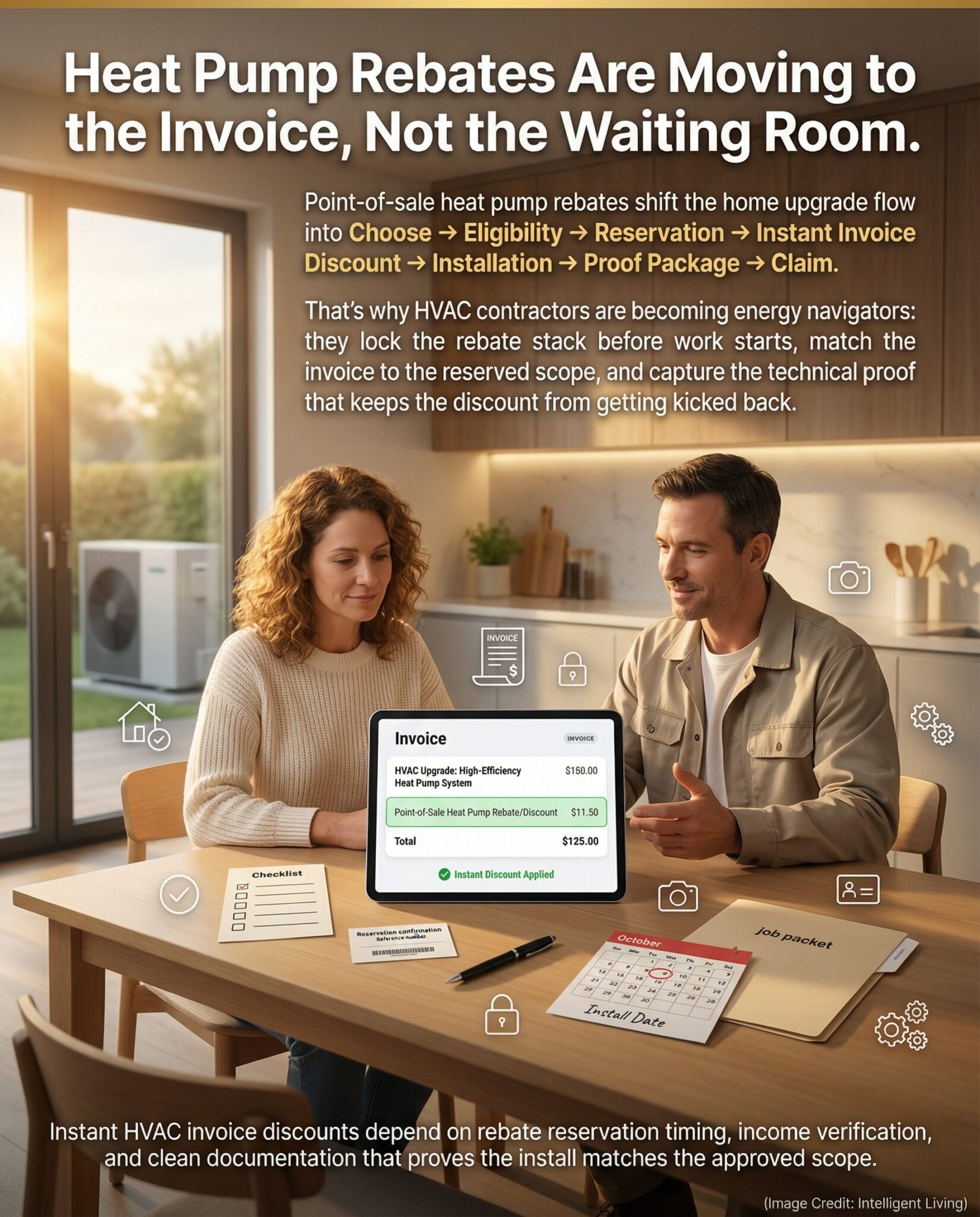
Essential Insights: Point-of-Sale Heat Pump Rebates and Contractor Invoicing Protocols
- Rebate programs frequently define instant point-of-sale incentives as immediate discounts applied directly to contractor invoicing.
- The new homeowner flow is often Choose, Verify, Reserve, Apply Discount on Invoice, Installation, Document, and Claim.
- Project availability remains a primary variable because reservation windows and program budget caps fluctuate based on demand.
- Contractors increasingly carry the responsibility for documentation quality, consumer protections, and clean records because program compliance depends on what happens on the jobsite.
- Homes with leaky envelopes often see steadier comfort and fewer sizing surprises once attic insulation and air sealing are performed to cut overall energy use.
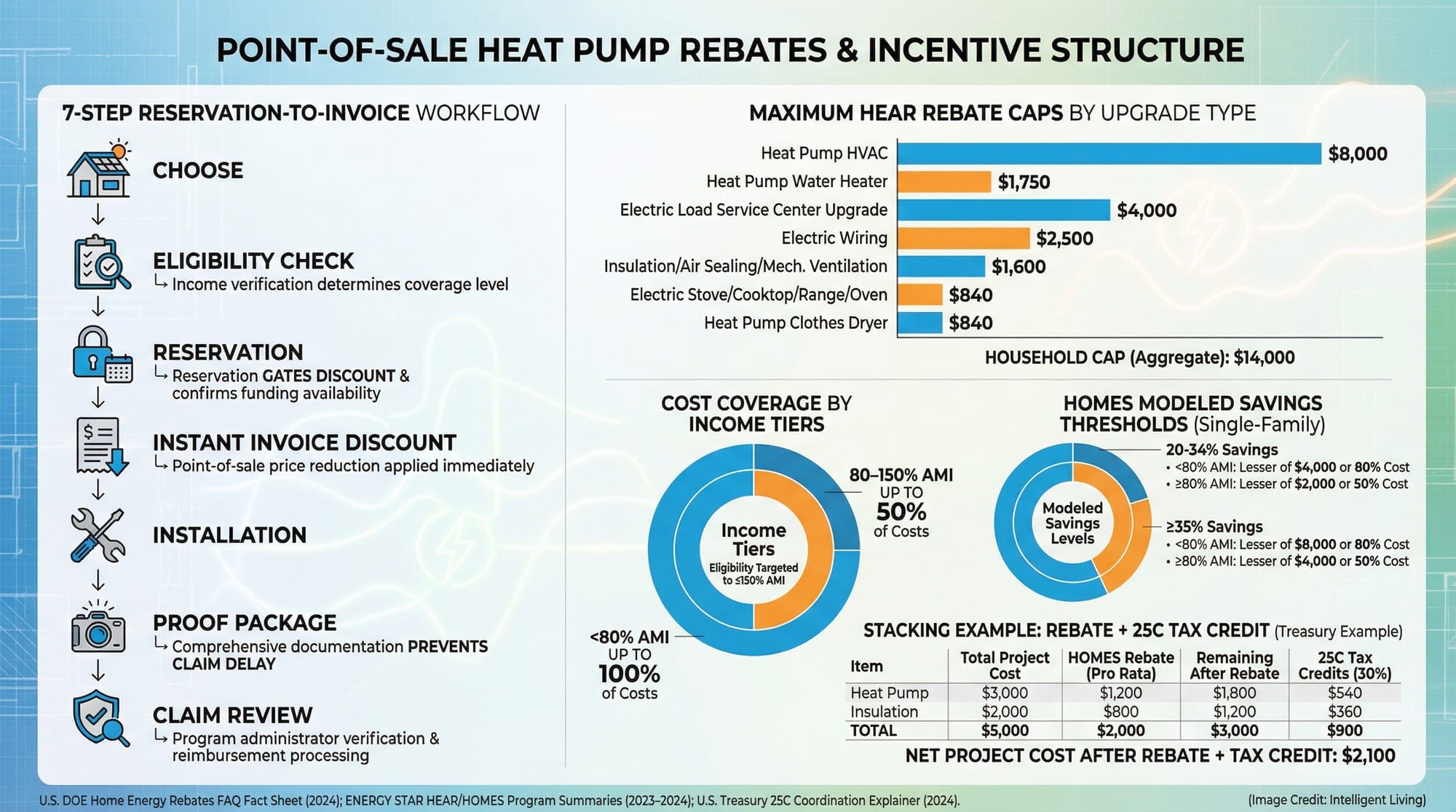
Point-of-Sale Heat Pump Rebates: Buying Workflow and Program Mechanics
Modernizing the Heat Pump Purchasing Cycle
The New Default Journey: Choose → Rebate Stack → Installation
Equipment selection and contract signing once preceded a rebate check that arrived months after installation. Point-of-sale programs insert an extra phase between the initial quote and the actual installation: eligibility and reservation. Reservation verification determines whether a rebate stack is available before the installation begins.
Households planning to replace failing furnaces often expect to sign contracts immediately, yet discounts frequently hinge on income verification. Explaining this reality before finalizing the initial quote prevents last-minute cancellations. Clear communication at the start of the engagement ensures installations remain on schedule while removing administrative surprises that could otherwise derail the project.
Envelope fixes that significantly lower energy bills make comfort outcomes more predictable. These improvements keep the heat pump quote aligned with what the property can realistically support over the long term.
Defining Point-of-Sale Mechanics in Modern Electrification
Transparent point-of-sale mechanics make the transition to electrification achievable. Shifting the rebate to the front of the transaction ensures that participants aren’t forced to float thousands of dollars. Instant-discount structuring offers several immediate advantages for both parties:
- Rebates apply as direct price reductions at retail checkouts or on final contractor invoices.
- Homeowners avoid the uncertainty and long wait times of traditional reimbursement checks.
- Contractors can close sales faster by presenting a lower net cost upfront.
- Financial risk is minimized for low-income households who cannot afford the full retail price.
Shifting from a refund-based mindset to an instant-discount model makes heat pumps a viable solution for more property owners. Removing up-front costs allows a wider demographic to participate in energy efficiency upgrades.
Data Intelligence Powering Targeted Rebate Programs
To scale these point-of-sale programs, utilities rely on data analysis to identify households that will benefit most from electrification. Through its UtilityAI™ platform, Bidgely analyzes smart meter data to provide appliance-level insights, helping energy providers identify homes with high heating loads for targeted heat pump upgrades. This targeting enables utilities and their contractors to allocate rebate incentives efficiently to the customers who can deliver the most program value.
Validating Incentives through Robust Reservation Systems
Reservations allocate limited program funds to a specific project before the physical work begins. If funds are confirmed, you can plan the installation around a guaranteed discount that significantly lowers the homeowner’s net cost. Without this confirmation, the rebate remains a theoretical possibility rather than a financial certainty.
Real-time status updates dictate what a contractor promises during sales consultations. Constant monitoring ensures pricing remains accurate as program availability fluctuates. A clear example is the HEEHRA reservation and rebate steps used in California’s TECH Clean program.

What Changed: Rebates Are Becoming a Front-End Discount, Not a Back-End Refund
Regulatory Frameworks: DOE Guidelines for Purchase Price Reductions
Federal rules for Home Energy Rebates programs define “point-of-sale” as an instant discount model. Purchase price reductions allow the discount to appear directly on contractor invoices, including scenarios covered by federal Home Energy Rebates program requirements when supported by the workflow.
For low-income households, DOE also notes programs must provide a way for rebate-covered work to be deducted from the invoice at the point of sale so households are not forced to front the full amount and wait.
Immediate invoice discounts create a visible impact for homeowners. A reduction that appears on the final bill feels tangible, whereas a rebate that arrives months later introduces perceived paperwork risk.
Strategic Workflow Design as a Catalyst for Technology Adoption
Process completion on busy job schedules depends on specific implementation details. PNNL workflow and interface patterns illustrate how installer-initiated reservations and claim packages are mapped for efficiency. These frameworks maintain consistency for both contractors and homeowners by following the DOE and PNNL data and tools requirements.
Real-time income verification is unavailable through the DOE and PNNL API, requiring programs to rely on document reviews or categorical eligibility. These verification steps are essential for compliance even though they can extend the project timeline.
Intake staff using eligibility scripts before dispatching site visits ensure that households are prepared with required documentation.
This proactive approach prevents projects from stalling after the estimate phase. Streamlining these interactions through IRA rebates API endpoints and schemas helps structure reservations without creating custom workflows for every job.

Contractor Implementation Guide: Eligibility, Reservations, and Compliance
Professional Evolution: Transitioning From Installers to Specialized Energy Navigators
Integrating Eligibility Screening and Income Verification into Sales Consultations
Moving eligibility screening into the early sales conversation allows navigators to confirm income-qualified pathways or categorical eligibility. Confirming these thresholds before reserving funds prevents wasted site time. Navigators require a structured intake that prevents late-stage surprises and ensures that both the contractor and the homeowner are aligned on financial expectations.
Optimizing Reservation Timing to Secure Project Viability
Confirming a program’s intent to honor a specific rebate impacts scheduling, scope locking, and written project commitments. One-page reservation checklists attached to estimates provide a common operational win. These tools ensure that sales teams and installation coordinators track the same project constraints.
Treating reservation status like a permit ensures that scheduling and equipment locking remain consistent. If the reservation is not secured, the project scope may need to be revisited before any equipment is ordered.
Prioritizing Onsite Documentation, Commissioning Logs, and Quality Assurance
Administrators require verifiable proof that upgrades meet strict quality standards, which necessitates the capture of onsite photos, serial numbers, and commissioning logs. Maintaining clean records ensures your projects can withstand federal review while securing the homeowner’s incentive.
Field documentation gets easier when crews use standardized prompts and claim-ready formats, including PNNL quality install documentation tools that package data into consistent reports. Ensuring proper suction line insulation for heat pump performance is one such detail that optimizes system output and longevity.
California’s Real-Time Case Study: When Funding Gets Fully Reserved
Navigating Full Reservation Status and Capacity Caps
Demand outrunning budget capacity in California illustrates the importance of active management.
Full reservation capacity typically shifts new projects to a waitlist until additional funding becomes available. This reality is reflected in California’s IRA rebate program status as programs cycle between open intake and constrained capacity.
Communicating Program Realities and Managing Homeowner Expectations
Presenting the likely outcomes—reserved, in-process, or waitlisted—prevents customer confusion and unnecessary alarm. This transparent approach avoids future pricing conflicts and maintains homeowner confidence in the project’s viability. Providing clarity ensures the consumer feels supported even when program funding is uncertain.
Implementing Strategic Scheduling to Maintain Incentive Eligibility
Reservation-driven projects need scope and timing discipline. Equipment selection changes or installation delays that drift outside program rules can cause a claim to fail. Operational teams that track shifting windows through TECH Clean California incentive windows reduce rework by matching scheduling decisions to current program realities.
Crews that log reservation IDs alongside job numbers avoid mixing reserved and unreserved installations during busy weeks. This simple field-level habit maintains organizational clarity.
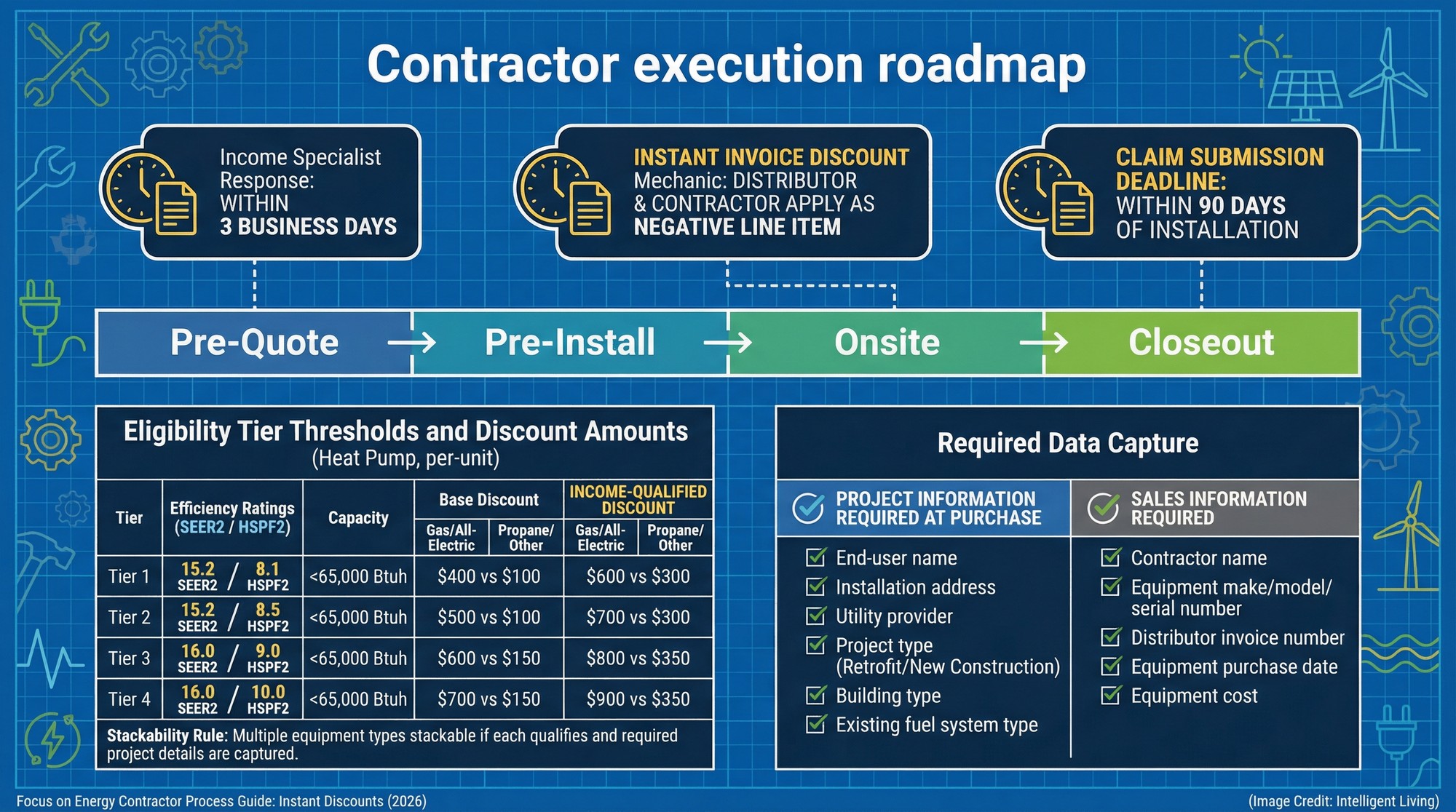
The Execution Roadmap: Strategic Implementation Checklists for HVAC Professionals
Pre-Quote Consultation: Essential Intake Diagnostics for Reducing Rework
Effective quoting begins with a thorough assessment of both the household’s eligibility and the home’s physical constraints. Standardizing your intake process ensures that no critical details are missed during the initial consultation.
A robust pre-quote checklist should include these key actions:
- Identifying the specific eligibility pathway helps determine what documentation the homeowner needs to provide.
- Discussing schedule variability ensures the client understands how verification timing affects the start date.
- Evaluating existing electrical capacity helps determine if panel upgrades will impact the project scope.
- Documenting current system specifications ensures the new heat pump quote aligns with previous loads.
Refining these details early prevents administrative bottlenecks later. Establishing a clear baseline makes the path to a successful reservation much more predictable for everyone involved.
Pre-Installation Protocol: Finalizing Reservations and Locking Project Scope
- Obtain a clear reservation confirmation before finalizing the installation date.
- Lock the scope to the reserved equipment and configuration, because changes can trigger re-reservation risk.
- Written project expectations delivered in plain language ensure the homeowner understands the timeline.
Aligning expectations regarding the financial ROI of HVAC upgrades before reservation timing turns into a surprise helps homeowners compare quotes more effectively.

Field Execution: Capturing Technical Proofs and Quality Metrics Onsite
Success on the job site depends on capturing verifiable data during the final stages of the project. These onsite proofs ensure the claim package passes administrative review without delays.
Field crews should prioritize these key documentation steps:
- Capture onsite photos and serial numbers during the normal closeout process.
- Complete all required commissioning checks in a standardized, repeatable order.
- Record the performance basics that demonstrate a successful and efficient installation.
Developing these technical habits validates your work and protects the homeowner’s incentive. Evaluating system runtime and airflow signals by evaluating system runtime and airflow helps detect performance drift before the job is finalized.
Administrative Finalization: Claim Submission, Record Retention, and Project Closeout
The final administrative phase ensures that the technical success of the installation translates into financial completion. Maintaining organized records at this stage prevents future compliance audits from becoming a burden.
Follow these steps for a clean closeout:
- Submit the final claim within the program’s designated submission window.
- Organize a complete job packet containing reservation IDs, invoice items, and documentation.
- Prepare for potential post-installation inspections with consistent record retention policies.
These final touches solidify your reputation as a professional energy navigator. With the paperwork secured, the homeowner can enjoy their new system with full confidence in its long-term value.
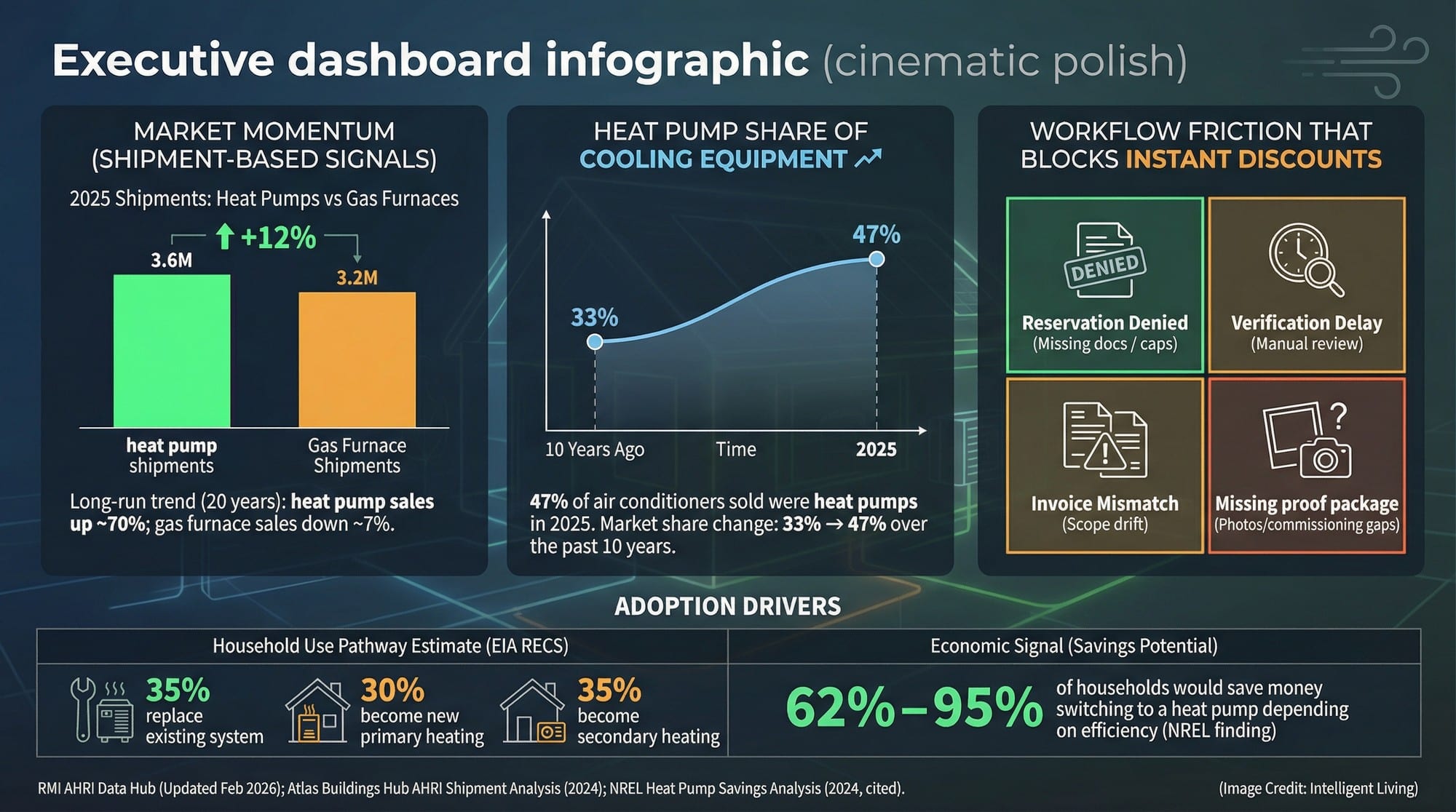
Making Heat Pumps the Default: Failure Modes, Trust, and Adoption
Mitigating Performance Risks: Identifying and Resolving Common Workflow Failures
Common hurdles during the rebate cycle often include reservation denials and documentation delays. Addressing these common failure modes ensures a reliable experience for the homeowner.
Watch for these specific challenges during the rebate cycle:
- Reservation denials caused by missing documentation or funding caps.
- Eligibility delays when households struggle to locate required financial records.
- Invoice mismatches where the installed equipment deviates from the reserved scope.
- Incomplete claim packets missing required onsite photos or commissioning data.
Pre-validating these details at the intake stage makes the entire workflow much more resilient. By anticipating these hurdles, you maintain the momentum of the project and secure the financial incentives without delays.
Many instant-discount programs treat steps like eligibility screening and claim windows as hard gates, as seen in the instant-discount contractor process guide. Being ready for calm conversations about home improvement financing choices ensures that savings remain a central part of the project even if reservations are delayed.
Establishing Electrification as the Preferred Default through Seamless Invoicing
Leveraging Frictionless Workflows Over Traditional Marketing Persuasion
Predictable workflows and immediate invoice discounts encourage households to choose the safest financial path. Because heat pumps reduce combustion emissions by moving heat rather than burning fuel, they are the preferred choice for eco-conscious homeowners. Heat pumps now serve as the default choice for most residential replacement scenarios.
Enhancing Consumer Protection Frameworks and Accountability Standards
Consumer protections and qualified contractor requirements ensure that electrification programs remain sustainable over the long term. These guardrails significantly reduce the perceived risk of major home upgrades.
Accountability and dispute handling frameworks build the necessary trust for widespread technology adoption. When you maintain clean documentation, you help enforce the DOE consumer protection plan elements.
Adapting to Regional Variations and Localized Program Launch Timelines
Even with federal oversight, individual states implement point-of-sale mechanics and income verification differently. Homeowners benefit from a clear explanation: heat pump hardware remains consistent, but the rebate workflow varies by location. You can track these localized rollout differences through the regional Home Energy Rebates program tracking for specific insights into your market.

Optimizing Long-Term Efficiency through Standardized Electrification Workflows
Standardizing these workflows results in smoother claims and more efficient sales processes. By protecting cash flow and building homeowner trust, you transform the rebate process into a powerful sales tool. The win isn’t just a smoother claim—it’s a smoother sale that positions your business as a leader in the energy transition.
Smaller electrification steps can still help households reduce fossil fuel use if they cannot wait for reservation windows to reopen. Suggesting a room-scale window heat pump that replaces a space heater and window AC provides immediate relief while the full-system installation is in the queue. This flexibility ensures that every client finds a path toward better comfort and lower emissions regardless of program timing.
Common Questions About Instant HVAC Discounts and Rebate Procedures
Clear answers regarding the application process help homeowners feel more comfortable with the transition to heat pump technology. These brief answers clarify the mechanics of point-of-sale incentives and reservation requirements based on information found in the DOE Home Energy Rebates webinar regarding rollout timing and mechanics.
Can my contractor apply the rebate directly to my invoice?
Standard point-of-sale models allow an immediate discount on the invoice. This occurs when the contractor participates in the program and the project is properly reserved.
Why is a reservation required before the heat pump is installed?
A reservation locks in funding for your specific job. Since program budgets are limited, this ensures the money is there before you commit to the work.
What documents do I need for income verification?
Income verification typically requires proof of address, tax returns, or categorical eligibility letters from existing assistance programs.
What happens if the program funding is exhausted?
If funds are fully reserved, you may be placed on a waitlist. Your contractor will help you decide whether to proceed or wait for new funding.
How can I spot and avoid clean energy scams?
Avoid high-pressure sales and “free” offers that sound too good to be true. The FTC has specific advice on how to avoid getting burned by solar or clean energy scams in the home-improvement market.


