
Imagine the smell of fresh bread at your local bakery. Now, imagine that same bread—once destined for a dumpster—becoming the secret ingredient in a chemical revolution. A lab team recently fed waste bread to specialized bacteria, allowing these microbes to generate hydrogen in oxygen-free tanks. News headlines often suggest we are turning toast into fuel. The true breakthrough involves researchers using microbes to replace dirty fossil hydrogen inside major chemical factories. This quiet innovation, detailed in a peer-reviewed one-pot chemo-microbial hydrogenation study, shows how hydrogen shapes everyday ingredients and industrial materials.
When a grocery store tosses out a tray of day-old rolls, most of us see a routine cleanup. Food decomposing in oxygen-starved landfills quickly turns into significant methane from the landfilled food waste source, which is why cities keep testing practical loops such as a waste-to-hydrogen public transportation concept that treats discarded material like a managed input. Capturing carbon before it drifts away as a greenhouse gas allows us to use it as a controlled feedstock for cleaner manufacturing.
Sustainable chemical synthesis using food waste could change how we think about industrial materials. Microbial hydrogen production allows companies to move away from the massive CO2 emissions tied to traditional fossil-derived hydrogen. Quiet shifts in how things are made ensure that the ingredients in favorite products don’t come at the cost of the planet’s health.

Breaking News Snapshot: Microbial Hydrogen Production and the Hydrogenation Pivot
The Truth Behind the Breadcrumb Headline and Microbial Hydrogen
Industrial experts aim to slash our reliance on fossil fuels during chemical reactions. Localized hydrogen production prevents the risks and costs of trucking pressurized gas to every factory. Researchers at the University of Edinburgh reported a one-pot, chemo-microbial approach where living microbes generate hydrogen for immediate use. This method allows a palladium catalyst to hydrogenate target molecules under mild conditions, supporting a transition toward fossil-free manufacturing that avoids traditional oil-based inputs. Industrial hydrogenation must reduce its reliance on fossil hydrogen, as the process does not depend on trucking in pressurized hydrogen for every batch.
Viral stories often highlight hydrogen from breadcrumbs to grab attention, pushing the food waste detail to the front of the narrative. Catchy hooks often blur the real target of this research. The work specifically aims to replace fossil hydrogen inside a reaction that global industries already rely on every day.
Quick Facts: Bread Waste, Bacteria, and a One-Pot Hydrogenation
Science is often about looking at common waste through a new lens. Understanding how bakery leftovers can fuel industrial change requires looking at these essential milestones in fossil-free chemical production:
- Recent research into biocompatible hydrogenation reveals the specific microbial hydrogen pathway and the vital role of palladium catalysts.
- Stale rolls and loaves are broken down into fermentable sugars to feed bacteria in specialized, oxygen-free environments.
- Global supply routes for hydrogen still depend on fossil fuels, with total hydrogen production reaching 97 million tonnes in 2023.
- Current industrial methods release nearly 920 million tonnes of greenhouse gas emissions from hydrogen every year, proving that shifting this reagent is a climate leverage point.
- Diverting some of the 1.05 billion tonnes of food waste generated globally every year could be a climate game-changer.
Replacing just one industrial reagent can have a massive ripple effect across global supply chains. Food waste is not the only waste stream being tapped for clean hydrogen. A separate 2026 breakthrough turned mixed plastic waste directly into high-purity hydrogen fuel using alkaline thermal treatment, capturing most of the carbon as a stable solid mineral in the process.

Why this Matters: Hydrogenation, Industrial Hydrogen, and the One-Pot Route
Understanding Why Fossil-Free Hydrogenation Beats Bread Fuel
Hydrogenation Basics: How the Chemical Reaction Actually Works
Hydrogenation works by adding hydrogen atoms to an unsaturated bond. Standard hydrogenation basics explain why the same reaction can show up in both food processing and industrial chemistry. This chemical step transforms reactive compounds into stable, usable materials for everything from snacks to plastics.
Where Hydrogenation Shows Up: Foods, Materials, and Specialty Chemicals
Food processors often use hydrogenation to turn liquid oils into solid fats. Manufacturers also rely on this step to ‘finish’ raw ingredients before they hit the store shelves. Experts often use hydrogenation in practice to understand how specific catalysts and temperatures shape final product traits.
The Environmental Cost: Why Fossil Hydrogen Still Rules Industrial Chemistry
Microbial hydrogen production targets the chemical reagents used in manufacturing rather than standard transportation fuels. This approach makes sense because industrial demand for hydrogen is massive and currently relies on polluting gas. Replacing fossil hydrogen inside widely used chemical reactions reduces embedded emissions across global supply chains.
Strategic Gains: Why Replacing Chemical Reagents Beats Building Pipelines
Decarbonizing hidden factory steps is often more effective than focusing on flashy end-uses. Replacing chemical reagents inside the factory floor can cut emissions much faster than building thousands of miles of new hydrogen pipelines. Market trends show the green hydrogen supply chain is maturing slowly, which makes demand-side substitutions inside industrial chemistry unusually valuable when timelines matter.
Step-By-Step Guide: How the Breadcrumb Hydrogen Trick Works
Step 1: Converting Starchy Bread Waste into Fermentable Sugars
Waste-to-value feedstocks allow bacteria to generate hydrogen consistently throughout the production cycle. Lab teams use heat and enzymes to break bread starch into sugars. Nutrient-rich broth allows bacteria to digest and produce hydrogen efficiently. Enzymatic breakdown turns starchy waste into a glucose-rich feedstock.
Sorting food donations reveals how quickly fresh surplus becomes unusable waste. Feedstock processing depends entirely on timing and handling costs.
Step 2: Utilizing Anaerobic Growth for Microbial Hydrogen Generation
Microbes like E. coli naturally release hydrogen gas during anaerobic growth. Oxygen-free metabolism uses specialized enzyme systems to convert food waste into clean chemical power. Researchers mapping the cellular machinery have found that formate hydrogenlyase organizes into a membrane-associated complex that drives this hydrogen release.
Laboratory anaerobic conditions remove oxygen so the microbial pathway that produces hydrogen can run.
Step 3: Capturing Clean Hydrogen Using a Palladium Catalyst
Water-based chemical reactions are much safer for the environment. Sustainable synthesis happens at lower temperatures with a palladium catalyst, reducing the overall energy footprint of the factory. Palladium acts as a magnet for hydrogen atoms. Palladium surfaces transfer hydrogen atoms directly into the target bond, removing the need for expensive external gas lines.
Other green initiatives are exploring sunlight-driven catalysis for hydrogenation, where specific designs decide whether efficiency gains are real or just theoretical.
Step 4: Executing Hydrogenation Under Mild Aqueous Conditions
Conventional methods require extreme heat and high pressure. Green technology operates near biological temperatures, making it safer and easier to manage in standard water-based setups.
Localized chemical microreactors could eventually use this method. On-site production of reagents cuts down on transport risks. Smaller-batch hydrogenations benefit most from process simplicity and safety constraints.

Analyzing The Lab Results: What Sustainable Chemical Synthesis Proved
Proven Lab Results: Successful Hydrogenation Across Multiple Substrates
Processed bread waste proved to be a reliable carbon feedstock for microbial hydrogen. Urban food scraps act as high-value industrial inputs to close the circular manufacturing loop. Peer-reviewed records report successful hydrogenations across multiple molecules relevant to industrial intermediates and specialty products.
Climate Impact: Modeled Emissions Benefits for Waste-To-Value Feedstocks
Life cycle assessment modeling suggests major greenhouse-gas advantages when waste bread replaces traditional feedstocks. Modeled outcomes depend on boundaries such as preprocessing energy, transport, and separation steps.
Municipal waste managers understand that composting success depends on how streams are collected, transported, and processed.
Scaling Barriers: Economics, Logistics, and Catalyst Stewardship
The current research demonstrates lab-scale success, but scaling to a factory level remains the next big hurdle. Successful commercialization depends on solving several logistics problems:
- Reducing the high cost of product separation.
- Managing continuous-feed logistics for large-scale bioreactors.
- Ensuring long-term catalyst performance and high recovery yields.
- Integrating these systems into existing industrial workflows.
Future systems might even use microbes for bio-palladium recovery to ensure the expensive catalyst is recycled in a truly circular loop.
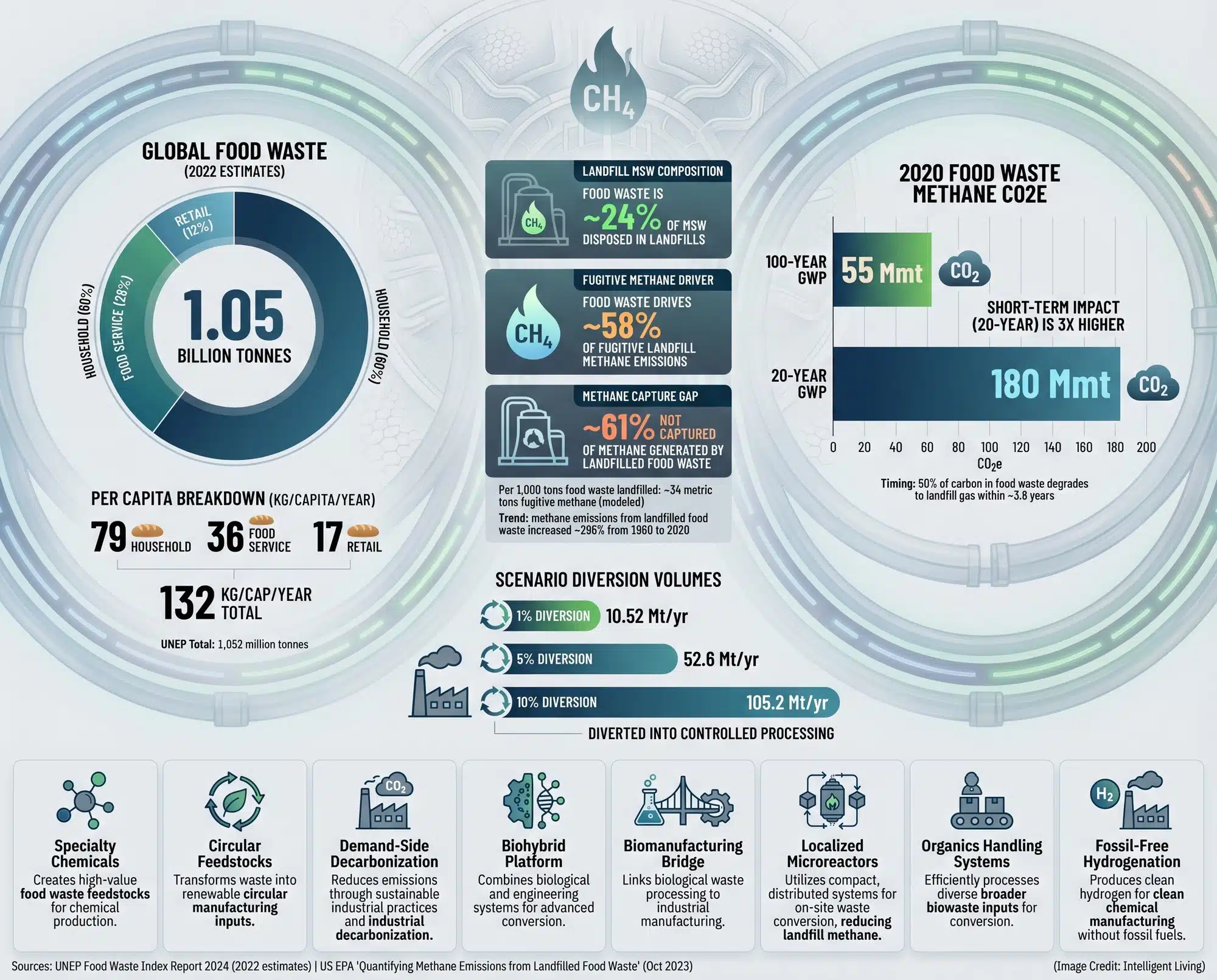
8 Industrial Uses for Fossil-Free Hydrogenation and Circular Manufacturing
Transforming waste into industrial power requires creative thinking. Here are eight ways this microbial hydrogen breakthrough could reshape the circular economy:
- Cleaner Hydrogenation for Specialty Chemicals: Smaller-scale producers making flavors, fragrances, and specialty intermediates can benefit first because mild conditions and local feedstocks may reduce dependence on delivered fossil hydrogen.
- Waste-to-Value Chemical Feedstocks in Circular Manufacturing: Efficient collection and preprocessing turn bread waste into a predictable input stream instead of a disposal cost.
- Industrial Decarbonization without Waiting for Full Hydrogen Infrastructure: Emissions cuts happen faster when a process input changes inside existing supply chains.
- Biohybrid Chemistry as a Platform: Pairing microbes with metal catalysts opens a design space between fermentation and classic chemical manufacturing.
- A Bridge Between Hydrogen and Biomanufacturing: Microbes sit at the center of emerging “molecules from air and electricity” narratives.
- Localized Manufacturing Concepts for Regions with Food Waste and High Energy Costs: Regions with expensive waste handling and energy costs may find localized chemical microreactors attractive.
- De-Centralized Organics Handling that Treats Waste as Feedstock: Household and community systems increasingly turn kitchen scraps into usable energy.
- A Template for Other Biowaste Streams: Generalizing the method allows other carbohydrate-rich wastes to become inputs, widening the circular-economy footprint beyond bakeries.
Diverse paths offer ways to cut fossil fuel reliance without waiting for a total overhaul of our energy grid.

Reality Check: What Has to Be True for Scale
Efficient Logistics: Feedstock Collection and Pretreatment Requirements
Industrial pretreatment determines whether a waste-to-value model is profitable. Localized feedstock sourcing ensures the final product is truly carbon-negative. Shipping bread across the country ruins the climate benefits. Circular business models succeed only when industrial cost centers are carefully managed.
Resource Management: Minimal and Recoverable Palladium Catalyst Use
Palladium constraints require catalysts that resist fouling and operate at low loading. Responsible scaling demands high recovery yields for expensive metals.
Operational Safety: Fitting Anaerobic Growth into Industrial Workflows
Oxygen-free bioreactors require disciplined control. Stable microbial performance and predictable feedstock quality are essential for industrial environments.
Data Integrity: Transparent Life Cycle Assessment Modeling
Full-chain accounting tracks every bit of energy used for transport, pretreatment, and catalyst recovery. Scenarios depend on transparent modeling boundaries.
Timeline Reality: Infrastructure Constraints for Industrial Decarbonization
Low-carbon hydrogen supply plans often stretch for years due to permitting and construction timelines.

Conclusion: Why Fossil-Free Hydrogenation is the Future of Industrial Manufacturing
News headlines highlight hydrogen from breadcrumbs as a great story, but the true value lies in linking waste feedstocks to cleaner factories. Streamlining the costs of scaling will significantly drop the demand for fossil hydrogen in chemical manufacturing. Biology-based tools offer a path to fixing the problems of heavy industry while helping the environment.
Clever chefs repurpose leftover bread into croutons; that same resourceful mindset is finally reaching the chemical industry. Industry leaders must decide if surplus food remains a leaking carbon problem or becomes a valuable input that slashes emissions. Bridging the gap between hydrogen and biomanufacturing creates a future where waste builds a cleaner, more stable world.
Frequently Asked Questions About Green Hydrogen and Food Waste
Can you make hydrogen fuel for cars from old bread?
No, this process replaces fossil hydrogen used as a chemical reagent in factories. It is not currently a way to produce bulk fuel for transportation or engines.
What makes microbial hydrogen production better for the environment?
Traditional hydrogen production releases massive amounts of CO2.. Bacteria and bread waste create hydrogen without fossil fuels, turning landfill-bound trash into a useful resource.
Why is a palladium catalyst used in this process?
Palladium handles hydrogen exceptionally well on its surface. It allows chemical reactions to happen under mild, water-based conditions instead of requiring high heat and dangerous pressure.
How does sustainable chemical synthesis help the planet?
Clean methods reduce our reliance on oil and gas for industrial processes. Waste-to-value feedstocks cut down on both landfill methane and factory emissions.
Is this technology ready for big factories today?
Science has proven the concept in labs, but scaling requires better waste collection and catalyst recycling before hitting industrial levels.


