
Most people who take sustainability seriously have already worked through the obvious checklist: reusable bags, a low-flow showerhead, maybe a compost bin in the backyard. A few have gone further — solar panels, an EV, a capsule wardrobe built around secondhand finds. And yet one room tends to get a pass: the bedroom.
More specifically, it is what you sleep under, dry off with, and pile on the couch. Home textiles — bedding, towels, throw blankets, and curtains — sit in a strange blind spot for a lot of eco-conscious consumers. We scrutinize food labels and research appliance energy ratings, but a set of microfiber sheets gets tossed in the cart without a second thought.
The Numbers Are Hard to Ignore
The global textile industry accounts for roughly 10% of global carbon emissions — more than international aviation and shipping combined. Home textiles are a meaningful slice of that. Americans replace bedding more frequently than most realize, partly driven by social media aesthetics, partly by the simple fact that cheap synthetics don’t last. A $20 sheet set might feel fine for a season before pilling and fading, at which point it usually ends up in a landfill, where petroleum-based fibers can persist for centuries.
Conventional cotton isn’t automatically a better choice. Growing one kilogram of cotton fiber requires an estimated 10,000 liters of water and typically involves heavy pesticide use. While modern sustainable farming in regions like Australia has reduced this to roughly 2,400 liters, the environmental case for scrutinizing fabric purchases remains genuinely strong — it’s just underreported compared to plastics or transport.
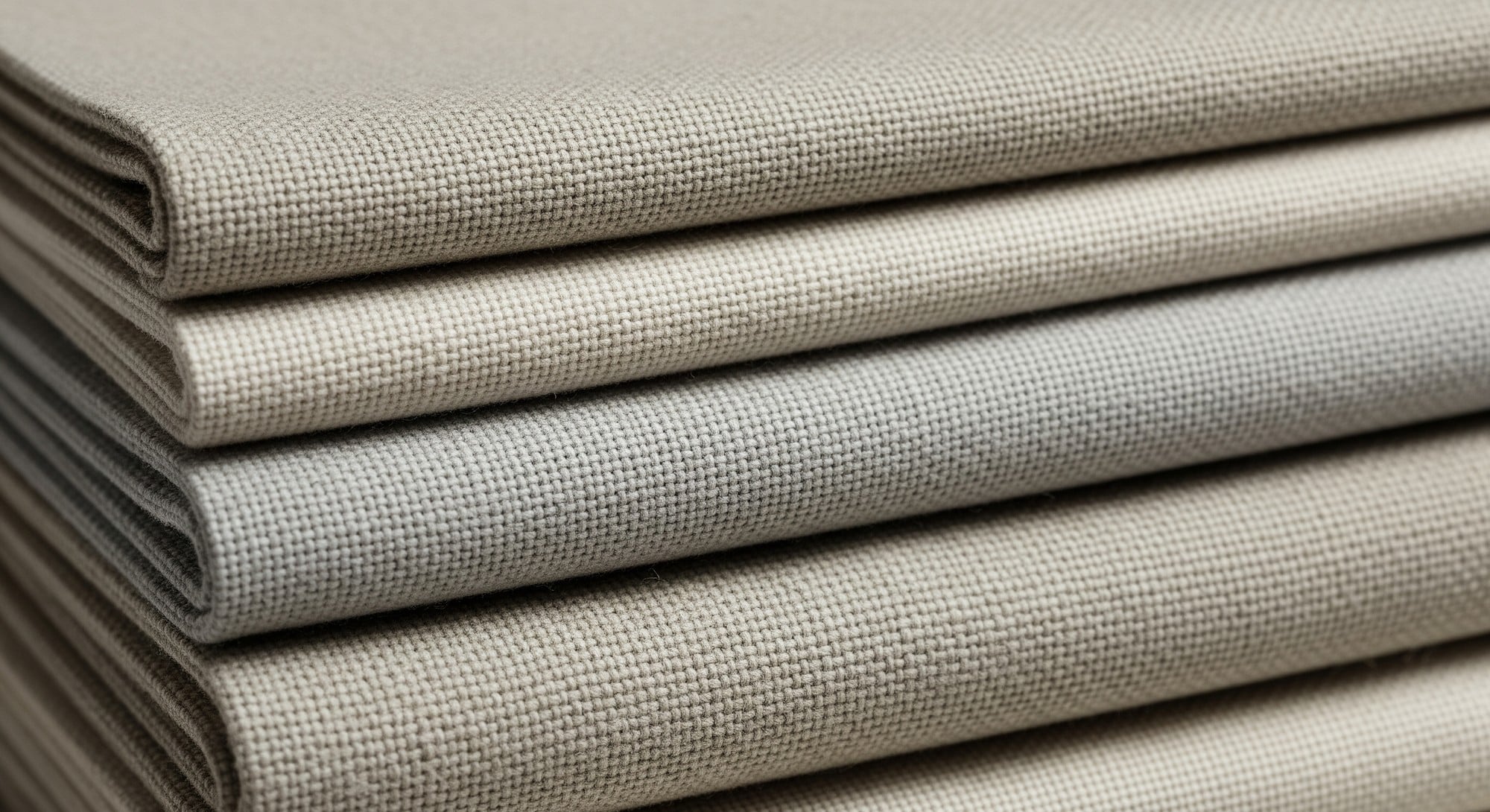
The Hidden Impact of Synthetic Fibers
Beyond the carbon footprint of production, synthetic home textiles like polyester and microfiber contribute to a growing crisis: microplastic pollution. Every time synthetic sheets or towels are laundered, they shed thousands of tiny plastic fibers. These microplastics are too small for most municipal filtration systems to catch, meaning they eventually find their way into our waterways and, ultimately, the food chain. For those building conscious interiors, moving away from “fast homewares” is as much about water health as it is about waste reduction.
What Certifications Actually Mean
This is where a lot of buyers get stuck. Greenwashing is rampant in home goods, and terms like “natural,” “eco-conscious,” and “plant-based” mean nothing without third-party verification. A few certifications carry real accountability:
- OEKO-TEX Standard 100: Tests every component of a finished textile — fabric, dye, thread, and buttons — for harmful substances. It doesn’t certify environmental production practices, but it confirms the product won’t off-gas chemicals into your bedroom.
- GRS (Global Recycled Standard): Verifies that recycled content claims are accurate and that minimum social and environmental standards were met across the supply chain. It matters especially for fleece, polyester blends, and recycled wool products.
- GOTS (Global Organic Textile Standard): The most comprehensive for natural fibers, covering organic farming, chemical processing, and labor conditions across the full production chain.
When buying, looking for manufacturers who hold these certifications — rather than brands who simply make the claim — is the more reliable shortcut. There’s a growing category of sustainably certified home textiles from verified suppliers who build compliance into production rather than marketing it as an afterthought.
Choosing Better Materials
If you are looking to replace your current linens, some materials are inherently more sustainable than others. Hemp, for instance, requires very little water and no pesticides to thrive, yet it produces a durable, breathable fabric that softens with every wash. Similarly, Tencel (lyocell) is made from wood pulp in a closed-loop process that recycles 99% of the solvents used. These options provide a tactile luxury that synthetics simply cannot replicate while maintaining a much lighter ecological footprint.

One Practical Starting Point
You don’t have to replace everything at once. The most useful first move is simply deciding that the next textile purchase — whatever it is — will meet at least one recognized certification standard. Over a few years, that approach replaces most of your home’s softgoods without the financial hit of a single overhaul. Sustainable living has never been about doing everything perfectly. It’s about removing the default assumption that convenience and accountability are mutually exclusive. In 2026, for home textiles at least, they increasingly aren’t.


