
Researchers and scientists are working around the globe experimenting with different drugs to either slow down the coronavirus COVID-19 infection, or find a vaccine capable of killing it. In this effort, it has been known that, focus on the SARS-CoV-2 spike protein is imperative.
An international team of researchers led by Dr. Josef Penninger from the University of British Columbia (UBC) have found reason for hope with their trials of a drug that can block “the cellular door SARS-CoV-2 uses to infect its hosts.”
Dr. Penninger is a professor in UBC’s faculty of medicine, and director of Life Sciences Institute and the Canada 150 Research Chair in Functional Genetics, he lists the others who were involved:
This work stems from an amazing collaboration among academic researchers and companies, including Dr. Ryan Conder’s gastrointestinal group at STEMCELL Technologies in Vancouver, Nuria Montserrat in Spain, Drs. Haibo Zhang and Art Slutsky from Toronto and especially Ali Mirazimi’s infectious biology team in Sweden, who have been working tirelessly day and night for weeks to better understand the pathology of this disease and to provide breakthrough therapeutic options.
Ali Mirazimi from the Karolinska Institutet in Sweden, an author on the study explains:
Our study provides new insights into how SARS-CoV-2 infects the cells of the body, including in blood vessels and kidneys. We hope that our results can contribute to the development of a novel drug treatment that can help patients with COVID-19.
ACE2 is a protein on the surface of our cell membranes, which has been determined by scientists as the key receptor for the SARS-CoV-2 spike glycoprotein. The ACE2 was recognized in 2003 as a receptor of the original SARS virus.
Using tissue samples from patients in the early stages of COVID-19, the team discovered the SARS-CoV-2 spike proteins bind to the cells’ surface receptor called an angiotensin-converting enzyme 2 (ACE2) to enter our cells.
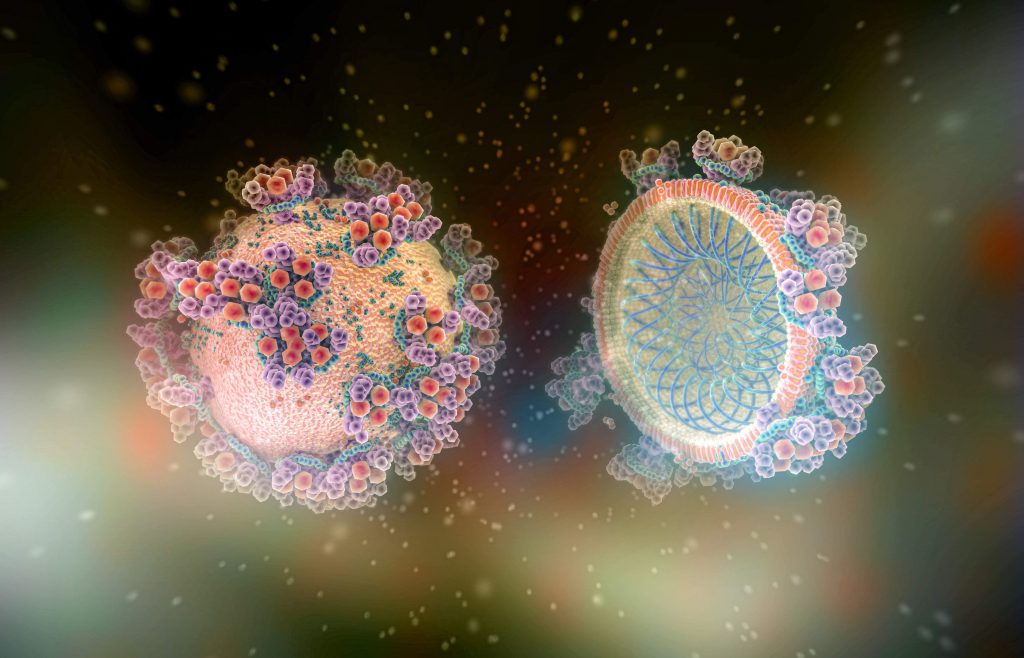
The team ran tests to see if the virus could be blocked from entering using a genetically modified variant of the protein. The modified protein is called “human recombinant soluble angiotensin-converting enzyme 2 (hrsACE2).”
Their results were published in Cell, and as Mirazimi points out, they believe they can attract the SARS-CoV-2 virus to the modified copy rather than the good cells:
We believe adding this enzyme copy, hrsACE2, lures the virus to attach itself to the copy instead of the actual cells. It distracts the virus from infecting the cells to the same degree and should lead to a reduction in the growth of the virus in the lungs and other organs.
The drug that would be used for treatment with the active substance is APN01, which is developed by Aperion Biologics and has already undergone phase II clinical studies against lung disease. With these current findings, Aperion Biologics will conduct a clinical pilot study using APN01 on COVID-19 patients in China.

Dr. Slutsky talks about the drugs antiviral properties:
Our new study provides very much needed direct evidence that a drug — called APN01 (human recombinant soluble angiotensin-converting enzyme 2 – hrsACE2) — soon to be tested in clinical trials by the European biotech company Apeiron Biologics, is useful as an antiviral therapy for COVID-19.
The team’s studies have provided further insight into the COVID-19 viral infection and show that it directly infects and multiplies itself in the blood vessels and kidneys. When the team tested the hrsACE2 on engineered human tissues that represented multi-organ failure and cardiovascular damage, it reduced the SARS-CoV-2 infection.
While we await further trials, Penninger explains what these findings mean to the experts:
The virus causing the COVID-19 is a close sibling to the first SARS virus. Our previous work has helped to rapidly identify ACE2 as the entry gate for SARS-CoV-2, which explains a lot about the disease. Now we know that a soluble form of ACE2 that catches the virus away could indeed be a very rational therapy that specifically targets the gate the virus must take to infect us.


