
Understanding one’s legal rights in self-defense is essential for protecting oneself and loved ones. In Alabama, the law grants individuals the right to defend their lives, property, and family. However, navigating these rights can be complex, as they come with specific limitations imposed by state regulations.
This article aims to clarify the critical elements of legal self-defense in Alabama, examining both the rights granted to individuals and the restrictions that govern their application. By delving into these aspects, readers will gain valuable insights, enabling them to make informed decisions regarding their ability to safeguard themselves legally.

Understanding the Right to Carry Firearms
Alabama is known for its robust support of the Second Amendment, which allows citizens to carry firearms for self-defense. Many residents choose to carry firearms to enhance their ability to protect themselves and others. However, while the right to carry is enshrined in law, it comes with specific rules and limitations.
Alabama is a “shall-issue” state, meaning that if an individual meets certain basic legal requirements, a permit for concealed carry will be granted. You must be 19 years old, a legal resident, and meet the background requirements to apply for a concealed carry permit.
Open carry is generally legal without a permit, but there are location-specific restrictions, such as prohibitions in courthouses, police stations, and schools. It’s important to know where carrying firearms is legally permitted, as breaking these restrictions can lead to legal consequences.
It’s also essential to understand how the Alabama concealed carry law intersects with self-defense. The state follows what is known as the “Stand Your Ground” law, which allows a person to use deadly force if they rationally believe that it is crucial to prevent imminent death or serious bodily harm. This right extends to protecting others or preventing a violent felony. While this law supports the use of firearms in self-defense situations, responsible firearm owners should remember that using deadly force is a last resort. Knowing when and how to act within the law can help avoid potential legal issues.
The Legal Aspects of Self-Defense in Alabama
Alabama law provides legal grounds for using force when protecting oneself from harm. Under the law, self-defense is justified when an individual reasonably believes they are at risk of physical injury, death, or sexual assault.
The key concept here is “reasonable belief,” meaning that your perception of the threat must be what an average person would find justifiable. If the threat of danger is ambiguous, responding with force might not be protected under the self-defense law.
The “Stand Your Ground” law further expands the rights of individuals in self-defense situations. Unlike the “Duty to Retreat” principle in some states, where individuals must attempt to avoid conflict if possible, Alabama allows a person to stand their ground and defend themselves without needing to retreat.
This law applies in various locations, including your home, vehicle, or anywhere you are legally allowed to be. However, this does not give blanket permission to use force; it must be proportionate to the threat.
Understanding the nuances of these self-defense laws is crucial for responsible and lawful behavior. For example, while you can defend yourself if threatened, using excessive force beyond what is necessary to stop the threat can lead to criminal charges.
Being familiar with the legal standards for self-defense will help make sure you act within your rights while protecting yourself or others.
Understanding the law is only one part of preparing for the aftermath of a self-defense incident. Some lawful gun owners also consider membership-based legal protection and educational resources; Right To Bear offers access to legal-support benefits and training resources for covered self-defense situations, subject to the membership and policy terms.

Non-Firearm Self-Defense: What Are Your Options?
While firearms are a common means of self-defense, not everyone feels comfortable carrying them or meets the legal requirements to do so. Fortunately, Alabama law also permits various other self-defense tools and techniques. Pepper spray, stun guns, and personal alarms are among the legal options for self-defense that do not require a permit or extensive training.
Pepper spray is a popular choice for those looking for a non-lethal option to incapacitate an attacker temporarily. It is easy to carry, effective, and legal for individuals over the age of 18. Stun guns and tasers, which deliver an electric shock to temporarily disable an attacker, are also legal to possess and use in Alabama.
However, it is essential to use them responsibly, as misuse can result in legal repercussions. These non-lethal options are highly effective in many situations but must be used appropriately and in line with state law.
In addition to carrying tools, personal self-defense training, such as martial arts or tactical courses, can enhance one’s ability to protect themselves without the use of weapons. Many Alabama cities offer self-defense classes aimed at teaching individuals practical techniques to deter or escape from potential threats. Regardless of the chosen method of self-defense, it is critical to remain informed of the local laws surrounding the use of force to avoid crossing legal boundaries.
Legal Ramifications and Seeking Legal Counsel
Understanding your rights is crucial, but it is equally important to be aware of the legal ramifications of self-defense actions. If you find yourself in a situation where self-defense is necessary, the immediate aftermath can be confusing and stressful.
It is recommended that law enforcement call as soon as possible and provide only the necessary details while waiting for legal counsel. The way you present your situation can significantly impact how it is perceived legally.
In Alabama, if your actions in self-defense are legally justified, you are protected from prosecution or civil suits. However, the interpretation of what constitutes justified self-defense can vary greatly, making it important to seek advice from a legal professional. Experienced attorneys specializing in self-defense cases can provide guidance on how to proceed and represent your rights in court if needed.
It’s also helpful to have a basic understanding of Alabama’s laws regarding self-defense. This knowledge enables individuals to protect themselves lawfully and provides clarity on what actions are permissible and when force is appropriate. Always err on the side of caution, and when in doubt, seek legal counsel to interpret the specifics of your situation.
Staying Prepared and Informed
Being prepared for a self-defense situation requires both mental and physical readiness. Staying informed about local laws and regulations on carrying firearms, using non-lethal tools, and understanding self-defense situations is vital.
Regularly updating your knowledge of these laws, which may change over time, helps maintain responsible self-defense practices.
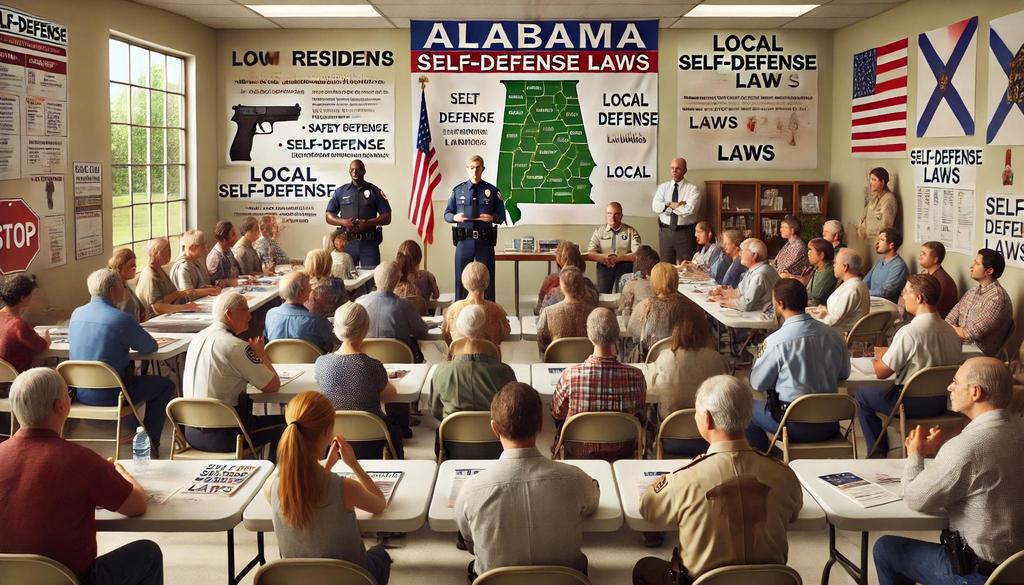
Moreover, Alabama communities often offer resources to help residents stay informed about self-defense rights and responsibilities. Local law enforcement departments, community centers, and self-defense organizations can provide training sessions, educational materials, and legal updates to keep you well-equipped and legally aware.
By understanding and respecting the laws around self-defense, you contribute to a safer community while protecting your rights effectively.

