
Visible hairline cracks in masonry often trigger the urge to authorize the fastest fix, yet conventional repairs frequently carry a sizeable carbon cost. Before commissioning heavy concrete pours, property owners should consider sustainable underpinning approaches. Such innovative techniques offer distinct ecological advantages, including the ability to:
- Reuse existing materials to reduce waste
- Minimize excavation and site disruption
- Protect surrounding soil biology and root systems
Adopting these strategies ensures that structural repairs do not come at the expense of the local environment.
Forward-thinking engineers now prioritize eco-friendly foundation repair methods that maintain structural integrity without the heavy environmental footprint.

Understanding the Essentials of Underpinning
Underpinning extends a footing’s depth or width so structural loads transfer into stronger ground or supplemental piles. While the principle dates back to the Renaissance, modern engineers utilize a significantly expanded toolkit.
- Historic context: Early builders hand-dug sequential pits and cast lime mortar infills, a forerunner of modern “pin” excavations that let walls remain supported while new bearing elements cure.
- Common systems: Engineers select from a variety of established techniques to suit specific site constraints. The most frequently employed methods include:
- Mass-concrete pits for traditional shallow strengthening
- Beam-and-base arrangements for spreading loads
- Mini-piles and push piers for restricted access areas
- Helical piers for rapid installation in varying soils
Designers select specific systems to align with the unique soil profile and access conditions of the project.
- Current drivers: Several factors are increasing the demand for foundation reinforcement. Key contributors to this trend include:
- Stricter seismic codes requiring retrofits
- Prolonged drought-induced soil shrinkage
- Heavier loads from new rooftop solar arrays
- Vertical extensions adding additional stories
Such mounting pressures raise the likelihood of necessary reinforcement work across existing building stocks.
The Shift Toward Low-Carbon Solutions
Because classic methods rely heavily on Portland cement, designers now look to lower-carbon binders, recycled plastics, and precision resin injections to reduce embodied emissions.
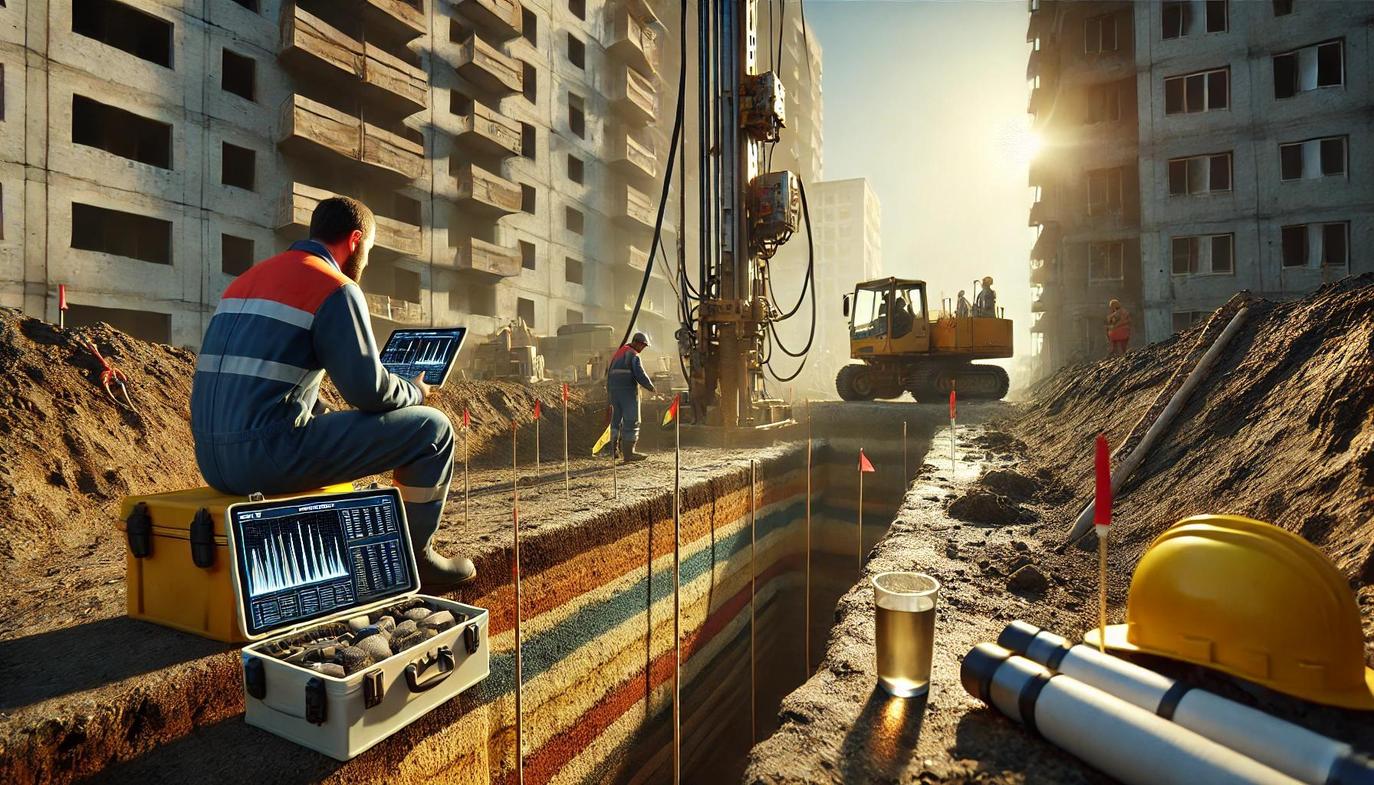
Analyzing Soil Profiles for Effective Repair
Subsurface data dictates every underpinning decision. Borehole logs, cone-penetrometer tests, and groundwater readings steer the choice of technique.
- Clay: Expansive clays swell when wet and contract when dry. Deep micropiles or stiff reinforced beams can bypass this volume change, limiting seasonal movement.
- Sand: Well-graded sands drain freely but lack cohesion. Helical plates or geopolymer bulbs bind loose grains and provide rapid load transfer.
- Silt and peat: Highly compressible silts or organic peats benefit from lightweight geofoam rafts that distribute loads without removing sensitive material.
- Urban fills: Mixed demolition debris conceals voids and utilities. Ground-penetrating radar, coupled with limited grout columns, targets weak zones while reducing spoil volumes.
- Contaminated ground: On brownfield sites, grouted steel micropiles can seal contaminants in place and avoid costly disposal of hazardous spoils.
Assessing the Necessity of Underpinning
Conducting a structured assessment prevents unnecessary work and guarantees genuine environmental gains.
- Structural data: Record crack widths, floor slopes, and door misalignments against national tolerance charts.
- Monitoring period: Tilt meters or tell-tales observed over at least six months confirm whether movement is active.
- Planned load changes: Future solar panels, green roofs, or extra stories may justify early intervention.
- Hydrology review: Improved drainage occasionally removes the root cause, making underpinning unnecessary.
A qualified geotechnical report combines these findings and recommends the most resilient, lowest-impact solution.
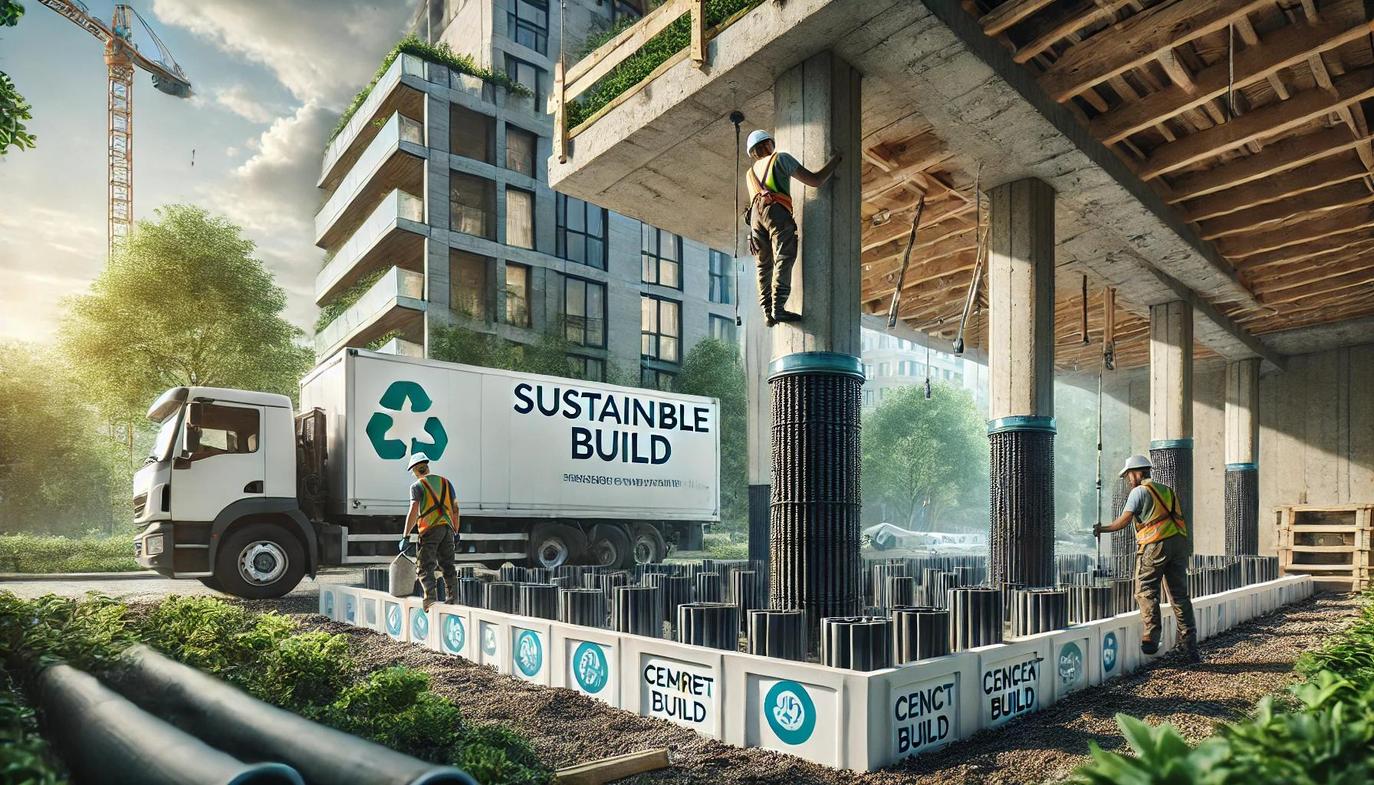
Implementing Lower-Carbon Foundation Components
Recycled polymers and supplementary cementitious materials (SCMs) increasingly challenge concrete’s century-long dominance.
- Recycled-plastic piles and pads: Manufacturers mold post foundations from reclaimed polyethylene reinforced with steel brackets. Compressive strengths significantly exceed those of traditional timber. Furthermore, underground life-expectancy testing projects service lives of 100 years or more.
- Protective skirting: Prefabricated plastic skirts protect above-ground posts from pest and moisture attack, extending column life while diverting waste from landfill.
- Cement-free footing discs: Rigid recycled-plastic pads can replace small concrete castings under isolated posts, eliminating kiln-related CO₂ emissions.
- Cost outlook: Up-front pricing typically runs 5–15 percent higher than treated timber, but lower maintenance and carbon-credit incentives often deliver overall savings.
Utilizing Precision Ground-Improvement Technologies
- Geopolymer injection: Expanding resins effectively fill voids and can lift settled slabs. Crucially, the procedure produces roughly half the greenhouse gas emissions of traditional cement grout.
- Carbon-fiber reinforcement: High-tensile straps bonded to basement walls distribute loads and avoid invasive steel beam installation.
- Robotic mini-pilers: Compact, GPS-guided rigs record torque and depth in real time, ensuring quality in tight urban basements.
- Low-clinker cement blends: Fly ash, slag, and calcined clay can cut embodied CO₂ by up to 40 percent while maintaining strength.

Ensuring Long-Term Durability and Performance
Eco-friendly solutions must endure for the building’s entire lifespan.
- Load transfer: Underpinning shifts weight to deeper, stiffer strata, reducing differential settlement that cracks brittle finishes.
- Material compatibility: Galvanized fixings prevent corrosion when paired with recycled polymers; alkali-resistant fibers reduce microcracking in cementitious mixes.
- Moisture control: Footing drains, capillary breaks, and correct downspout routing limit hydrostatic pressure and freeze-thaw cycles.
- Seismic considerations: Helical piles fitted with moment-resisting brackets help heritage structures resist lateral earthquake forces without oversized concrete beams.
- Inspection regime: Annual infrared scans and tilt-sensor data confirm settlement remains within design limits, preserving warranties.
Navigating the Regulatory and Incentive Landscape
Environmental legislation is reshaping underpinning practice and, in many regions, unlocking financial support.
- Embodied-carbon reporting: Public projects increasingly require whole-life-carbon calculations, encouraging engineers to compare low-cement mixes with traditional options.
- Waste-soil rules: Excavated contaminated material must be tracked from site to disposal, incentivizing in-situ stabilization where feasible.
- Stormwater protection: Local bylaws limit groundwater alteration; grout blends must seal against leachate yet allow controlled flow.
Aligning Foundation Repair with ESG Goals
For corporations, foundation decisions influence environmental, social, and governance metrics that investors track.
- Environmental: Specifying recycled plastics and low-cement geopolymers cuts Scope 3 emissions.
- Social: Low-noise, no-excavation resin systems reduce disturbance for neighbors.
- Governance: Transparent procurement policies and third-party audits echo guidance from industry-trusted resources and international reporting bodies.
The next decade is likely to blend biogenic binders, digital twins that predict ground movement, and the reuse of decommissioned steel piles. Such technological convergence will push underpinning from reactive repair toward predictive resilience.

Constructing a Resilient Future for Foundations
The shift toward low-carbon underpinning represents more than just a technical upgrade; rather, the method reflects a broader commitment to resilient, responsible construction. By adopting methods that utilize recycled materials and minimize soil disruption, property owners can secure their assets against future ground movement while actively reducing their carbon footprint.
Key Takeaways
Low-impact underpinning is achievable by matching soil data with recycled or low-cement materials, precision installation, and long-term monitoring. When differential settlement threatens your building, pair sustainable underpinning with targeted floor-level corrections to safeguard structural health for decades to come.
As regulations tighten and climate patterns become more unpredictable, the value of sustainable underpinning will only increase. Choosing these advanced methodologies today ensures that foundations remain robust, compliant, and environmentally sound for generations to come.
Common Questions About Sustainable Underpinning
What is the most eco-friendly way to underpin a house?
Geopolymer injection and recycled plastic piling are currently considered the most eco-friendly options, as they require minimal excavation and significantly reduce carbon emissions compared to concrete.
How does geopolymer injection reduce carbon emissions?
Geopolymer resins expand to fill voids and compact soil without the need for large-scale excavation or heavy machinery, producing roughly half the greenhouse gas emissions of traditional cement grout.
Are there green alternatives to concrete for foundations?
Yes, alternatives include recycled plastic piles, timber piles, and low-clinker cement blends that utilize industrial byproducts like fly ash to reduce embodied carbon.
How long do recycled plastic underpinning piles last?
Testing indicates that recycled plastic piles are highly durable, with projected service lives exceeding 100 years, often outlasting treated timber in damp soil conditions.
Does sustainable underpinning cost more?
While upfront material costs for items like recycled piles can be 5–15% higher, the reduced need for heavy excavation and shorter installation times often result in overall project savings.


