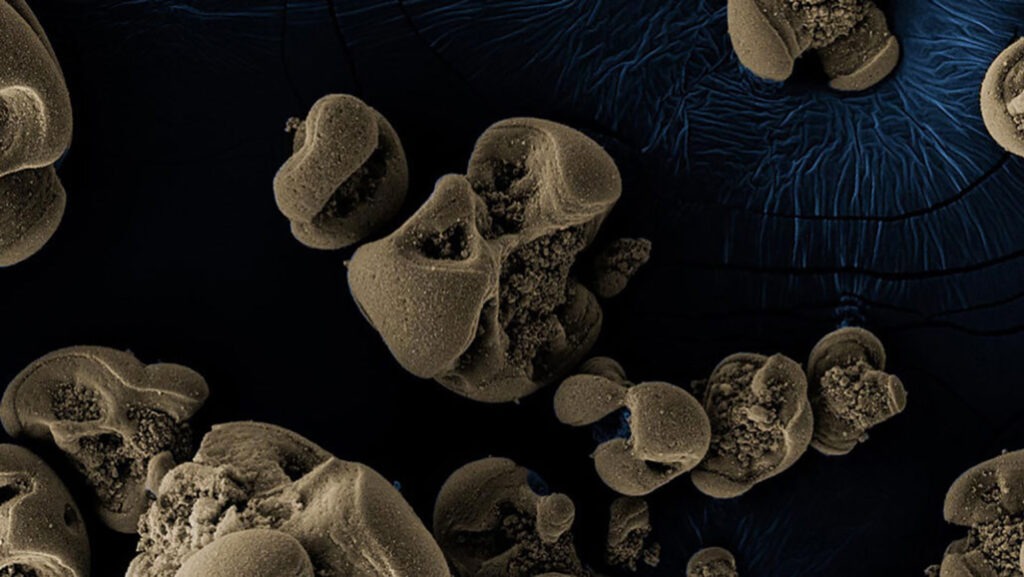
For over 100 years, scientists have predicted that bacteria could use manganese to fuel growth, but none were found—until now. Two environmental microbiologists at Caltech, Jared Leadbetter, and Hang Yu, have discovered the first bacteria known to use metal manganese to grow. The duo published their findings on July 15 in Nature.

Leadbetter filled a glass jar that was covered in a pink compound called manganese carbonate with tap water and left it in the sink to soak for ten weeks. When he returned, the jar’s contents had transformed into a dark, crusty material; and two new species of bacteria were responsible.
The duo identified around 70 species from the jar, which most likely came from the tap water, then narrowed it down to a pair of bacterial species that, when put together, generate manganese oxide. Then, when the scientists gave the bacteria manganese carbonate, they multiplied significantly. The rate of manganese oxide production increased, as the bacterial population size increased, suggesting that the bacteria were using manganese as fuel for growth.

The environmental microbiologists called the newly identified species ‘Ramlibacter lithotrophicus’ and ‘Candidatus Manganitrophus noduliformans.’ The team doesn’t know yet what role each species plays, either they are both integral in generating energy from the manganese or one is mainly responsible.
Furthermore, the findings could help control and manage manganese oxide pollution in drinking water.