
In Western art history, women have been depicted in paintings for centuries. But in very old paintings of women, you’ll find that they are usually depicted as goddesses or mythical figures. Later, it became the European custom for royalty and wealthy and influential men to commission famous painters of the time to paint their wives, daughters, or other important female relatives. The artists had to portray the women as realistically as possible.
It was relatively late in our art history that artists started to create paintings of women, not because they were commissioned to do so but because they were inspired by a specific woman or the female body. This shift can be seen in movements like Degas’s Impressionist, where artists focused on capturing fleeting moments and the essence of their subjects rather than just their identities. The models in many of the famous portraits of women remain unknown, as their identity was not always the central aspect of the painting
In this article, we’ll look at some famous paintings depicting women, which were not commissioned but were created due to the artist’s inspiration.
Inspired Self-Portraits by Women Artists
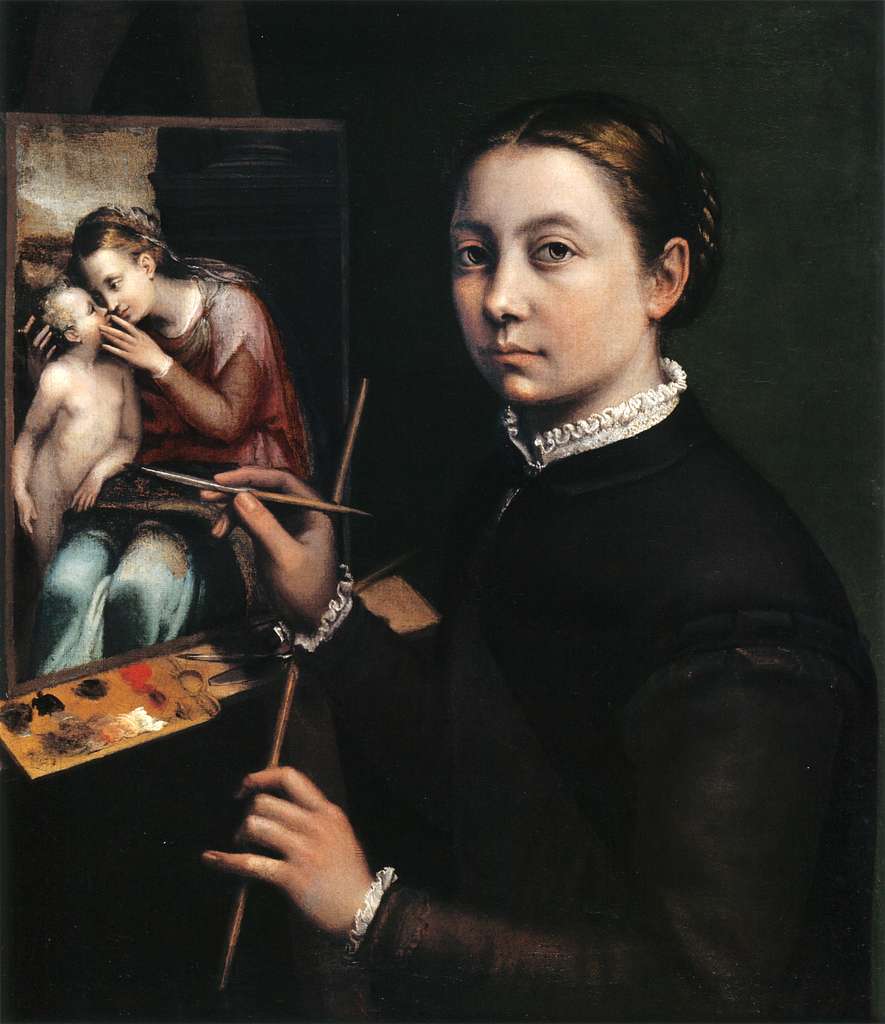
Interestingly, women artists played an important role in the Renaissance era in breaking away from traditional “using” women in paintings. Instead, they were inspired to use self-portraiture as a vehicle to convey messages of themselves to the viewers of the paintings.
The Italian Renaissance painter Sofonisba Anguissola, for instance, created her now-famous “Self-portrait at the Easel” in 1556 as a result of her inspiration. She was inspired by her conviction that she and other women painters were equal to men artists.
Some women artists’ bodies sometimes also inspire them to create self-portraits. Paula Modersohn-Becker is the first female artist in Western culture to show her full nude figure in a self-portrait. In the self-portrait, created in 1906, she depicted herself as pregnant, although she was not. She was inspired to use the pregnancy metaphorically to indicate that she is in a fertile period of her artistic career.
Artist inspired by the Idea of a “timeless” Woman by Girl with a Pearl Earring (1665)
“Girl with a Pearl Earring” by Johannes Vermeer is an excellent example of where the painter’s own inspiration led him to create a painting of a woman. Most of Vermeer’s paintings focus on the life of middle-class people, and the girl in this painting is depicted as a woman from the middle class.
The beautiful “Girl with a Pearl Earring” is one of Vermeer’s most famous paintings of women. He created this work not as a commission for someone but because he was inspired to depict a specific moment in the life of this unknown girl. According to art historians and critics, he created a picture of a young woman who belonged to no specific time or place.

Vermeer always took care of details when creating artwork to ensure that he depicted precisely what he wanted to show the viewer. In this painting, a very “mysterious” young woman is depicted at the moment when she looks over her shoulder to gaze at the viewer. It also seems as if her eyes are following the viewer.
Artist inspired to paint his Mother by Whistler’s Mother (1871)
In 1871, James Whistler got inspired to paint a portrait of his mother. This is another excellent example of a painting created due to an artist’s inspiration. However, it was not commissioned or requested by anyone.
Whistler just got the inspiration to portray his mother. But, of course, his inspiration was the motherliness of his mother. And he succeeded in showing this aspect of her character in the portrait painting.

She was in her late 60s when Whistler painted the portrait of his mother. Because she had difficulty standing for long periods, he let her sit and painted her as being seated in a chair.
Artist inspired to combine his Fascination with the Image of a Woman by The Dream (1910)
Henri Rousseau’s “The Dream” is an example where an artist’s desire to create a fabulous painting of a beautiful woman and his fascination with the jungle combined to inspire him to create a work that would become world famous.
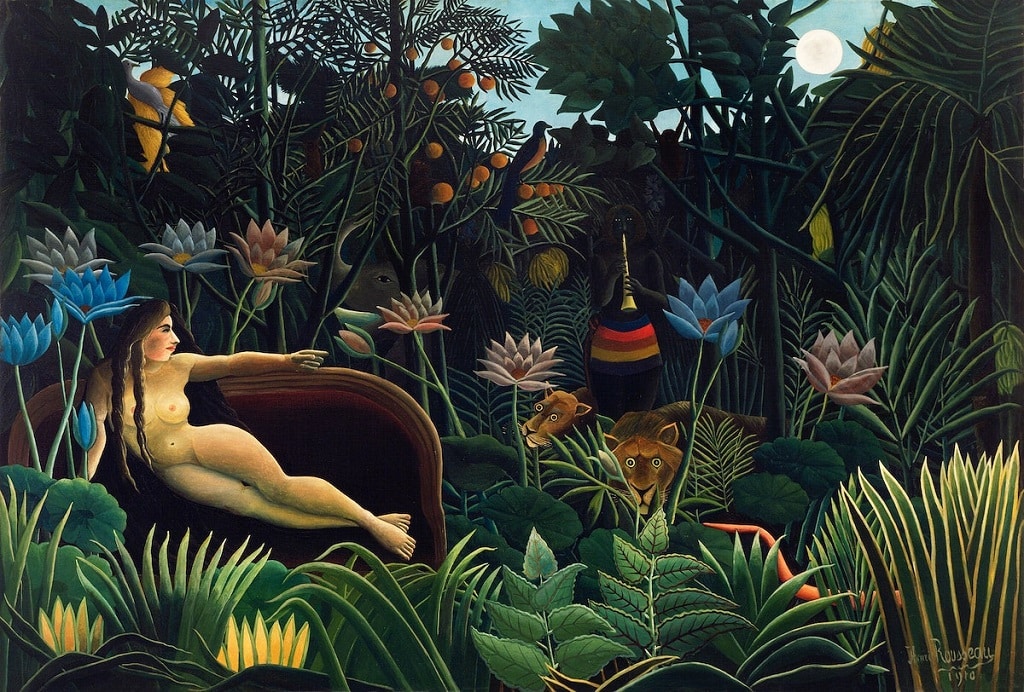
“The Dream” depicts his mistress lying naked on a divan, looking at a jungle landscape with leaves, flowers, and animals. Interestingly, “The Dream” was the last painting done by Henri Rousseau before he died a few months later.
Artist inspired by his Wife and her Shop by Woman with a Hat (1905)
In 1905, Henri Matisse’s inspiration for his painting “Woman with a Hat” was his wife Amélie and her hat shop. She owned a hat shop, and Matisse wanted to capture that in portrait painting. Like the other artworks discussed in this article, nobody commissioned or requested this painting – it was painted because of Matisse’s inspiration to depict his wife in this manner.

Interestingly, Amélie was her husband’s manager, but after more than 40 years of marriage, she left him because he was obsessed with his art. But their earlier relationship is captured forever by Matisse’s inspirational portrait, “Woman with a Hat.”
Artist inspired by the Female Form and the Beauty of a Women by Portrait of Wally
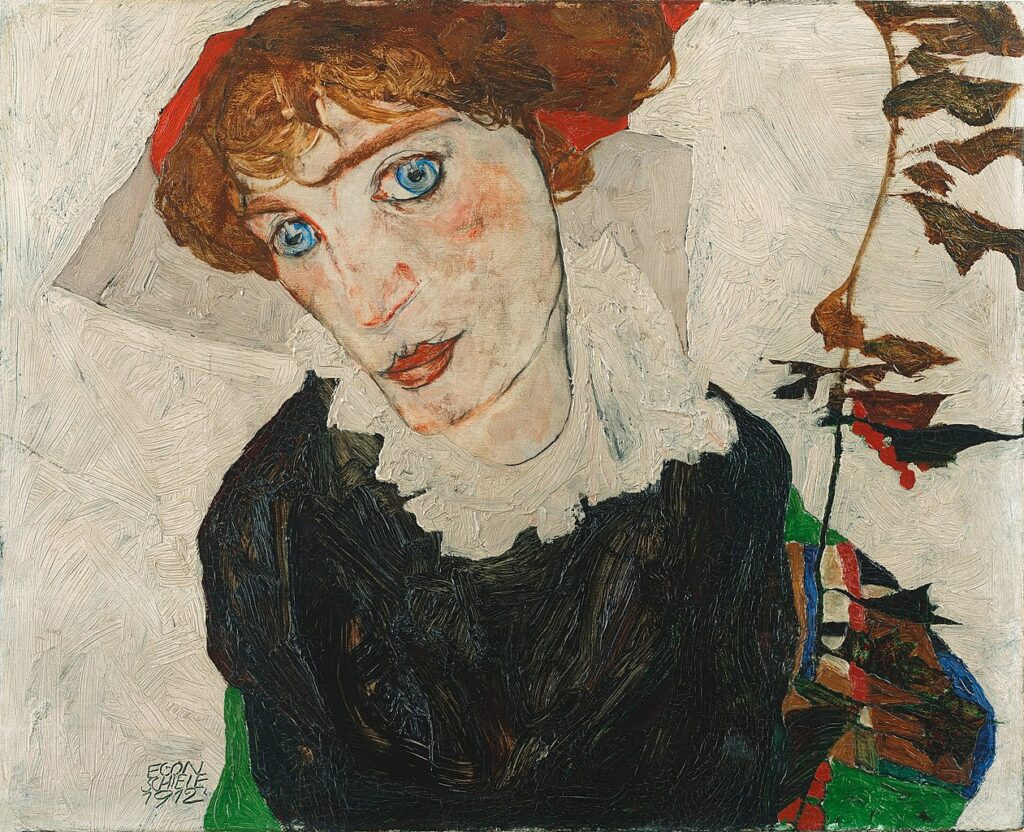
Egon Schiele was a Viennese artist who created many paintings with females as the subject, and he took female portraits to a new level in the early 20th century. He was so inspired by the female form that he created some of the most famous paintings of women ever.
Schiele met Wally, a 17-year-old girl, in 1911, and they became lovers. Her body so inspired him that he created “Portrait of Wally” in 1912, where he depicted her as a young woman with brown hair and wide-open blue eyes. Interestingly, this artwork was later, after Schiele’s death, sold to the Austrian government for $500 million.
Conclusion
Although ancient paintings of women depicted women as mythical, and women later only became the subject of commissioned portrait paintings, artists in the 1800s started to include women in paintings whenever they were inspired.


