
Despite the fact that our oceans span more than 70% of the earth’s surface, world consumption of fish and seafood is rising faster than our seas can fairly (and securely) maintain. Sustainable fishing entails keeping adequate fish in the ocean while also safeguarding ecosystems and endangered species. People who rely on fishing can keep their jobs if the oceans are protected.
What Problems are Caused by Overfishing?
According to the United Nations (UN), the loss of coastal ecosystems has negative effects for the more than 3 billion people who live off the abundance of the seas and coasts, as well as fishing vessels that are forced to sail long distances further to fish in more rich waters.
These forced migrations, in turn, cause additional issues such as overfishing of other fishing areas and territorial conflicts, particularly along the shores of Africa, Latin America, and south and north-east Asia, the world’s most heavily fished continent. Furthermore, the degradation of the oceans, along with a scarcity of resources in the weakest fleets, encourages illicit fishing.
How to Do It?
Fishing with a hook and line is a sustainable way to capture a variety of species. By using circular hooks instead of J hooks, bycatch is reduced and habitat harm is minimal. Multiple lines can be dragged behind a fishing vessel at the same time during trolling. If you choose this technique, you may go for some of the best cheap fishing kayaks available online and embark on your fishing excursion while also considering sustainability. Pot fisheries, which employ one or more cages sunken on the ocean floor and linked to the water’s surface by a rope and buoy so fishermen can quickly locate their catch, are another option. Bycatch is minimal, and habitat harm is minimal.
People leave various kinds of trash along the coast and in the ocean, which causes difficulties. Debris in the water may wrap around boat propellers, causing engine problems, while rubbish, like cigarette filters and supermarket bags, appears to animals as food. They induce asphyxia or starvation when consumed. The objective is to be meticulous about packing all of your trash and carrying it home with you, preferably for recycling and composting.
Sustainable Fishing and Marine Fauna
Sustainable fishing maintains a balance and ensures the survival of all species by respecting marine ecosystems and adapting to fish fertility rates. Moreover, sustainable fishing opposes the indiscriminate harvesting of young and endangered or non-commercially valuable species.
Spearfishing
Sustainable fishing guarantees that fisheries in both marine and freshwater areas continue to thrive. For thousands of years, people have fished responsibly. For instance, the Tagbanua people of the Philippines search for certain species at different periods of the year, which helps to keep fish populations healthy. They also employ environmentally friendly measures such as spears.
Fly Fishing
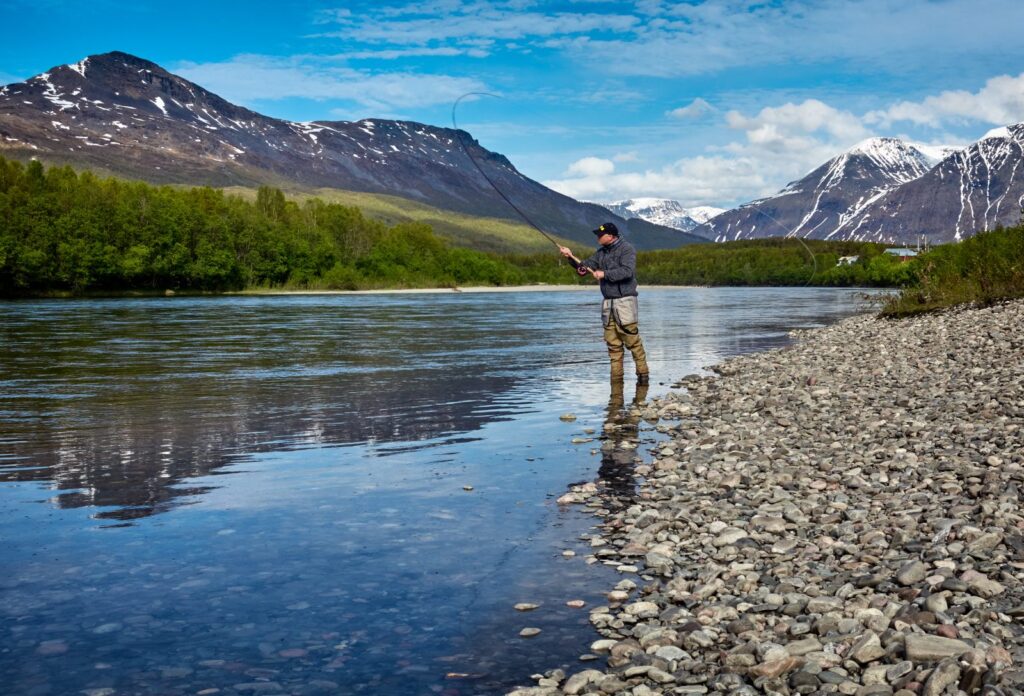
Classical rod-and-reel fishing techniques, such as fly fishing, are a sustainable manner of fishing. Rods and reels come in a range of forms and sizes, enabling outdoor recreation anglers to target a variety of freshwater and saltwater species of fish.
Why Is Sustainable Fish Better for You?
Many sustainable fish species are high in protein, minerals, and omega-3 fatty acids, with minimal hazardous additions. Overfished seafood like salmon and tuna often includes mercury and other highly toxic contaminants. Due to bioaccumulation, larger fish at the top of the food chain have higher amounts of hazardous substances. As a result, the protein-rich barramundi contains half the calories of salmon and is one of the purest fish available, with low levels of mercury, PCBs, and other toxins.
Over 85% of the world’s fisheries are completely fished, resulting in the extinction of numerous fish species. Selecting sustainably produced fish helps to relieve strain on wild fisheries while also allowing populations to recover.

Bycatching
Every year, the fishing industry discards around 10 million tons of inadvertently captured fish. Many of these marine species got entangled in fishing gear, despite the fact that they were not meant to be caught. Bycatch is a term for an undesirable catch that generally dies. Bycatch can include fish that are too tiny to sell, as well as wildlife such as sea turtles, dolphins, seagulls, and even whales. Longlining and bottom trawling for shrimp yield some of the highest bycatch rates. Bycatch can be 3 to 15 times larger than the desired catch in some situations. By adopting proper gear technology and fishing tactics, several fisheries have effectively minimized bycatch.
Ecological Impact
Because the biggest fish in a species command the greatest price, overfishing frequently targets them. Because huge fish play distinct functions in ecosystems, this can be a concern for the species’ population and others. Because giant females produce substantially more eggs than smaller females, huge fish are especially vital for the survival of their species. This is why the bigger individuals in certain regulated populations are released back into the ocean.
Destructive Fishing
The tactics employed to catch fish are referred to as destructive fishing. They can pose a serious threat to the ecology and aquatic ecosystems’ future.
Bottom trawling, in which large nets are pulled down the seafloor, taking up anything in their path, including fragile corals and sponges; and cyanide fishing, in which sodium cyanide is spilled into the water to shock fish and make them easier to catch, are two examples of harmful fishing. There’s also dynamite fishing, which involves the underwater detonation of explosives and the collection of dead fish that come to the surface, which has its own set of problems when done on a big scale.
Sustainable indicates that a fish was captured or farmed with the species’ long-term future in mind as well as the cleanliness of the seas. Simply put, sustainable seafood is healthy and beneficial for both you and the environment. Our harvesters and seafood aficionados will have a greater chance of catching on to sustainable fishing if they are well educated. Sustainable fishing practices must be supported by seafood diners if the industry is to prosper. In recent years, it appears that this has occurred, with an increasing number of anglers adopting sustainable techniques that benefit everyone.


