
Bill Bensley has been designing some of the world’s most iconic resorts, hotels, spas, homes, and even palaces since 1989. Now, the maverick designer’s firm takes on its most ambitious project yet – a zoological resort called WorldWild where animals roam, and humans are caged. It will be located in Wuchuan, Guangdong province, China.

WorldWild is like an inside-out zoo with the spirit of a wildlife reserve. It will be a sanctuary for endangered and rescued animals. Of the 2,000-hectare site, 95% will be allocated to animals roaming free, and only 5% will be for human use.
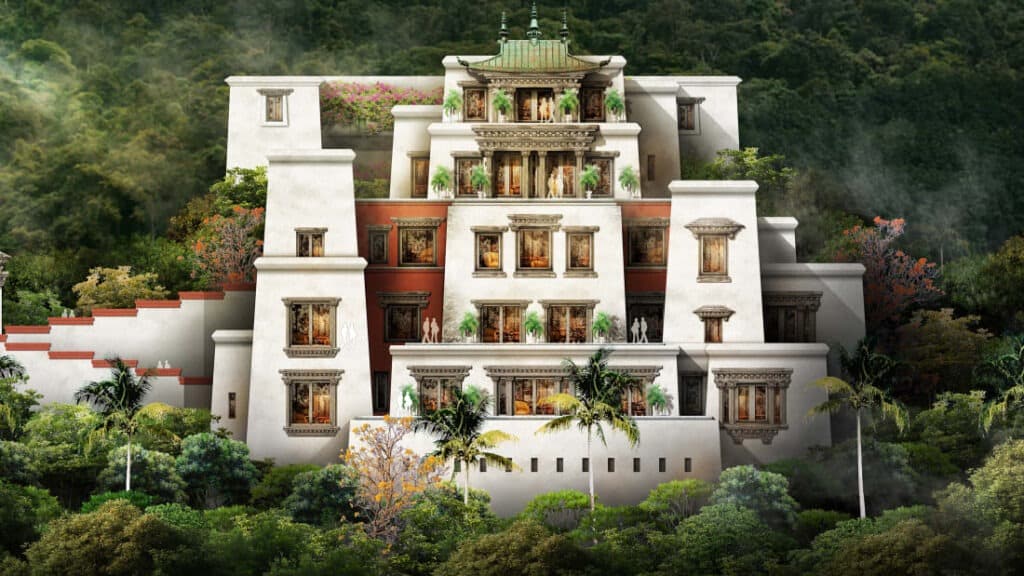
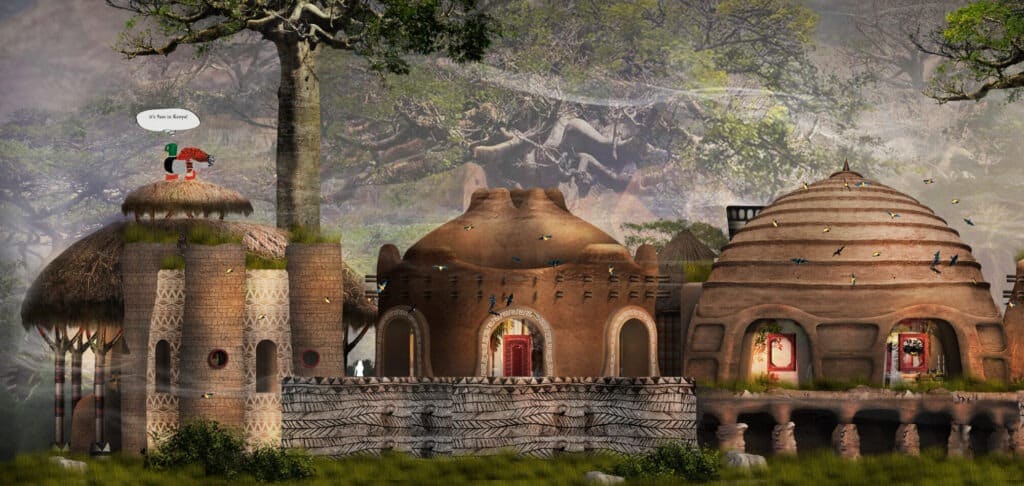
It will take eight years to build, but the first phase should be ready by 2023 and open to the public. The masterplan is made up of three zones – Africa, Asia, and Australia. Each one will have local species living in their “natural habitat” and a luxurious hotel where visitors can stay.
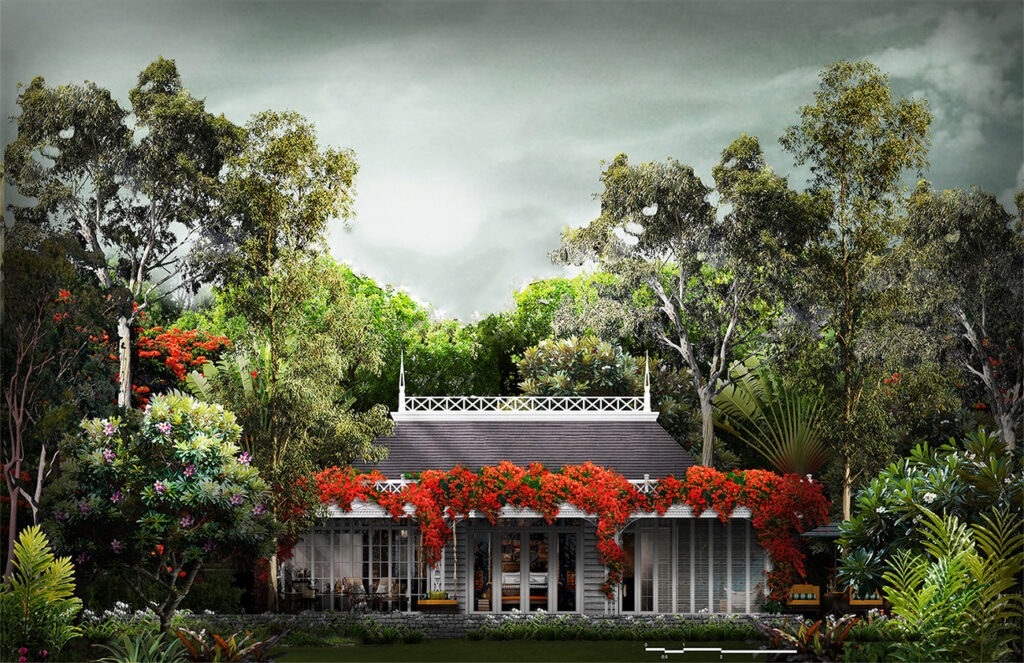
The Australian zone will house the Waldorf Astoria WorldWild and Bensley’s hotel brand Shinta Mani (a 28-tent camp called Kamp Koala). There will also be hotels by Conrad, Four Seasons, and Canopy by Hilton. Overall, there will be 2,400 hotel rooms where visitors can admire and observe the animals outside from behind glass.

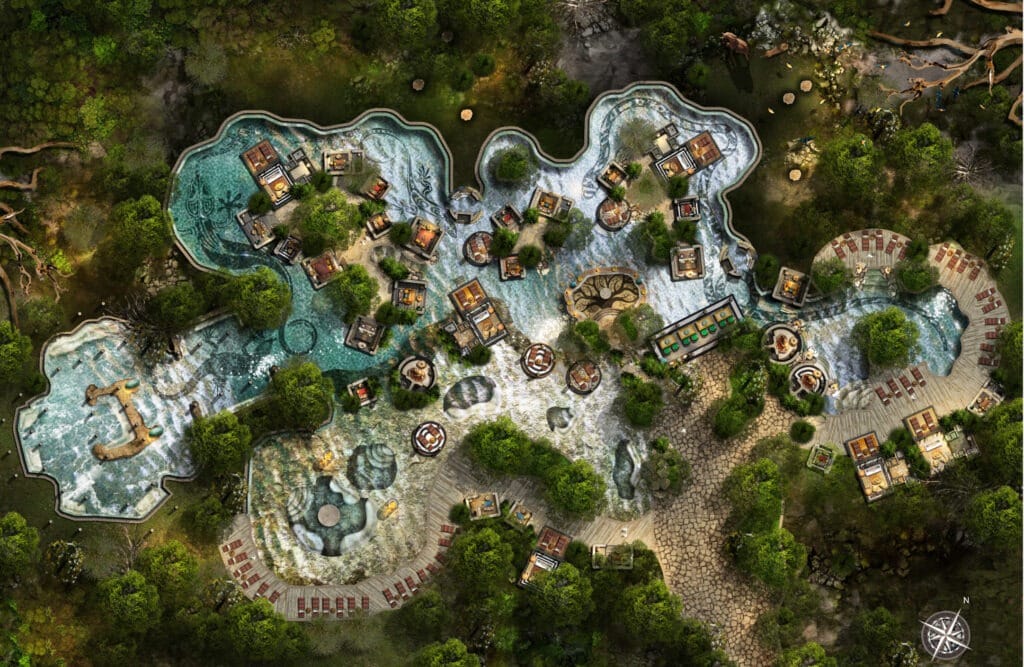
Each zone (continent) will be split into segments to include areas for rhino, grazing herds, an elephant park, and outdoor aviaries. All the regions will be connected by train with seven different stops along the route. Each one will have a theatre broadcasting program.
Bensley told Globetrender in an interview:
The perimeter will be the hotels. Unlike a safari, you won’t be able to drive through it. You do have them in China, but the one I went on, there was a gazelle giving birth in the road, and someone was honking its horn at it because he was late for dinner or something. This isn’t a show – it’s real life.
Because the Chinese government is totally behind us, they will be helping us with moving animals from existing zoos. We are not making a circus here. At Guangzhou zoo, they make tigers jump through hoops every hour. We will be providing a sanctuary.
Among the animals they’re looking to rescue from Chinese zoos are golden snub-nosed monkeys, elongated tortoises, and white rhino – but the list goes on. There will be no predators, so no need for enclosures to keep animals apart.
Bensley said:
That’s when you run into problems. I have this zoologist on staff for me full time, so we are working out where we can get these animals from and what will be the mix. We know that kangaroos can love happily with gazelles, for example.

China’s Communist Party leaders approved the project last year and will help find abused animals from China’s zoos and relocate them to WorldWild. This is a significant step in the right direction for the country’s ethical and environmental awareness.
Bensley said:
I met with the highest leader of the Communist Party of South East Asia and his 45-person entourage in a giant ballroom and presented 800 meters of drawings of WorldWild. My client wanted us to build them a zoo, but I don’t really like zoos, so I said I would see what I could do. We looked at all the zoos in China – there are about 15 or so, and there are some really bad zoos with animals in horrible cages – and I said let’s make a zoo for people, and all the animals can run wild.
The government has approved all our plans, and the most exciting thing is that we have a train that goes around and stops at different places in a very theatrical matter, where we will pound home that message that wildlife should not be an item on the dinner menu. If the buying stops, then the killing will stop. We hope to influence maybe ten million Chinese people a year in this way.
Bensley has made bold environmental pitches before. For example, his Shinta Mani eco-camp in Cambodia is located on a site that he bought at an auction with his business partners. The land was being sold as a potential titanium mine. Also, he recently published a white paper titled “Sensible Sustainability Solutions.” It’s an open-source document detailing twenty suggestions for how hotels should be built with sustainability as part of their DNA.
There’s another ambitious wildlife rescue project in the works in South Africa called Noah’s Ark. That one is a little different. While there will be a section for visitors, the project’s primary focus is to save two of every kind of species on the planet and document the process.


