
Buying furniture online has a well-known weak spot. A product photo shows what a chair looks like, but not how it will sit in a specific room. Will the sofa block the radiator? Does the side table look tiny next to a deep armchair? Shoppers often find out only after delivery. AI tools that build a 3D model from a single photo are starting to close that gap. They let anyone test a piece in a room plan before it’s bought, which has practical benefits for both budgets and waste.
From Pixels to Geometry
A photo is a flat grid of colored pixels. A 3D model is a set of points, edges, and surfaces with real depth. Getting from one to the other used to need either a skilled modeler or a scan from many angles.
Single-image 3D generation works differently. Models trained on large collections of 3D objects and images learn how shapes usually look from all sides. Given one photo of a chair, the system estimates the depth of what it can see. It then predicts the parts it can’t, such as the back of the legs or the underside of the seat, based on what similar objects tend to look like. The output is a mesh, the same kind of surface model used in design software and games.
The prediction step is important to understand. The hidden sides of the model are an informed guess, not a measurement. For most furniture that guess is close, because chairs, tables, and sofas follow familiar structures. For unusual or asymmetrical pieces, the back of the model may differ from the real object.
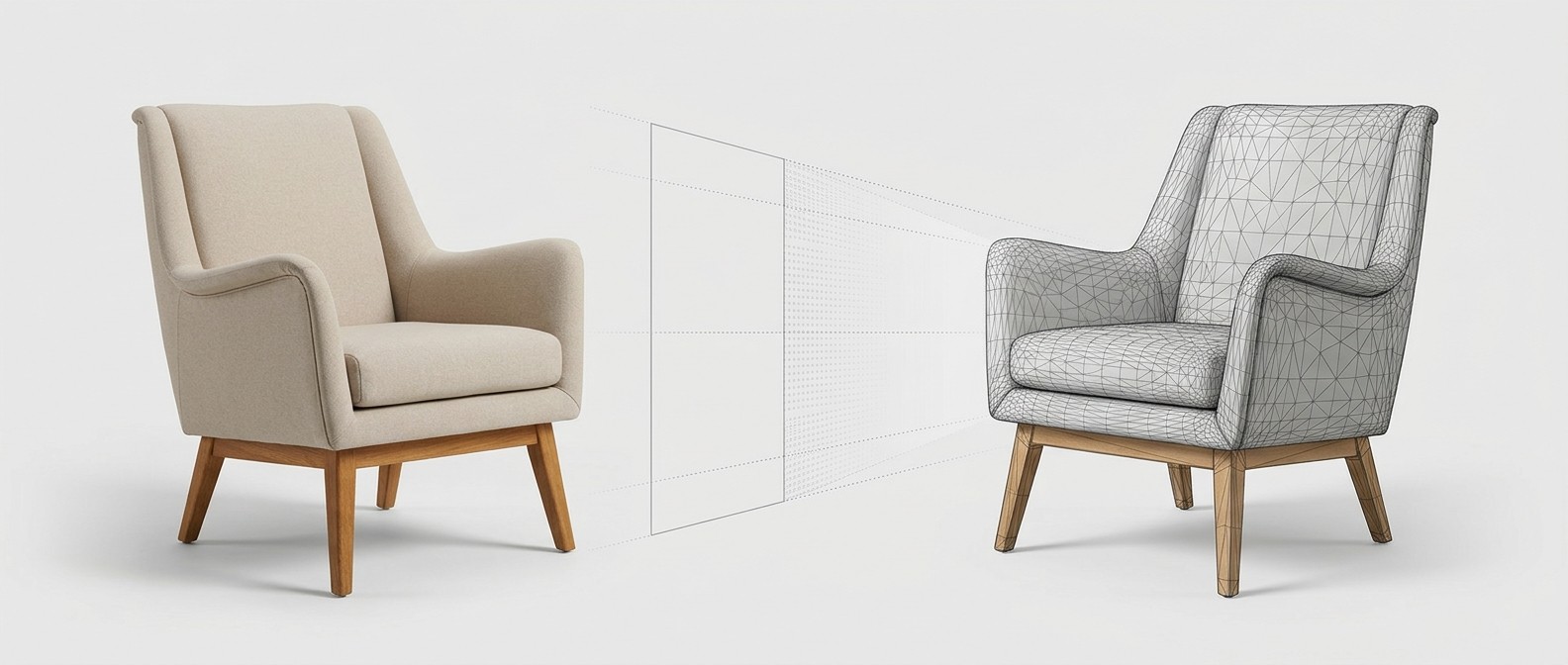
What the Tools Actually Do
Several tools now offer this for furniture. Among them is FurniMesh, a furniture-specific converter that takes one photo of a single piece and returns a textured model. It exports native files for design programs, SketchUp and Blender among them, and users can try it before paying for downloads. Like most tools of this type, it works on one object per photo rather than whole rooms.
The quality of the result depends heavily on the input. A clear three-quarter view on a plain background gives the system much more to work with than a cropped, dim, or straight-on shot.
| Input Photo | Likely Result |
|---|---|
| Three-quarter view, even light, plain background | Good overall shape and proportions |
| Straight-on front view | Depth is harder to judge; the piece may come out too thin or too deep |
| Heavy shadows or reflections | Edges and surfaces can be misread |
| Object partly hidden by other items | Hidden parts are guessed and may be wrong |
The model’s size also needs a manual step. A photo does not show scale, so the user should set the real dimensions, usually listed on the product page, once the model is in the design program.
Why This Matters for Wrong-Size Purchases
A common reason for furniture returns is simple: the item doesn’t fit, or it fits but overwhelms the room. A sofa listed at 90 inches can look reasonable in a photo and still leave only 20 inches of walkway in a narrow living room.
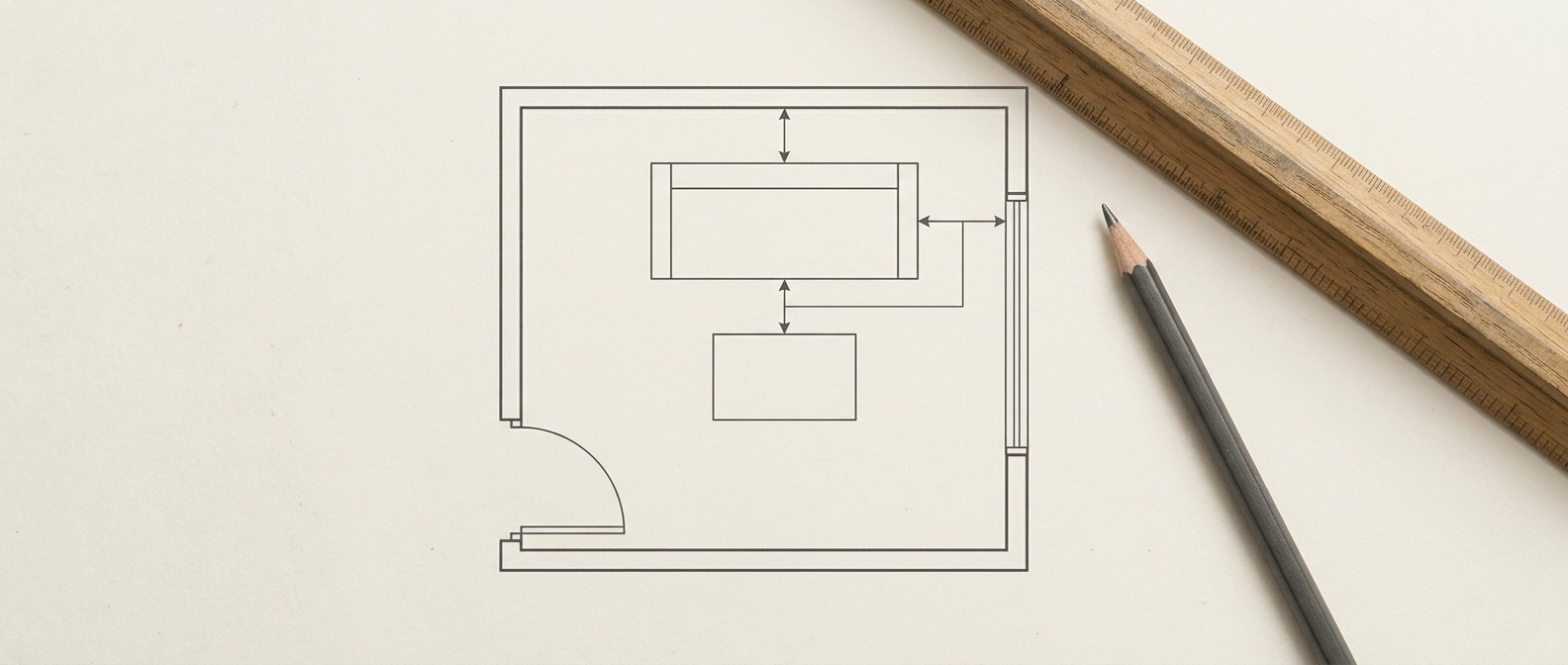
With a 3D model scaled to the listed dimensions, a shopper can place the sofa in a simple plan of the room and check the clearances first. Designers often recommend around 30 to 36 inches for main walkways and roughly 18 inches between a sofa and a coffee table, as Better Homes & Gardens notes in its sofa spacing guidance. Those checks take a few minutes in a model and are hard to judge from a photo alone.
The Waste Side of the Question
Furniture is a large and stubborn part of household waste. According to the U.S. Environmental Protection Agency, furniture and furnishings made up 12.1 million tons of municipal solid waste in the United States in 2018, about 4.1 percent of the total. The same data shows that about 80 percent of that furniture went to landfill, with most of the rest combusted for energy recovery. The EPA also notes that, apart from mattresses, no measurable data was available on furniture recycling.
Better planning won’t solve that problem by itself. But each piece that is bought at the right size the first time is a piece that doesn’t need to be returned, resold, or thrown out. Bulky returns also carry their own transport footprint, since a sofa has to travel back through the delivery network.
Planning works in the other direction too. A 3D model of a piece someone already owns makes it easier to see whether it still works in a new home after a move. That can keep a well-made table in use instead of replacing it. For more ways to cut what a home sends to landfill, see these strategies for shrinking your household waste footprint.
Where the Technology Still Falls Short
Single-photo 3D generation is useful, but it has limits that buyers and designers should keep in mind.
The hidden sides are predicted, not measured. Fine details such as carved trim, woven cane, or thin metal frames can be simplified. Materials in the model may carry the photo’s lighting, so colors are a rough guide rather than a true sample. Anyone relying on the model for a tight fit should check it against the manufacturer’s listed width, depth, and height, not the model’s shape alone.
For these reasons the tools work best as a planning aid, answering the question of whether a piece will fit and how it will look in a space. They are not a substitute for a fabric swatch or a measured drawing of a custom piece.
A Smarter Way to Plan a Room
The broader shift is that 3D planning no longer needs specialist skills. A homeowner can measure a room, build a simple box in free design software, and fill it with models made from the photos of real products under consideration. Professionals can do the same faster, testing more options with clients before anything is ordered.
That puts more of the decision-making before the purchase, where mistakes are cheap, rather than after delivery, where they are expensive for the buyer and wasteful for everyone else.


