
Eco-conscious scientists at the University of Edinburgh (UoE) use an engineered form of Escherichia coli (E. coli) bacteria to transform plastic bottles into vanillin, the main compound of vanilla flavoring.
In recent years, discoveries have demonstrated how plastic-eating bacteria, Superworms, honeycomb moth larvae, enzymes, and even edible mushrooms, could help tackle the colossal plastic waste problem. However, the latest research from UoE is pioneering because, in addition to breaking down single-use plastics, it also turns them into a valuable ingredient.
In the study, the UoE scientists focused on polyethylene terephthalate (PET) since it’s the most commonly used plastic. Each year, PET packaging from food containers, shampoo bottles, soda bottles, and more generates roughly 50 million tons of waste.
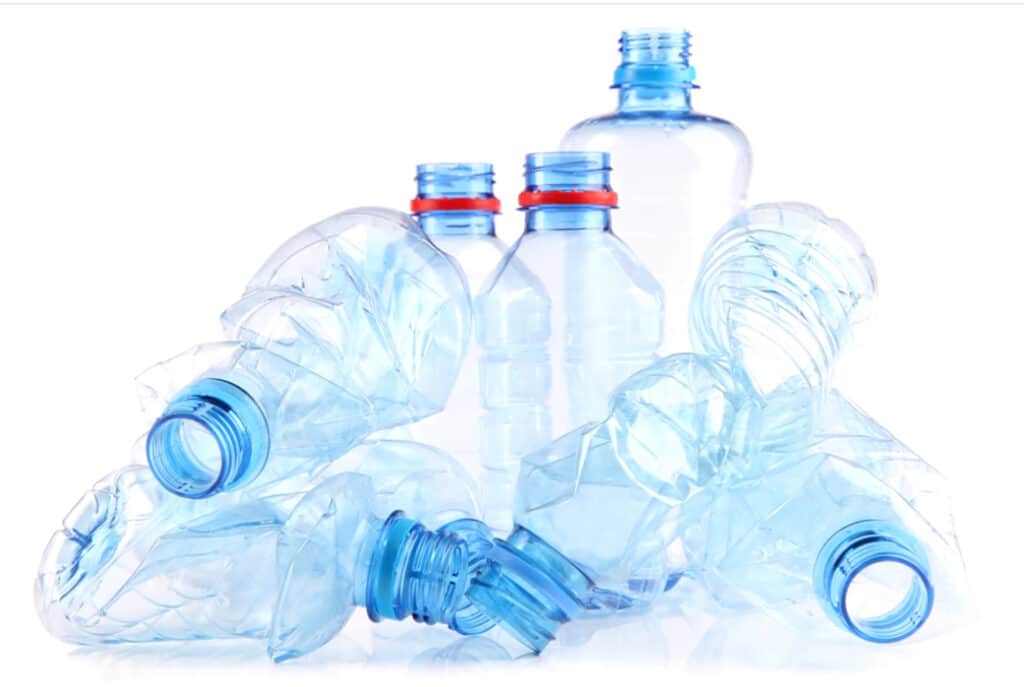
PET can be converted back into its original building blocks to produce more PET plastics via existing recycling methods. However, the team explored how they could turn it into something else entirely. They created a technique that uses an engineered form of E. coli bacteria to target a PET waste product, known as terephthalic acid (TA). After fine-tuning chemical reactions, the bacteria were subsequently added to degraded PET plastic bottles, where they effectively converted 79% of the TA to vanillin.
Joanna Sadler, the study’s first author, said:
This is the first example of using a biological system to upcycle plastic waste into a valuable industrial chemical, and this has very exciting implications for the circular economy. The results from our research have major implications for the field of plastic sustainability and demonstrate the power of synthetic biology to address real-world challenges.
Vanillin is the prime chemical component of extracted vanilla beans. It has an endless range of applications beyond the food industry, including serving as an ingredient in cosmetics, cleaning products, anti-foaming agents, and herbicides. Therefore, once the scientists demonstrate how their technique could be scaled large, it could offer a new sustainable source for a product the world uses tens of thousands of tons of annually.
Publishing editor Dr. Ellis Crawford, of the Royal Society of Chemistry, added:
This is a really interesting use of microbial science at the molecular level to improve sustainability and work towards a circular economy. Using microbes to turn waste plastics, which are harmful to the environment, into an important commodity and platform molecule with broad applications in cosmetics and food is a beautiful demonstration of green chemistry.
The ground-breaking research was published on June 10, 2021, in the journal Green Chemistry.


