
The pervasive nature of plastic pollution makes microplastic an extremely challenging crisis to tackle. Microplastics are plastic particles smaller than 5mm in diameter—tiny fragments that are extremely tough to track. Microplastics are released into the environment during the production and breakdown of items like grocery bags, water bottles, car tires, or everyday activities such as washing synthetic clothes (like nylon) and washing with micro-beaded soaps.
People have developed ways to capture these minuscule fragments—from employing bacteria that can quickly break down plastics or enzymes embedded in plastics to make them biodegrade within days after usage. A separate food-derived study examined a related biological capture strategy: the bacterium Leuconostoc mesenteroides CBA3656 bound nanoplastics and increased their passage out of the gut in mice, although human safety and effectiveness remain unknown. Another example arises from microbiologists at Hong Kong Polytechnic University, who have devised a sustainable approach to trapping tiny plastic particles using a sticky bacterial biofilm.
Bacteria naturally tend to group and stay glued to surfaces. The phenomenon produces an adhesive substance known as “biofilm.” The PolyU microbiologists have taken advantage of this sticky bacteria property to make tape-like microbe nets that capture microplastics in polluted water. What’s leftover is an easily disposable and recyclable blob of microplastics.
Dr. Joanna Sadler, a researcher at the University of Edinburgh, who was not associated with this study, stated:
“This is a really innovative and exciting application of biofilm engineering to address the plastic pollution crisis. One of the biggest challenges in dealing with microplastics is capturing such small particles so they c.an be degraded and removed from the environment. Liu and co-workers have demonstrated an elegant solution to this problem, which holds great potential to be further developed into a real-world wastewater treatment technology.”
Liu and the team led by James Kar-Hei Fang and Professor Song Lin Chua engineered their biofilm from a germ called Pseudomonas aeruginosa. This species of bacteria can be found in all ecosystems and has previously been demonstrated to colonize microplastics in ecosystems. The biofilm captures rogue microplastics floating in water in a bioreactor, aggregating them, making them heavy, so they eventually sink. In bioreactors, this makes the microplastics easier to gather.

After the biofilm has captured the microplastics and sunk them to the reactor base, the researchers utilized a biofilm-dispersal gene that caused the biofilm to release the microplastics. What’s left is a bulk of collected microplastics ready to recycle.
Study author Yang Liu said that this:
“…allows convenient release of microplastics from the biofilm matrix, which is otherwise difficult and expensive to degrade so that the microplastics can be later recovered for recycling.”
Dr. Nicholas Tucker, a senior lecturer in molecular microbiology at the University of Strathclyde, who was not involved in the analysis, said:
“In terms of the capture of microplastics, it’s an interesting development. Whether it’s scalable is going to be interesting to see. There will need to be more research on what types of surfaces to grow the biofilm on.
However, research like this provides a good example of the many uses for microbial biotechnology and what big feats tiny bacteria can accomplish. In general, this shows that microbes can and will play a role in every stage of the life cycle of plastics.”
Microplastics are a massive issue, and more techniques are needed to eliminate them from our environment safely. Liu, who introduced the extensive research at the Microbiology Society’s Annual Conference, said:
“It is imperative to develop effective solutions that trap, collect, and even recycle these microplastics to stop the ‘plastification’ of our natural environments.”
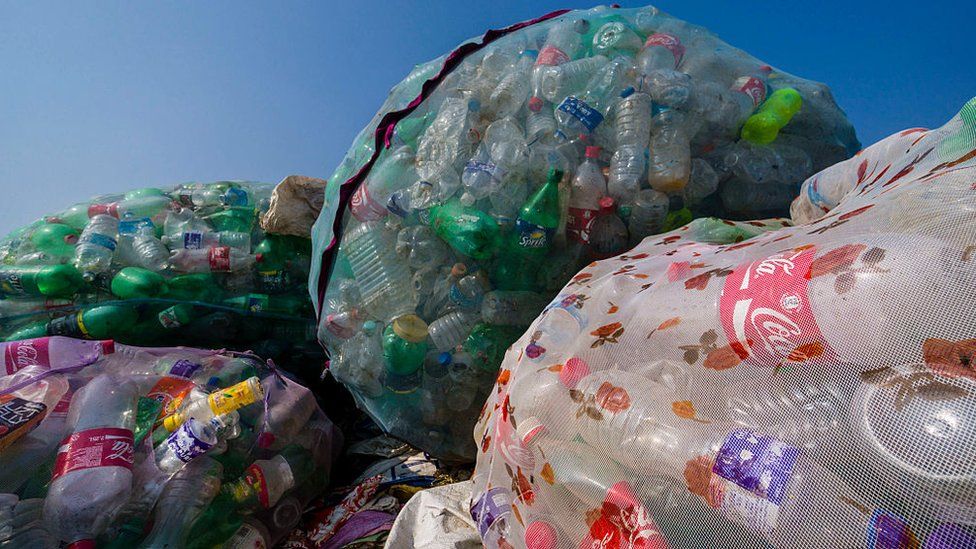
The potential health risks of microplastics are becoming more apparent by the day, with a slew of troublesome studies. For example, research has found that microplastics stick around in human organs, cause immune cells to die three times faster, affect the shape of human lung cells, cause aneurysms in fish, and more.
Studies have also shown that microplastics will make their way up the food chain after being ingested by tiny marine creatures. Microplastics were found in over 114 aquatic species in 2018, according to the International Maritime Organization. Plus, they are present in water, sodium, milk, fruits, vegetables, and more. Adults eat and inhale a teaspoon of microplastics a week, and bottle-fed babies consume up to 16 million pieces a day!
Liu said:
“They are not easily bio-degradable, where they retain in the ecosystems for prolonged durations. This results in the uptake of microplastics by organisms, leading to the transfer and retention of microplastics down the food chain. Due to their huge surface area and adsorption capacity, microplastics can adsorb toxic pollutants, such as pesticides, heavy metals, and drug residues at high concentrations. This leads to biological and chemical toxicity to organisms in the ecosystems and humans after prolonged unintended consumption of such microplastics. Moreover, microplastics are also difficult to remove in wastewater plants, resulting in their undesired release into the environment.”
The group considers this biofilm study a proof-of-concept but imagines the approach used in wastewater plants preventing microplastics from seeping into the ocean. The coming phase of their research will involve moving the proof-of-concept from the lab to an ecological setting.
Liu said:
“We next plan to isolate and identify natural pro-biofilm forming bacterial isolates either from the sewage or from aquatic environments, where they display heightened abilities to colonize and form biofilms on microplastics.”
While these findings are preliminary, the invention could provide a means of sustainably lowering plastic pollution levels by simply using something found in nature.


