
Basic life support, or BLS, generally refers to a type of medical care used by first responders, public safety professionals, and healthcare providers to relieve anyone experiencing cardiac arrest, respiratory disease, or obstructed pathway.
It is an essential pre-hospital care in emergencies that can increase the chances of survival. The primary goal of BLS is to improve circulation and ventilation to vital organs by clearing airway obstruction, cardiopulmonary resuscitation (CPR), and automated external defibrillator (AED).
The techniques are crucial yet simple and effective so you can act swiftly and confidently to preserve life. A basic life support certification is a credential that signifies your competence in providing emergency care.
Steps involved in BLS
The steps to provide basic life support are:
Step 1: Recognition and activation of the emergency response system
The first step involves recognizing sudden cardiac arrest and activating the emergency response system by calling the emergency helpline.
Step 2: Early CPR
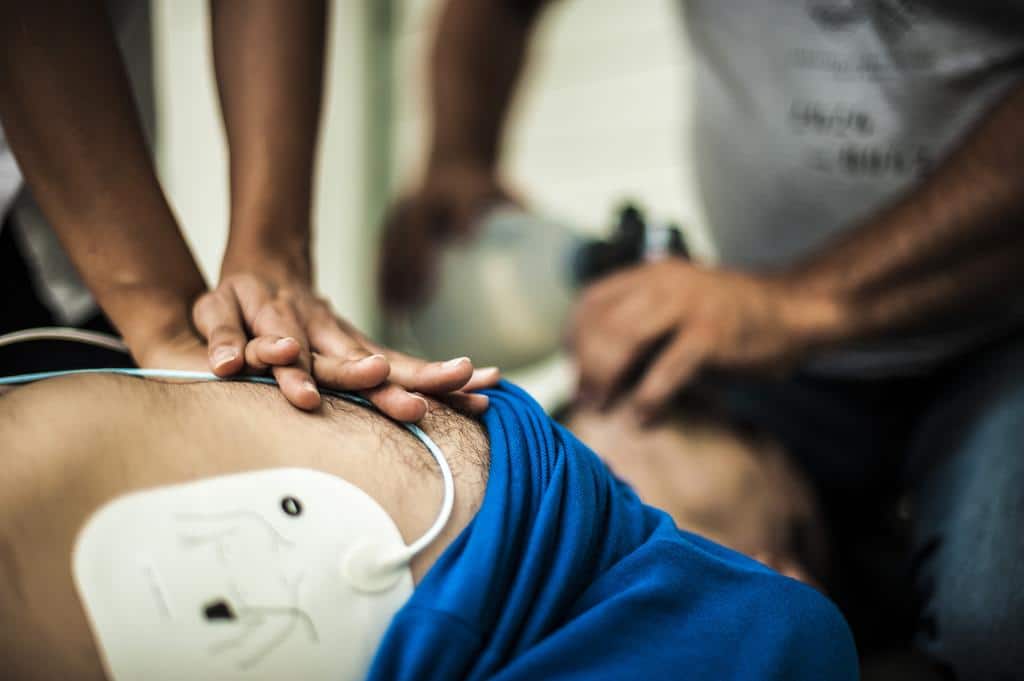
The subsequent step includes chest compressions and rescue breaths. These actions help circulate oxygen-rich blood to the brain and other vital organs, preventing tissue damage and enhancing survival rates.
Step 3 : Rapid Defibrillation
The third step involves using a defibrillator or AED to deliver a shock to the heart, which helps restore a normal heart rhythm.
Basic life support certification process
To obtain your BLS certification, you need to follow the following steps:
1. Select a reputable course provider
Various organizations offer basic life support certification courses. To ensure you receive quality education, keep the following things in mind while choosing a course provider:
Recognition
Ensure that the course provider is recognized by the certified bodies and that the course content adheres to the latest guidelines.
Employer approval
Confirm that your employer recognizes the certification and that it meets your workplace’s specific requirements.
Cost
Compare the cost of different course providers and ensure transparency regarding fees. This approach will help you obtain quality education at a competitive price.
Mode of education
When selecting a course provider, check its schedule. Many providers offer online and hybrid courses to enhance accessibility for learners. Check your priorities before making a choice that aligns with your preferred learning format.
2. Register for the course
Register for the course after selecting a provider that offers courses that meet your learning requirements. You must complete a basic registration form and pay the required course fees. You will then be provided with course materials.
3. Theoretical training
It involves learning anatomy and physiology relevant to resuscitation and basic principles of timely intervention with basic life support.
4. Practical skills training
In practical classes, candidates do hands-on training on manikins under the guidance of certified instructors. It helps them achieve accuracy and builds muscle memory and confidence.
5. Assessment
Once you have completed your training, you must take an exam and a practical skill test to demonstrate your proficiency. After passing both of these tests, you are eligible to receive your certification.
6. Certification
After successful completion of the course and assessments, you will receive your BLS certification card. A BLS certification is valid for two years, after which you need to attend a refresher course to renew your certification.
Importance of BLS certification
The importance of basic life support certification extends across various sectors, from healthcare, workplace, and community safety to personal empowerment:
1. Healthcare sector
A BLS certification is often mandatory for healthcare professionals because of the following reasons:
Professional competence and quick response
It allows healthcare professionals to handle life-threatening situations and provide immediate care, which increases their chances of survival.
Interdisciplinary coordination
It facilitates understanding and approach among healthcare teams. Thus, it improves coordination during emergencies.
2. Community Safety
Having a BLS certificate plays a vital role in community safety by:
Providing bystander CPR
The active, efficient response allows for immediate emergency care for anyone experiencing sudden cardiac arrest, significantly increasing their chances of survival until professional help arrives.
Public education
It raises awareness about the importance of timely management of BLS techniques and encourages more people to acquire them.
3. In the workplace
Many workplaces prefer candidates with a BLS certificate to ensure occupational safety. Industries like construction and manufacturing are at higher risk of accidents, so BLS-certified workers are preferred as they can respond effectively and help reduce the severity of incidents.
4. Personal empowerment
It empowers individuals with confidence and the ability to act in emergencies. This gives a sense of preparedness to provide life-saving care to their loved ones.
Conclusion
Basic Life support certification is an important credential that signifies your efficacy in emergencies. It develops the skills and knowledge to act decisively in life-threatening situations. It is a vital public health and safety component, not just a formal certificate. It improves survival rates by providing adequate care in cardiac and respiratory emergencies.
BLS certificate has broad applications, from enhancing healthcare practices to fostering personal responsibility. Thus, BLS certification is a foundational aspect of emergency preparedness that encourages a culture of readiness and safety in various settings.


