
Thale cress, a common weed in the cabbage family (also known by its scientific name Arabidopsis thaliana), has proven itself to be a hero in disguise. Scientists have long dismissed it as not being medically useful. Still, plant biologist Alessandra Devoto, Ph.D., a researcher and professor at Royal Holloway University, thought it had more to offer and began examining its potential medicinal properties in 2006.
After several years of study, she discovered that the white-flowered roadside weed has anti-cancer properties and stopped breast cancer cells’ growth in the lab. It could be the solution to better treatments for the disease because it doesn’t damage healthy cells like most cancer therapies today. It’s wonderful news, seeing as one in eight women in the UK alone are affected by breast cancer. This discovery could lead to chemotherapy treatments without side effects.
Prof Devoto and her colleagues treated Thale cress leaves with the plant hormone jasmonate (methyl jasmonate) – a chemical found in jasmine that boosts plant responses to stress. This compelled the plant to pump out more hormones, supercharging the plant and its effects.
Prof Devoto explained:
“Jasmonate is a natural plant hormone, a substance discovered in jasmine that boosts plant responses to stress and a powerful inducer of specialized metabolites in plants, some of which precursors of anti-cancer drugs.”
The team then incubated the treated leaves alongside breast cancer cell cultures. The normal cells in the cultures remained unaffected, but the breast cancer cells stopped growing.
Prof Devoto said:
“The plant is very much like the ‘Cinderella’ of the medicinal plant world — no one thought it was so special, but it has shown its true colors via our research. The discovery has important implications in developing treatments for cancer as well as other diseases.
I am truly excited to have discovered the amazing impact this unassuming plant has on breast cancer cells. It just proves that even plants with a non-medicinal pedigree can work for cancer treatment.”
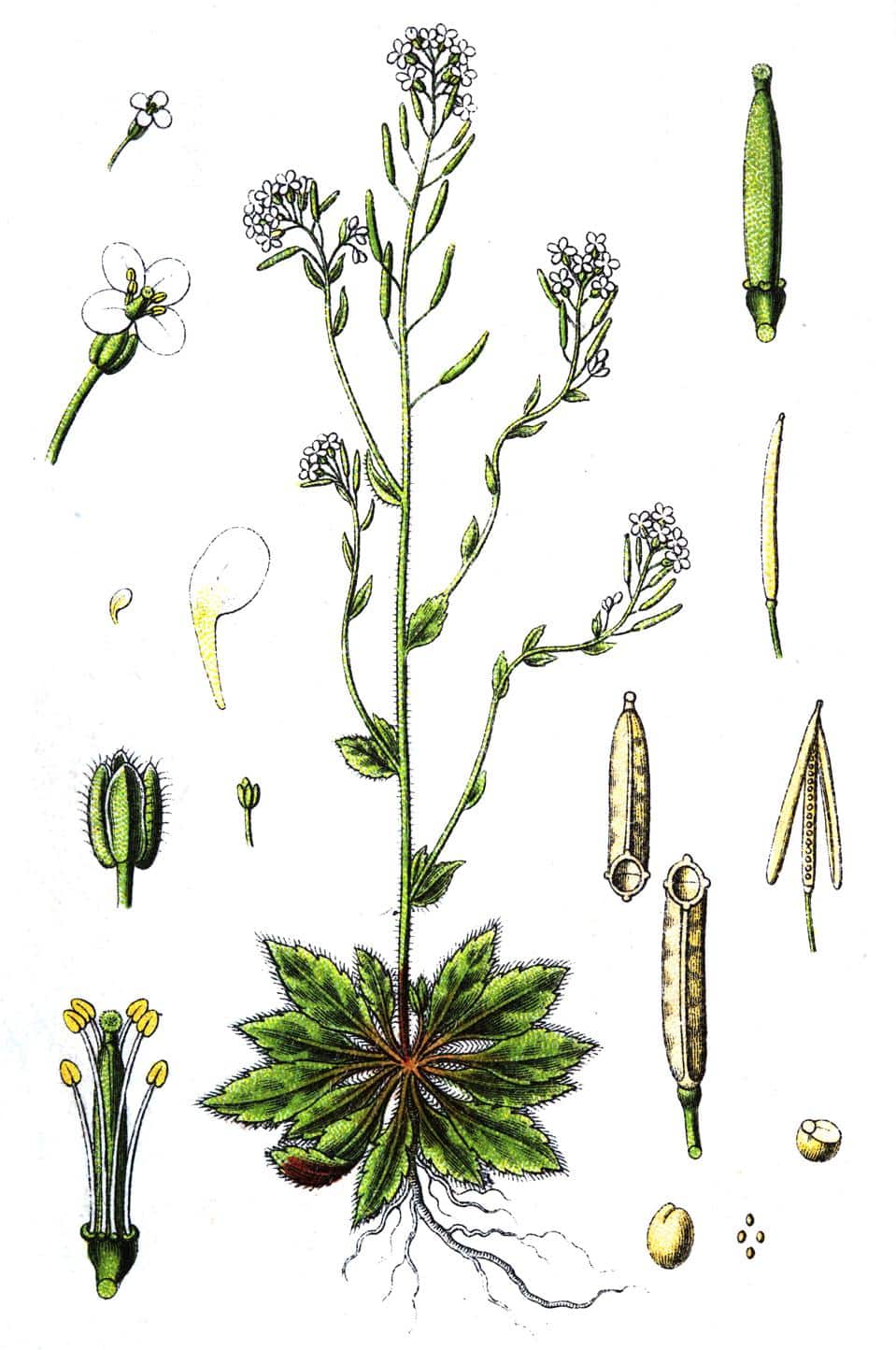
Arabidopsis thaliana is in the Brassica family of plants, including broccoli, cabbage, cauliflower, mustard, oilseed rape, and many others. It’s edible but isn’t typically eaten. It’s commonly used in scientific laboratories studying plant genetics as a model organism for research.
Noting that numerous bioactive chemicals with anti-cancer properties have been extracted from Brassica plants in recent years, Devoto became convinced there was something to find in Arabidopsis.
Devoto said:
“I decided to work on Arabidopsis because it belongs to the cabbage family, and it could have contained similar compounds.”
And while her work is still at an early stage, the results are auspicious. It’s also fascinating how a plant used so extensively in the scientific setting for years has been found to contain anti-cancer properties now.
Co-authors Dr. Amanda Harvey, from Brunel University London, and Prof Nicholas Smirnoff, from the University of Exeter, said:
“Combined with recent progress in metabolic engineering and biotechnology, our approach will also facilitate production and analysis of bioactivities of valuable metabolites from plants on an industrial scale. “We are looking forward to continuing our collaboration with Prof Devoto to identify the plant-derived chemicals that interfere with breast cancer cells as well as with other diseases and to progress this research by gathering more funding to benefit society more widely.”
Prof Devoto added:
“We are looking forward to continuing our collaboration to identify the plant-derived chemicals that interfere with breast cancer cells as well as with other diseases and to progress this research by gathering more funding to benefit society more widely.
Continuation of the work will depend on several variables such as compound chemistry and effectiveness to availability of funding.”
The team’s next step is to pinpoint exactly which compounds made by Thale cress are killing cancer.
This study highlights why it’s crucial to our survival and wellness that we take care of the planet and its biodiversity. Many modern cancer medications have their roots in the plant world, like Taxol – chemotherapy used to treat various cancers. Taxol’s active ingredient originated from the Pacific yew tree. Plant compounds are often used in the making of pharmaceuticals, among other important things.


