
Recent data from a two-year randomized analysis within the COSMOS trial suggests that taking a daily multivitamin might modestly slow the pace of biological age. The research focused on DNA methylation patterns—biological markers that form epigenetic clocks—to track how quickly our internal systems are aging relative to the calendar. While the findings are statistically significant, they highlight a specific signal measured in months rather than a sudden leap in total longevity.
Real-world healthy aging remains a complex puzzle that goes far beyond any single supplement. Your most effective long-term strategy involves a combination of routines that safeguard physical function, cognitive health, and daily resilience. Leading experts emphasize that healthy aging is a mix of nutrition, movement, sleep, and preventive care instead of relying solely on a pill to do the heavy lifting.
Bridging small micronutrient gaps helps stabilize your biological baseline, improving how the body responds to foundational habits that truly define your quality of life as you age. Think of a multivitamin for healthy aging as a supportive tool rather than a primary driver.

Decoding the Multivitamin Aging Signal: Key COSMOS Study Takeaways
Quick Facts: What this Study Found in Plain Numbers
The analysis focused on specific metrics to ensure the results were grounded in high-quality data. Key research parameters included:
- Trial Structure: A prespecified ancillary randomized analysis nested within the broader COSMOS trial.
- Participant Profile: A group of 958 older adults with an average age of roughly 70 years.
- Active Interventions: Daily multivitamin-multimineral (Centrum Silver) compared against a placebo, with cocoa extract tested separately.
- Core Metrics: Five validated epigenetic aging clocks measured via DNA methylation.
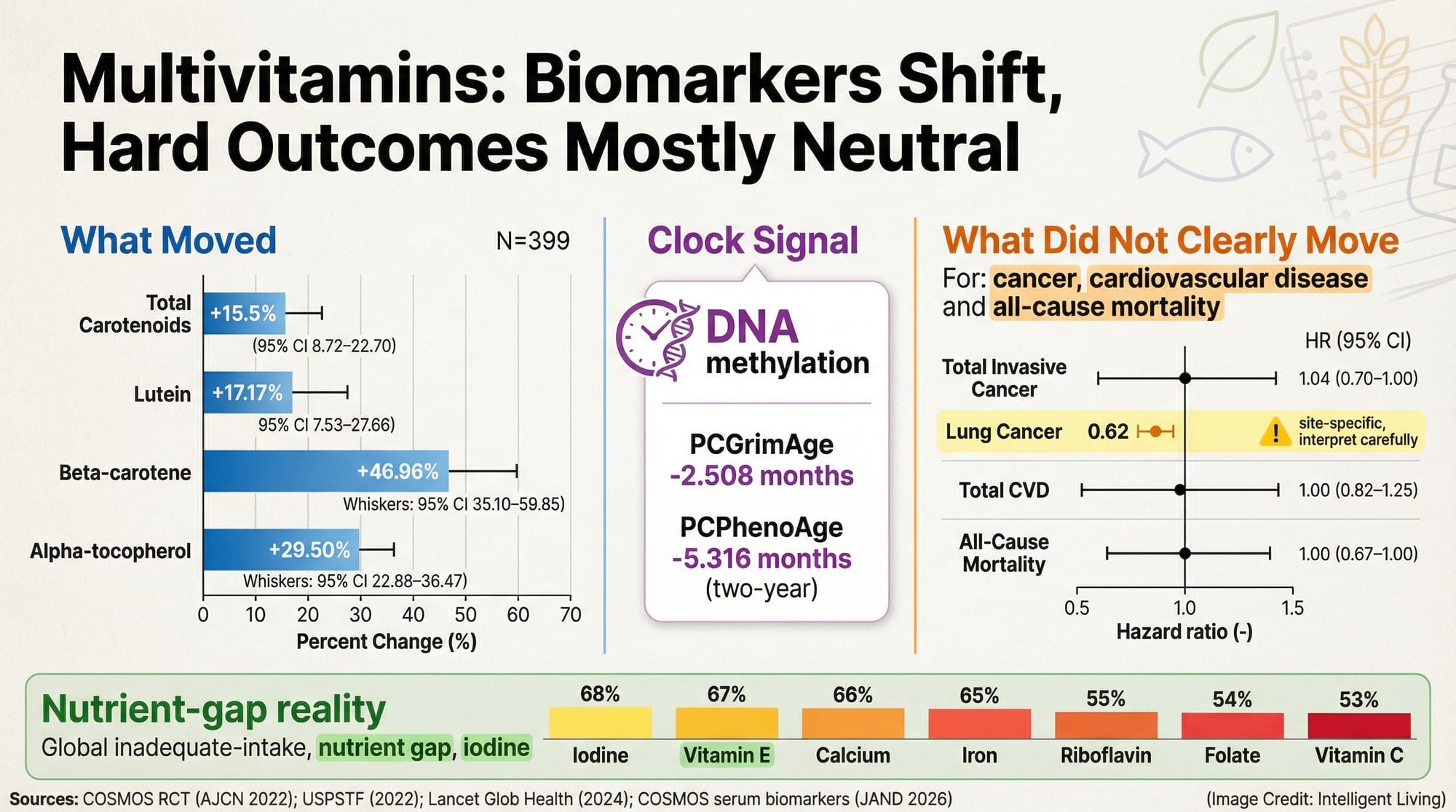
- Primary Result: Statistically significant slowing in two second-generation clocks, PCGrimAge and PCPhenoAge.
These figures highlight that while the effects were small, the measurement precision was high.
The Four-Month Question: What “Slower Biological Aging” Means Here
When someone hears a supplement “slows aging,” they often imagine a dramatic transformation. Instead of a complete biological overhaul, the study reveals a more subtle shift. The measured difference resembles a small adjustment on a biological dashboard rather than a complete rewrite of the aging process. Practically, the multivitamin group saw clock scores advance more slowly, with calculations showing gains in months instead of years.
The phrasing matches estimates of months-level biological changes without suggesting a guaranteed extension of lifespan. Some public summaries translated the effect into everyday language as roughly four months over two years.
A neighbor in their seventies who started a daily multivitamin after routine labs described the habit as a small way to stay on track. That kind of steady routine can be useful, but it helps to keep expectations in proportion to what was actually measured.

Measuring Biological Age: Methods and Results from the COSMOS Epigenetic Analysis
Participant Demographics and Trial Generalizability
Researchers analyzed 958 participants in a prespecified ancillary study within COSMOS, a large supplement trial in older adults. Participants were generally healthy, and the sample demographics limit how directly the findings generalize to younger people or more diverse populations. Data regarding the baseline characteristics of COSMOS trial volunteers clarify who this evidence is most relevant for.
Context matters when translating trial data to personal health. While study volunteers maintain stable routines, real-world usage involves several complicating factors:
- Complex medication combinations.
- Fluctuating daily diets and appetite levels.
- Varying baseline nutrient statuses at the start of supplementation.
Understanding these variables helps clarify how a supplement might behave outside of a controlled research environment.
Factorial Assignment and Registry Rules
The study utilized a specific factorial design to isolate the effects of the multivitamin. Participants were randomized to receive either the active multivitamin-multimineral product or a matching placebo. A simultaneous randomization tested cocoa extract, though that intervention produced no measurable changes in the aging clocks. For those interested in the underlying rules, the official COSMOS study plan and registry record details the eligibility and assignment protocols used.
Tracking DNA Methylation and Epigenetic Clock Scores
Measurements focused on DNA methylation, a chemical tagging system that helps regulate how genes are turned on and off. Epigenetic clocks use thousands of methylation sites to generate a biological score. Because this score moves in sync with aging-related biology, the COSMOS multivitamin epigenetic clock methods and effect sizes show exactly which clocks were used and how the differences were calculated.
Understanding DNA methylation and epigenetic control of gene activity helps visualize what these biological signals are doing in daily life.
Primary Outcomes: Significant Shifts and Unchanged Aging Markers
Three other clocks in the analysis failed to show statistically significant differences between the groups. Such results are common, as different clocks capture various biological features. Several distinct factors influence how biological clocks react to interventions:
- Biological features captured by specific clock models.
- Technical variations in measurement noise and design.
- Individual baseline differences unique to each participant.
These variables underscore why epigenetic clocks serve as surrogate signals rather than definitive clinical endpoints.
Measuring Changes in PCGrimAge and PCPhenoAge Signals
Two measures showed statistically significant slowing: PCGrimAge and PCPhenoAge. These are considered second-generation clocks because they were built to better reflect aging-related risk than earlier clocks. Calling PCGrimAge “mortality-linked” is not a marketing phrase. It reflects the clock’s original development work in the GrimAge development paper connecting methylation patterns to lifespan risk. PCPhenoAge is also rooted in a clinical-risk framework linking phenotypic aging to healthspan-related risk through specific methylation markers.
Such a reaction is understandable, yet the breakthrough remains a biomarker signal rather than a proven clinical outcome.
Explaining Variations in Clock Outcomes
Measurement noise, clock design, and baseline differences can all influence what moves. The biggest interpretive caution is that clock movement is still a surrogate marker, and keeping in mind why epigenetic clocks remain surrogate signals rather than clinical endpoints helps ground these results when headlines get ahead of the data.
Identifying the Groups Most Responsive to Multivitamin Support
Possibly, people with higher biological vulnerability have more room for improvement, especially when a multivitamin closes small nutrient gaps. Exploratory analyses suggested larger effects among participants who were biologically older at baseline, with clock values exceeding their chronological age.
Does a Multivitamin Help You Live Longer? Evidence and the Nutrient-Gap Case
Distinguishing Surrogate Biomarkers from Actual Lifespan Extension
Providing necessary context requires placing clock results beside larger, outcome-focused evidence. Epigenetic clocks serve as surrogate biomarkers; while they effectively track biological trends, they do not always predict real-life health outcomes with certainty.
What COSMOS and Long-Term Mortality Data Show
In the broader COSMOS trial, results for major endpoints like invasive cancer and cardiovascular disease remained largely neutral. Broader trial outcomes are shown in the COSMOS trial results for cancer and cardiovascular disease, which outline how effects varied by endpoint. Observational research with long-term follow-up supports this neutral view. A large US analysis found no clear longevity advantage from routine multivitamin use once major lifestyle factors were considered.
Multivitamins remain useful despite these limitations. The strongest public-health claim, living longer, is not currently supported for generally healthy adults. Current USPSTF recommendations for vitamin supplementation maintain a cautious stance regarding the prevention of chronic disease.
Applying Biological Age Data to Personal Health Monitoring
Treating biological age as a trend line rather than a verdict provides the most utility for those tracking health numbers. This approach aligns with tracking biomarker data as a personal health tool and complements other metrics, such as blood tests that estimate long-term mortality risk within a population context.
The Nutrient-Gap “Insurance Policy” Frame: When a Multivitamin May Be Reasonable
Individuals often view a daily multivitamin as low-cost nutritional insurance rather than a food replacement. This strategy is most effective when specific challenges affect your nutrient intake.
A multivitamin safety net is often recommended when:
- Diet quality remains inconsistent day to day.
- Appetite naturally decreases with age.
- Underlying absorption issues are present.
Especially since vitamin and mineral deficiencies can carry real health consequences when they persist, bridging these gaps helps stabilize physiology.
Prioritizing Whole Foods as a Foundation for Healthy Aging
A caregiver described switching an older parent from erratic meals to a simpler routine, then adding a basic multivitamin to reduce the risk of preventable deficiencies. The pattern mirrors how clinicians typically view multivitamins: essential coverage rather than clinical superpowers.
Establishing a food-first foundation remains the most effective strategy for healthy aging. Nutritious eating habits for older adults make the ‘diet first’ mandate feel achievable. Furthermore, understanding the essential nutrients for optimal health defines the baseline for multivitamin coverage, while a Mediterranean-style approach to longevity provides a practical roadmap for daily meals.
A Safety-First Multivitamin Strategy: Prioritizing High-Impact Longevity Habits
A Safer, Smarter Multivitamin Checklist
Who Should Talk to a Clinician First
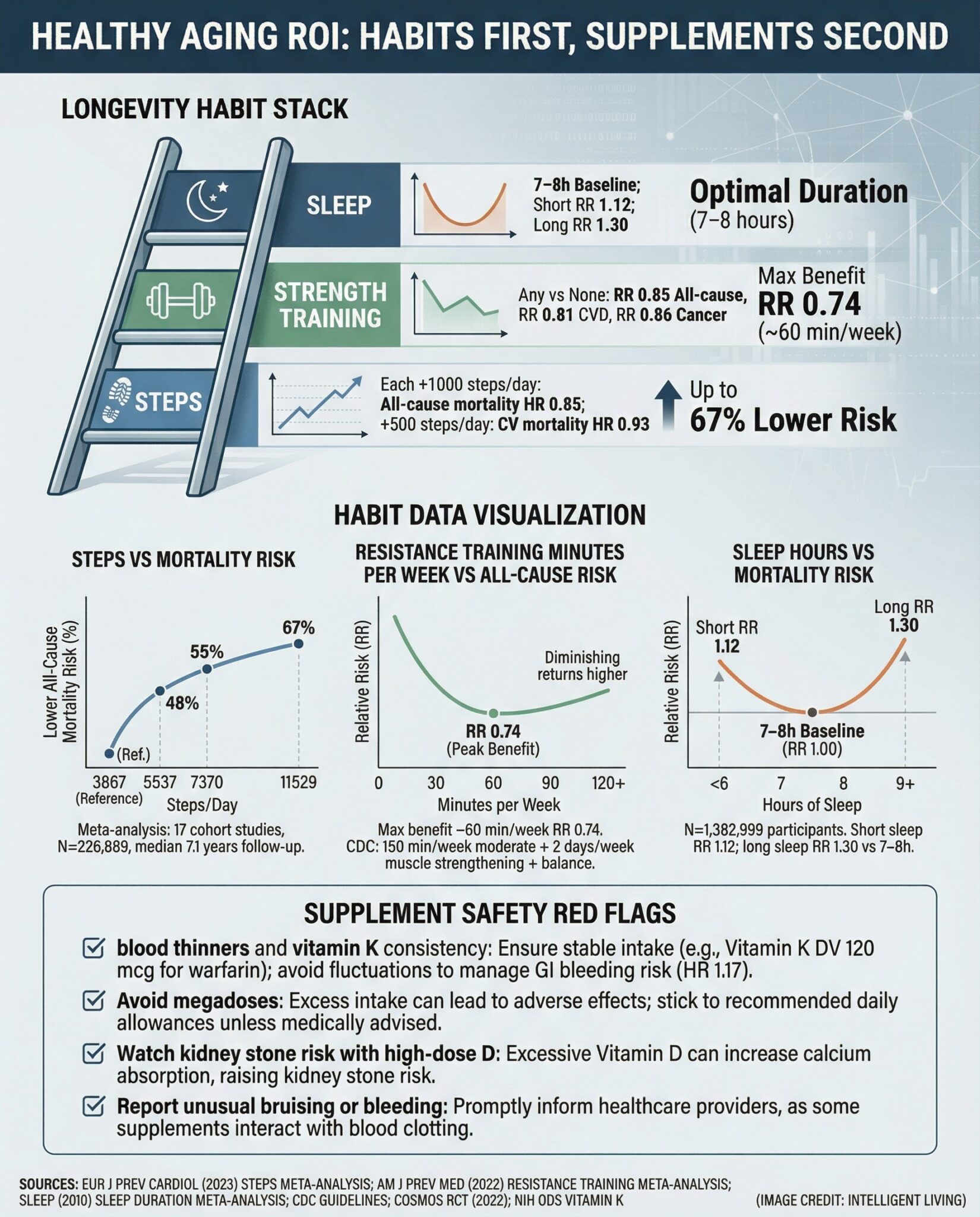
People taking blood thinners, thyroid medications, certain heart drugs, or high-dose minerals should talk with a clinician before starting a daily multivitamin. Interactions are often subtle, and supplements may alter lab values in ways that complicate follow-up care. Anticoagulant users must monitor their vitamin K intake and medication interactions carefully to avoid complications.
What to Look For on a Label (Without Buying Hype)
A practical multivitamin is boring on purpose. Look for balanced doses near typical recommended ranges rather than megadoses, and avoid stacks that promise dramatic anti-aging effects. This aligns with choosing balanced multivitamin formulas without megadoses to provide steady, safe micronutrient support.
Regulation also matters. In the US, supplements are not approved the way drugs are, and label language often leans on structure and function claims that describe how a nutrient supports normal physiology without proving disease prevention. Practical guardrails on choosing supplements and reading labels sit inside the FDA’s consumer guidance on using dietary supplements, including the limits of what labels can truly promise.
Implementation Strategy for Consistent Micronutrient Support
Establishing a consistent routine is necessary to accurately gauge a supplement’s impact. When beginning a multivitamin, follow these tracking steps for eight to twelve weeks:
- Maintain a daily schedule to stabilize nutrient levels.
- Monitor personal signals such as appetite, energy levels, and physical symptoms.
- Keep an updated medication list for clinical review.
- Reassess your needs once dietary stability improves.
If You Want the Biggest Aging Return, Do Not Skip the Unsexy Stuff
Healthy aging yields the highest returns from foundational habits that cannot be bottled. Physical strength and consistent daily movement are the primary drivers of metabolic health and resilience.
Sleep Quality and its Role in Systemic Biological Repair
Consistent recovery is vital. Maintaining proper sleep habits linked to longevity and healthier aging connects daily rest patterns to long-term biological repair, often making it easier to manage nutrition and stress. Better sleep is one reason many people find nutrition easier to manage day by day.
Strength and Mobility for Independence
For the body’s structural side of aging, strength and mobility matter. Practical strategies for building natural strength and muscle pair well with joint care, including daily habits that combat stiffness, to support long-term independence.
The Routine Stack that Feels Real in Daily Life
Maintaining fitness and independence in later years ensures that these daily routines become sustainable habits. A neighbor who began walking daily, fixed sleep timing, and added light resistance work noticed more reliable gains in balance and stamina than from supplements alone. That kind of stacked routine is often where healthy aging stops feeling theoretical.

Assessing the Role of Multivitamins in Your Longevity Strategy
Findings from the COSMOS trial provide a clear signal that daily multivitamin use can influence biological age by slowing specific epigenetic clocks. Such a shift likely stems from better micronutrient coverage, offering the most visible benefits to individuals who begin with higher biological vulnerability. Separate evidence from a multivitamin and cognitive function study offers intriguing data on memory support, though it remains a secondary factor.
Even so, a slower biological clock isn’t a guaranteed shortcut to living longer. The most effective approach treats supplements as a form of nutritional insurance for when your diet falls short. To truly impact how you age, you’ll need to stay focused on the ‘unsexy’ essentials: consistent sleep, strength training, and proactive medical screenings. These remain the primary levers for maintaining independence and vitality throughout your later years.
FAQ: Multivitamins, Biological Age, and the COSMOS Trial Evidence
1. How does the COSMOS trial define biological age?
Biological age is a measurement of cellular health and systemic wear, often tracked through DNA methylation patterns. The Nature Reviews guide to epigenetic clocks explains how these biological models are validated and why they sometimes disagree.
2. Can a daily multivitamin really slow down the aging process?
The study showed a modest slowing of two specific clocks—PCGrimAge and PCPhenoAge—by about four months over a two-year period. This suggests a subtle shift in biological signals rather than a total reversal of aging.
3. Do these results mean I will live longer if I take vitamins?
No direct longevity benefit was proven. While epigenetic clocks are mortality-linked, they are surrogate markers. Broader research has not yet confirmed that multivitamins reduce the risk of death in healthy adults.
4. Is it safe to take a multivitamin with other medications?
Safety depends on your specific health profile. Some vitamins can interfere with blood thinners or thyroid drugs, so you should always review your supplement plan with a clinician to avoid harmful interactions.
5. Who gains the most from using multivitamins for healthy aging?
Individuals with micronutrient gaps tend to see the most benefit. These supplements act as a safety net to ensure your body has the raw materials needed for basic repair. While epigenetic clocks are a primary focus, monitoring telomeres and longevity markers offers another way to assess biological aging without treating any single metric as destiny.


