
The industrial sector has reached a definitive turning point where the boundary between physical production and digital intelligence has effectively dissolved. In 2026, success in the global market demands more than high-quality output; it necessitates an agile digital nervous system that neutralizes disruptions before they reach the factory floor.
Companies treating digital manufacturing platforms as mere software upgrades inevitably lag behind peers embracing them as primary business engines. This shift marks a departure from reactive planning. Instead, it creates a dynamic environment where machines, sensors, and operators provide a continuous stream of actionable intelligence.
In 2026, digital manufacturing platforms serve as the bedrock of industrial operations rather than optional enhancements. They have transitioned into essential components of core business infrastructure, fundamentally altering the industrial landscape.
Just as ERP systems became foundational to enterprise operations decades ago, digital manufacturing platforms now underpin real-time decision-making, supply chain coordination, predictive maintenance, and operational agility. Organizations investing in these platforms are doing more than optimizing manufacturing; they are future-proofing their entire business model.

Centralizing Intelligence for Seamless Integrated Operations
Seamless interconnectivity powers today’s most competitive factories. Machines, materials, and personnel sync through centralized platforms integrating data from every corner of the facility.
Digital manufacturing platforms serve as a centralized command center. They link vital systems like MES, ERP, CAD, PLM, and IoT devices into a single, responsive environment. Real-time alignment provides several operational advantages:
- Bottlenecks are reduced through immediate resource allocation.
- Scheduling shifts from reactive to proactive modeling.
- Leadership gains total visibility across cost, performance, and quality metrics.
This transparency ensures that decisions are based on facts rather than assumptions.
Extensive integration drives significant demand for robust wiring and assembly infrastructure. Companies like CloomTech support these platforms by providing smart wire harnesses and cable assemblies, which ensure signal integrity, reduce electrical noise, and allow modular connectivity across complex digital systems.
Harnessing Manufacturing Data as a Strategic Business Asset
Manufacturing platforms redefine how enterprises value and deploy their data. Instead of treating data as a byproduct, forward-thinking firms harness it as a strategic engine for performance gains and customer engagement.
Effective data utilization includes the following:
- Quality data helps optimize machine calibration.
- Sensor data supports predictive maintenance and energy reduction.
- Workflow data reveals inefficiencies and training needs.
- Historical trends fuel AI models that refine production logic.
Collecting high-quality data starts with reliable hardware. Manufacturers like OurPCB France play a role in this process by supplying high-performance circuit boards for use in industrial sensors, controllers, and monitoring systems. Without stable electronics, even the most advanced platform software struggles to produce meaningful insights.
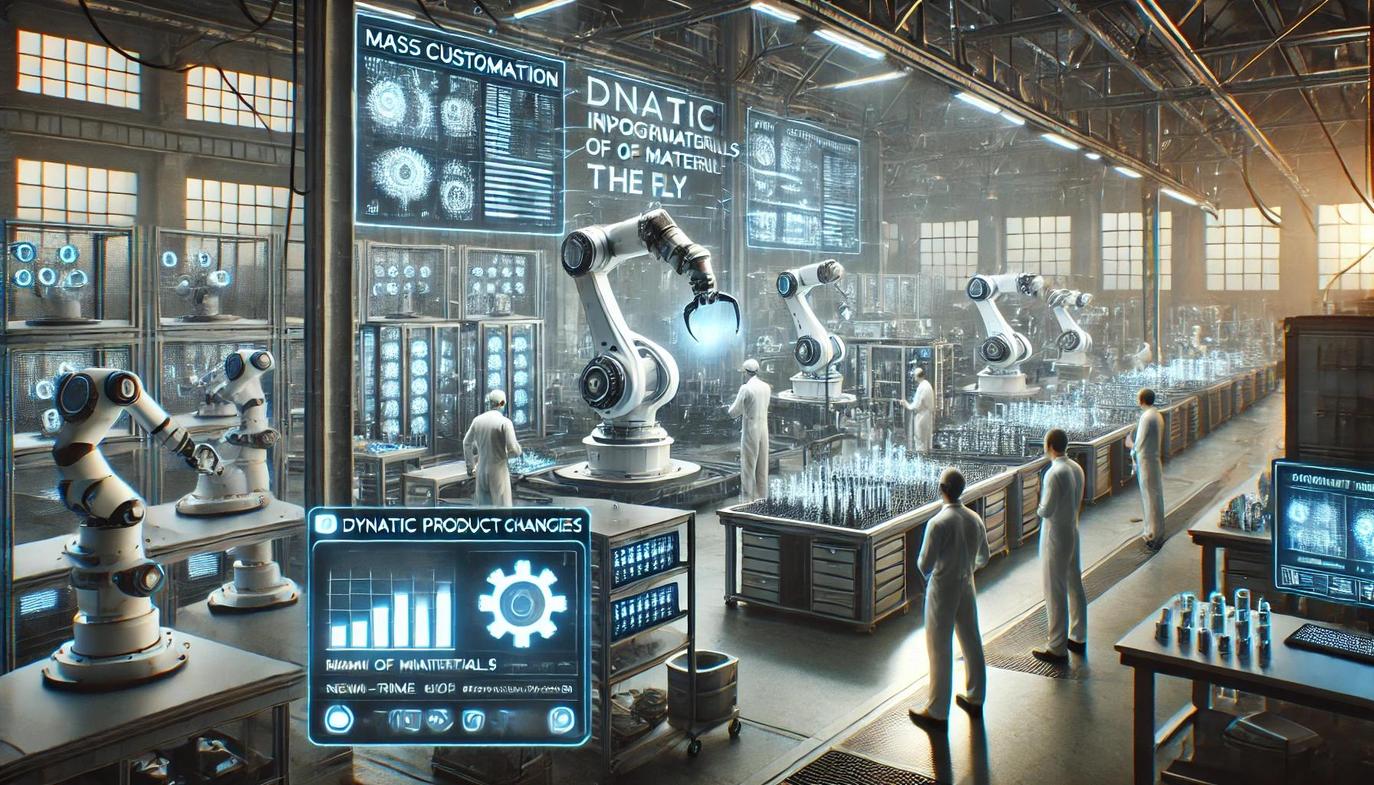
Catalyzing Mass Customization through Digital Connectivity
Digital platforms catalyze mass customization by enabling manufacturers to meet hyper-specific consumer demands instantly. Today’s consumers demand tailored products delivered without extended lead times or premium costs. Platforms allow manufacturers to meet this demand through:
- Dynamic BOM management
- Automated reprogramming of CNC and robotic systems
- Real-time part traceability
- Smart inventory allocation and replenishment
This flexibility is only possible when machine instructions, order data, and design inputs flow seamlessly across departments. Providers like PlacaPCB support this shift by delivering flexible and precise PCB solutions for modular control systems. This enables machines to switch between tasks without hardware changes and helps factories adapt quickly to changing customer needs.
Scaling Supply Chain Resilience with Platform-Led Collaboration
Siloed updates and disconnected vendors no longer suffice in modern production. Digital manufacturing platforms create a shared digital thread across suppliers, engineers, quality teams, and logistics providers.
These platforms bolster supply chain resilience through real-time updates and predictive demand planning. When stakeholders view the same data, they act with greater confidence. Decisions occur faster, reducing errors and eliminating traditional friction points.
This transparency is especially critical in electronic manufacturing, where board-level communication must match system-level expectations. Manufacturers like PCBPortugal support this by delivering PCB assemblies built to specification, allowing real-time integration and ensuring consistency across product lines.
Reducing Innovation Costs via Digital Twin Simulation
While traditional innovation once incurred steep costs from tooling and training, digital systems now accelerate development with remarkable fluidity.
Through simulation, digital twins, and integrated feedback loops, teams test configurations virtually. This allows them to validate parameters without physical prototypes and deploy changes with minimal disruption. Ultimately, these efficiencies reduce development costs and accelerate time to market.
Hardware adaptability is also essential. Manufacturers like PCBLeiterplatte support flexible manufacturing by delivering custom circuit boards for smart modules, which are easily reprogrammed and integrated into evolving digital platforms.

Empowering the Workforce with Connected Digital Ecosystems
Rather than replacing human expertise, digital platforms augment the workforce by automating routine tasks and illuminating complex insights.
Connected ecosystems empower specific roles across the organization by providing tailored insights.
- Operators act on immediate task guidance to maintain floor efficiency.
- Engineers leverage deep analytics to refine and shorten production cycles.
- Managers coordinate shifts using live dashboards for optimized labor allocation.
- Customer service departments provide accurate timelines through connected systems.
These advancements ensure that every team member contributes to the broader strategic goals of the firm.
By offloading routine cycles, platforms enable personnel to prioritize high-level problem-solving and innovation—the very domains where human ingenuity thrives.
Navigating Industrial Volatility as a Strategic Imperative
Adopting a digital manufacturing platform represents a pivotal business strategy rather than a mere technical upgrade. These systems directly influence profitability, risk, and agility. Most critically, they empower manufacturers to navigate volatility and complexity with confidence.
High-performing platforms integrate fully into a company’s operational fabric, linking every cost forecast and product decision to guarantee sustained resilience.

Leveraging Digital Platforms for Long-Term Industrial Resilience
The transition toward platform-centric manufacturing represents a permanent shift in how value is created and sustained. By unifying disparate systems into a single source of truth, organizations gain the clarity needed to navigate volatile markets and complex consumer demands with unprecedented precision. These platforms serve as the catalyst for a more sustainable, efficient, and innovative future where the limitations of traditional manufacturing no longer apply.
Success in this new era requires a commitment to both digital sophistication and hardware reliability. When advanced software aligns with precision-engineered components—from smart wire harnesses to high-performance PCBs—the result is a manufacturing ecosystem that is both robust and remarkably flexible. Embracing this holistic approach ensures that digital manufacturing platforms remain the cornerstone of business growth for years to come.
Essential Insights on Digital Manufacturing Platforms
How do digital manufacturing platforms improve supply chain resilience?4
These systems provide real-time visibility and a shared digital thread that allows all stakeholders to synchronize production schedules and anticipate material shortages.
What role does centralized intelligence play in modern factories?
Centralized intelligence integrates data from IoT devices and enterprise systems to eliminate operational silos and enable proactive, data-driven decision-making.
How do digital platforms make small-scale customization cost-effective?
Yes, by automating the reprogramming of robotic systems and managing dynamic Bills of Materials, platforms make tailored production cost-effective at any scale.
Why is hardware reliability critical for digital manufacturing?
Digital platforms rely on high-quality data from industrial sensors and controllers; stable PCBs and wire harnesses ensure the signal integrity necessary for accurate analytics.
How do these platforms empower the industrial workforce?
Platforms automate repetitive manual tasks and surface complex performance insights, allowing personnel to focus on high-value problem-solving and innovation.


