
Occupants rarely perceive baseline home air quality until physiological triggers or odor thresholds indicate a shift in the environment. Recurring morning headaches, pediatric congestion, and persistent basement odors often serve as early indicators of underlying air quality imbalances. Home air quality improves rapidly once you engage the primary mechanical and habit-based controls. This guide turns standardized guidelines for a room-by-room indoor air plan into a practical upgrade map that works in real life.
Effective management of home air health requires a shift from reactive fixes to a systematic ‘IAQ Stack’ approach. By focusing on source control, ventilation, and filtration in unison, occupants can stabilize the environment against invisible triggers that often degrade respiratory comfort and cognitive performance. This structured methodology ensures that every air quality upgrade yields measurable improvements in the living space.
Adopting these standards transforms a residence into a sanctuary where home ventilation and advanced air filtration work silently to sustain a healthier daily routine.

Start Here: The Indoor Air Quality Foundation
The Fastest Way to Improve Indoor Air Quality is to Fix the Right Levers First
The Four Essential Control Levers for Home Air Quality
Improving indoor air quality is rarely about a single heroic purchase. It is a sequence of clear decisions that reduce pollutant sources, bring in clean air at the right times, filter what remains, and keep humidity in a range that prevents problems from returning. Following standardized indoor air improvement steps starts with a simple truth: removing pollution at the source usually beats trying to clean it up later.
A Simple Order of Operations that Prevents Wasted Money
Initiate your home health plan by addressing immediate environmental factors within your direct control. Begin by removing obvious pollutant sources. Once the environment is stabilized, refine your ventilation habits and select filtration that matches the room’s specific needs before investing in costly mechanical upgrades. This subtle shift in perspective prevents unnecessary expenditures on hardware when the root cause is a faulty exhaust fan or inadequate kitchen ventilation.
Occupants often report that high-use areas feel significantly less stale after implementing a few basic environmental adjustments:
- Running bathroom exhaust fans consistently following every shower.
- Ensuring all HVAC supply vents remain unblocked by furniture or rugs.
- Installing a properly sized filtration unit for the specific square footage.
These small habit-based shifts establish the baseline for a more breathable and focused home environment. Maintaining cleaner indoor air can support afternoon focus for remote workers facing long hours and relentless screen time.

How Indoor Air Quality Works (The IAQ Stack You’ll Use in Every Room)
Source Control: Stop Pollution Before it Spreads
Targeted source control isolates and prevents pollutants from infiltrating the building envelope at the point of origin. Prioritize sealing chemical solvents tightly and selecting lower-emitting building materials. Avoiding indoor habits that generate smoke further reduces the baseline chemical load. Recent data shows indoor VOC concentrations typically average two to five times higher than outdoor levels during normal life, and they can spike far higher after activities like paint stripping. For remodeling projects, utilizing low-VOC paints and finishes reduces the chemical burden without creating lingering odors.
Ventilation: Fresh Air, But Only When Outdoor Air is Clean
Ventilation dilutes indoor pollutants with outdoor air. Timing is the difference between help and harm. While opening windows or engaging mechanical ventilation refreshes the home on clear days, you must keep the building envelope sealed and rely exclusively on filtration during wildfire smoke events. Homes that have been tightly sealed for energy savings still need planned ventilation, often benchmarked against the ASHRAE 62.2 residential ventilation standard. In regions with high moisture levels, precise humidity management in damp climates prevents fresh-air strategies from inadvertently introducing moisture problems.
Filtration: Portable CADR Versus HVAC MERV
Filtration removes particles from the air, but it works best when the metric matches the job. Portable air cleaners rely on the CADR metric to ensure the unit matches a room’s volume, whereas MERV ratings define how efficiently an HVAC filter traps particles during a standard heating or cooling cycle. Comprehensive CADR and MERV sizing guidance explains both filtration pathways, which is especially important when matching HVAC filters to uncommon slots in older systems. Installing custom-sized HVAC filters that prevent bypass ensures that dusty air does not migrate around the filter edges.
Humidity Control: Why 30–50% is a Practical Sweet Spot
Stabilizing relative humidity within a central range inhibits microbial proliferation without causing the respiratory irritation associated with excessive dryness. Recognize visible window condensation or persistent basement dampness as an immediate requirement for mechanical humidity intervention. Reviewing humidity and moisture lessons clarifies the link between lingering dampness and fast fungal growth, while establishing repeatable mold prevention routines keeps moisture issues from returning.
Quick Facts: The EPA-Backed Home Air Reality Check
- Since most people spend about 90% of their time indoors, residential air quality choices significantly impact long-term health.
- Effectively drying wet materials within 24 to 48 hours dramatically reduces the probability of mold colonization.
- A detailed combustion products overview explains why exhausting cooking byproducts to the outdoors is a vital safety step.
- Because radon risk is undetectable by smell, finding a reliable radon test kit is the only way to verify soil gas safety levels.
- Ozone-producing air cleaners can create secondary pollutants, so you must avoid any device that intentionally generates ozone.

Room-by-Room Guide to Practical Indoor Air Quality Upgrades
Each room has a dominant risk profile centered on specific pollutant types. Visualizing how pollutants circulate through a home action poster helps you identify how a source in one area affects the entire household’s breathing environment.

Kitchen: Cooking Air is Chemistry, Not Just Smell
Identifying Key Room Pollutants and Health Implications
Cooking creates particles, heat-driven vapors, and gases, especially when using high heat or open flame. These airborne byproducts migrate through living spaces unless captured at the point of origin.
Immediate Actions for Tonight’s Air Quality Optimization
Turn on the range hood every time you cook, and leave it running for a short period afterward. A professional cooking ventilation checklist recommends using back burners to maximize the hood’s capture efficiency.
Strategic Weekend Projects for Long-Term Air Improvements
Upgrading to a dedicated exterior-vented hood represents a primary structural improvement for kitchens currently utilizing recirculating models. Current nitrogen dioxide guidance for gas stoves emphasizes that exhaust must be directed outside to remove harmful combustion byproducts.
Critical IAQ Mistakes and How to Correct Them
Treating a recirculating hood as equivalent to outdoor exhaust. Grease capture is not the same as removing combustion gases.
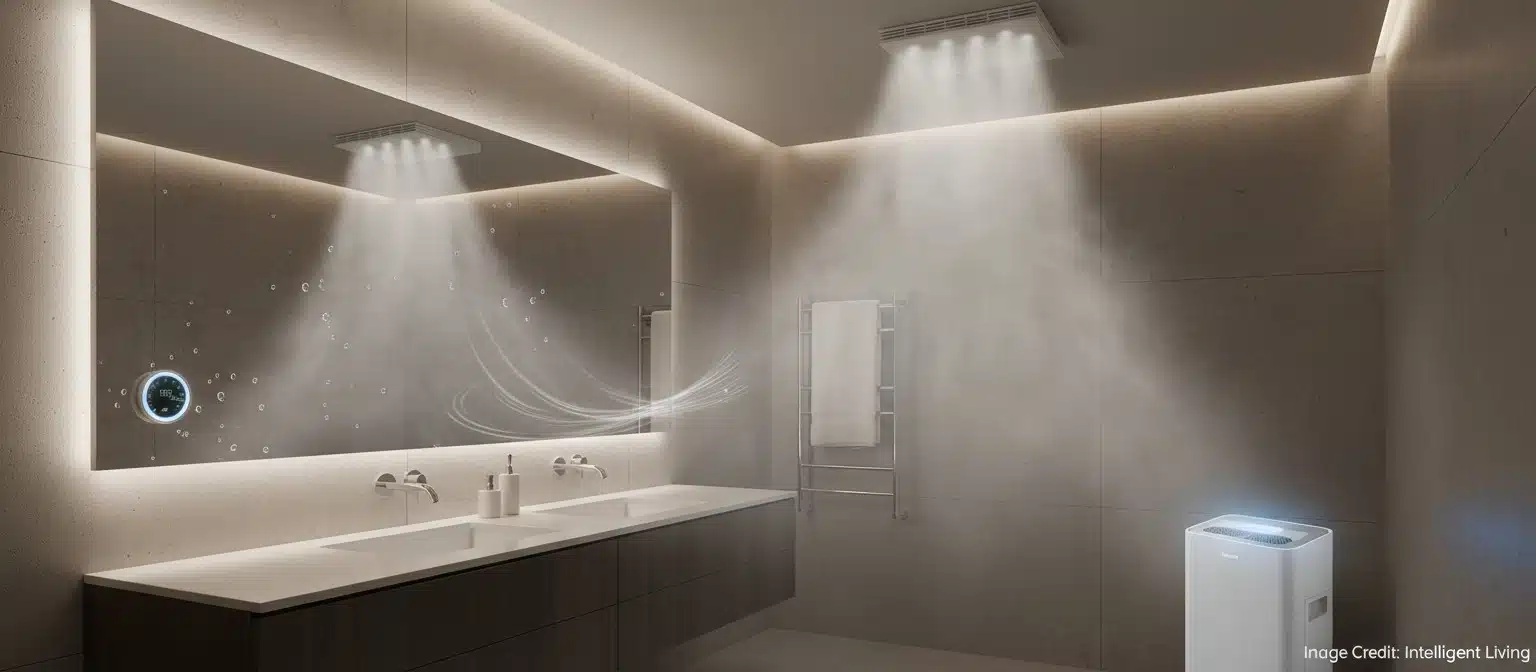
Bathroom: Humidity Management is Mold Prevention in Disguise
Identifying Key Room Pollutants and Health Implications
Bathrooms spike in moisture. Persistent dampness fosters fungal growth in concealed voids, including wall cavities and cabinetry interiors.
Immediate Actions for Tonight’s Air Quality Optimization
Engaging the exhaust fan during and after showers, while monitoring ambient levels with a digital hygrometer, helps establish a localized baseline for moisture control.
Strategic Weekend Projects for Long-Term Air Improvements
Confirm the fan duct terminates outdoors, not into an attic. Installing early-warning leak sensors helps you detect hidden dampness before it evolves into a costly mold remediation project.
Critical IAQ Mistakes and How to Correct Them
Waiting for visible mold before acting. The smell of dampness is otherwise the first warning.

Bedroom First: The Room You Breathe in for a Third of Your Life
Identifying Key Room Pollutants and Health Implications
Bedrooms collect fine particles, fabric fibers, and allergens. Prolonged physiological exposure during sleep cycles ensures that air quality refinements in the bedroom yield rapid, perceivable benefits.
Immediate Actions for Tonight’s Air Quality Optimization
Optimizing the sleeping environment requires a focus on reducing allergen accumulation and chemical triggers:
- Wash all bedding in high-temperature cycles regularly.
- Maintain a pet-free sleeping zone to minimize dander exposure.
- Eliminate strongly scented sprays or candles that increase the VOC load.
Implementing these sleep-zone standards ensures that your body recovers in a chemically neutral environment. Standardized safety protocols also dictate that carbon monoxide detectors belong near sleeping areas because the gas remains undetectable without calibrated sensors.
Strategic Weekend Projects for Long-Term Air Improvements
Size a portable HEPA air cleaner for the room and run it consistently, or upgrade the HVAC filter if your system can handle it. Configuring a practical smoke and carbon monoxide alarm setup involves selecting interconnected sensors that match your home’s unique layout.
Critical IAQ Mistakes and How to Correct Them
Buying a tiny purifier for a large bedroom. If the airflow is too low, the room never cycles enough air to matter.

Living Room: The High-Traffic Zone
Identifying Key Room Pollutants and Health Implications
Increased occupancy levels elevate the concentration of airborne particles through movement and surface agitation. Dust gets tracked in, cushions hold dander, and new furniture can off-gas.
Immediate Actions for Tonight’s Air Quality Optimization
Effective evening maintenance centers on minimizing particle suspension and surface accumulation:
- Deploy a high-efficiency HEPA vacuum to capture sub-micron dust and allergens.
- Reduce surface clutter to facilitate comprehensive and frequent sanitization.
These routine adjustments prevent high-traffic zones from becoming long-term reservoirs for outdoor pollutants.
Strategic Weekend Projects for Long-Term Air Improvements
Use a portable air cleaner matched to room size and place it where airflow is not blocked. Establishing home air habits—such as entryway shoe rules—reduces the volume of outdoor dust tracked into the living space.
Critical IAQ Mistakes and How to Correct Them
Expecting a single device to clean an open-plan layout. Treat large spaces as zones and prioritize where people sit and sleep.

Basement and Crawl Space: The Hidden Risk Rooms
Identifying Key Room Pollutants and Health Implications
Below-grade spaces introduce complex environmental risks, primarily centered on fungal growth from persistent moisture and the infiltration of invisible soil gases like radon.
Immediate Actions for Tonight’s Air Quality Optimization
Use a radon test kit on the lowest lived-in level and treat the reading as actionable data. The 4 pCi/L radon action level is the threshold established for initiating residential mitigation.
Strategic Weekend Projects for Long-Term Air Improvements
Resolve drainage and sealing issues immediately while engaging dehumidification to stabilize the space. Understanding foundation moisture paths helps you address the root causes of basement odors rather than merely treating the symptoms with a dehumidifier.
Critical IAQ Mistakes and How to Correct Them
Accepting a musty basement smell as normal. That smell is often an early warning that moisture is feeding microbial growth.

Utility and Garage-Adjacent Areas: Combustion Safety and Invisible Gas Basics
Identifying Key Room Pollutants and Health Implications
Fuel-burning appliances and attached garages can introduce combustion pollutants. Backdrafting and poor venting can pull gases into living space.
Immediate Actions for Tonight’s Air Quality Optimization
Never run a vehicle or gasoline-powered tool in an attached garage, even with the door open.
Strategic Weekend Projects for Long-Term Air Improvements
Establish a recurring schedule for inspecting fuel-burning appliances. Verifying how carbon monoxide builds up indoors helps you identify which household sources—such as blocked vents or leaking appliances—require immediate professional attention.
Critical IAQ Mistakes and How to Correct Them
Assuming alarms last forever. Replace alarms per the manufacturer timeline and test them regularly.

Make it Stick: Habits, Home Upgrades, and Smoke-Day Rules
Ten Actionable Habits for Superior Indoor Air Quality
Start Tonight (0–30 Minutes)
- Run kitchen and bathroom exhaust whenever you create moisture or smoke.
- Keep sleeping spaces simple, clean, and low-scent.
- Confirm alarms work and that at least one is loud enough to wake sleepers.
This Weekend (1–3 Hours)
- Verify exhaust ducts vent outdoors, not into attics or crawl spaces.
- Track humidity for a few days so you know when it is drifting.
- Size one portable HEPA unit to a single priority room and run it daily.
Next Paycheck (Targeted Upgrades that Don’t Waste Money)
- Performing consistent HVAC filter maintenance ensures your system runs efficiently while maximizing particle capture.
- Improve range hood exhaust to the outdoors.
- Add dehumidification where dampness persists.
- Conduct a radon test on your lowest lived-in level and implement a mitigation plan if the data reveals an actionable risk.
Build Tight, Ventilate Right (Energy Upgrades without Trapping Pollution)
Balancing modern energy efficiency with home health requires adherence to the latest ventilation standard for low-rise homes, ensuring that tight building envelopes do not trap harmful pollutants. You can use a home checklist for air quality to verify that your upgrades do not inadvertently trap indoor pollutants.
Emergency Protocols for Wildfire Smoke and Poor Outdoor Air
Adopting specific smoke and heat preparation steps secures a tactical advantage during high-pollution events, keeping the interior environment breathable when outdoor air is hazardous. If a commercial unit is unavailable, a DIY air cleaner for wildfire smoke serves as an effective emergency alternative.
Finish The Plan: Next Steps, Smart Purchases, and The One-Habit Reset
A Simple Next Step: Pick One Room and Run the Plan for 7 Days
Choose the room where you spend the most time and pick one upgrade to run consistently for a week. That might be running the range hood for every cook, keeping bedroom air filtered overnight, or fixing a bathroom fan habit so humidity stops lingering. Prioritize progress over perfection; demonstrating how routine shifts measurably improve air quality provides the momentum needed to scale these upgrades throughout the home.
The Role of Practical Purchases: The Anti-Gimmick Buyer’s Guide
CADR: The Metric that Actually Matches Room Size
When purchasing a portable air cleaner, verifying the AHAM Clean Air Delivery Rate ensures you select a unit sized for your specific square footage.
MERV: When an HVAC Filter Upgrade Beats Another Gadget
An HVAC filter upgrade can be a powerful whole-home move. A MERV filtration factsheet clarifies which ratings effectively capture fine allergens versus larger dust particles.
Avoiding Hazardous Ozone-Generating Air Purifiers
Ozone is a lung irritant, and you must avoid any ozone-generating air cleaners marketed as purification devices. To ensure safety, consult the low-ozone air cleaner registry before making a purchase.
What Filtration Cannot Fix and What to Do Instead
Filtration does not solve a bulk moisture problem, and it does not automatically remove every gas or odor. Learning the sources of common indoor pollutants helps you prioritize source removal over mechanical cleaning.

Practical Strategies for Improving Indoor Air Quality Long-Term
Implementing home air health upgrades effectively requires a phased approach, beginning with a single room and a consistent seven-day habit cycle. This incremental scaling allows the EPA’s framework to dissolve into a natural daily habit. By capturing pollution at the source, timing ventilation for peak outdoor air clarity, and prioritizing filtration in high-exposure zones, you resolve environmental stressors before they compromise your well-being.
Long-term maintenance involves managing moisture and VOC concentrations as measurable environmental variables. As these small wins accumulate room-by-room, the collective impact on your long-term health becomes undeniable. Commit to one habit today to secure the foundation of a truly breathable home environment.
Frequently Asked Questions About Home Air Health
What is the Fastest Way to Improve Indoor Air?
Combining targeted source control with mechanical ventilation provides the most rapid path to improved air quality. Exhausting pollutants during cooking and sleep-cycle filtration usually yield the quickest perceived results.
What is the Ideal Humidity Level for a House?
Maintain relative humidity between 30% and 50%. This range inhibits microbial growth while preventing respiratory irritation caused by excessively dry air.
Does a MERV 13 Filter Restrict HVAC Airflow?
High-efficiency filters can increase resistance. Verify your system’s static pressure capacity or consult an HVAC professional before upgrading to MERV 13.
Can Air Purifiers Effectively Remove Smoke and VOCs?
HEPA filters excel at capturing smoke particles. However, gaseous VOCs typically require activated carbon media or consistent fresh air ventilation for removal.
Is Home Radon Testing Necessary for Every Floor?
Radon testing should begin on the lowest lived-in level. Because this invisible gas migrates from the soil, early detection is vital for effective mitigation.
Why Do Plants Change Air Quality Perceptions?
While they don’t replace mechanical filtration, living plants change how we perceive air freshness and can lower overall stress levels in a home.


