
Nuts are high in omega-3 fatty acids (healthy fats), fiber, and other good nutrients. Nutritional benefits vary depending on the kind of nut. Nuts are one of the best plant-based protein sources. In addition, a 2017 review study found that a diet high in nuts may help decrease risk factors, like inflammation, for chronic diseases.
The list below covers nine of the healthiest types of nuts to consume and information on their additional nutritional benefits.
1. Peanuts

Peanuts are a fantastic way for people to increase their protein intake. Peanuts are widely available and provide many vital nutrients. Peanuts are also less expensive than many other types of nuts. Although peanuts are classified as a legume, which means they are part of a group of foods from a plant family, most people refer to them as nuts.
Peanuts are high in antioxidants, polyphenols, flavonoids, and amino acids, among other things. Studies have demonstrated that all of these components are beneficial to human health. One hundred grams of peanuts provides the following:
- Calories: 567
- Protein: 25.80 g
- Fat: 49.24 g
- Carbohydrate: 16.13 g
- Fiber: 8.50 g
- Sugar: 4.72 g
Peanuts contain more monounsaturated and polyunsaturated fatty acids (PUFAs), with less saturated fats. In addition, 100 g of peanuts include a variety of minerals, including the following:
- Calcium: 92 milligrams (mg)
- Iron: 4.58 mg
- Magnesium: 168 mg
- Potassium: 705 mg
- Phosphorous: 376 mg
2. Almonds

In recent years, almonds have grown in popularity, and they are now widely available. They have a lower protein content than peanuts, but they make up for it with other nutrients.
Almonds may be the ideal snack for those looking for a protein-rich, healthy alternative to pretzels or potato chips. 100 grams of almonds contain the following:
- Calories: 579
- Protein: 21.15 g
- Fat: 49.93 g
- Carbohydrate: 21.55 g
- Fiber: 12.50 g
- Sugar: 4.35 g
Monounsaturated fats make up the majority of the fats in almonds. Almonds are also high in vitamins and minerals, including the following:
- Calcium: 269 mg
- Iron: 3.71 mg
- Magnesium: 270 mg
- Potassium: 733 mg
- Phosphorous: 481 mg
- Vitamin E: 25.63 mg
3. Pistachios
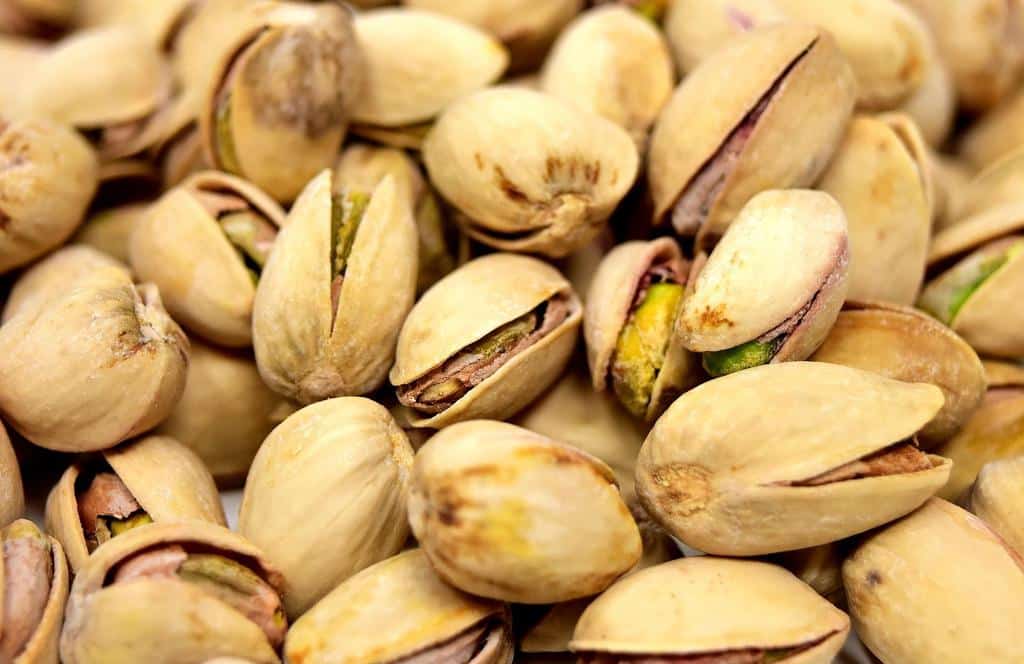
Pistachios are high in protein and other essential nutrients. They also contain beneficial fatty acids and antioxidants. The famous green nut is a pistachio tree seed, but it is commonly referred to as a nut because of its look and texture.
According to a study published in Nutrition Today, eating pistachios lowers blood pressure and improves endothelial function, potentially lowering the risk of heart disease. One hundred grams of pistachios contains the following:
- Calories: 560
- Protein: 20.16 g
- Fat: 45.32 g
- Carbohydrate: 27.17 g
- Fiber: 10.60 g
- Sugar: 7.66 g
The majority of the fat content in pistachios is made up of healthy monounsaturated fatty acids (MUFAs) and PUFAs. While pistachios include fewer minerals than other nuts, they have far more potassium. Pistachios include the following vitamins and minerals:
- Calcium: 105 mg
- Iron: 3.92 mg
- Magnesium: 121 mg
- Potassium: 1,025 mg
- Phosphorous: 490 mg
4. Cashews

Cashews have a creamy texture that complements a variety of snacks and recipes. A hundred grams of cashews include the following:
- Calories: 553
- Protein: 18.22 g
- Fat: 43.85 g
- Carbohydrate: 30.19 g
- Fiber: 3.30 g
- Sugar: 5.91 g
Monounsaturated fats make up the majority of the fats in cashews. Cashews include the following vitamins and minerals:
- Calcium: 37 mg
- Iron: 6.68 mg
- Magnesium: 292 mg
- Potassium: 660 mg
- Phosphorous: 593 mg
5. Walnuts

Despite being lower in carbs than many other nuts, walnuts have higher calorie content due to their significantly high-fat content. However, the fats in walnuts are mostly PUFAs, which may offer numerous health benefits.
Walnuts are well-known for their healthy fat content, but they also contain protein and other nutrients. One hundred grams of walnuts provides the following:
- Calories: 654
- Protein: 15.23 g
- Fat: 65.21 g
- Carbohydrate: 13.71 g
- Fiber: 6.7 g
- Sugar: 2.61 g
The mineral content of walnuts is slightly lower than other nuts:
- Calcium: 98 mg
- Iron: 2.91 mg
- Magnesium: 158 mg
- Potassium: 441 mg
- Phosphorous: 346 mg
Walnuts are also high in phenolic acid and flavonoids, according to a study published in the British Journal of Nutrition.
6. Hazelnuts

Hazelnuts have a unique flavor that makes them a popular ingredient in sweet dishes. Hazelnuts have a lower protein content than other nuts; however, they may compensate with other health benefits. For example, a Journal of Clinical Lipidology study found that hazelnuts may help lower cholesterol levels.
One hundred grams of hazelnuts contains:
- Calories: 628
- Protein: 14.95 g
- Fat: 60.75 g
- Carbohydrate: 16.70 g
- Fiber: 9.7 g
- Sugar: 4.34 g
Hazelnuts are more like walnuts than other nuts because of their high protein and fat content. Although monounsaturated fats make up the majority of hazelnut fats, they also contain polyunsaturated and saturated fats. Other nutrients found in hazelnuts include:
- Calcium: 114 mg
- Iron: 4.70 mg
- Magnesium: 163 mg
- Potassium: 680 mg
- Phosphorous: 290 mg
7. Pecans

Pecans are a mild nut commonly used in pies, cakes, cereal, salads, and grains. One ounce (28 grams) of roasted pecans includes the following:
- Calories: 201
- Fat: 21 grams
- Protein: 3 grams
- Carbs: 4 grams
- Fiber: 3 grams
- Vitamin B1 (thiamine): 11% of the DV
- Manganese: 48% of the DV
- Zinc: 13% of the DV
Pecans, like other nuts, are high in beneficial fats, vitamins, minerals, and fiber. In addition, they are an excellent source of zinc, a mineral that helps with immune function, DNA synthesis, wound healing, and growth and development.
In addition, some studies have found that pecans may improve heart health. For example, a small, 8-week trial of 56 people at risk of heart disease showed that individuals who consumed pecans daily experienced significant reductions in LDL (bad) cholesterol and triglyceride levels compared to a control group.
8. Macadamia nuts

Macadamia nuts are rich in nutrients and have a buttery feel. They are an excellent addition to cookies, brownies, oatmeal, and salads, or turned into nut butter. One ounce (28.35 grams) of macadamia nuts provides:
- Calories: 204
- Fat: 21.5 grams
- Protein: 2 grams
- Carbs: 4 grams
- Fiber: 2.5 grams
- Vitamin B1 (thiamine): 28% of the DV
- Copper: 24% of the DV
- Manganese: 51% of the DV
Macadamia nuts are abundant in healthy fats and low in carbs compared to other nuts, making them a popular low-carb snack. Incorporating macadamia nuts into your diet can have a variety of health benefits. For example, studies have demonstrated that eating tree nuts, such as macadamia nuts, can help lower triglycerides, blood sugar, and LDL cholesterol levels.
9. Brazil nuts
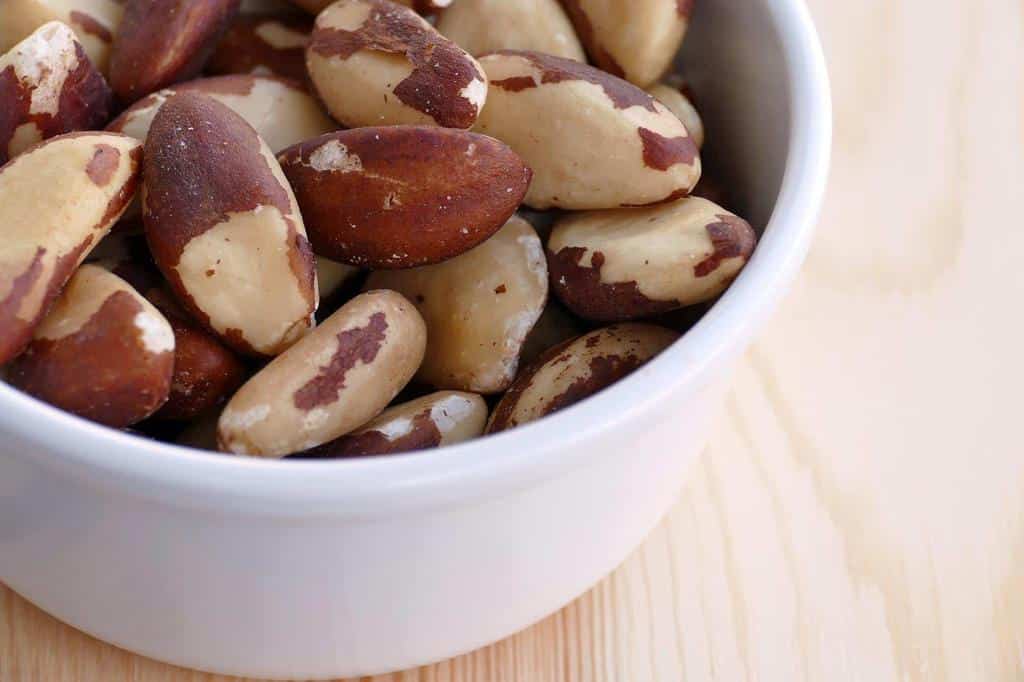
Brazil nuts are high in several nutrients, particularly the mineral selenium. One ounce (28 grams) of Brazil nuts provides the following:
- Calories: 187
- Fat: 19 grams
- Protein: 4 grams
- Carbs: 3 grams
- Fiber: 2 grams
- Vitamin E: 11% of the DV
- Magnesium: 25% of the DV
- Selenium: 989% of the DV
Magnesium is abundant in Brazil nuts, necessary for energy production, blood pressure and blood sugar regulation, and neuron function.
Brazil nuts are extremely rich in selenium, a mineral that your body requires for vital tasks such as DNA synthesis and thyroid hormone production. However, to prevent surpassing the upper limit of 400 mcg, which can cause selenium toxicity, limit your intake to just a few nuts each day. Then again, consuming too much selenium via supplements rather than food is more likely to cause this problem.
While the amount of selenium in Brazil nuts depends on several circumstances, this mineral is a potent antioxidant that may protect against oxidative damage.
How to Incorporate Nuts into Your Diet
To receive more plant proteins, you can boost your nut consumption in various ways. Below are some examples of including nuts in your diet.
Mix Them Up With Your Trail Mix
Roasted, salted nuts can enhance the flavor and satiation of a savory trail mix, which can replace unhealthy snacks like chips. However, because of the added salt and high-calorie content, it is still advised to limit portion amounts.

Raw nuts are also nutritious and healthy, complementing a sweet trail mix with dried fruits. People who crave a candy bar or similar sweet food may find that sweet trail mix can satisfy their desires. However, dried fruits can contain a lot of sugar; therefore, people on low-carb or low-sugar diets should consume them with caution.
Snack on Them
Nuts are usually ready to consume, making them an excellent snack at any time. However, while nuts contain beneficial fats, they are also high in calories.
Consume Nut Milk
Nut milk does not have the same qualities as cow’s milk, but it retains some of the nuts’ flavor and health advantages. You can order nut milk online or visit one of the many grocery stores that sell them. However, if you wish to avoid added ingredients, you can make nut milk at home. Almond milk, walnut milk, cashew milk, hazelnut milk, and pistachio milk are just a few examples.

Eat Nut Butters
Many different types of nut butter can be found in grocery shops and markets. They can be spread onto bread, apples, bananas, sandwiches, or added to oatmeal or smoothies.

Toss Them Into a Salad or Cereal
A serving of nuts can improve the protein and vitamin value of a salad or cereal and make it more filling.

Is It Possible to Consume Too Many Nuts?
Nuts are good for your health since they can help you avoid heart disease and other diseases. However, eating too many nuts is possible.
Nuts have high-calorie content, so consuming many of them throughout the day can cause people to surpass their target calorie intake without realizing it. Regularly doing so may result in weight gain. Nuts are rich in healthy fats, which are beneficial to the body when consumed in moderation but can cause diarrhea and other problems if consumed in excess.
Roasted, salted nuts have about the same amount of sodium as other salty snacks. Anyone who eats salted nuts should read the label to see how much sodium they would be consuming. Nuts that are raw or dry-roasted are a healthier option.
Some people may get stomach issues as a result of eating nuts. In this situation, eating too many nuts may produce gassiness, cramping, or bloating. Nut allergies are also prevalent.


