
Groundbreaking new research involving brain implants and spinal cord stimulation has proven successful in enabling a paralyzed man to walk again simply by thinking about it. This life-changing technology can potentially improve the quality of life for countless individuals experiencing paralysis.
Pioneering Research
Grégoire Courtine, a prominent neuroscientist at the École Polytechnique Fédérale in Lausanne (EPFL), has led this pioneering research, focusing on the development of advanced treatments for spinal cord injuries. The innovative study involves both brain implants and spinal cord stimulation, allowing patients to regain control over their leg movements through electrical pulses transmitted wirelessly.
A Newfound Independence
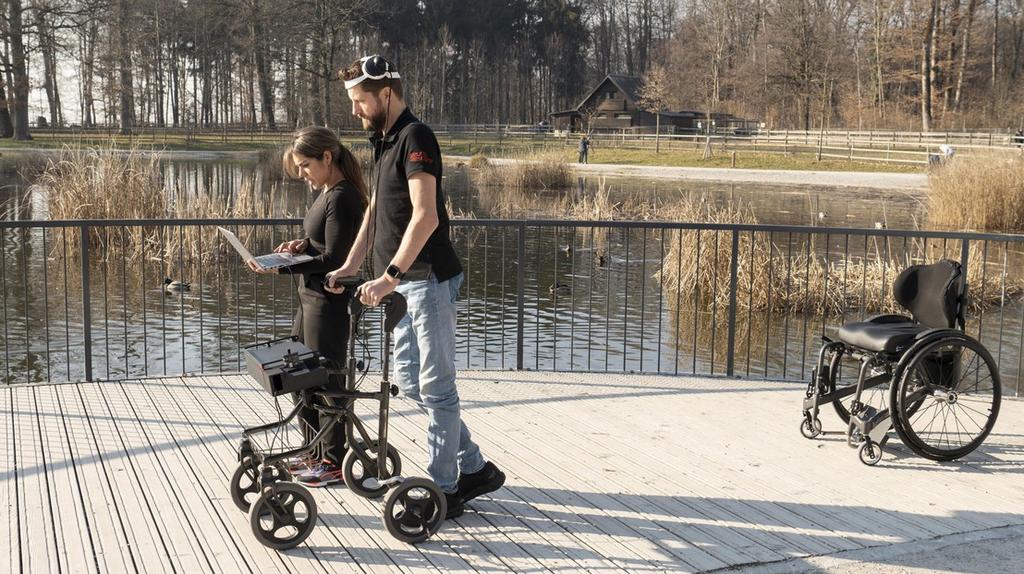
Gert-Jan Oskam, a 40-year-old man, experienced an extraordinary transformation after undergoing the delicate surgery to receive the brain implant. Having been paralyzed from the waist down due to a cycling accident 12 years ago, Oskam now reports being able to walk, stand, and climb stairs with the assistance of this revolutionary treatment.
The Significance of Natural Movements
The main difference between previous research and this new approach is the emphasis on restoring natural movements. Earlier forms of treatment dealt primarily with arm movements, but Grégoire Courtine’s team has shifted the focus to leg movement through spinal cord stimulation, paving the way for unprecedented improvements in patient mobility.
The Process of Rehabilitation
Treatment with the brain-spine interface involves intensive training sessions for patients like Gert-Jan. Through these sessions, they relearn how to send electrical pulses from the brain to their leg muscles, allowing them to regain voluntary control over their movements. Co-investigator Henri Lorach has played a crucial role in guiding patients through this process, monitoring their progress, and making necessary adjustments as they redevelop motor skills.
Courtine shares the story of Gert-Jan Oskam, their first test pilot using only a spinal implant: “Despite using the [spinal cord implant] stimulation for three years, he hit a plateau in his recovery, and became interested in using the new brain-controlled stimulation.”
Promising Outlook
This innovative technology has immense potential to transform the lives of paralyzed individuals, offering them newfound freedom and independence. Onward Medical, a company co-founded by Grégoire Courtine, aims to develop a commercial version of the brain implant and processing unit that is “easy for patients to use in daily life.”
The researchers believe that their approach will be effective for other patients, but they do caution that the extent of recovery may depend on the injury’s severity. “You have to be careful to calibrate expectations,” Courtine says. “But I’m confident we can reproduce the same outcome, especially in individuals with incomplete spinal cord injury.”

Future Developments
The team is also exploring the possibility of applying their technique to upper limbs, with neuroscientist Henri Lorach revealing their plans for a clinical trial involving three participants. The researchers also express the potential for treating paralysis caused by strokes.
In related news, Neuralink has recently received FDA clearance for the first human clinical trial of their brain-implant technology aimed at revolutionizing mental health treatments and technological advancements. By decoding brain activity and translating it into actions, the technology could bring hope to people with neurological conditions like depression, autism, and schizophrenia. The success of this groundbreaking technology, including the brain-spine interface, hinges on thorough research, testing, and ethical considerations aimed at safeguarding patient safety. As the research progresses, the potential for recovery in paralyzed patients has never been greater, representing a significant step toward helping people regain control of their lives.
As the research progresses, the experts behind the brain-spine interface strive to refine the treatment, making it as accessible and effective as possible for patients in need. With the ongoing development of brain implants, spinal cord stimulation, and the promising brain-spine interface, the potential for recovery in paralyzed patients has never been greater. The future possibilities for this groundbreaking research are undoubtedly exciting, and the implications for countless individuals across the world are nothing short of life-changing.
The research has been published in Nature.


