
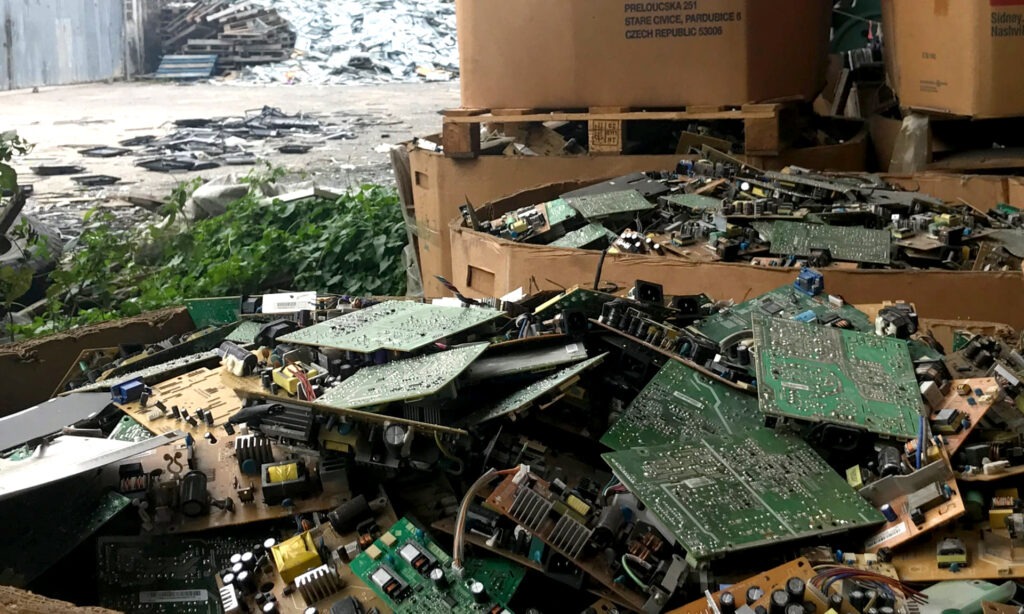
The House of Commons Environmental Audit Committee (EAC) has published a damning report, claiming the UK generates over three times more magnetic and electronic waste than the global average (7.3kg per capita). The country is the second-highest generator of e-waste (23.9kg per person), following Norway. It is failing miserably to create a circular electronics economy.
Committee members suggest that global giants, such as Apple and Amazon, discourage repairs and recycling by doing things like intentionally shortening the lifespan of their products and making devices more expensive to fix than to buy new.
Philip Dunne MP, the chair of the environmental audit committee, said:
“For too long, companies like Amazon and Apple have been dodging their environmental responsibilities for the products they sell. Too many devices sold and made by these companies have a limited, sometimes decreasing, lifespan and end up in bins, eventually going to landfill or incineration. There is no chance of precious metals being retrieved, which could quickly become a huge problem as the rare and disappearing materials are crucial for renewable energy such as wind turbines, solar panels, and electric car batteries.”

The EAC says all companies should help collect, recycle, and repair the products they sell. It could help cut 155,000 tons of e-waste (in the UK alone) from being discarded improperly every year. Most e-waste goes to landfills or incineration, but about 40% is shipped to developing countries, sometimes illegally. Actually, the UK is Europe’s worst offender for illegally exporting toxic e-waste.
The EAC wrote:
“In the countries that receive our electronic waste, it is often dumped, with toxic chemicals leaching into the environment and harming people.
Tech companies should now take the lead in creating sustainable and environmentally friendly business models that do not rely on the overexploitation of nature and natural resources.”
The report points out how online marketplaces tend to have products sold by third-party retailers, so they aren’t always considered retailers or producers themselves. This situation gets online shopping platforms off the hook when it comes to contributing to the collection and recycling of e-waste. Such is not the case with physical retailers and producers.
MPs said:
“For all their protestations of claimed sustainability, major online retailers and marketplaces such as Amazon have so far avoided playing their part in the circular economy by not collecting or recycling electronics in the way other organizations have to. Given the astronomical growth in sales by online vendors, particularly this year during the coronavirus pandemic, the EAC calls for online marketplaces to collect products and pay for their recycling to create a level playing field with physical retailers and producers that are not selling on their platforms.”
The report then recommends:
- Legal protections for the right to repair
- A reduction in VAT on repair services, a practice that place in other countries
- That all producers be forced to collect products and fund their recycling
Apple and Amazon replied to these accusations in defense.
Apple told The Guardian:
“We were surprised and disappointed with the Environmental Audit Committee’s report, which does not reflect any of Apple’s efforts to conserve resources and protect the planet we all share. There are more options for customers to trade-in, recycle, and get safe, quality repairs than ever before. Our latest Apple Watch, iPad, and iPhone lineup all use recycled material across key components. We will continue to work with parliament and the government to document Apple’s industry-leading commitments and to support our common effort to leave a clean economy and a healthy planet for the next generation.”
And an Amazon spokesperson told the publication:
“Amazon is committed to minimizing waste and helping our customers to reuse, repair, and recycle their products, and we provide a range of options that anyone can easily access through the Amazon Second Chance website. We have supported the recycling of more than 10,000 tons of electronic waste in the UK over the last decade.”
Those two businesses certainly would argue, as they’ve put forth more effort than most to meet their environmental responsibilities. New approaches to hardware reuse are also emerging. Google and UC San Diego recently demonstrated that old phones can become AI servers, building a 2,000-device computing cluster from discarded hardware that would otherwise add to the growing e-waste stream. Amazon launched a $2 billion climate technology fund in June, and Apple pledged to be carbon neutral by 2030.


