
Patients navigating the organ transplant system face a brutal mathematical reality where donor availability rarely meets the urgent timeline of human need. Current data on over 100,000 individuals awaiting organ donation reveal the severity of the U.S. waiting list, where 13 people lose their lives daily while awaiting a match. Recent news highlights a significant intersection of faith and science as the Holy See press conference introduced updated Vatican xenotransplantation ethics regarding the use of animal tissues in humans.
Advances in 2026 have moved gene-edited pig organ transplants from experimental theory to active clinical observation. Several living recipients now carry gene-edited pig kidneys, while clinical trials for porcine kidney functionality rigorously test long-term safety and organ performance. Precise 2026 organ transplant medical trials represent a pivotal shift in addressing chronic shortages through innovative bioengineering.
Bioethical discussions now focus on the practical implementation of cross-species grafts. As animal-to-human transplant trials expand, guidance from religious authorities provides a moral compass for families making high-stakes medical decisions. Incorporating Catholic bioethical organ donation principles ensures that technological progress respects human dignity while seeking viable end-stage kidney disease solutions.

Vatican Xenotransplantation Ethics and The 2026 Clinical Implementation
Core Principles: Vatican Xenotransplantation Guidance in 2026
Moral frameworks in 2026 bridge the gap between rapid technological growth and long-standing traditions. Providing clear ethical markers supports the high-stakes decisions facing medical teams and patient advocates today.
- Vatican xenotransplantation ethics now provide updated reflections on the use of gene-edited animal organs, clarifying that Catholics may receive organ transplants from animals under specific moral conditions.
- Xenotransplantation refers to transplanting living cells, tissues, or organs from animals into humans.
- In 2026, gene-edited pig kidneys are in early clinical development, moving beyond single emergency-use cases.
- The biggest scientific barriers remain immune rejection, infection risk, and long-term graft survival.
- Organ shortages remain severe, with kidney wait times stretching into years in many health systems.
Compiling these factors leads to a single takeaway. While acknowledging these procedures are not risk-free, the Vatican emphasizes that the Vatican xenotransplantation ethics framework is now a necessary clinical mandate for the medical community.
For people who have watched a loved one plan life around dialysis days, the word “trial” can sound both hopeful and frightening in the same breath.
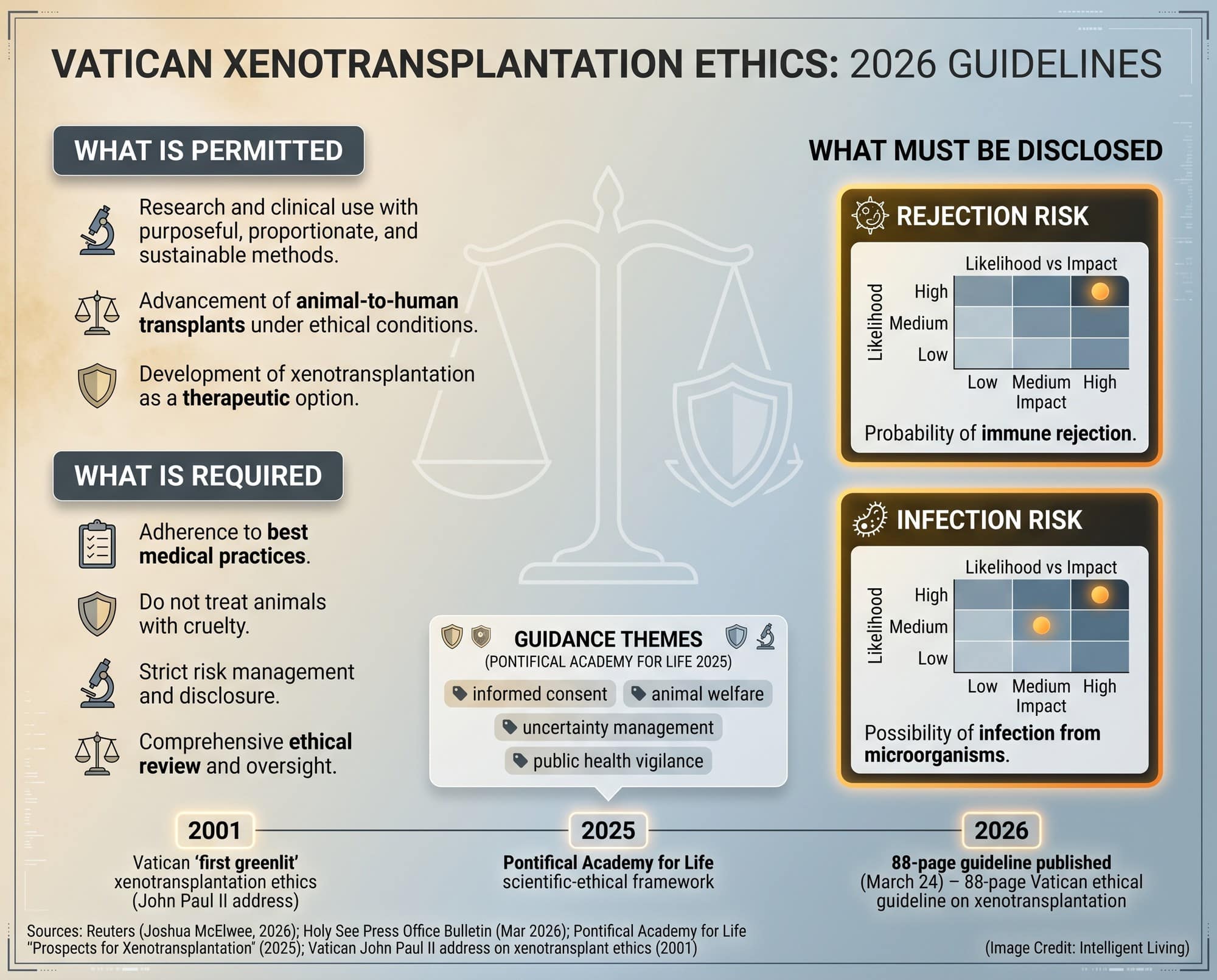
What Did the Vatican Actually Say About Xenotransplantation?
Moral Permissibility and Technical Medical Safeguards
The recent update avoids a simple binary conclusion, offering instead a nuanced ethical framework. In 2001, Pope John Paul II provided an early signal for the field by addressing the moral and social justness of animal organ transplants, establishing a foundation for today’s Catholic bioethics.
Current bioethical reviews view cross-species grafting as a compassionate option for patients facing critical failure, weighing these procedures against core Catholic values. These standards prioritize human dignity, the proportionality of clinical risk, and the moral limits regarding animal welfare. Church doctrine holds that animal-to-human transplants are morally permissible when governed by strict medical safeguards, though the latest Vatican guidance emphasizes the inherent scientific risk of these complex procedures.
Ethical Boundaries of Human Identity and Dignity
The ethical caution centers on what the Church sees as the boundary of human identity and dignity. Replacing a failing kidney does not change personhood, but interventions that would blur the line between a human and a hybrid organism raise deeper concern.
The updated guidance investigates complex intersections of animal welfare and consent, focusing on how xenotransplantation affects human identity and dignity in the modern era. Investigations cover animal welfare and informed consent, addressing how societies should handle uncertainty when the stakes involve life and death.
Impact of Bioethics on Dialysis Patient Perspectives
For many families, this is not a philosophy seminar. It is the kind of decision that shows up during a late-night call from a hospital, when a care team is offering the next option and time is not generous.
Moral permission within the guidance arrives alongside a reminder that risk, consent, and oversight remain essential. It offers a moral permission paired with a reminder that risk, consent, and oversight are part of the story.

Xenotransplantation Basics and Why this Debate Reappeared Now
Defining Cross-Species Grafting: Understanding Xenotransplantation
Functional Scope of Cross-Species Organ Procedures
The process of xenotransplantation involves moving organs or tissues between different species. Modern clinicians focus primarily on using genetically modified porcine donors to provide life-saving grafts for human recipients.
Unlike traditional human donation or emerging lab-grown tissues, this distinct medical track relies on advanced porcine genetics and rigorous cross-species transplantation surveillance.
Why Pigs Are the Donor Animal
Researchers favor certain biological models due to their compatibility with human systems. Porcine subjects offer several distinct advantages for animal-to-human transplant trials:
- Organ size and anatomical structure closely mirror human physiology.
- Rapid reproduction cycles allow for scalable clinical development.
- Advanced gene editing tools effectively silence triggers for hyperacute rejection.
- Select human genes can be integrated to minimize immune system alerts.
Strategic engineering transforms these organs into viable candidates for long-term clinical use. Reaching this level of biological compatibility stands as a primary goal for 2026 organ transplant medical trials, ensuring that donor grafts remain functional over several years.
How Gene Editing Changes the Immune Signals
The biological hurdle lies in the immune system’s detection mechanisms, which act as a rigorous biological filter against foreign tissue. A traditional pig organ sets off alarms instantly. Gene editing aims to change the signals so the immune system hesitates instead of attacking in minutes.
Why Monitoring is Part of the Procedure
Beyond the surgical theater, xenotransplantation requires extensive long-term monitoring as regulators manage infectious disease risks in cross-species transplantation to protect public health.
Regulatory bodies maintain comprehensive requirements for donor screening and recipient follow-up in xenotransplantation to safeguard the public. Core frameworks establish several high-priority safety measures:
- Strict donor animal screening for viral and bacterial pathogens.
- Intensive recipient follow-up to track long-term immune behavior.
- Mandatory safety reporting protocols for any adverse events.

Strategic Timing of Bioethical Guidance In 2026
The Transition from Emergency Use to Structured Clinical Trials
Timing matters because the science has crossed a threshold from repeated lab success into early human use. In 2024, Massachusetts General Hospital achieved a major milestone with the first living-recipient gene-edited pig kidney transplant into a living patient, moving the science beyond laboratory boundaries.
Clinical development is rapidly maturing as major research centers launch systematic research programs for porcine kidney transplants. Systematic data collection serves as the primary goal for these initiatives, moving beyond the isolated emergency-use cases of previous years.
The Urgent Mandate of The Global Organ Shortage
The relentless pressure of the organ shortage creates an urgent clinical mandate for new solutions. People living with end-stage kidney disease often learn the system’s delays in the hardest way, through postponed matches and the steady grind of dialysis schedules.
Researchers continue to refine genetically engineered pig kidneys as a solution for organ scarcity as the field enters a more regulated clinical phase.
Applying Bioethics to Clinical Decision-Making
In real hospitals, ethical guidance often shows up as a checklist conversation, not as a sermon. It shapes how consent is discussed, how risk is explained, and how families weigh “experimental” against “no other option.”

Technical Mechanisms of Gene-Edited Pig Kidneys and Risk Mitigation
Biological Functionality of Gene-Edited Organs in Humans
Overcoming Hyperacute Rejection via Genetic Engineering
Immune rejection stands as the primary biological barrier to successful cross-species grafting. Human immune systems evolved to detect foreign tissue rapidly. Early twentieth-century attempts often suffered catastrophic failure within hours due to this defense.
A core goal of modern gene editing is to prevent hyperacute rejection, the kind of immediate immune attack that can destroy a transplant quickly.
Engineering Clotting and Complement Compatibility
Modern approaches use gene editing to remove pig molecules and engineer human compatibility into porcine donor organs to reduce immune and clotting conflicts.
The Massachusetts General Hospital case explains the strategy in unusually concrete terms, including extensive genomic edits and screening aimed at reducing viral risk in the donor animal.
What Immunosuppression Still Has to Do
Genetic engineering does not humanize the organ; instead, these modifications ensure biological compatibility, allowing the immune system to tolerate the graft without hyperacute rejection.
The edits do not make the organ “human.” They aim to make the organ compatible enough that the immune system can be managed without immediate catastrophic rejection.
Clinical Risk Assessment: Rejection, Infection, and Surveillance
Infection and Xenozoonosis
Risk discussions extend beyond immune rejection. One major concern is zoonotic infection, meaning pathogens that could jump from animals to humans.
Such persistent risks require regulators to maintain unique FDA xenotransplant oversight protocols that differ significantly from standard surgical procedures. Persistent risks require regulators to maintain unique oversight, with current xenotransplant infection risk guidance ensuring that rare events are caught before affecting public health.
Long-Term Surveillance and Public Health Rules
Monitoring is an ongoing clinical commitment, involving advanced tracking of immune system behavior in xenotransplant recipients to observe how the body reacts over time.
Recipients in early trial conditions require frequent lab work, viral testing, and monthly clinical check-ins. Long-term health depends on consistent adherence to these protocols. Experienced patients recognize the constant vigilance required to distinguish minor symptoms from serious complications.
Psychosocial Considerations of Experimental Organ Replacement
Living with an animal organ brings unique emotional challenges for patients and their loved ones. While some may find the concept difficult to process, many prioritize the human reality of spending more time with family instead of losing hours to a dialysis schedule.

Who it Could Help First and What the Evidence Still Cannot Promise
Patient Eligibility and Systemic Healthcare Transformation
Early Eligibility will Be Narrow
Kidney failure is the primary target because kidneys are technically simpler than hearts or livers, and dialysis can keep patients alive while trials gather safety data.
In the near term, eligibility is likely to remain narrow due to expert breakdown of pig kidney trials and intensive monitoring.
How it Could Change Dialysis and Waiting Lists
Reliable cross-species grafting would fundamentally alter the landscape of modern healthcare. Recent data on the 2025 organ transplant shortage highlight the persistent gap between medical progress and donor availability. Implementing porcine kidney transplantation could lead to several major shifts:
- Significant reduction in national organ waiting list times.
- Decreased dependence on the exhausting grind of chronic dialysis.
- Improved capacity for hospitals to manage transplant volume.
- Enhanced ability for patients to return to work and travel freely.
Broader ripple effects extend into long-term care systems and overall medication costs. Reducing the daily burden of treatment allows individuals to reclaim their personal autonomy and quality of life.
Why Hearts Are a Different Problem
A secondary target is heart transplantation, but hearts are less forgiving than kidneys. Years of pig heart transplant optimism show how long this idea has been in the cultural bloodstream, even though the safest clinical pathway is still being built one kidney at a time.
Reality Check: What this Does and Does Not Prove Yet
What Has Been Shown So Far
The Vatican’s guidance addresses moral permissibility, not medical safety. The science remains provisional.
Early cases show feasibility, not routine reliability. Long-term graft survival beyond one or two years has not yet been established in a way that would justify broad public use.
What Remains Unproven
Researchers continue to investigate the long-term side effects of immunosuppressive drug protocols and the prevention of rare infections. Establishing scalable animal welfare standards also remains a high priority. The ultimate goal is to guarantee that these organs behave predictably across different patient populations for years to come.
Other Shortage Workarounds Under Development
Other teams are exploring the lab-grown mini-livers as a separate scientific path toward resolving donor scarcity.
The most honest way to frame xenotransplantation in 2026 is structured risk under careful supervision. It is neither a miracle cure nor a reckless experiment. It is a field trying to build proof through trials while the public watches closely.

Future Projections for Organ Replacement Bioethics
Key Indicators of Xenotransplantation Success
The Next Data that Matters
Clinical outcomes from upcoming studies will determine if cross-species grafting becomes a routine medical option or remains a specialized treatment. A major indicator of progress is how quickly clinical authorization for expanded porcine kidney trials translates into broader patient access.
How Trials Expand and Standardize
One practical milestone is how quickly trials can expand and how cleanly they can document safety signals under real-world conditions. Success requires consistency in donor screening, meticulous follow-up, and clear reporting when complications arise.
Corporate and academic timelines are also moving into the open, with major biotech firms establishing structured designs for FDA-cleared xenotransplant studies to set clinical expectations.
Timelines that Depend on Results
The next year of reporting will likely hinge on a handful of measurable outcomes: graft survival past the one-year mark, infection monitoring results, and whether follow-up protocols prove manageable for patients who do not live near a transplant center.
The New Ethics of Organ Replacement is Already Here
The simultaneous arrival of Vatican xenotransplantation ethics and active clinical trials redefines how society perceives and implements life-saving biotechnology. Faith traditions are no longer reacting to distant theory. They are responding to decisions that living patients may face.
Modern clinical teams must now balance patient consent and technical risk against the ticking clock of organ failure. Animal welfare also transforms from a sidebar discussion into a core component of responsible medicine.
Patients on organ waiting lists view this progress through the lens of daily survival. Their reality is defined by chronic dialysis fatigue and the hope of reclaiming a life no longer dictated by clinical treatment slots.
A WHO report notes that transplants performed globally meet less than 10% of total need, creating a global organ transplant shortfall estimates that continues to drive experimentation with new clinical pathways.
If xenotransplantation matures into a reliable clinical tool, it could redefine organ scarcity and ethical medicine at the same time. Until the data is stronger, the most responsible stance is the one the Vatican document implicitly mirrors: cautious permission paired with hard questions and strong safeguards.

Conclusion: The Future of Xenotransplantation Ethics
The intersection of Vatican xenotransplantation ethics and gene-edited pig organ transplants signals a new era in regenerative medicine. Scientific progress in 2026 organ transplant medical trials is no longer a distant theoretical exercise but a tangible reality for those awaiting a match. As porcine kidney transplantation moves into the clinical mainstream, the dialogue between faith and medicine ensures that patient safety and human dignity remain at the forefront of innovation.
Relying on cautious permission and rigorous safeguards allows the medical community to explore animal-to-human transplant trials with integrity. Addressing the global organ shortage requires both technical ingenuity and ethical clarity to protect vulnerable patients. Success in these endeavors will be measured by the quality of life restored to individuals who previously lacked end-stage kidney disease solutions, bridging the gap between clinical potential and human survival.
Xenotransplantation Frequently Asked Questions
Does The Vatican Allow Pig Organ Transplants?
Current Vatican xenotransplantation ethics permit animal-to-human transplants when procedures respect human dignity, manage proportionality of risk, and ensure high animal welfare standards.
Are Gene-Edited Pig Organs Safe for Humans?
Safety is being evaluated in 2026 organ transplant medical trials, where researchers monitor for hyperacute rejection and zoonotic infection risk using high-dimensional immune profiling.
How Long Do Pig Kidney Transplants Last?
Current animal-to-human transplant trials aim to establish long-term graft survival, though broad clinical reliability beyond initial emergency cases is still being documented through rigorous surveillance.
What Are the Biggest Risks of Xenotransplantation?
Primary concerns include hyperacute rejection of the graft and the potential for xenozoonosis, requiring lifelong cross-species transplantation surveillance and specialized immunosuppressive drug protocols.
Who Qualifies for Porcine Kidney Transplantation Trials?
Eligibility usually favors patients with end-stage kidney disease who live near specialized research centers and can commit to the intensive long-term monitoring required by FDA xenotransplant oversight.


