
Amazon’s $11.57 billion purchase of Globalstar is more than just a massive tech transaction; it transforms how we maintain contact during emergencies or travels beyond traditional network reach. While the $11.57 billion price tag is massive, the official $11.57B satellite connectivity acquisition details reveal a strategy built on long-term spectrum access. By securing these orbital assets, Amazon is moving to stabilize iPhone safety features while scaling its own ambitious Amazon Leo satellite network.
If you are hiking through a remote national park or navigating an isolated mountain pass only to see ‘No Service’ on your screen, this acquisition directly addresses that anxiety. It transforms standard smartphones into satellite-capable devices. This isn’t just about high-speed browsing; it’s about ensuring that a simple text message can reach emergency responders even when you are miles away from the nearest cell tower. This layered approach to connectivity means your phone works harder to keep you safe in the gaps of traditional networks.

Inside the $11.57B Amazon Globalstar Deal: Infrastructure and Spectrum Strategy
Essential Summary: Core Financial Terms of the $11.57B Acquisition
Amazon reached an agreement to acquire Globalstar for $11.57 billion. Shareholders can choose between $90 in cash or 0.3210 Amazon shares, though cash payouts are subject to a proration cap. While the deal awaits final approval for a 2027 close, Amazon plans to integrate Globalstar’s spectrum into the Amazon Leo network. Current Apple satellite features will reliably remain active under this new operational agreement.
Snapshot: Shareholder Payouts, Regulatory Approvals, and Close Dates
This deal is structured like infrastructure financing, not a typical consumer tech buyout. The cash-or-stock choice matters because it signals how Amazon is balancing certainty for shareholders with long-term control of a regulated communications asset.
- Price: $11.57 billion
- Offer: $90 cash or 0.3210 Amazon shares per Globalstar share
- Cash elections: Capped at 40% of total shares through a proration mechanism
- Expected close: 2027, subject to regulatory approval
- Strategic payload: Mobile satellite spectrum, satellites already in service, and ground network operations
- Apple continuity: Amazon says the satellite features on supported iPhone and Apple Watch models will continue
- Near-term purpose: Integrate Globalstar’s network into Amazon Leo to expand satellite-to-phone coverage beyond cellular dead zones
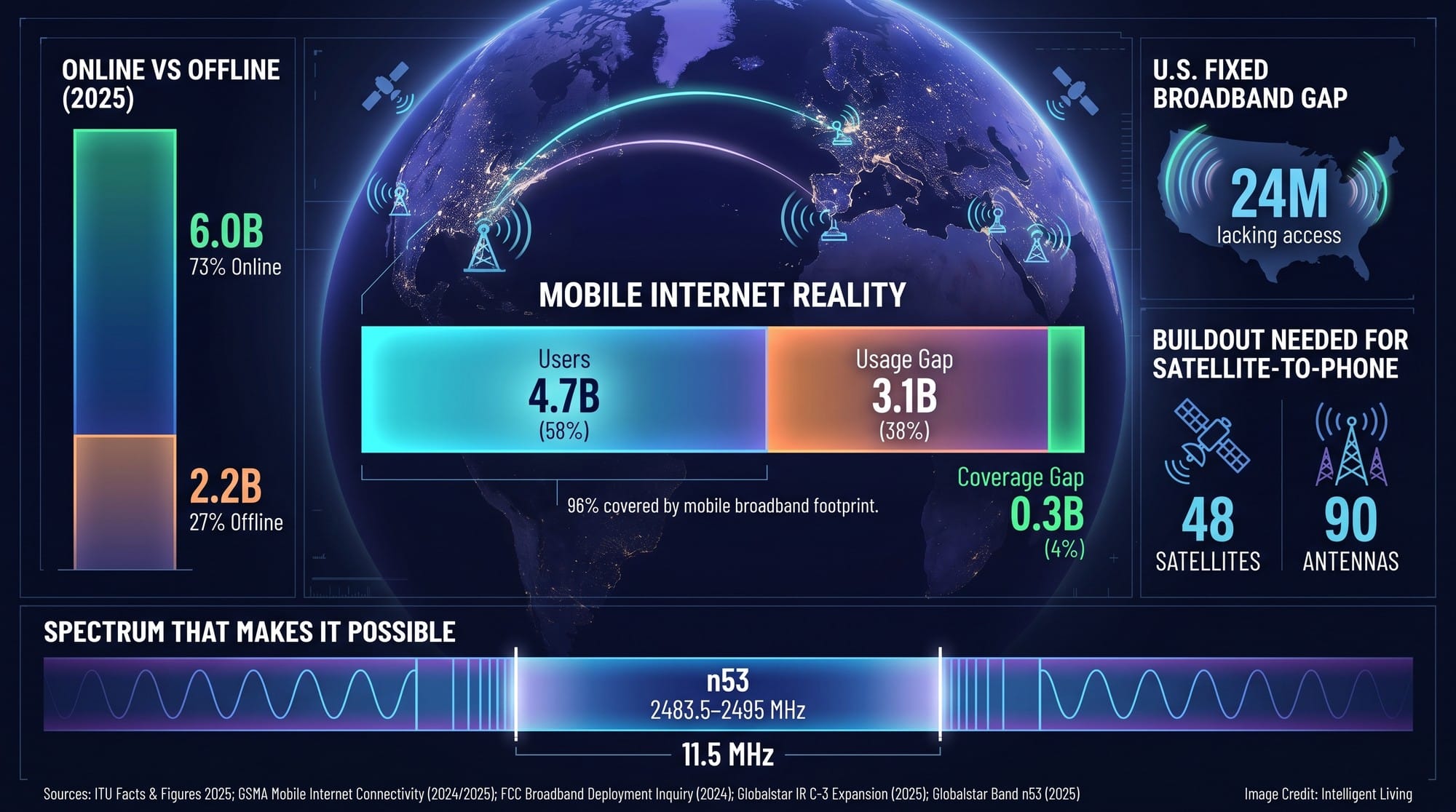
Amazon is primarily buying the legal permissions and physical equipment needed to send signals from space. This infrastructure allows the network to carry data even before Amazon launches its full fleet of satellites.
The deal relies on specific Globalstar shareholder payout structures that balance cash and stock options. These terms show why the transaction centers on spectrum access and operating capability rather than short-term profits. Amazon is paying for permissions, frequencies, and working systems that can start carrying useful traffic before a larger constellation is fully built.
Why the Amazon Globalstar Acquisition Targets Global Satellite Coverage Gaps
Immediate Gains: Scaling Amazon Leo with Mobile Satellite Spectrum
Amazon is using the acquisition to accelerate Amazon Leo’s ability to provide coverage where cell towers are unreliable or absent. This expansion supports the broader global Amazon Leo satellite network deployment designed for worldwide reach. Globalstar contributes several critical components to this mission:
- Spectrum Access: Strategic licenses that allow signals to travel between space and your phone.
- Operational Network: A functioning system of satellites and ground stations ready for immediate use.
- Strategic Speed: The ability to skip years of infrastructure development and regulatory waiting.
Compliance with federal emergency satellite communication regulations ensures these services remain integrated with 911 response systems. These strict emergency obligations explain why spectrum is managed like essential infrastructure rather than just another tech feature.
If a heavy storm knocks out local towers or you drive through a remote highway area with zero service, this satellite layer stays active. It works as a failsafe to make sure your emergency texts reach help, even in total dead zones.
Amazon aims to widen this lane for rural travelers, outdoor work sites, and disaster zones. In these high-stakes environments, a single working message provides a vital link to the outside world when traditional infrastructure fails.
A major part of this strategy involves delivering high-speed satellite broadband connections that reach up to 1 Gbps. Amazon positions this as a cloud-native link designed for companies that need zero-downtime connectivity.
Platform Integration: Preserving Safety Standards for the Apple Ecosystem
Globalstar’s relationship with Apple matters because it anchors satellite connectivity in a device ecosystem people already carry. iPhone users already utilize advanced satellite-to-phone text messaging to stay in touch without cellular signals. This feature complements Emergency SOS by allowing basic texting when Wi-Fi and cell service disappear.
Per the transaction terms, Amazon will sustain Apple’s existing satellite services, ensuring users retain access to established safety functions. This kind of pressure tends to raise the floor for service quality, because a safety feature only earns trust when it works during the exact moment it is needed.
Understanding Satellite-to-Phone Connectivity and Direct-to-Device Technology
Direct-to-Device Logic: How Low Earth Orbit Satellites Link to Smartphones
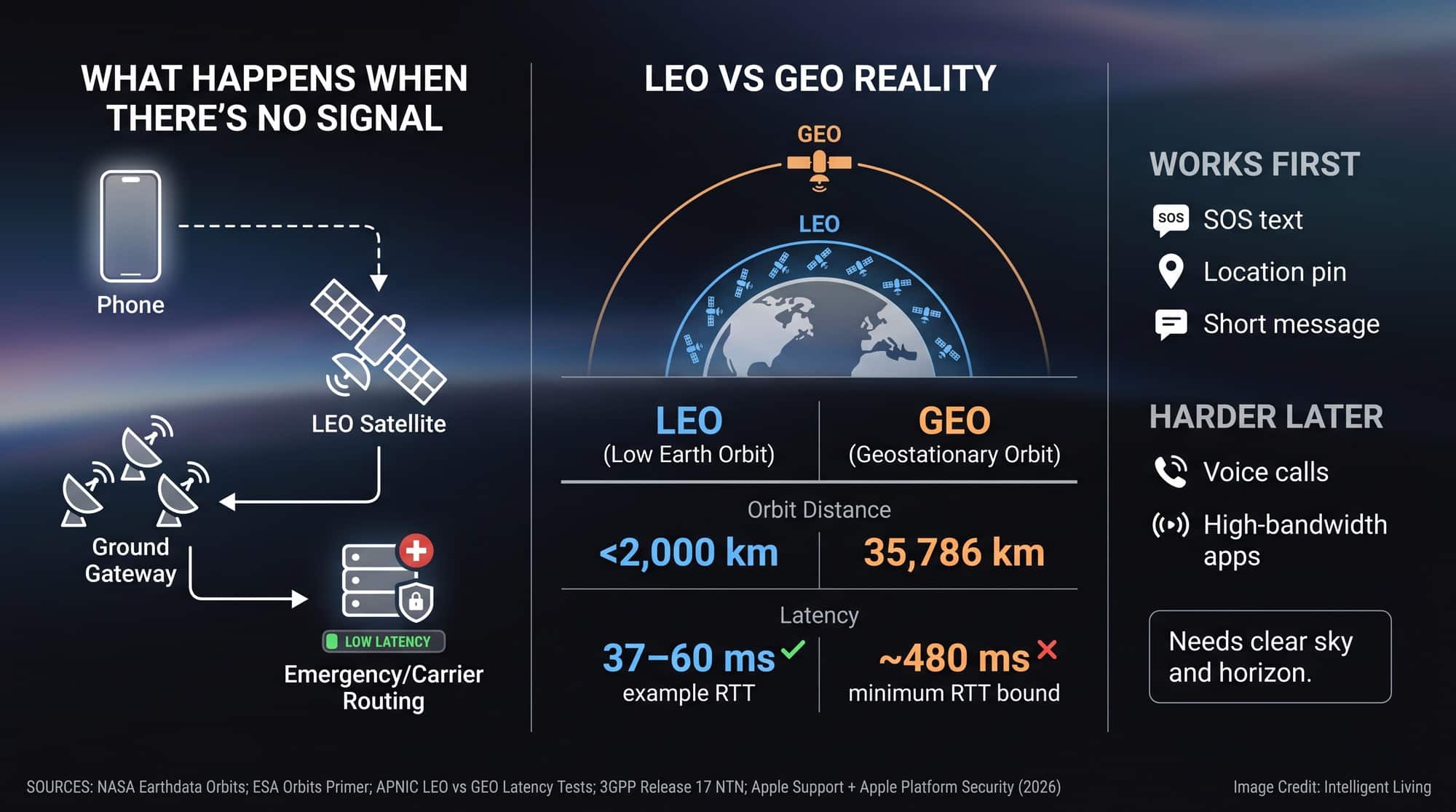
Low Earth orbit satellites work like moving cell towers in space. The system aligns with global non-terrestrial network standards that allow standard phones to link with space-based towers. This setup allows space-based towers to work alongside the ones on the ground. It ensures your phone stays connected by:
- Filling Coverage Gaps: Providing a signal where cell towers cannot reach.
- Switching Automatically: Moving your connection to a satellite when cellular service drops.
- Supporting Standard Hardware: Using the phone you already own without needing special antennas.
Low Earth Orbit satellites reside much closer to the ground than older geostationary models, significantly reducing signal delay. However, these systems still manage tight power constraints since standard smartphones use small internal antennas. As a result of these hardware limits, early direct-to-device services prioritize small, critical data packets like emergency texts or GPS pings.
Picture a driver rolling through a mountain pass where coverage drops without warning. A single satellite-sent location pin can turn a vague “somewhere on the road” situation into a precise pickup point.
iPhone Safety Continuity: Maintaining Emergency SOS Messaging for Users
Amazon’s commitment to maintaining Apple’s satellite features provides critical continuity for users. This ensures that Emergency SOS via satellite remains a dependable lifeline for those relying on it in remote areas.
For iPhone 14 and newer models, critical satellite-based emergency alerts provide a dependable way to text emergency responders. This last-resort connection often turns a scary situation into a manageable one by getting rescuers your exact location. These features are designed for short, essential communications, and they work best when the phone can keep a clear line of sight to the sky.
That continuity is not random; it sits on top of significant funding for satellite network expansion from major tech partners, which helped expand satellite capacity and made these features more than a marketing experiment.
Spectrum Strategy: Leveraging Licenses to Accelerate Deployment Timelines
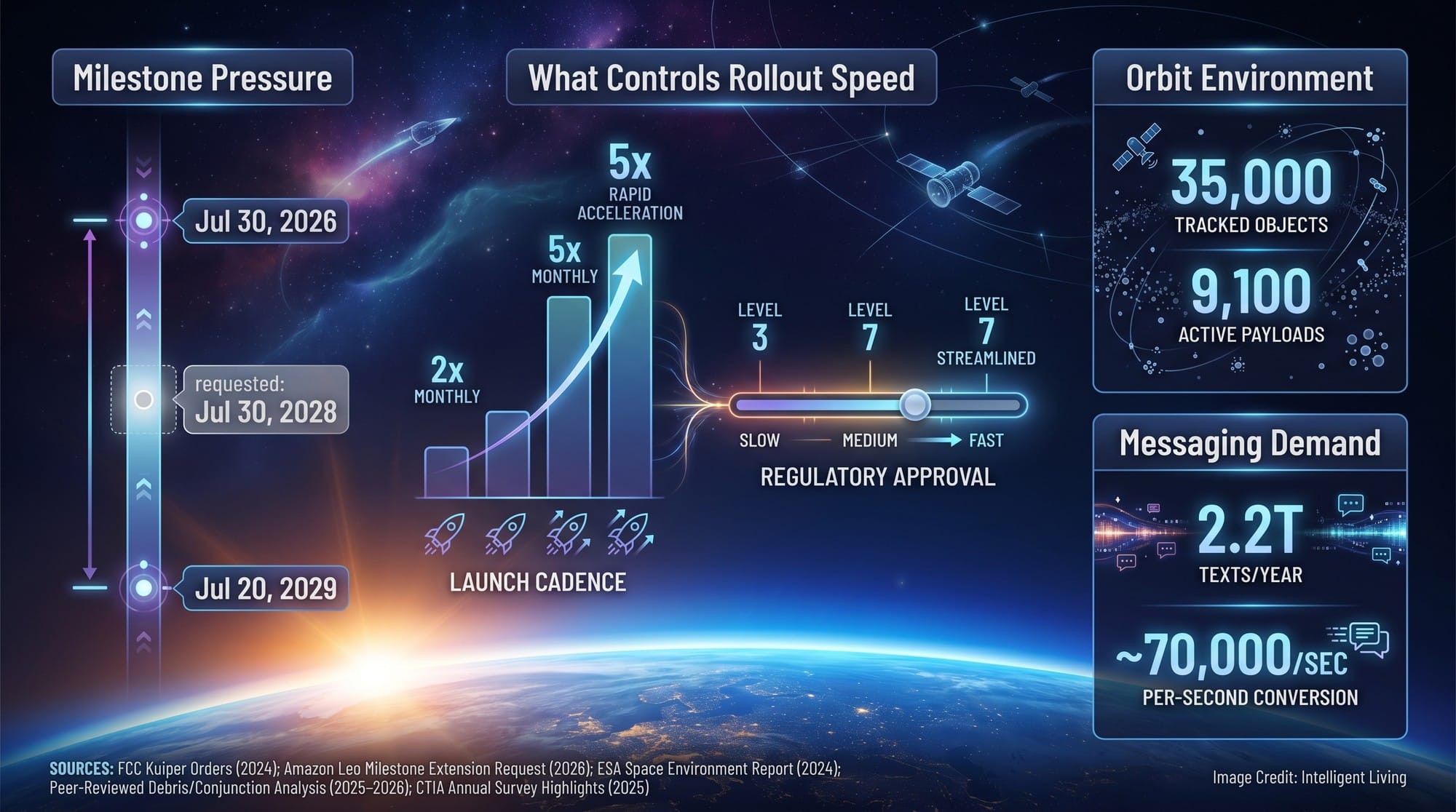
Spectrum is the invisible lane space that signals the need to move between phones, satellites, and ground stations. The speed of this rollout depends on federal licenses and space regulations. These rules set the schedule for when Amazon can launch satellites and how many it can keep in orbit at once.
Securing the proper mobile satellite spectrum often takes years due to complex licensing and international regulatory hurdles. Think of the spectrum as invisible lanes in the air. These lanes determine how clear your signal is and how many people can use the network at the same time without slowing it down.
Detailed investor documents outlining deal milestones reveal the complex nature of the acquisition. These terms show that Amazon is investing in permissions and operating hardware rather than starting from zero.
Future Consumer Impacts: Satellite Messaging Expansion and Launch Bottlenecks
Practical Mobile Impacts: 5 Ways Satellite Tech Improves Daily Reliability
The way Starlink first launched still shapes what people expect when they hear about getting internet from space.
- Enhanced Emergency Connectivity: Dependable satellite-to-phone messaging for regions where natural disasters or geographic barriers disable traditional cellular signals.
- More rural options over time: Future partnerships will likely combine cellular and satellite infrastructure to reach underserved rural areas.
- Consistent Emergency Lifelines: Direct-to-device safety features will gain reliability as the Amazon Leo network increases orbital capacity.
- More competition in satellite internet: Amazon is positioning itself to challenge established low Earth orbit internet providers currently dominating the market.
- Layered resilience that works today: Local safety is further improved by off-grid community communication tools that work during major outages.
Deployment Bottlenecks: Launch Cadence and Orbital Debris Management
The acquisition alone does not ensure a swift deployment. Rapid scaling depends heavily on manufacturing capacity and a consistent launch cadence to populate the orbital network. Industry experts highlight ongoing challenges with heavy-lift rocket capacity as a major obstacle. Getting enough hardware into orbit depends on launch availability and manufacturing speed.
As the orbital environment grows more crowded, advanced technologies for satellite debris management are becoming a priority. Managing these risks is essential because collisions can threaten the long-term reliability of satellite networks.
Consumers should view satellite-to-phone coverage as a tiered expansion. Moving from a big announcement to an actual service you can use takes time. It depends on when rockets can launch, getting permission from different countries, and building enough stations on the ground to handle the traffic.
Reliable Satellite to Phone Connectivity as a New Safety Standard
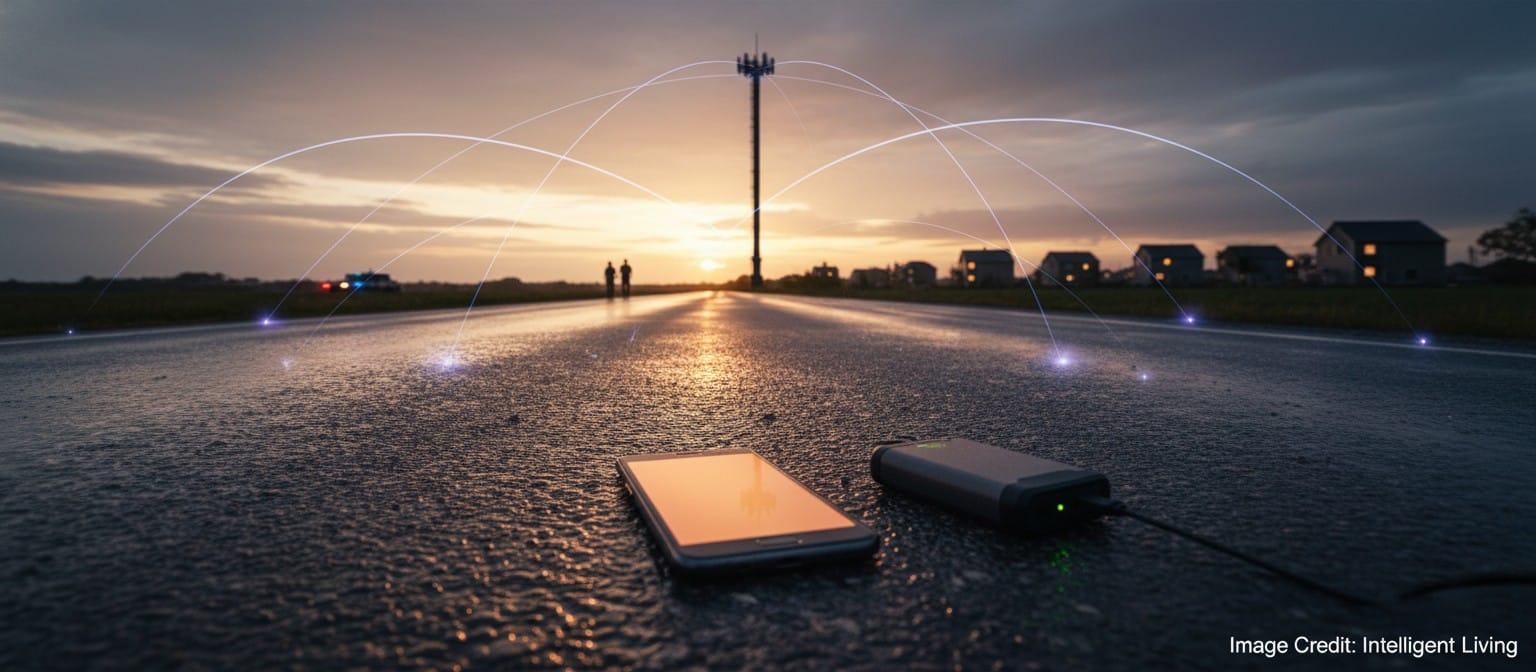
This acquisition does not instantly replace your local cellular provider, but it effectively closes the gap in emergency coverage. The primary benefit for everyday users is a clearer path to satellite-to-phone messaging in dead zones and much-needed redundancy during widespread outages. As the Amazon Leo system integrates with Globalstar’s established infrastructure, the market for satellite internet will become more competitive, likely leading to better performance and more accessible safety features for everyone.
Understanding why modern network failures occur helps explain why satellite-to-phone backups are essential. These backup layers provide realistic expectations for staying connected when the main network goes dark. Moving forward, having a satellite-based safety net will likely become a standard expectation for any mobile user, ensuring that ‘off the grid’ no longer means being out of reach.
Globalstar FAQ: Safety Features, Service Rollout, and Device Support
Will My iPhone Emergency SOS via Satellite Still Work?
Yes. Amazon has confirmed that all satellite features on supported iPhone and Apple Watch models will continue uninterrupted under the new agreement.
What is Direct-to-Device Satellite Coverage?
This technology allows a standard smartphone to connect directly to satellites in orbit for small data packets, like emergency texts, without needing any extra hardware or antennas.
When will Amazon Leo Launch Satellite Internet for Phones?
While the deal targets a 2027 close, the rollout will happen in stages as Amazon expands its constellation and secures further regulatory clearances for mobile services.
Is Amazon Building a Satellite Network for Rural Areas?
Absolutely. The project focuses on providing high-speed access and emergency messaging to underserved regions where traditional fiber or cell towers are too expensive to install. Furthermore, essential disaster preparedness strategies show that connectivity is just one part of keeping a family safe during a crisis.
How does this Compare to Starlink Satellite Internet?
While Starlink currently has more satellites in orbit, Amazon is securing specific mobile spectrum and established infrastructure to provide a more integrated mobile experience for phone users.


