
Industrial operators and warehouse managers throughout the region recognize that used containers are often liabilities or logistics headaches, yet they offer significant recovered value when managed correctly. For facilities across the Mid-Atlantic region and beyond, companies like Kelly Drums’ container pickup, recycling, and reconditioning services provide a reliable resource for managing steel, poly, and fiber drums, IBC totes, and Gaylord boxes. The company’s stated Mid-Atlantic service area supports industrial clients who need reliable pickups, industrial pallets for drum storage & shipping, responsible handling of hazardous residues, and documentation that holds up during compliance reviews.
Managing a busy loading dock means dealing with a constant stream of empty containers that can quickly turn into a serious safety and efficiency concern. Leaving used steel drums or plastic totes to pile up behind the warehouse creates more than just a tripping hazard; it opens your facility to regulatory fines and environmental risks. A reliable industrial waste pickup service handles these headaches by turning your clutter into a documented, compliant recycling stream that protects your business and your team.

What Are the Legal Requirements for Industrial Drum and Tote Safety?
Industrial drum recycling and IBC tote pickup programs fail when “empty,” “hazardous,” and “ready for transport” are treated as vague labels. Use these specific criteria to determine if a used container qualifies for clean reuse or requires specialized hazardous disposal.
- “Empty” has a legal meaning: The federal RCRA empty container rule sets thresholds that determine whether a container still carries regulated hazardous residue.
- Day-to-day storage rules are concrete: Satellite accumulation areas require containers to stay closed, compatible, and clearly marked, keeping the hazard visible and your safety controls consistent across the loading dock.
- IBC totes are not “one-and-done”: Many IBCs used for hazardous liquids require periodic leakproofness testing and inspection cycles when they are used for regulated transportation.
- Spill planning expectations are physical: Facilities often rely on secondary containment guidance under SPCC to keep oil and similar materials from reaching water.
These rules determine how your crew must stage and label containers to keep your Mid-Atlantic facility running safely during busy dock hours.
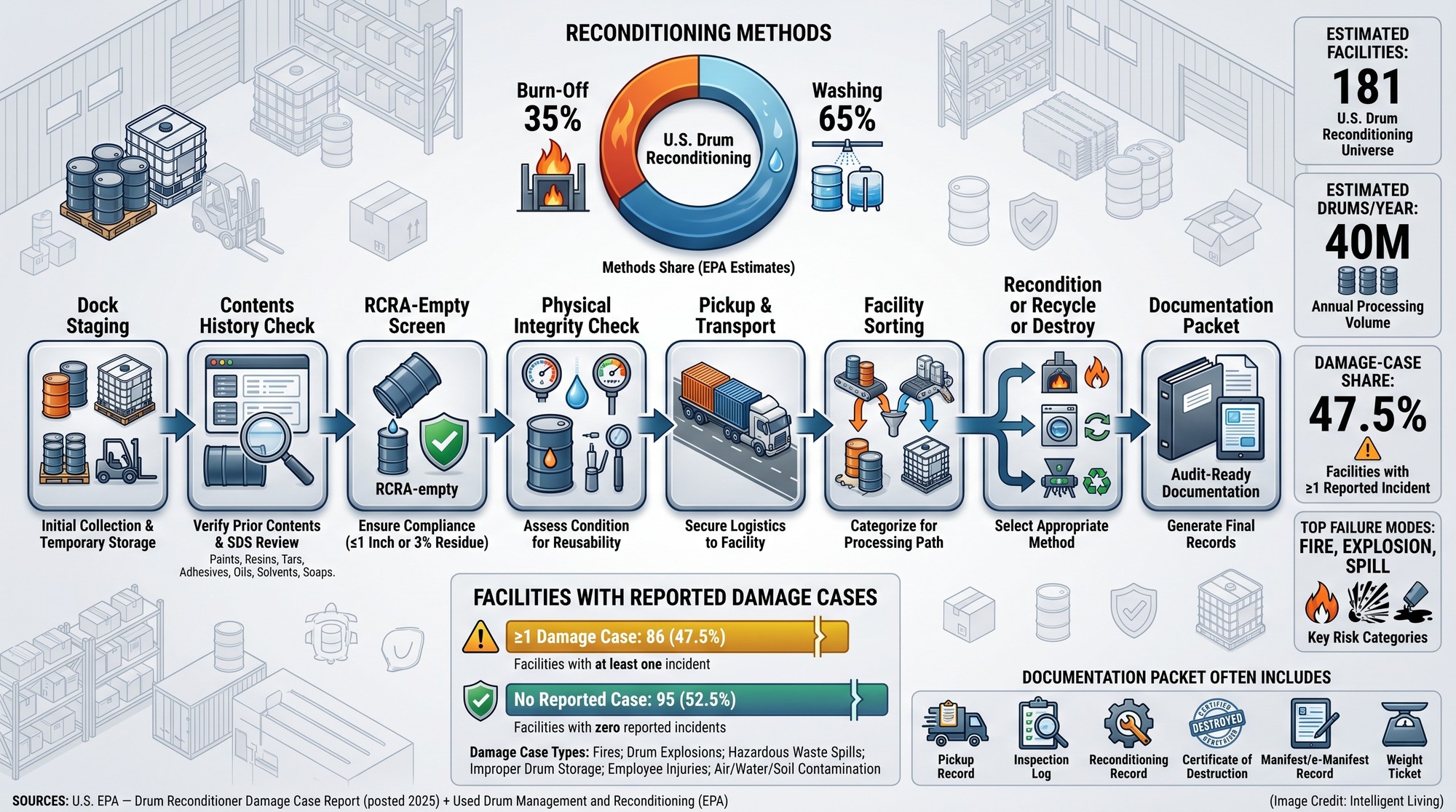
A Guide to Compliance-Focused Industrial Container Recycling Workflows
How Professional Container Recycling Actually Works
A professional recycling service steps in to collect your used containers and identify the safest next step for each unit. They decide if an item can be reused, reconditioned, or must be destroyed to eliminate liability. These programs manage the complex overlap of hazardous waste rules, bulk logistics, and corporate sustainability goals. The final choice depends on container type, residue condition, and documentation history; EPA’s used drum management and reconditioning guidance explains why “empty” status and cleaning methods change what is safe and compliant.
Common Risks and Safety Gaps in Drum Reconditioning
EPA has also summarized risks in the drum reconditioning sector through EPA drum reconditioner damage findings, reinforcing why contamination cleanup, careful inspections, and accurate records of what the container held before matter before anything is reused.
Standardized Pickup and Sorting Procedures
Experienced pickup crews spot contaminated or damaged units on sight, preventing your receiving docks from becoming hazards that slow down your team. This managed approach ensures the dock remains clear of unmarked empties that often accumulate without oversight.
Comparing Reconditioning to Material Recycling
When a drum is structurally sound and can be cleaned and restored to meet DOT reuse and reconditioning requirements, it may be refurbished for reuse in appropriate contexts. When a drum is compromised, its metal, plastic, or fiber becomes feedstock for recycling, which can still be the safer choice when residue history is unclear.
Verifying Disposal Through Certificates of Destruction
Shredding or grinding ensures contaminated packaging cannot be reused, effectively closing the loop on potential liability. A documented certificate of destruction clarifies when the container was removed from service and by whom. Detailed records protect your facility during supplier audits by proving containers were removed from circulation correctly.

Connecting Operational Compliance to Your Sustainability Targets
If a container recycling program cannot be proven, it will not withstand a detailed regulatory inspection, a customer questionnaire, or a serious incident review. Accurate empty container thresholds and clear labeling transform recycling from a regulatory burden into a verifiable operational strength. Many high-performing sites integrate these tasks into comprehensive environmental management workflows that simplify reporting and vendor oversight where safety, reporting, and vendor accountability have to stay consistent every shift.
Clarifying the RCRA-Empty Standard for Busy Warehouses
A container that meets federal thresholds for “empty” is often not treated as hazardous waste, but the removal method and the material type still matter. Using the definition correctly reduces needless waste and increases the pool of containers that can be reconditioned.
Understanding Waste Generator Categories and Documentation
EPA’s hazardous waste generator categories help explain why accumulation limits and paperwork can change with the amount of waste a site produces and why state rules may be more stringent than the federal baseline.
Managing Satellite Accumulation Areas Every Day
Daily routines like immediate labeling and proper lid securement stop minor oversight from becoming major safety risks. In a busy warehouse, a two-minute label-and-close habit at the transfer point can cut down the number of unlabeled drums left in an out-of-the-way corner.
Integrating DOT and OSHA Safety Rules into Your Workflow
Managing reuse and reconditioning requires strict adherence to transport rules for reclaiming packaging, and workplace hazard communication rules demand accurate labeling so handlers can work without accidental exposure. Standardized Hazard Communication Standard label elements provide the visual cues your handlers need to prevent chemical mixing and accidental release.

Understanding the Lifecycle and Safe Storage of Industrial Containers
Mapping the Lifecycle of Your Used Industrial Containers
| Container Type | Typical Best Pathway | Warning Signs to Watch For | Typical Documentation |
|---|---|---|---|
| Steel Drum | Recondition or recycle | Severe corrosion, significant residue | Inspection record, reconditioning log, pickup manifest |
| Plastic Drum | Reuse if compatible; recycle if degraded | Cracks, deformation, incompatible residues | Inspection record, cleaning notes |
| Fiber Drum / Gaylord | Recycle (fiber stream) | Water damage or hazardous liquid saturation | Recycling receipt, weight ticket |
| IBC Tote | Recondition and retest or recycle | Structural damage, unknown residue | IBC test certificate, retest dates |
Key Triggers for Disposal and Recycling Decisions
Clear container histories make reconditioning or recycling a predictable, low-risk process for your facility. Destruction is often the most effective way to prevent liability when a container shows:
- Structural compromise or damage
- Unknown residues or chemical history
- Contamination that cannot be safely removed
A simple contents-history tag at receipt can prevent confusion later when the tote is being staged for pickup.
Identifying DOT Requirements for Intermediate Bulk Containers
Under the DOT definition of an intermediate bulk container, an IBC is a portable rigid or flexible packaging designed for mechanical handling, which is why damage checks and documented inspections matter even when a tote looks fine from a distance.
Using IBC Code Markings for Efficient Sorting
On many units, IBC code markings like 31HA1 can reveal whether the tote is composite, plastic, or steel-framed, which helps teams separate what can be responsibly reconditioned from what should be recycled or destroyed.
Maximizing the Value of Clean Gaylord Boxes and Corrugated Fiber
For fiber streams, EPA’s containers and packaging materials data is a useful reminder that corrugated material is valuable to recycle when it stays clean and dry.
Preventing Frequent Mistakes in Container Storage and Handling
Operational errors often start in the storage yard. Drums stacked without containment, unlabeled Gaylord boxes, and unattended tote transfers create both safety incidents and audit findings.
Setting Up Secondary Containment that Protects Your Floors
Investing in spill-resistant chemical storage infrastructure prevents minor releases from escalating into costly cleanup operations. Design containment to hold the largest container plus freeboard. Good spill-ready chemical storage systems keep small releases from turning into expensive accidents.
Pallet Standards for Drum Storage and Shipping
A pallet plan is not just logistics; it is stability and spill prevention. Utilizing standardized industrial pallets for drum shipping ensures stability and level staging, significantly reducing the risk of punctures during fast-paced forklift operations.
Simple Steps for Preventing Leaks Before the Recycler Arrives
Staying proactive with routine drum leakage inspections allows your team to spot signs of wear before they cause a safety hazard. A proactive approach prevents small leaks from becoming major violations. Standardize these checks:
- Compatibility: Ensure residues won’t react with the container or other nearby waste.
- Routine Inspections: Look for early signs of wear or corrosion.
- Early Detection: Catch leaks before they spread across floors or reach drains.
Mastering Proper Labeling for Safer Daily Handling
Accurate hazard labels are a strict safety requirement. Visible hazard information stops a handler from parking a container in the wrong zone or staging it near an incompatible material. Many near-misses start with a rushed move and end with a calm pause when someone spots a clear label and chooses the safer route.
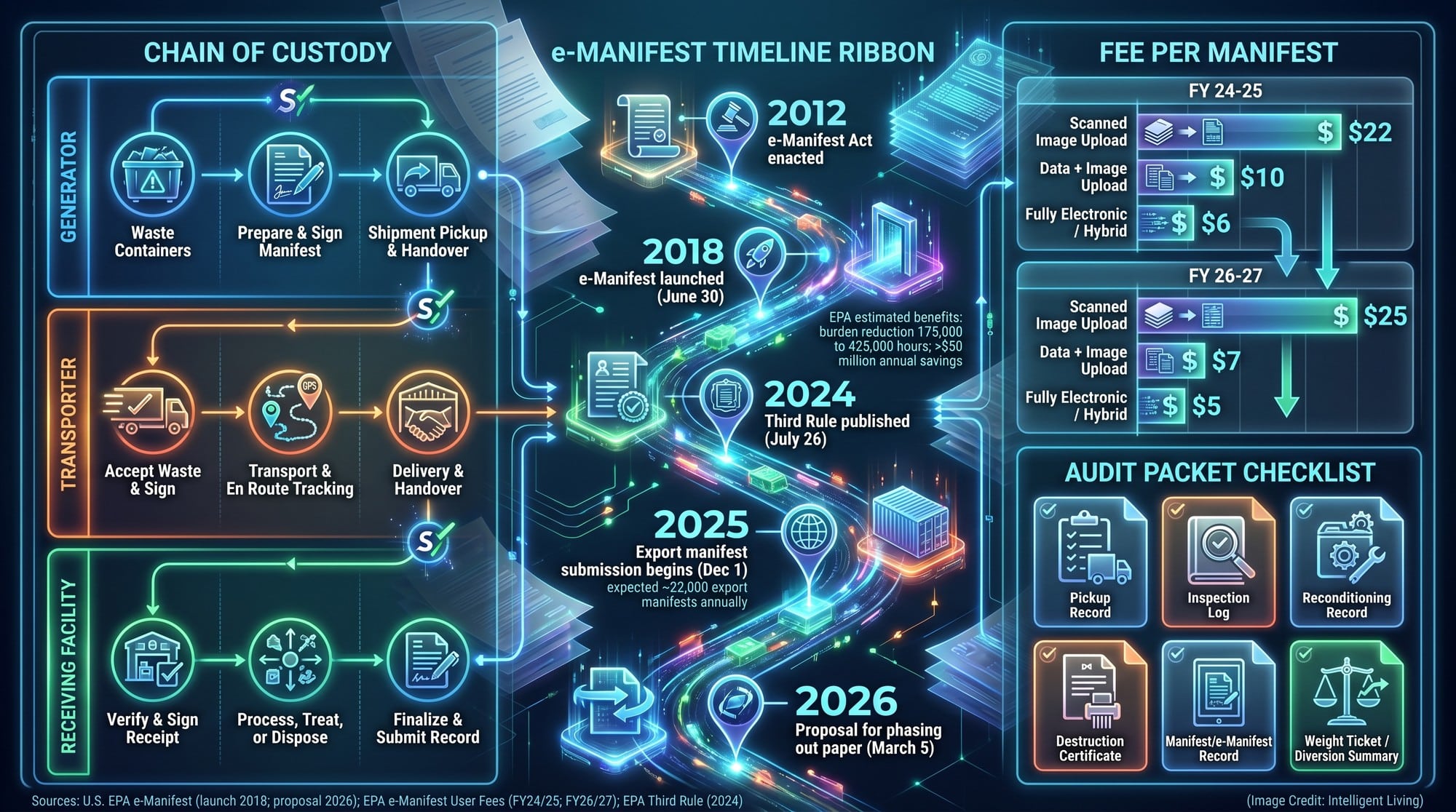
How to Build Audit-Proof Documentation for Industrial Waste Compliance
Maintaining Documentation that Survives Strict Compliance Audits
Effective recycling programs treat documentation as a vital protective measure rather than just a minor administrative task. The paper trail turns a container decision into something a regulator, insurer, or customer can verify months later. Track pickup records, reconditioning logs, certificates of destruction, and recycling weight tickets. Electronic manifests now serve as the primary tracking mechanism within the national hazardous waste infrastructure, supported by EPA’s e-Manifest system.
Essential Records Your Facility Needs to Keep
Applying a rigorous vendor vetting process ensures your environmental partners maintain the same high documentation standards as your own facility. Keep inspection sheets long enough to match your internal warranty and audit timelines, keep certificates of destruction to protect brand and supplier accountability, and keep manifests to show chain of custody.
Turning Your Recycling Records into Sustainability Metrics
You can use tools like EPA’s Waste Reduction Model to show exactly how reuse and recycling lower your total environmental footprint. Recording diversion rates and recycling receipts turns discarded containers into measurable sustainability metrics. Screening-level comparisons help teams explain why reuse and recycling pathways can reduce lifecycle impacts when the assumptions are stated clearly.
Adopting Digital Systems for Modern Compliance Reporting
Auditors are increasingly looking for traceable systems where data flows from operations into reporting with fewer manual handoffs. New AI-assisted ESG compliance reporting workflows make this easier, turning your waste diversion data into verified proof for customers and regulators. Modern facilities are adopting smart recycling technology and sorting automation to turn waste handling into a transparent, accountable part of their daily infrastructure.
10 Steps for Implementing a Safer Container Management Program
- Inventory Container Flows: Tag drum and tote types, note last contents, and record condition at receipt.
- Standardize Emptying SOPs: Use consistent cleaning and inspection steps so the team treats “empty” the same way every time.
- Label at the Source: Attach a simple, durable label when a container is first used or emptied.
- Define Recondition vs. Destroy Triggers: Put inspection photos and a rejection checklist into the SOP.
- Schedule Regular Pickups: Avoid accumulation surprises by setting a predictable pickup rhythm with a qualified recycler.
- Require Documentation Packages: A certificate of destruction or a reconditioning record should accompany each batch, and the Uniform Hazardous Waste Manifest tracking system clarifies how accountability follows regulated waste from generator to receiving facility.
- Use quick, scenario-based training to help your warehouse team avoid common sorting and handling mistakes.
- Use Containment Pallets and Racking: Match pallet specs to container types to reduce tipping, punctures, and staging chaos.
- Tracking these metrics helps you justify the ROI of your industrial reverse logistics programs while proving the reliability of your recovery systems at scale.
- Run a Small Audit Twice a Year: Test a random batch of containers against the SOP and the documentation trail.

Why Audit-Ready Systems Secure Your Long-Term Industrial Sustainability
Facilities that treat compliance as the backbone of container recycling unlock safer operations and measurable outcomes. Turning drum and tote handling into a repeatable system builds a defensible record of diversion and reduces the chance that reuse becomes a regulatory risk.
Modern tracking systems make industrial waste management more measurable through improved sensors, routing, and sorting data. This operational shift treats waste handling as accountable infrastructure, ensuring your facility stays compliant while reaching environmental goals.
Top 5 Questions for Maintaining Safe and Compliant Container Recycling
How do I know if my drum is RCRA empty?
Federal rules state a container is empty when common practices remove all possible material and remaining residue stays below specific weight or depth limits. For acute hazardous materials, you must follow a certified triple-rinse cleaning standard to ensure the container is truly decommissioned.
Can IBC totes be reused after hazardous use?
Yes, provided the tote is structurally sound, compatible with the new material, and passes the required leakproofness testing and inspection cycles.
Does an empty drum still need a manifest?
Documentation is often necessary to prove chain of custody and show that your facility followed specific disposal or reconditioning protocols during an audit.
When should I choose destruction over recycling?
Destruction is the best choice for containers with unknown residues, structural damage, or when you need to protect your brand from unauthorized reuse.
How can I quickly lower my warehouse compliance risk?
Label every container immediately, keep lids closed at all times, and set a recurring pickup schedule with a certified recycler to prevent clutter.


