
There are videos on YouTube presenting climate misinformation and instigating climate crisis denial. An activist group named Avaaz brought to light that the online video service is providing monetization to these factually inaccurate videos with YouTube advertisements. The group discovered that over 100 brands have advertisements running on the videos promoting climate misinformation.
Julie Deruy, a senior campaigner at Avaaz, said:
This is not about free speech; this is about free advertising YouTube is giving to factually inaccurate videos that risk confusing people about one of the biggest crises of our time. YouTube should not feature, suggest, promote, advertise or lead users to misinformation.

Some of the names – including L’Oréal, Samsung, and Decathlon – had no idea that their adverts were being played during and before these videos.
A L’Oréal spokeswoman said:
The information promoted by these videos is in direct contradiction with L’Oréal’s commitments and the work we have been carrying out for many years to protect the environment. We are collaborating with YouTube teams asking them to use all the technological means at their disposal to better inform the platform’s users about the nature of these videos and to limit their impact.
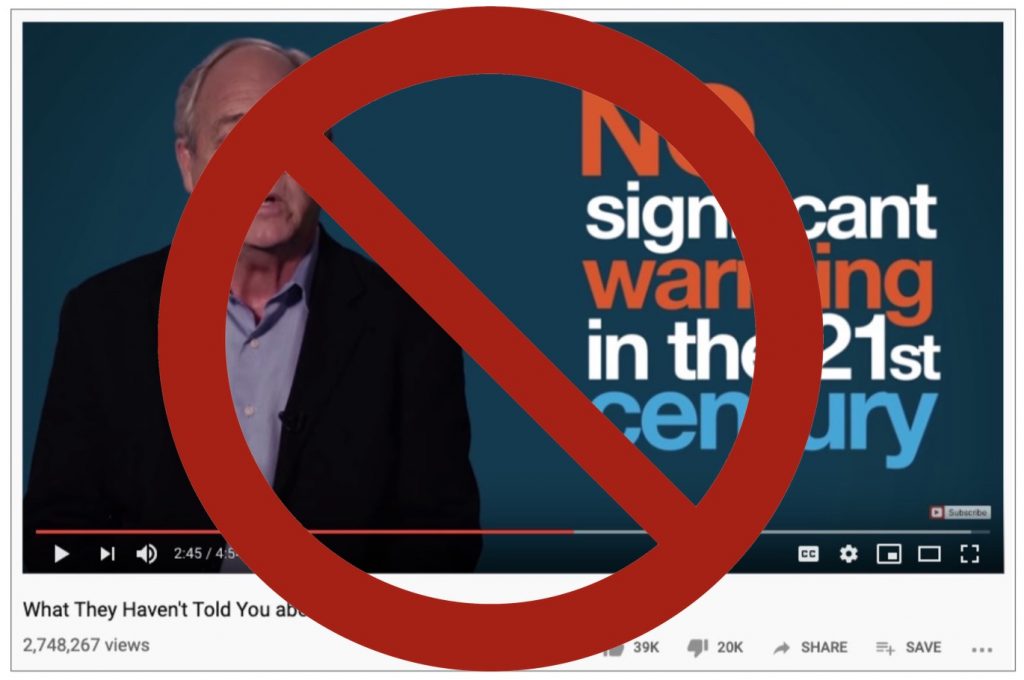
Avaaz published a report detailing the situation. The group examined videos that persuaded viewers against climate change. They found the videos by searching keywords such as “global warming,” “climate manipulation,” or “climate change” and seeing what YouTube pushed the users to watch in their suggested videos list.
They focused on the videos given high prominence by YouTube’s recommendation algorithms. What they saw was that 16 out of the top 100 videos on “global warming” contained misinformation, while 21 out of 100 on “climate manipulation” did, and 8 out of 100 on “climate change” did.
Avaaz argued:
YouTube has previously taken welcome steps to protect its users from anti-vaccine and conspiracy theories, but has not acted with equal force against broader misinformation and disinformation content, including climate misinformation.

In the report, the group calls on YouTube to enforce new policies designed to prevent people from further spreading climate misinformation on its platform. It suggests the site should:
- Add climate misinformation to its “borderline content” policy so that the platform’s algorithmic distribution of videos limits such videos from being seen. Questionable content consists of videos that do not reach the bar required to remove them from the site altogether, but the algorithm strictly limits them from being suggested for viewing.
- Demonetize misinformation, meaning no advertisements for videos with malicious content.
- Enable a way for advertisers to have the option of excluding their ads from videos with climate misinformation.
- Work with independent fact-checkers to brief users who have viewed or interacted with verifiably misleading or false information.
- Release data showing how many views are driven to misinformation via the platform’s recommendation algorithms – to provide transparency for researchers.
On that note, YouTube claims Avaaz’s report itself has transparency problems. It said in a statement:
We can’t speak to Avaaz’s methodology or results, and our recommendations systems are not designed to filter or demote videos or channels based on specific perspectives. YouTube has strict ad policies that govern where ads are allowed to appear and we give advertisers tools to opt-out of content that doesn’t align with their brand. We’ve also significantly invested in reducing recommendations of borderline content and harmful misinformation, and raising up authoritative voices on YouTube.
In 2019 alone, the consumption of authoritative news publishers’ channels grew by 60%. As our systems appear to have done in the majority of cases in this report, we prioritize authoritative voices for millions of news and information queries, and surface information panels on topics prone to misinformation – including climate change – to provide users with context alongside their content. We continue to expand these efforts to more topics and countries.
Nevertheless, like Travis Nichols, a spokesperson for Greenpeace USA, said:
If we’re going to stop the climate crisis, we need tech and social media companies like YouTube to be part of the solution, not part of the problem.
Knowledge is power and the wrong information can be very harmful!