
Imagine living in a city so connected that you can step out of your front door and onto a train platform within minutes. No traffic, no carbon-spewing commute—just a clean ride to work, school, or your favorite local café. Now imagine that your home, powered by energy-efficient systems and built within reach of everyday needs, costs less than the city average. This isn’t a futuristic fantasy. It’s already happening across the United States—thanks to a growing wave of policies tying affordable housing development to transit access.
From Seattle to Connecticut, local governments and federal programs are working together to solve two of our biggest urban challenges: housing affordability and climate pollution. At the heart of this solution is a deceptively simple idea. Building more homes near zero-emission transit allows you to:
- Reduce car dependence.
- Cut household costs.
- Help the planet.
This article explores how these efforts are taking shape, what’s working, and what it will take to scale the approach across the country. We’ll walk through the policies, funding, real-world examples, and even the challenges—so you can understand how sustainable living by design is being made real, one train station at a time.
Key Takeaways: Housing, Transit, and Climate at a Glance
Here’s a snapshot of what we’ll explore:
- What is TOD (Transit-Oriented Development)? It’s more than a buzzword. TOD means building walkable, mixed-use communities centered around public transportation hubs.
- Why link housing to transit? Because placing affordable homes near clean transit lines reduces emissions, improves access to jobs, and lowers transportation costs.
- What’s the federal government doing? Through programs like the FTA’s TOD Planning Grant and the Build More Housing Near Transit Act, Washington is putting real money behind these ideas.
- Which cities are leading the way? Seattle’s Sound Transit mandate, Connecticut’s Meriden project, and San Antonio’s Green Line zoning reforms are models in action.
- What’s the impact? Lower vehicle emissions, better public health, reduced commute times—and a chance to build equity into climate policy.

What is TOD, and Why it Matters
Let’s start with the basics. Transit-Oriented Development (TOD) refers to housing and commercial development designed specifically around public transportation. Imagine a community where essential amenities are all within a 5- to 10-minute walk of a light rail station or rapid bus line, including:
- Apartment buildings
- Grocery stores
- Clinics
- Coffee shops
Now pair that setup with affordable rent, bike lanes, and tree-lined sidewalks, and you’ve got a living model for sustainable urbanism.
But TOD is more than a design philosophy; it’s a tool for climate action. With transportation accounting for nearly 29% of U.S. greenhouse gas emissions—mostly from personal vehicles—placing homes near transit directly cuts car trips and tailpipe pollution.
TOD also reduces household costs. In many cities, the average family spends more on transportation than they do on housing. That dynamic flips when residents can ditch the second car or walk their kids to school. And with the right policies, these developments can prioritize low- and moderate-income families—ensuring that access to clean, connected living isn’t just for the wealthy.
Here’s why TOD matters:
- Reduces emissions by giving people a viable alternative to driving.
- Improves equity by increasing affordable housing in job-rich areas.
- Boosts health by encouraging walking and lowering air pollution.
- Drives local economies by clustering small businesses around transit corridors.
And when paired with zoning changes and federal investment, TOD becomes not just a design principle but a scalable solution to climate and housing crises.
Federal Policy Fueling TOD-Linked Affordability
This trend is not just an idea embraced by urban planners; it’s backed by significant federal policy and funding.
The FTA TOD Planning Grant Program
In Fiscal Year 2024 alone, the Federal Transit Administration (FTA) awarded over $10.5 million in competitive TOD Planning grants. These funds help cities and transit agencies plan projects that:
- Increase affordable housing near transit
- Encourage mixed-use development
- Improve pedestrian and cycling access
- Reduce vehicle miles traveled and emissions
Cities like Pittsburgh, Albuquerque, and Tucson have used these funds to kick-start local TOD plans that center equity and climate resilience.
Justice40: Putting Equity First
President Biden’s Justice40 Initiative requires that 40% of federal climate and infrastructure funding benefit disadvantaged communities. This mandate directly supports TOD by ensuring that new transit-connected housing developments serve the people who need them most—not just the highest bidders.
That includes historically underfunded neighborhoods, Black and brown communities, and areas hardest hit by pollution and disinvestment. By channeling resources into transit-adjacent zones in these areas, Justice40 strengthens the link between housing access and environmental justice.
The Build More Housing Near Transit Act
Bipartisan legislation like the Build More Housing Near Transit Act proposes to align federal transit funding with local housing production. In short: if a city wants transit dollars, it must show how it’s enabling higher-density, affordable housing near that transit.
It’s a logical connection. You don’t want shiny new train stations surrounded by parking lots and single-family homes. You want communities—places where people can live, work, and thrive without a car.
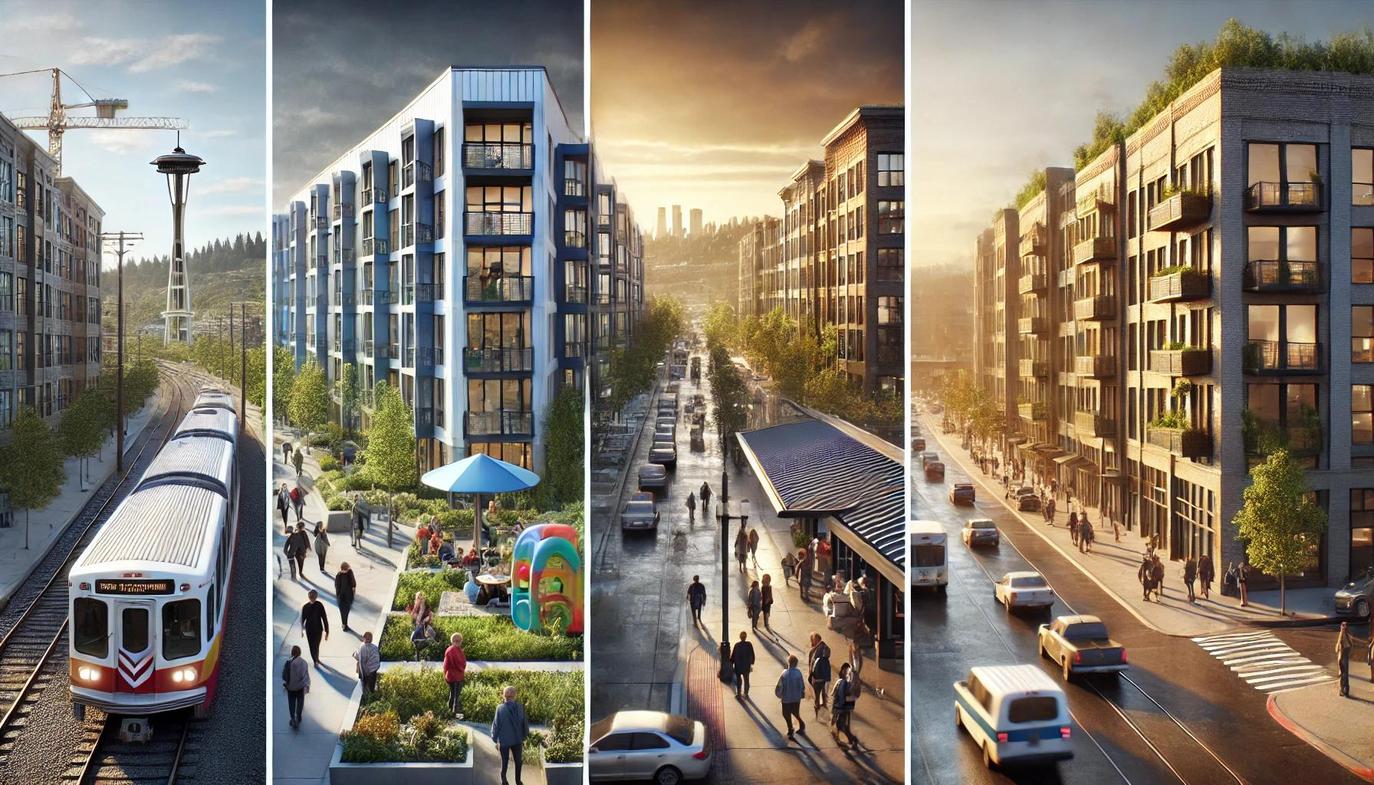
Real-World Models of Transit‑Linked Affordable Housing
Theory is one thing. Seeing it work on the ground is another. Across the U.S., cities and transit agencies are beginning to put policy into practice—creating real-life examples of affordable housing developments anchored to clean transit systems.
Seattle: Building Equity Into the Transit Blueprint
Seattle’s Sound Transit has adopted one of the country’s most ambitious and equity-driven approaches to TOD. By policy, when the agency sells land near transit stations, 80% of the housing units must be affordable to people earning no more than 80% of the area median income (AMI). That’s a bold move in a region known for its rising housing costs.
As of 2023, the agency had enabled the creation of over 2,670 affordable homes across 14 stations. Some developments include additional community amenities like childcare centers, green space, and small business incubators. Seattle’s model proves that TOD can be more than just housing density—it can be a strategy for building inclusive, thriving neighborhoods.
Connecticut: Small-Scale, Big Impact
While smaller in scope, Connecticut is making steady strides. In Meriden, the Colony Project added 69 new housing units right by the train station, with 19 of those reserved as affordable. Backed by $2.4 million in state funding, the project integrates ground-floor retail, walkability enhancements, and modern energy systems.
Meanwhile, plans are underway to reimagine the area around Stamford’s main train station. Proposed designs emphasize mixed-income housing, solar integration, and broader transit access, reflecting a shift toward clean infrastructure tied to compact living.
San Antonio: Rethinking Zoning for Clean Growth
In Texas, San Antonio is using zoning reform as a lever to reshape urban growth. The city recently updated its development code to support higher-density housing along its proposed Green Line rail corridor. One of the biggest changes? Eliminating parking minimums, which historically inflated housing costs and prioritized car travel over walkability.
This shift means developers can now create more compact, transit-linked housing with lower costs and fewer car-dependent design requirements. While the plan has met local resistance, it’s a powerful example of how zoning can be reimagined to support climate-smart, people-first development.
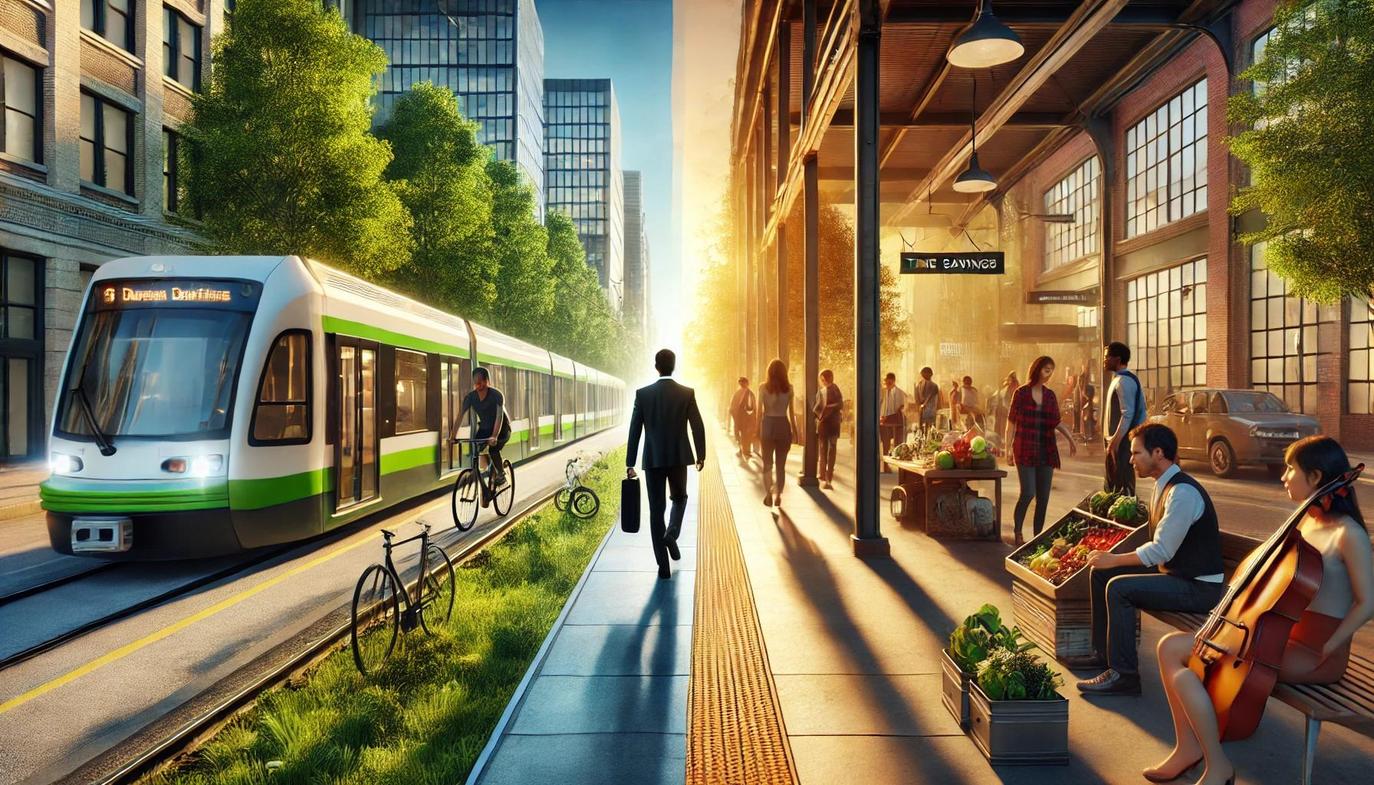
Triple-Benefit Impact: Emissions, Commute, Equity
Transit-oriented affordable housing does more than just meet a housing quota; it addresses three of the most urgent challenges facing American cities today: pollution, long commutes, and inequality. Let’s take a closer look at each.
Cutting Carbon Emissions by Reducing Car Use
Living near quality public transit directly reduces car dependency. For example, a study of residents near Los Angeles’s Expo Line light rail found their daily transportation-related carbon emissions were 27% lower than their peers, saving about 3.1 kilograms of CO₂ per household daily.
The result matters. According to the EPA, transportation is the largest source of greenhouse gas emissions in the U.S., with personal vehicle use as the leading contributor. Transit-linked housing is one of the few scalable strategies that reduces emissions immediately and changes long-term behavior.
Shorter Commutes and More Free Time
When homes are located near reliable transit, residents spend less time stuck in traffic and more time living their lives. In cities where TOD is done well, residents can walk or bike to local amenities and take transit directly to jobs, schools, or health care centers.
This improves quality of life while also opening up economic opportunities. A reliable, affordable commute expands the job search radius for low-income residents, unlocking access to better-paying positions and educational resources.
Advancing Equity Through Access and Location
Historically, public services, jobs, and affordable transit have pushed low-income and marginalized communities to the urban fringe. TOD flips that dynamic by placing affordable homes in the heart of opportunity zones.
Federal efforts like the Justice40 initiative are designed to ensure that investments in transit and climate resilience flow directly to communities that need them most. And local mandates, like Seattle’s affordability targets or Connecticut’s mixed-income development funding, help embed inclusion into urban design.
When housing, transit, and equity move in the same direction, the results are transformative, creating communities where:
- Families can live closer to work and school.
- Seniors and people with disabilities gain better mobility.
- Entire neighborhoods become more resilient and interconnected.
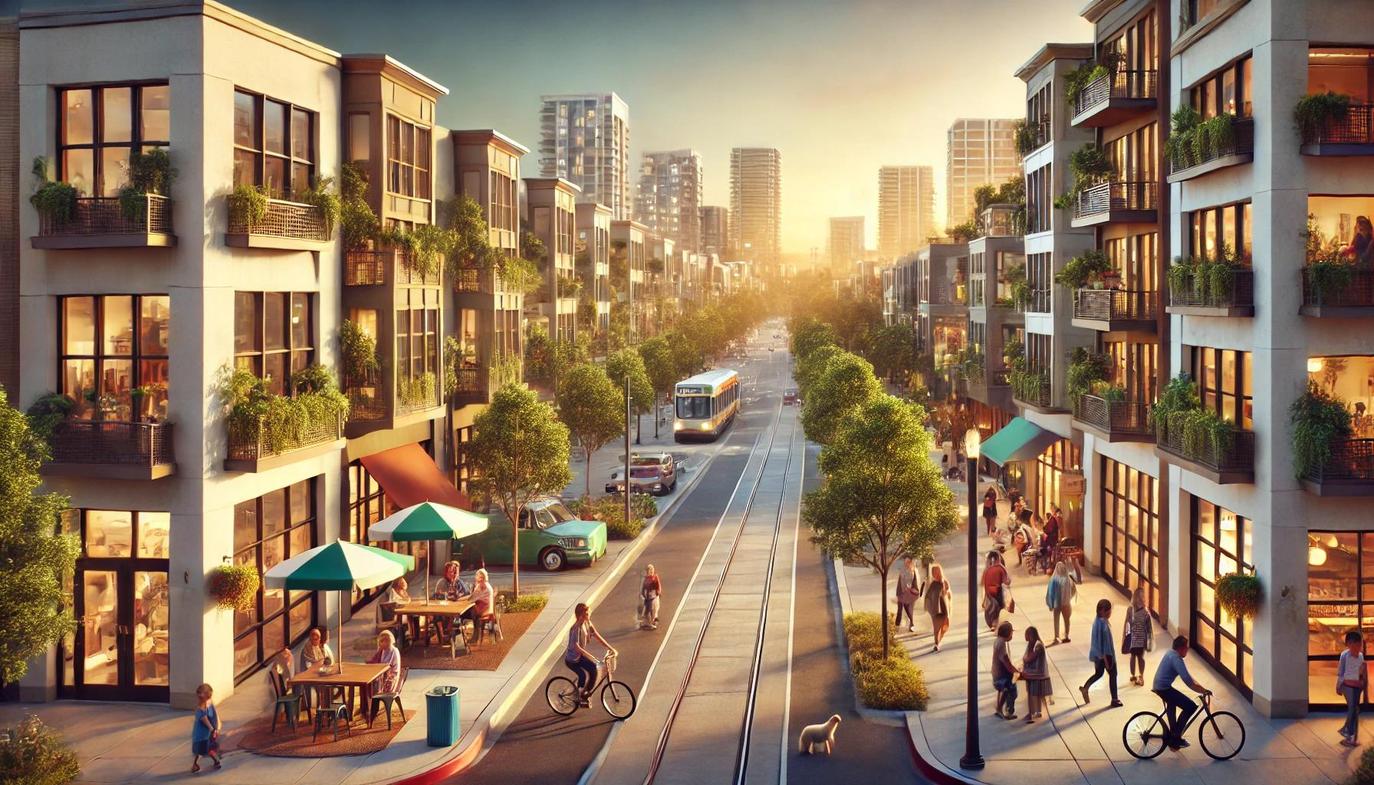
City Planning Reinvented: The 15‑Minute Neighborhood and Zoning Reform
As more cities look to reduce sprawl and emissions, a new vision of urban life is taking hold: the 15-minute neighborhood. It’s a simple but revolutionary idea: everything you need—groceries, healthcare, schools, green space, transit—should be reachable within a 15-minute walk or bike ride.
What Is a 15-Minute Neighborhood?
At its core, this model challenges car-first development. Instead of prioritizing highways and parking lots, it emphasizes density, accessibility, and mixed-use spaces. This means more apartments above corner shops, smaller-scale retail, public services embedded in neighborhoods, and urban designs that prioritize pedestrians over vehicles.
Cities like Portland, Paris, and Melbourne have championed this model, but U.S. metros are beginning to explore it too—especially as climate goals and housing needs intersect.
How Zoning Reform Makes It Possible
Traditional zoning laws in the U.S. often separate residential, commercial, and industrial uses. They also restrict density and require large amounts of parking, which limits the ability to build compact, walkable communities.
Reforming these codes is key to unlocking 15-minute living. That includes:
- Eliminating or reducing parking minimums (as in San Antonio)
- Legalizing multi-family homes in areas previously zoned only for single-family housing
- Encouraging form-based zoning, which focuses on building design and walkability instead of strict land-use categories
A recent academic study from Salazar-Miranda and Talen (2025) found that form-based codes in U.S. cities lead to more compact, transit-supportive housing and offer greater flexibility for developers to meet local needs.
Connecting the Dots Between Policy and Place
The 15-minute neighborhood is more than a planning philosophy. It’s a practical response to climate, affordability, and social cohesion. But it requires cities to rethink how land is used—and who has access to what.
That’s where federal policy, local zoning reform, and TOD all come together. With supportive laws, incentive programs, and community engagement, these ideas can move from paper to pavement, reshaping the way we live and move through our cities.
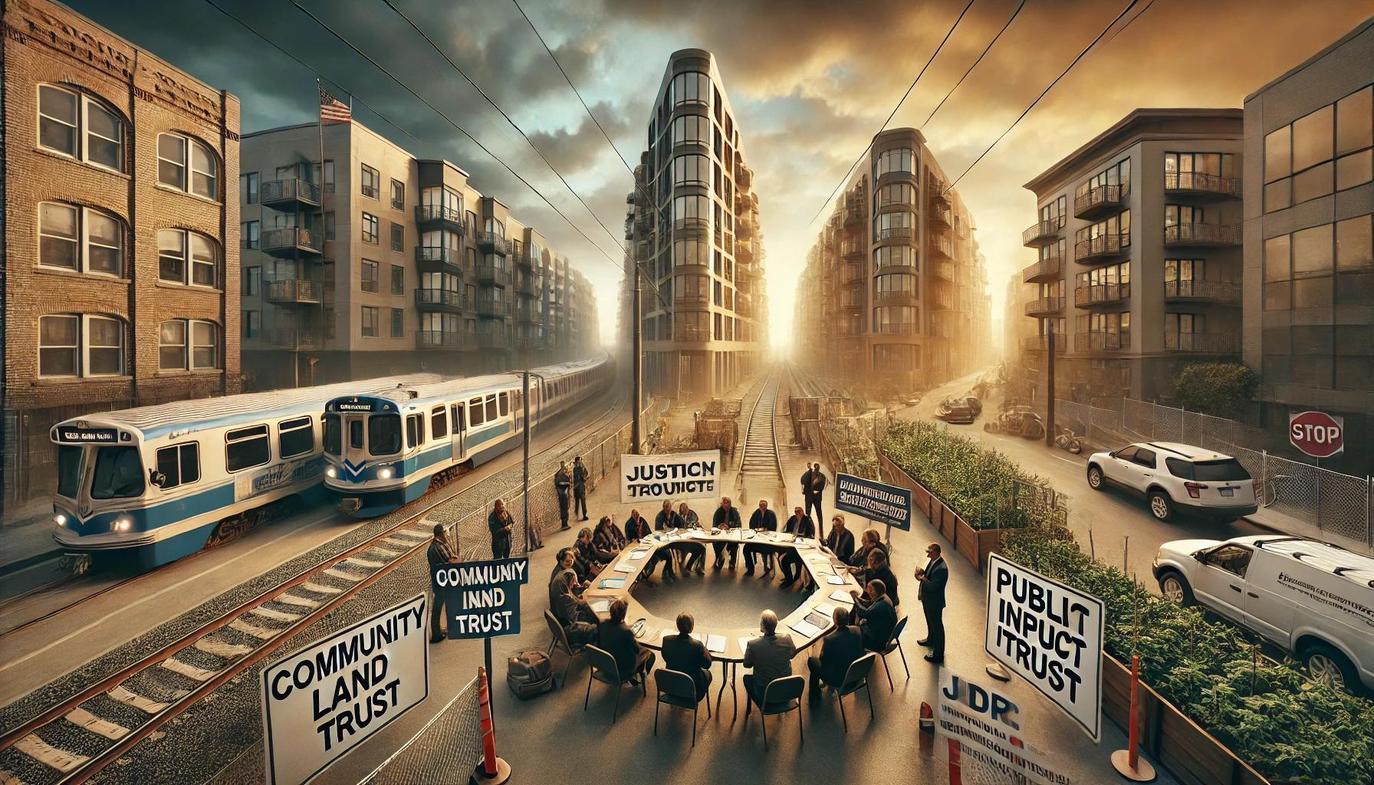
Risks, Resistance, and Safeguards
While the promise of transit-oriented affordable housing is compelling, real-world implementation often runs into pushback. Local opposition, concerns about gentrification, and political hurdles can slow or even block well-intentioned projects. To make these initiatives work for everyone, we need to look at both the friction and the strategies that help communities move forward together.
Understanding the Root of Resistance
One of the most common challenges to TOD is community resistance, especially in areas unaccustomed to density. Residents sometimes fear that adding new apartments or reducing parking requirements will change neighborhood character, reduce property values, or increase traffic. These concerns, while not always supported by evidence, reflect deeper anxieties about change and control over local environments.
In San Antonio, for instance, zoning changes along the planned Green Line corridor sparked concern about congestion and development scale—even though the reforms were designed to promote walkable, transit-friendly growth.
Other objections include:
- Fears of displacement when land values rise
- Distrust of outside developers or transit agencies
- Lack of infrastructure readiness for new population density
The Displacement Dilemma
The most pressing concern is gentrification. When TOD projects attract investment, they can unintentionally raise property values and push out the low-income residents they were designed to help, especially in areas with weak affordability mandates or tenant protections.
To prevent displacement, policies must be proactive, not reactive. That means including affordability targets in land-use decisions, requiring long-term income restrictions on housing units, and investing in anti-displacement measures like community land trusts or right-to-return programs for displaced residents.
Designing Safeguards That Build Trust
Fortunately, there are proven safeguards that can reduce resistance and protect vulnerable communities:
- Transparent public engagement: Involve local voices early and often in the planning process.
- Mandatory affordability minimums: Policies like Seattle’s 80–80–80 rule ensure that TOD benefits low- and moderate-income households.
- Zoning with equity in mind: Legal tools can be used to require or incentivize affordable housing in all new TOD developments.
- Infrastructure guarantees: Pairing new housing with investments in sidewalks, green spaces, schools, and healthcare builds public trust.
A compelling example of this inclusive planning approach is the Justice40 initiative, which directs at least 40% of federal climate-related funding into historically underserved areas. This ensures that transit-linked housing isn’t just efficient or green—it’s also fair.

Policy Roadmap: Scaling Up Transit‑Linked Climate Housing
To meet its housing, transportation, and climate goals simultaneously, the U.S. must ensure transit-linked housing evolves from an innovative concept into an infrastructure standard. This requires coordinated action at every level—from federal law to local zoning boards.
Expand Federal Investment and Incentive Programs
The foundation is already in place. Programs like the FTA TOD Planning Grants, the Inflation Reduction Act, and the Build More Housing Near Transit Act offer important frameworks for funding and coordination. But these programs need more visibility and scale.
Policymakers can:
- Increase the size and scope of FTA’s planning and implementation grants
- Tie climate resilience funding to TOD-based housing strategies
- Make TOD guidelines a condition of federal transit investment, encouraging cities to densify around stations
Reform Local and State Zoning Codes
Without compatible zoning, even the most generous federal funding can stall. That’s why cities and states must:
- Eliminate or reduce parking minimums, which drive up development costs and space usage
- Legalize multi-family homes near transit corridors
- Permit higher density by-right zoning in areas with high transit access
- Encourage form-based codes that focus on urban form and function over rigid use categories
California’s proposed Senate Bill 79, for example, would upzone transit-adjacent parcels and allow housing on land owned by transit agencies—offering a model other states could follow.
Create a Unified Framework for Equity and Sustainability
Finally, any roadmap must integrate climate targets and social justice. That means explicitly linking transportation emissions reduction with housing affordability outcomes in long-term planning.
Recommendations include:
- Building national databases to track emissions, housing costs, and accessibility
- Coordinating between HUD, DOT, and EPA to create unified guidance
- Prioritizing Justice40 alignment in grant allocations
Cities and states that connect these dots will not only unlock federal funding but also build communities that are resilient, equitable, and prepared for a carbon-constrained future.

The Geography of Opportunity
The story of transit-oriented affordable housing is not ultimately about trains, budgets, or zoning maps. It’s about rethinking the geography of opportunity itself. It asks us to see our cities not as machines for moving cars, but as ecosystems for human thriving, where access to jobs, health, and community isn’t a luxury dictated by income.
The challenges of gentrification, political resistance, and outdated planning are significant, but the momentum is undeniably shifting. With every new policy and project, the idea of a life that is affordable, sustainable, and less dependent on a car moves from a distant ideal to a tangible reality. What if we measured progress not by the length of our commutes but by the richness of our communities? In the world of sustainable housing, location is climate strategy. And for a growing number of cities, the future of green living is arriving on the next train.


