
In many suburban neighborhoods across North America and beyond, attempts to introduce more sustainable public transit options often hit a wall. Not a physical one, but a cultural and design wall, one shaped by decades of auto-centric planning and deeply embedded transportation habits.
While urban cores experiment with walkability, bike lanes, and 15-minute living, suburbs often remain car-first environments. Residents resist bus routes, scoff at sidewalk expansions, and hesitate to embrace even flexible transit models. So, what’s behind the resistance? The answer is a complex mix of neighborhood design, personal convenience, and deep-seated cultural values.
This article unpacks the quiet tension between modern public transportation solutions and long-standing suburban norms. We will explore the importance of improved transportation infrastructure and how transit planners and residents often view the street through entirely different lenses.

Understanding The Car-Centric Culture of Suburbs
Most suburban neighborhoods were built around the automobile, not as an afterthought, but as the central feature. Post–World War II development in the U.S., Canada, and parts of Europe was built on several key principles:
- Low-density housing
- Wide, car-friendly roads
- Zoning laws that separated residential, commercial, and industrial areas
The result? Communities where nearly every errand requires a vehicle.
But this preference isn’t just functional; it’s also emotional. Owning and driving a car in the suburbs has long been tied to personal freedom, privacy, and even identity. Suburban streets without sidewalks feel normal. Driveways outnumber front porches. Commuting by car is a default, not a choice.
Attempts to shift this mindset often run into quiet resistance. According to research published in ScienceDirect on suburban mobility patterns, these values shape community response to transit planning, often leading to strong pushback when new infrastructure threatens that independence.
In one study conducted in Chicago’s inner-ring suburbs, researchers found that walking and cycling were sometimes viewed as either burdensome or elitist, depending on the socioeconomic lens, revealing how mobility culture is layered and nuanced.
Suburban Public Transportation Quick Answers
What Is Demand-Responsive Transit (DRT) And How Does It Help Suburbs?
Demand-responsive transit (DRT) is a flexible form of public transportation where vehicles adjust routes based on real-time passenger requests, much like a rideshare service. It is highly effective for improving suburban transit because it can efficiently serve low-density areas where fixed bus routes are impractical, reducing wait times and improving access to sustainable mobility.
Can Car-Centric Suburbs Truly Become Walkable?
Yes, improving walkability in areas with car-centric designs is possible through smart urban planning. The fused grid design, for instance, creates new pedestrian and cycling paths that connect residential cul-de-sacs to main roads and transit stops without requiring a complete neighborhood overhaul, making walking a more viable option.
Who Gains The Most From Better Suburban Transit?
While the entire community benefits from reduced traffic and emissions, the most significant advantages often go to residents with limited transportation options. This includes seniors, individuals with disabilities, and lower-income households. However, equity in suburban transit planning is critical for making sure these systems are accessible to all.
Do New Transit Projects Increase Housing Costs?
It’s a valid concern. Transit-Oriented Development (TOD) can increase property values near new stations, a phenomenon known as transit-induced gentrification. To counter this, planners must pair new public transportation projects with affordable housing policies to ensure longtime residents are not displaced.
How Can I Influence Local Suburban Transit Planning?
Getting involved in participatory planning is the most effective way. Attend public meetings held by your local transit authority, join community workshops, and advocate for solutions that fit your neighborhood’s needs. Resident involvement is key to developing successful and trusted suburban transit systems.

How Suburban Design Undermines Public Transportation
Suburban designs, particularly those with cul-de-sacs, long block lengths, and limited pedestrian access, make it difficult to implement traditional public transit.
Unlike urban grids, these winding street networks create significant distance between homes and potential bus stops. This complicates route planning for transit agencies and reduces overall walkability for residents.
From Design Flaws To Cultural Resistance
Transit-Oriented Development (TOD), a model where communities are built around transit hubs to encourage reduced car use, often performs poorly in these settings. Studies point out that TOD concepts struggle in low-density neighborhoods where the built environment fails to support walking or biking to a station.
These physical challenges only strengthen the cultural resistance. For example, when new transit lines are proposed near single-family neighborhoods, fears of increased noise, changing demographics, or loss of parking frequently arise. This reaction often leads to NIMBY (Not In My Backyard) opposition, stalling otherwise climate-friendly projects.
Even modest interventions can have a significant impact. For example, connecting cul-de-sacs with pedestrian paths can boost transit access without radically altering a neighborhood’s identity. But without community support, even small changes face long approval timelines or political roadblocks.
Demand-Responsive Transit: A Flexible Solution For Suburbs
If traditional buses and trains don’t work well in suburbs, what might? A growing body of research points to demand-responsive transit (DRT) as a promising solution. DRT combines scheduled service with ride-hailing technology, allowing vehicles to adjust their routes in real time based on passenger needs.
A standout study from Calabrò et al., 2021, demonstrated the power of this model. Their research indicated that integrated fixed-route and demand-responsive transit networks significantly reduced both access times and travel expenses in suburban areas. In places like Markham, Ontario, such hybrid models have allowed suburbs to maintain the sense of flexibility and convenience that cars offer—without requiring each household to rely on a private vehicle.
Another study notes that well-designed DRT systems can reduce inequality by serving lower-income or aging populations who may lack personal vehicles but live in areas underserved by fixed transit lines.
What makes DRT appealing isn’t just comprehensive transportation software—it’s the perception. These systems allow suburbs to “opt in” to transit in a way that feels optional and customizable rather than imposed. It reintroduces the idea of shared mobility without threatening the autonomy or aesthetic of suburban life.
Rewiring Suburban Streets with Fused Grid Design
Most suburban streets weren’t built with walkability in mind. Curved roads, cul-de-sacs, and long block patterns dominate the landscape, creating barriers to transit access. These features not only discourage walking and biking but also make it more expensive and inefficient to run fixed-route buses.
Urban planners have proposed an alternative: the fused grid design. This layout reconfigures neighborhoods by maintaining vehicle flow on outer roads while inserting internal pedestrian pathways and green corridors that connect homes to local amenities.
This design increases walkability, improves safety, and reduces travel distances without requiring full redevelopment. Instead of tearing up roads, planners stitch pedestrian paths between cul-de-sacs, allowing people to move through neighborhoods more efficiently while still preserving privacy for residents.
In areas where retrofitting is possible, this model has demonstrated real impact. It provides a visual and spatial balance between modern accessibility and the suburban ideals of quiet and space. In practical terms, its implementation means kids can walk to school without detouring around a dozen dead ends, and seniors can access transit hubs without driving half a mile.
For suburbs hesitant about densification, fused grid solutions offer a compromise: greater mobility without forcing major cultural or structural shifts.
Who Benefits from Transit Changes, And Who Might Be Left Behind?
Equity in suburban transit planning is more than just a buzzword. As future transit systems are proposed, whether traditional bus lines or demand-responsive shuttles, one central question must be asked: who gains, and who is at risk of being excluded?
Studies highlight a recurring issue. While transit improvements can reduce barriers for many, they sometimes unintentionally widen gaps for others. This is especially true for those living where service is sparse or where language, disability, and digital literacy become new forms of exclusion.
The Risk Of Transit-Induced Gentrification
Demand-responsive systems, for example, often rely on smartphone apps to request pickups, which is convenient for tech-savvy commuters.
However, this creates a digital divide. For older adults, newcomers, or low-income residents without data plans, such a system could be inaccessible without analog backup options like call-in scheduling.
Another risk lies in how Transit-Oriented Development (TOD) can drive up housing prices near new transit lines. If not paired with affordable housing protections, these areas may slowly gentrify, displacing the very communities transit aims to support. This dynamic has been observed globally, including in Jakarta and Toronto, where infrastructure projects inadvertently catalyzed socioeconomic shifts.
Equity-aware planning must account for more than just ridership numbers. It must examine whether systems reach people with the fewest alternatives, whether sustainable access methods are inclusive, and whether transit growth reinforces or disrupts patterns of exclusion.

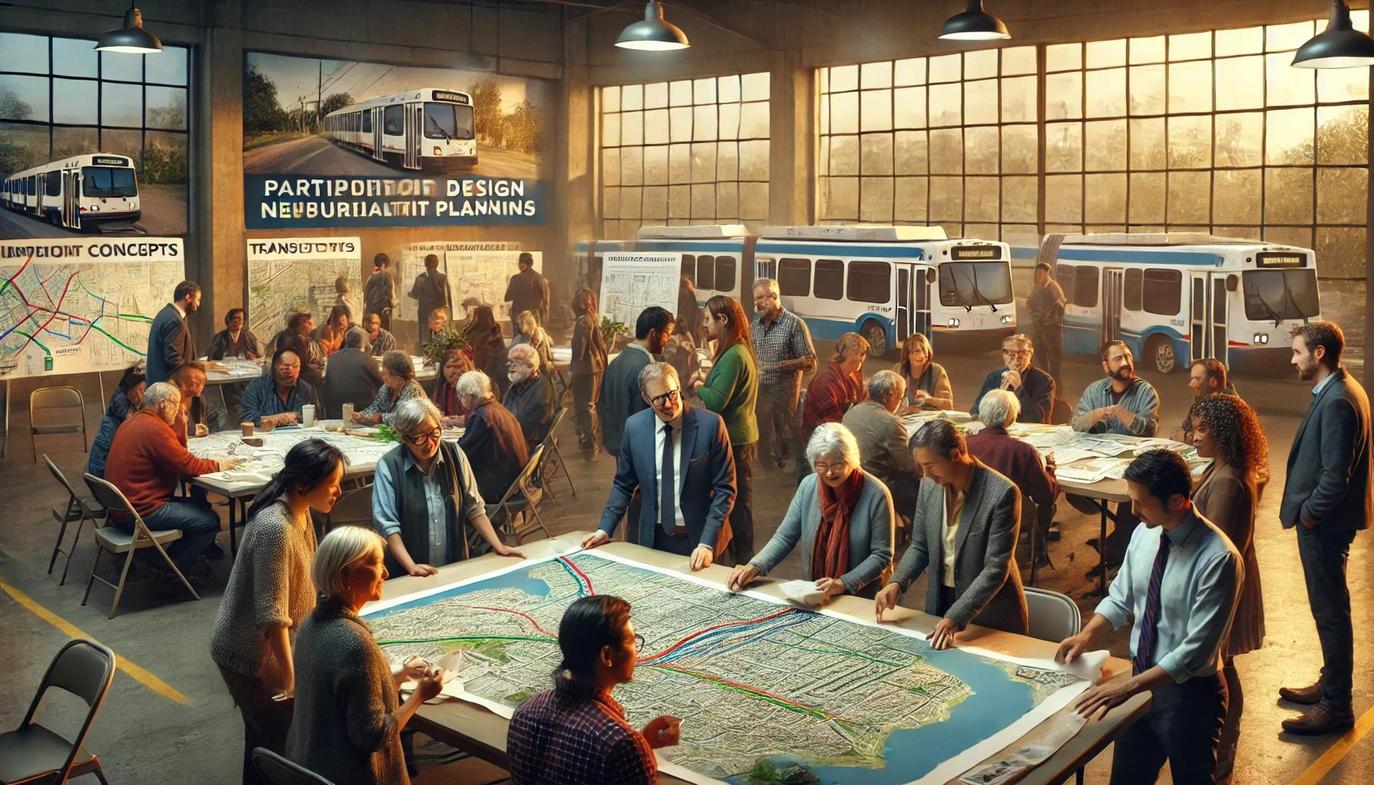
Bridging the Gap Between Residents and Planners Through Participatory Design
Successful suburban transit reform doesn’t just come from better engineering—it emerges from deeper trust and involvement. In too many projects, plans are drawn up by regional authorities with little engagement from the people most affected. This disconnect often fuels skepticism, especially in neighborhoods wary of urbanization or unfamiliar with transit culture.
Participatory planning turns this process on its head. Rather than presenting fixed proposals, it invites residents to help shape routes, stop locations, service hours, and even branding. This method has proven effective in multiple community-centered pilot programs across North America.
One powerful example comes from the city of Ottawa, where residents co-designed last-mile bike paths that complemented a newly introduced bus network. When community members helped pick the paths, placement of signage, and bench locations, the city saw a significant uptick in usage and long-term satisfaction.
Engaging communities early and often can reduce conflict and improve outcomes. It also builds shared language. When residents understand the constraints transit agencies face—and when planners understand the lived experience of residents—solutions become co-owned rather than top-down mandates.
In practice, such activities could mean community workshops at local libraries, translated materials for multilingual households, or inviting high schoolers to map out “safe routes to transit” initiatives. These efforts don’t just gather input; they build long-term trust and a sense of shared investment in a sustainable transportation future.
A Suburban Future Built on Incremental Transformation
For all the challenges of retrofitting transit into car-centric suburbs, there is one overwhelming advantage: time. Suburbs rarely change overnight, but small, well-planned interventions can steadily shift behavior and expectation.
This future doesn’t depend on a single silver-bullet policy. Instead, it begins with small, well-planned interventions, such as:
- Flexible shuttles connecting residents to grocery stores.
- Re-striped crosswalks that improve neighborhood walkability.
- Evening service hours designed to accommodate community work and school schedules.
It grows with every rider who realizes they don’t need to drive to every destination.
Experts like Calabrò and Mortazavi propose layered strategies that emphasize adaptability, proximity, and inclusion. These include integrating microtransit with traditional lines, designing multimodal hubs in strip malls or parking lots, and using fused grid street upgrades to extend pedestrian access without full redevelopment.
The suburbs may never look or function exactly like city centers, and they shouldn’t have to. But if suburban transit is treated not as an afterthought but as a vital piece of climate, equity, and economic resilience strategies, transformation becomes possible.
Rather than asking suburbs to become something they are not, we can ask a better question: How do we help them become more of what they want to be while getting people where they need to go?
Reimagining the Suburbs: Moving Toward Inclusive, Flexible, and Sustainable Transit
The path toward sustainable transportation in suburban areas isn’t a straight line. It’s shaped by a complex mix of history, layout, cultural identity, and public perception. For decades, suburban living has centered on personal vehicles, with neighborhood layouts and community values reinforcing that model. Today, as cities and governments push for lower-emission futures, those very structures are being called into question.
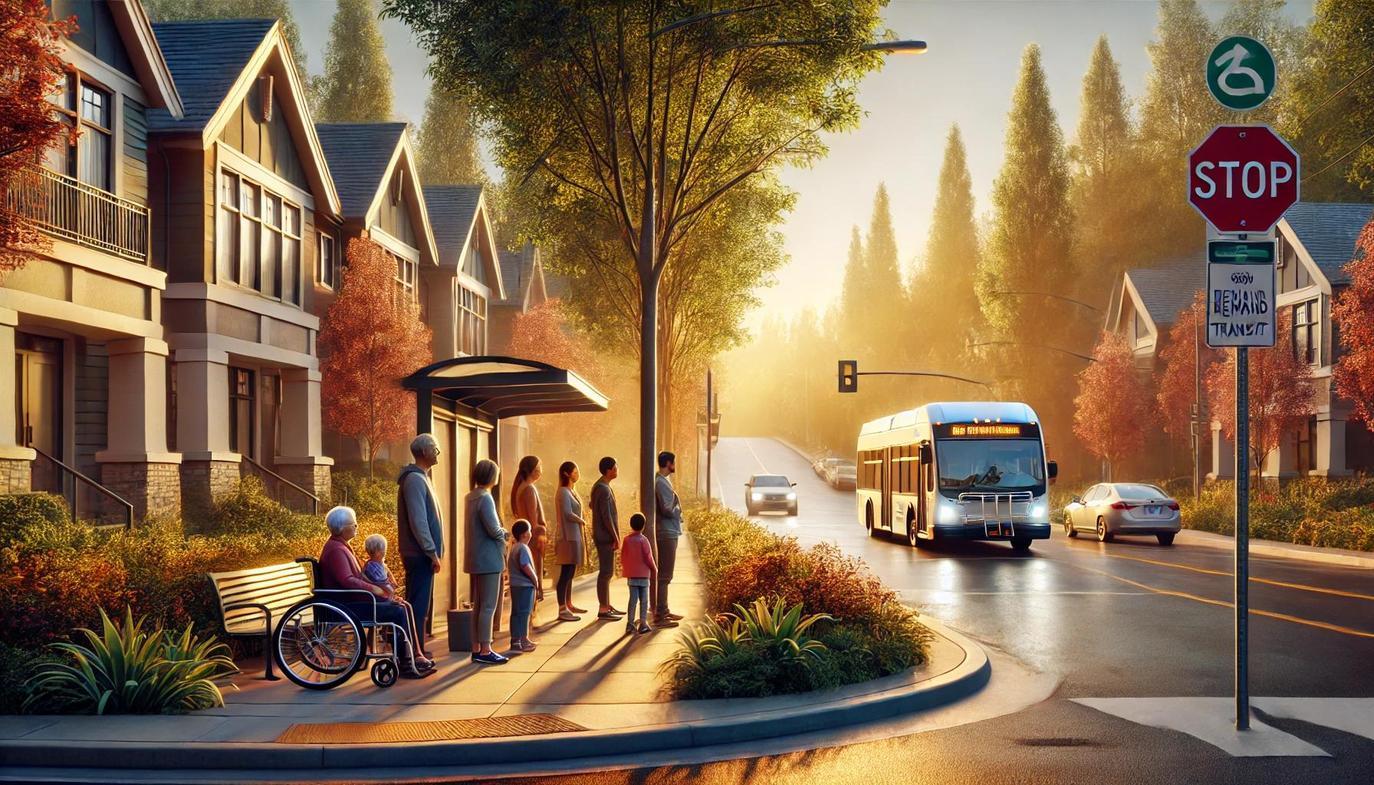
But the solution isn’t to erase what suburbs are—it’s to understand them better. As we’ve seen, innovative tools like demand-responsive transit systems, fused grid design, and community-driven planning approaches offer real promise. They demonstrate that it’s possible to build smarter, more sustainable transportation networks without upending suburban life.
Crucially, this shift must be collaborative. Planners, policymakers, and residents need to bridge the gap between design logic and daily experience. The goal is not just access, but trusted, usable, and equitable access. That means transit that works for seniors as well as students, that connects neighborhoods without eroding their character, and that evolves in step with community values.
Suburban transformation won’t come from a top-down redesign or a one-size-fits-all model. It will come from thousands of small changes that respect local context, elevate voices, and adapt to new realities. If we can meet people where they are, literally and culturally, we can help them move toward a future that works better for everyone.


