
What if your garden could tell the story of climate change and help reverse it? That is the mission behind Kew Gardens’ latest exhibit: the Carbon Garden, a permanent installation that merges climate science, regenerative design, and emotional storytelling.
Opening in July 2025, this forward-thinking landscape invites visitors into a space where every tree, rock, and raindrop plays a role in explaining the carbon cycle and how we can live more resiliently.
Designed with materials like flax composites and low-carbon timber and populated with plants chosen for their climate durability, the Carbon Garden is both an ecological classroom and a blueprint for the future of urban sustainability.

A Pavilion That Breathes Carbon and Stories
A Fungi-Inspired Structure with Purpose
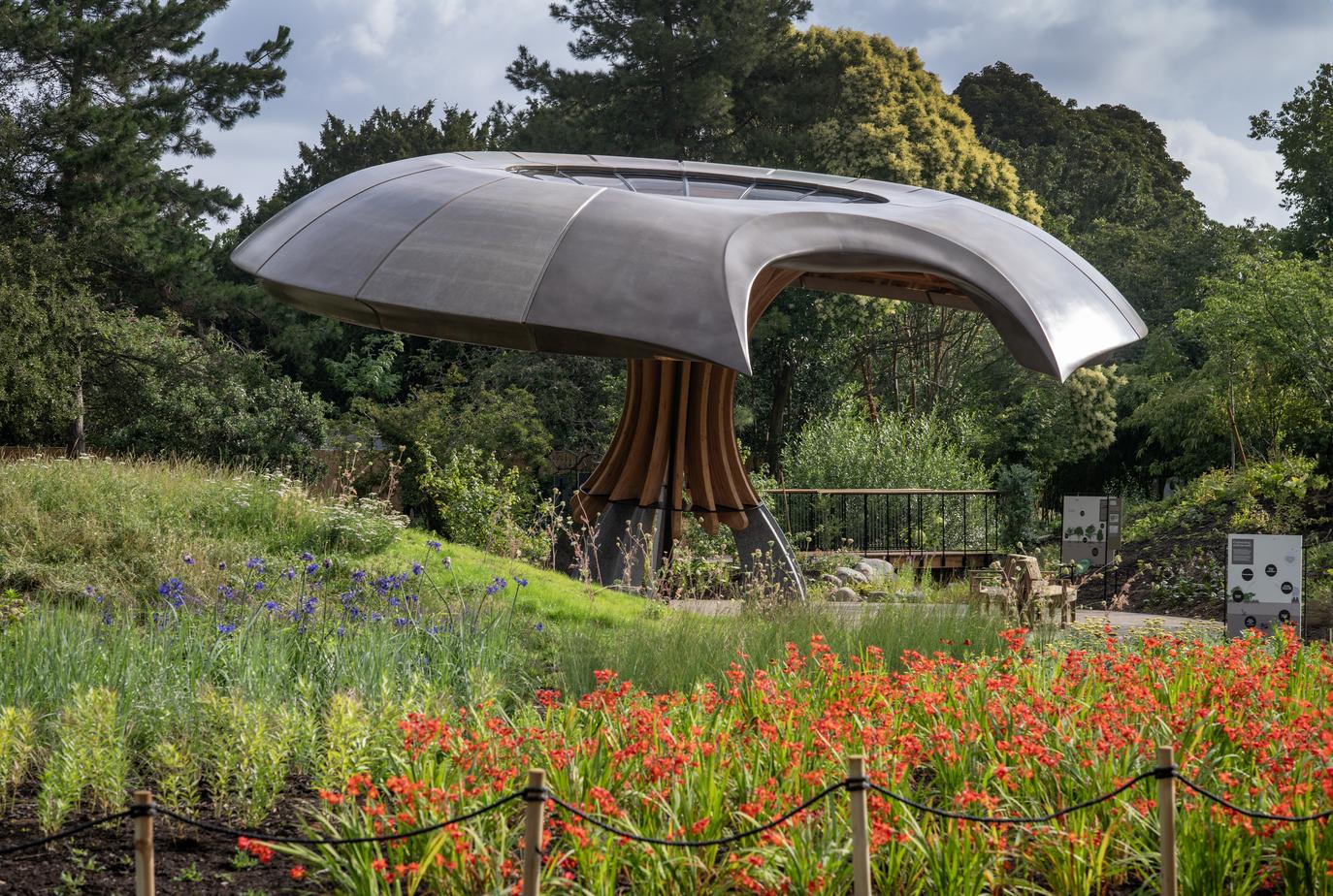
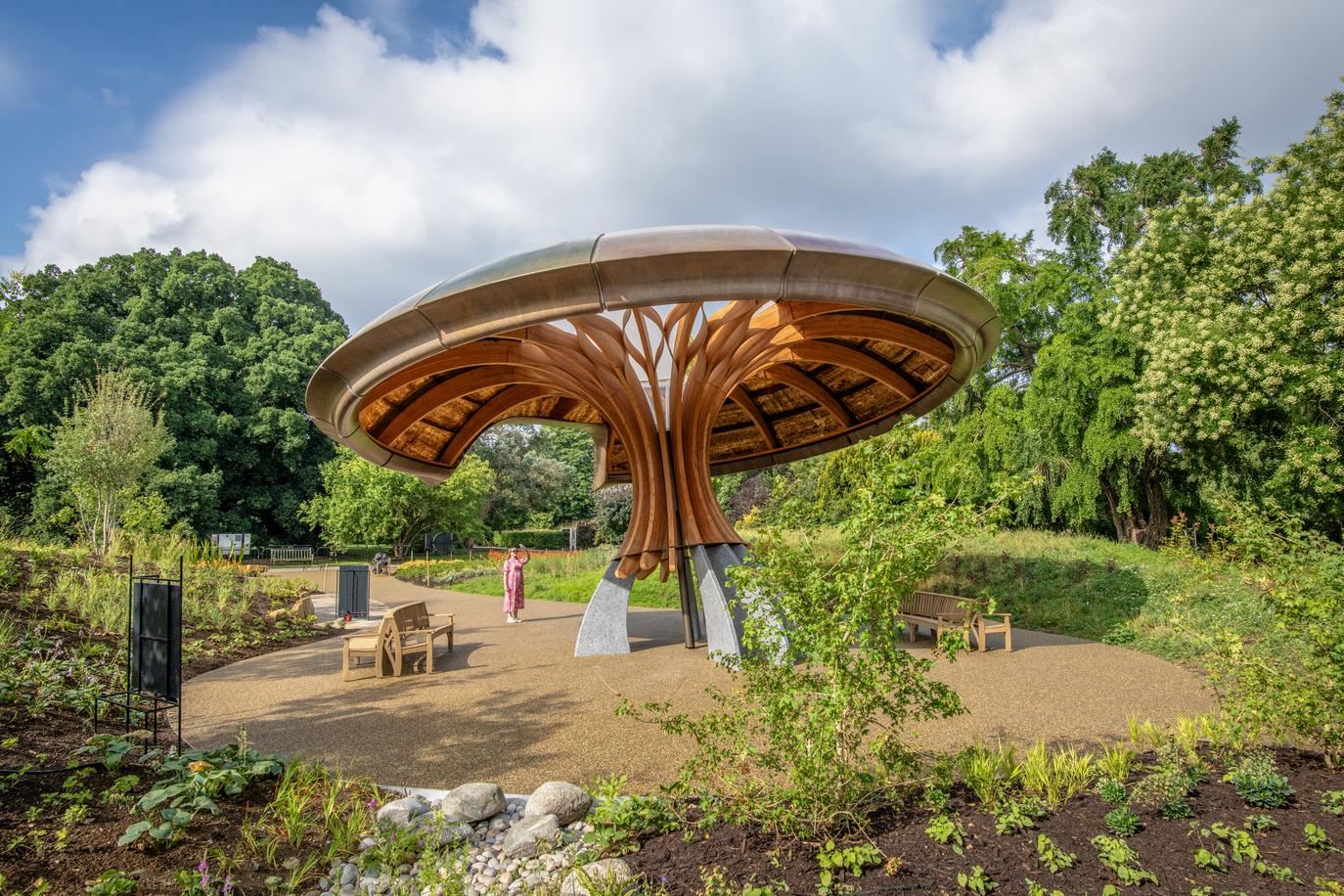
At the heart of the garden lies a striking architectural centrepiece: a canopy pavilion inspired by the branching networks of fungi. Created by Mizzi Studio, this naturalistic structure was built using sustainably sourced timber, flax composite sheeting, and granite foundations, materials selected for their low environmental impact and longevity. The design is more than aesthetic. It reflects the unseen underground role fungi play in carbon transfer and soil health, acting as a biological metaphor for ecological interdependence.
Rainwater Collection as Environmental Teaching
Rain that falls on the canopy doesn’t just disappear; instead, it is directed through sculpted channels into a bioswale rain garden below. This system slows down stormwater, filters pollutants, and recharges the soil, simulating how urban landscapes can be retrofitted for climate-resilient water management. As Kew explains, the design offers a functional and symbolic lesson for capturing natural resources and minimising runoff waste.

Climate Stripes in Bloom: Planting a Visual Timeline
Translating Global Warming into Garden Design
One of the garden’s most impactful features is a planting border designed to mirror global temperature rise. Inspired by climate scientist Ed Hawkins’ famous visualisation of the “warming stripes,” the border transitions in colour from cool blues through purples to deep reds. This artistic gradient lets visitors see the progression of climate change through a living, growing timeline.
Why Colour Matters in Communicating Climate Risk
Using colour this way taps into emotional and sensory learning. Red, for instance, isn’t just a pigment but evokes heat, urgency, and change. By embedding these cues into a tactile environment, the garden helps translate abstract climate data into visceral understanding, especially for visitors unfamiliar with climate graphs or scientific terminology.
Future-Ready Flora: Drought Zones and Plant Resilience
Mediterranean Plants Built for Tomorrow’s Climate
If London’s climate continues to heat, it may eventually resemble present-day Barcelona, a scenario modelled in the garden’s selection of drought-hardy species. Kew curated flora like lavender, rosemary, yucca, and perovskia, plants adapted to dry soils and irregular rainfall. These species don’t just survive; they actively sequester carbon through extensive root systems and high biomass.
Soil, Mulch, and Resilience by Design
The drought zone includes degraded sandy soil, mimicking the tougher substrates gardens may soon face due to heatwaves and erosion. Visitors can observe how mulch, spacing, and companion planting increase both water efficiency and root stability. This lecture is less about aesthetics and more about landscape survival strategies, lessons that urban dwellers and suburban gardeners can replicate in their own backyards.
Functional Beauty: Rain Garden, Bioswale & Meadow Ecosystems
How Rain Gardens Capture Carbon and Manage Stormwater
A key feature of Kew’s Carbon Garden is its fully integrated rain garden, a shallow, planted basin designed to collect and filter rainwater from surrounding hard surfaces. The rain garden works alongside a bioswale—a gently sloped drainage channel filled with absorbent vegetation and organic material. Together, these elements provide a natural water management system that reduces runoff, prevents erosion, and allows moisture to slowly percolate back into the soil.
What many don’t realise is that this system also plays an active role in carbon sequestration. As water passes through the planted media, microbes in the soil process carbon-rich compounds, storing some in root systems and soil layers. This dual function between stormwater control and atmospheric carbon reduction makes the rain garden an elegant tool for adapting to a changing climate.
Biodiversity Boost from Below Ground to Above
Beneath the surface, the soil in the rain garden is alive with microorganisms, fungi, and worms that help decompose organic material and improve soil structure. Above ground, native and adapted plants attract insects, pollinators, and birds. This creates a miniature ecosystem within the garden, balancing aesthetics with ecological function. It’s a model that can be replicated at various scales, from small yards to city parks.

Take‑Home Climate Lessons: How Any Garden Can Become a Carbon Ally
Gardening for the Climate Starts at Ground Level
The Carbon Garden is not just a spectacle. It is a blueprint for everyday gardeners looking to make a meaningful impact. Every element, from the fungi-inspired pavilion to the dry planting borders, has a counterpart that can be adapted for domestic use.
Small decisions like choosing deep-rooted perennials, planting trees with high carbon absorption rates, and mulching bare soil can improve your garden’s ability to trap carbon and resist climate stress.
Simple Design Ideas Inspired by the Exhibit
- Rain Capture: Consider installing a small rain garden or barrel system to manage roof runoff naturally.
- Resilient Planting: Use drought-tolerant species and native flora that thrive with minimal intervention.
- Colour for Communication: Recreate the climate stripe effect by planting in colour gradients to educate others or simply to reflect environmental awareness.
- Soil Health as a Priority: Composting, minimising tilling, and using organic matter all contribute to long-term carbon storage in garden soil.
These strategies are more than just good practices. They reflect a shift in mindset—treating gardens as living systems that can buffer against climate extremes while contributing to a more sustainable future.

The Wider Impact: Kew as a Model for Educational Design
When Storytelling Meets Ecology
Kew’s Carbon Garden stands out because it merges the disciplines of ecology, design, and public engagement. The exhibit is not just informative; it’s emotionally resonant. Visitors are invited to walk through a narrative: seeing the timeline of climate change, feeling the shift in temperature colours, and understanding the mechanics of natural systems beneath their feet.
This type of immersive, place-based sustainability education makes abstract ideas tangible. Rather than overwhelming people with climate data, it gives them interactive metaphors they can remember, feel, and share.
Inspiring Replication in Schools and Cities
Beyond gardens, the principles behind the Carbon Garden can be translated into schoolyards, community centres, libraries, and urban design projects. Educational spaces with bioswales, carbon-positive planting, and rainwater systems can reframe environmental literacy as something that is both beautiful and practical.
As a working model, Kew’s Carbon Garden does not claim to solve climate change, but it reimagines how we live with it and invites others to explore, experiment, and participate.

Frequently Asked Questions About Climate-Resilient Landscaping and Carbon Gardens
What Is a Carbon Garden?
A carbon garden is a landscape intentionally designed to capture and store carbon dioxide from the atmosphere through soil processes, root systems, and plant biomass. It also integrates features like rain gardens and meadows to support biodiversity and water management.
How Do Rain Gardens Help with Climate Change?
Rain gardens reduce surface runoff, improve water infiltration, and sequester carbon in soil and plant matter. They’re especially useful in cities where impermeable surfaces like pavement lead to flooding and water pollution.
What Plants Work Best in a Drought-Resistant Garden?
Plants like lavender, rosemary, perovskia, yucca, sedum, and ornamental grasses are popular choices. These species are known for deep root systems, low water requirements, and strong resilience in hot climates.
Can I Make a Small Carbon Garden at Home?
Yes. Even a small patio or balcony garden can incorporate carbon-capturing containers, resilient species, and low-impact watering systems. Start with compost-rich soil, native plants, and efficient irrigation.
Why Does Garden Design Matter for the Environment?
Well-designed gardens don’t just look good—they interact with ecosystems. Smart planting can reduce emissions, manage water, attract pollinators, and lower temperatures in urban heat zones.


