
Imagine living in a house where the walls breathe, the air is always fresh, and the materials beneath your feet were harvested from the very land you stand on. This isn’t a utopian vision—it’s the emerging reality of passive homes built with locally sourced natural materials. In a world dominated by synthetic construction and carbon-heavy supply chains, a quiet revolution is unfolding: builders and homeowners are turning to the earth for inspiration, resilience, and sustainability.
Returning Home to the Earth
This article explores how ancient building materials like hemp, clay, and straw are meeting cutting-edge energy performance standards, reshaping what it means to build sustainably in the 21st century. From rammed earth walls that regulate temperature naturally to hempcrete insulation that stores carbon, these homes fuse tradition with technology. It’s not just about energy savings—it’s about reconnecting with place, reducing environmental impact, and creating healthier, more harmonious spaces to live.
What Is a Passive House, and Why Does Material Matter?
At its core, the Passive House (or Passivhaus) standard is a rigorous building certification focused on extreme energy efficiency. Originally developed in Germany, it demands that homes use up to 90% less energy for heating and cooling compared to conventional buildings. To meet these standards, a home must be tightly insulated, air-sealed, and equipped with a Mechanical Ventilation with Heat Recovery system (MVHR)—which constantly circulates fresh air while capturing warmth from the outgoing flow.
But here’s where things get really interesting: what you build the house with matters just as much as how it performs. Most Passive Houses have traditionally relied on industrial materials—concrete, foam insulation, steel—but this comes with high embodied carbon (the emissions associated with producing and transporting materials). That’s where natural, locally sourced materials like hempcrete, rammed earth, and straw bale step in. These not only perform beautifully but are renewable, non-toxic, and often carbon-sequestering.
For example, hempcrete—a blend of hemp fibers and lime—naturally regulates humidity and locks away carbon during its production. Rammed earth walls, made from compacted subsoil, offer massive thermal mass that keeps interiors cool in the summer and warm in the winter. Meanwhile, straw bales provide thick insulation with impressive R-values (a measure of thermal resistance) while also being affordable and biodegradable.
In a world urgently seeking climate solutions, using local, natural materials is a powerful double win: reducing a building’s energy needs and slashing its carbon footprint from the ground up.

Material Journeys: Hempcrete, Rammed Earth & Straw Bale
Hempcrete: Carbon-Balancing Walls That Breathe
Hempcrete is quickly becoming a hero in sustainable construction. Made from the woody core of the industrial hemp plant mixed with lime, this biocomposite forms lightweight, insulating walls that absorb carbon dioxide as they cure. It’s breathable, mold-resistant, and fire-resistant and can regulate humidity naturally—qualities that make for a healthier indoor environment.
Because hemp can grow densely and rapidly (maturing in just 3–4 months), it’s a renewable resource that doesn’t deplete soil or require pesticides. When sourced locally, hempcrete’s embodied carbon is incredibly low—plus, it reduces the need for additional insulation or vapor barriers.
While it’s not load-bearing, hempcrete works beautifully with timber frames or structural skeletons. It can be cast in place, sprayed, or formed into blocks, making it adaptable for new builds and retrofits alike.
Rammed Earth: Thermal Mass Straight from the Ground
Rammed earth is one of humanity’s oldest building techniques—yet it’s seeing a modern revival. It involves compressing a damp mix of local subsoil, sand, and sometimes lime or clay between forms to create thick, dense walls. The result is a stunning, layered aesthetic that’s durable, non-toxic, and incredibly thermally stable.
What makes rammed earth ideal for Passive House alignment is its thermal mass: the ability to absorb heat during the day and release it at night, maintaining a steady indoor temperature. This natural buffer reduces the need for heating or cooling—especially in climates with large temperature swings.
Using on-site soil not only cuts transportation emissions but also creates a deep sense of place—your home literally becomes a part of its environment. While rammed earth construction can require more labor and planning upfront, its longevity and near-zero maintenance make it a sustainable long-term investment.
Straw Bale: Affordable, Regenerative Insulation
Forget haystacks; straw bales are being stacked into high-performance walls that rival or exceed conventional insulation. Bales are placed tightly within a structural frame and finished with clay or lime plaster, resulting in thick walls with R-values up to R‑35 or higher. That’s plenty of thermal resistance to meet Passive House needs.
Straw is a byproduct of grain agriculture, making it both inexpensive and abundant. With careful design to protect against moisture, straw-bale walls are safe, long-lasting, and biodegradable. They also offer superior acoustic dampening and can give a home a beautiful, earthy aesthetic.
When combined with passive solar orientation and airtight sealing, straw bale homes can meet or exceed modern energy standards—without relying on foam or plastic.

Built Examples: Place‑Based Passive Homes That Work
WISE Campus in Wales: Education Meets Earth Design
The Wales Institute for Sustainable Education (WISE) is a flagship project combining rammed earth and hempcrete in a performance-certified campus building. Located in Machynlleth, Wales, WISE exemplifies how natural materials can meet institutional-grade standards, serving as both a place of learning and a living model of ecological construction.
Its walls use locally quarried stone and subsoil, hemp insulation, and passive solar design principles to maintain year-round comfort with minimal energy input.
Napa Valley Home Built from Site Soil
In Napa Valley, California, one architect took rammed earth to a poetic level—constructing a home almost entirely from soil and stone excavated directly from the site. This passive-like home uses thick earth walls, radiant floor heating, and deep overhangs to achieve passive climate control in a region known for hot summers and chilly nights.
While the cost was higher due to artisanal labor, the results are nothing short of breathtaking: a home that blends seamlessly into its surroundings, uses no toxic materials, and will likely outlive its owner by centuries.
Material Cultures’ Rural Cabin in the U.K.
Material Cultures, a U.K.-based architectural studio, is pushing boundaries by constructing rural cabins out of straw, clay, bark, and cactus plaster—showcasing a zero-waste ethos. These low-tech homes are thermally optimized, hyper-local in material sourcing, and designed to be deconstructed and composted at end of life.
The fusion of vernacular design and passive energy logic makes these cabins both radical and replicable—a vision of sustainable shelter that’s circular by design.
Design Meets Efficiency: Passive Houses Using Low-Tech Materials
Blending Ancient Wisdom with Modern Building Science
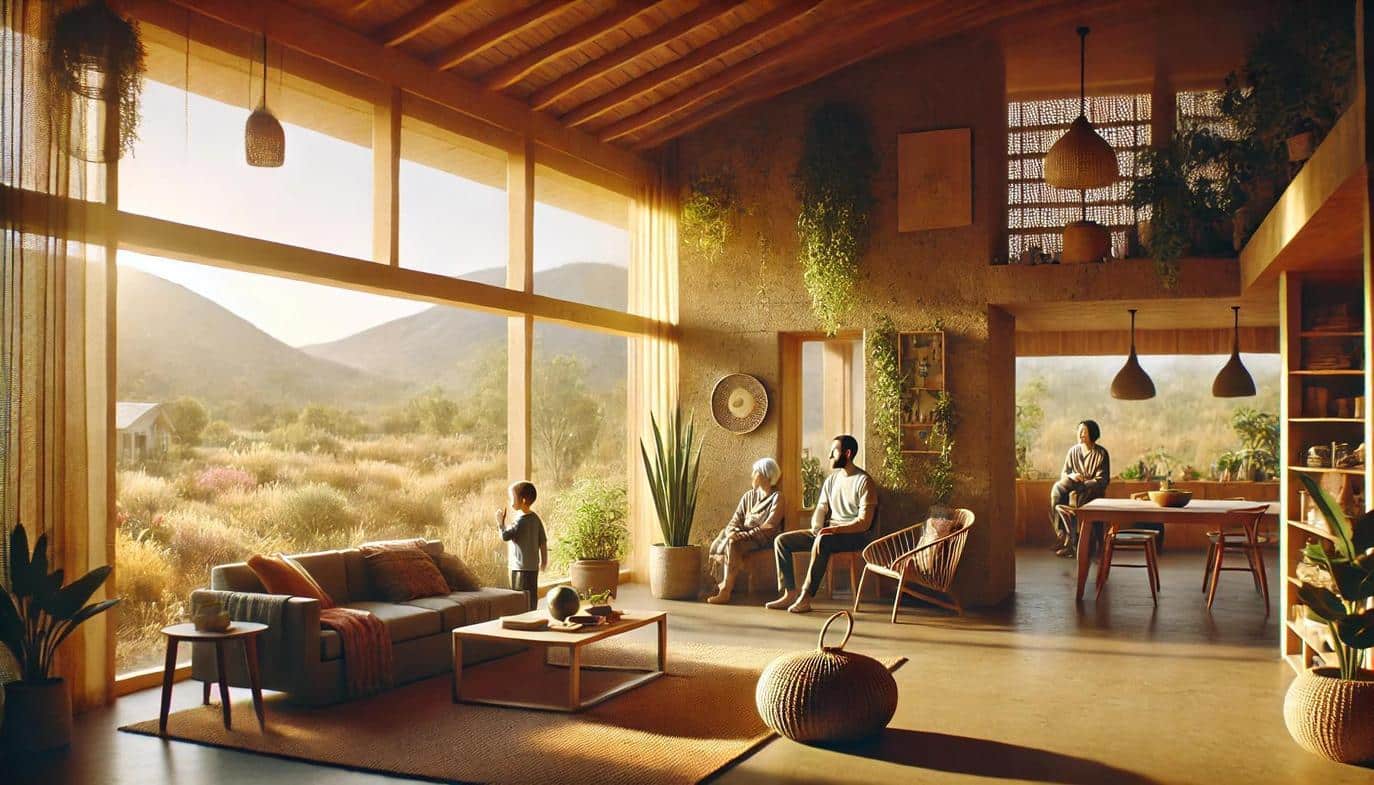
One of the most compelling aspects of today’s green building movement is how ancient, humble materials are now powering some of the most technologically advanced energy systems. It might seem paradoxical: how can straw, mud, and lime meet strict performance standards that rival space-age foam and engineered steel? But the answer lies in how passive house principles complement natural materials perfectly.
Take hempcrete, for example. On its own, it’s a great insulator with humidity-buffering properties. When builders combine hempcrete with airtight construction, triple-glazed windows, and mechanical ventilation systems like MVHR (Mechanical Ventilation with Heat Recovery), the material becomes part of a system that maintains year-round comfort using almost no energy. Similarly, rammed earth and straw bale walls, when paired with modern flashing, breathable membranes, and thermal modeling, deliver airtightness and R-values that compete with synthetic alternatives.
This hybrid approach allows builders to design homes where the walls do the heavy lifting naturally, reducing the need for mechanical cooling or excessive insulation layers. It also simplifies repairs and end-of-life reuse, since these materials can be composted, repurposed, or returned to the earth.
Passive Solar and Local Orientation
Efficiency isn’t just in the walls—it’s in how the building is positioned. Many homes built with natural materials embrace passive solar design: large south-facing windows for winter heat gain, shading elements for summer cooling, and thermal mass (like earth or concrete floors) to store and release heat throughout the day.
When local materials are used—say, earth from the site for walls, or timber from a nearby mill—you gain more than low embodied carbon. You gain synergy with the climate, terrain, and natural solar cycles, which is central to Passive House thinking. The result? Homes that feel grounded, responsive, and efficient without needing a “smart thermostat” to make every decision.
Benefits Beyond Carbon: Health, Durability, and a Sense of Place
Indoor Air Quality That Supports Wellness
In conventional homes, especially tightly sealed ones, indoor air can become stale or polluted without proper ventilation. But homes built to Passive House standards require constant fresh-air exchange, often through MVHR systems that remove stale air and supply filtered air while conserving heat. When used with safe, breathable materials like hempcrete, clay plaster, and straw, this creates a living space with fewer harmful chemicals, controlled humidity, and a more pleasant atmosphere.
This matters deeply for people with allergies, asthma, or chemical sensitivities—and it contributes to better sleep, focus, and well-being for everyone.
Fire Resistance, Mold Prevention, and Durability
Some might assume straw or earth are fragile or risky materials. But the opposite is often true. Rammed earth walls, for example, are naturally fireproof—they won’t burn or emit toxic fumes in a blaze. Hempcrete is also highly fire-resistant, and its ability to regulate moisture prevents mold growth and decay. Straw bale homes, when properly plastered, have shown excellent performance in fire testing due to their compressed, air-free cores.
As climate change accelerates wildfires and extreme weather, the resilience of natural building materials becomes a safety feature, not just an aesthetic or ethical choice.
Connection to Local Identity and Ecology
There’s something grounding about living in a home made from materials of your region. Whether it’s the golden straw of a prairie, the clay-rich soil of a hillside, or hemp grown in your valley, these homes visibly express place-based identity.
This not only builds a sense of pride and connection—it supports local economies, reduces transportation emissions, and encourages architectural styles that feel rooted, not generic.
Challenges and Trade‑Offs
Upfront Labor and Material Sourcing
While the long-term energy savings and carbon reductions are impressive, it’s true that natural material builds often cost more upfront—mainly due to skilled labor and bespoke construction methods. Hempcrete walls must be cast in place or sprayed. Rammed earth walls require formwork and compaction. Straw bales need careful handling and weatherproofing.
Additionally, finding local suppliers for certified, pesticide-free straw or structural hemp can be difficult depending on the region.
Regulations and Building Code Gaps
Many natural materials are still underrepresented in building codes. That means extra time may be needed for approvals, and some builders may face skepticism from inspectors or financiers unfamiliar with the techniques.
Innovative builders often work around these issues by combining code-compliant structural systems (like timber framing) with natural infill or by using third-party certification programs that help bridge gaps in regulation.
Maintenance and Climate Fit
Natural materials require thoughtful design. Straw bale homes, for example, must be well-sealed against water intrusion. In humid climates, breathable finishes and roof overhangs are essential. Hempcrete, while durable, is not load-bearing, so it must be integrated into a structural framework.
Still, with good detailing, these homes can last generations.
Takeaway: Living in Houses That Give Back
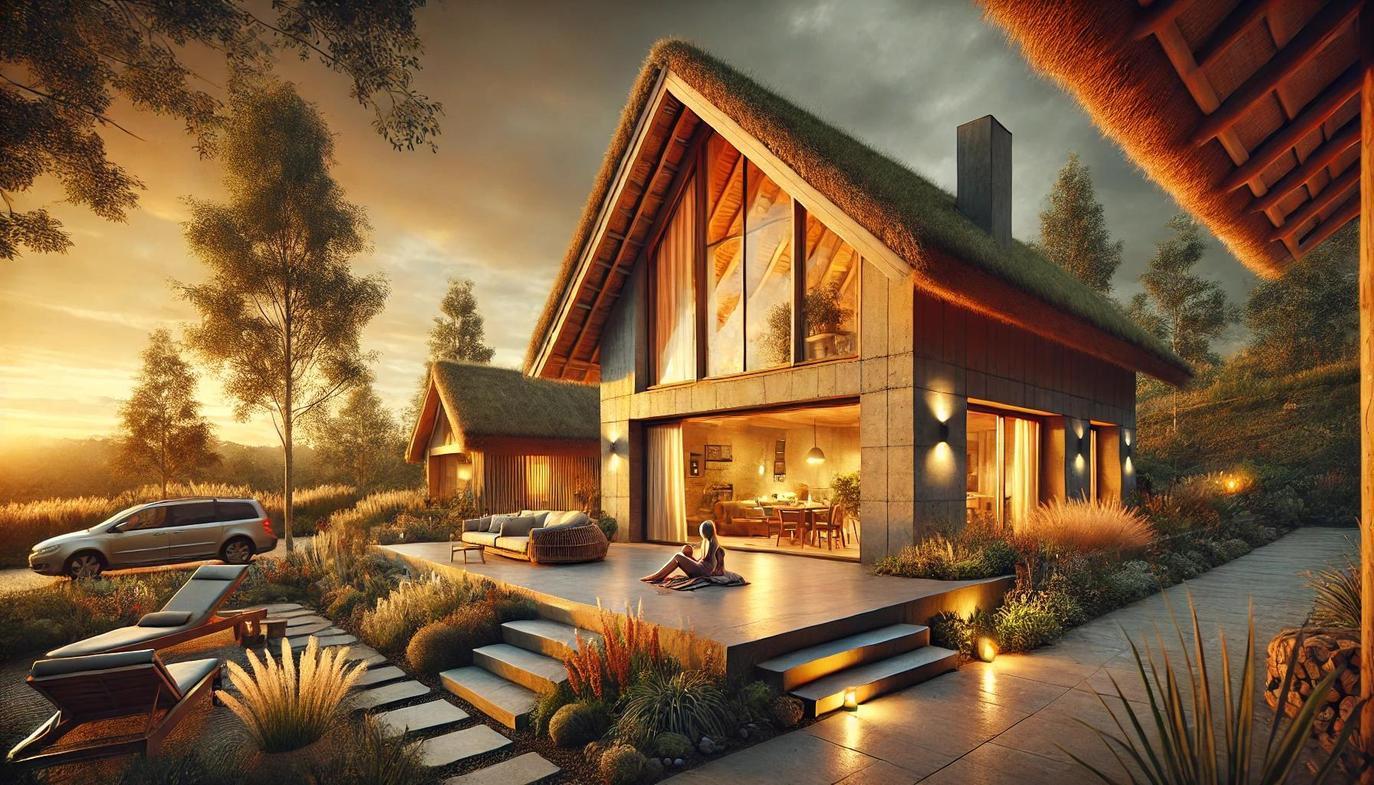
At a time when climate headlines can feel overwhelming, building (or living in) a home made from earth, plant, and place is a deeply hopeful act. This statement conveys that we can live well without exploiting the planet. We can create homes that are beautiful, resilient, and efficient—and aligned with the rhythms of the land.
The Passive House model provides us the science to reduce emissions. Local natural materials give us the poetry—and the practicality—to do it without waste, toxins, or imports. Together, they offer not just shelter but a story of restoration and possibility.
Whether you’re an architect, homeowner, or simply curious, these buildings remind us: we don’t need to reinvent the wheel—we just need to build it with better soil and in the right direction.
FAQ / Side Features
Can Natural Materials Meet Passive House Standards?
Yes. While materials like hempcrete or straw bale are not structural, they can be integrated into airtight, well-insulated wall systems that exceed Passive House performance when combined with smart design and ventilation.
Are Straw Bale Homes Fire-Safe?
When plastered, straw bale walls perform exceptionally well in fire tests. The dense packing limits oxygen, making combustion difficult.
How Long Does Rammed Earth Last?
Properly protected, rammed earth walls can last centuries. Some ancient rammed earth buildings are still standing after 500+ years.
What’s the Cost Difference?
Natural builds may be 10–30% more upfront in labor/materials—but they offer lower long-term energy costs, reduced maintenance, and improved air quality.
Where Can I Find These Builders?
Organizations like PHIUS, Natural Building Network, or studios like Material Cultures are excellent places to start. Many regions now offer green building directories and certified consultants for Passive House + natural builds.


