
There is nothing quite like the feeling of a dirt bike pulling hard out of a muddy corner. But that feeling depends on a machine that is cared for. Dirt bikes live a rough life. They get soaked in creek crossings, packed with dust on dry trails, and pushed to high revs for hours at a time. A street bike might go thousands of miles between services, but an off-road bike can wear out parts in a single hard weekend.
The good news is that most routine maintenance is simple. With a few basic tools, a clean workspace, and a little patience, any rider can handle the jobs that keep a bike reliable. This guide walks through the essentials every owner should know.
Start With a Clean Bike
Maintenance begins with washing. It may seem like a chore, but a clean bike lets you actually see what is going on. Cracked plastics, leaking fork seals, loose bolts, and frayed cables are easy to miss under a layer of dried mud.
Wash the bike after every ride if you can. Plug the exhaust and cover the airbox opening before you start. Use a gentle stream of water rather than a high-pressure jet aimed directly at bearings, seals, or electrical connectors, because pressure can force water and grit into places it should never go. Once the bike is clean, let it dry fully and then do a quick walk-around inspection.
Keep the Air Filter Clean and Oiled
If there is one job riders should never skip, it is the air filter. A dirt bike engine breathes huge amounts of air, and on a dusty trail that air is full of fine particles. A dirty or poorly oiled filter lets dust slip into the engine, where it acts like sandpaper on the piston, rings, and cylinder walls.
Most riders clean their foam filter after every ride or two, and more often in very dusty conditions. Wash it in a dedicated filter cleaner, let it dry completely, and then apply filter oil evenly so the foam is coated but not dripping. Always check that the filter is seated properly in the airbox. A small gap at the edge can undo all your effort.

Change the Oil More Often Than You Think
Oil in a dirt bike works harder than oil in a car. It runs hotter, it often lubricates the transmission and clutch as well as the engine, and it breaks down faster. Changing it regularly is one of the cheapest ways to protect an expensive motor.
Follow the interval in your owner’s manual, but treat it as a maximum rather than a target. If you ride in sand, mud, or extreme heat, shorten the interval. When you drain the oil, look at it. Metal flakes, a milky colour, or a burnt smell are early warning signs that something needs a closer look. Replace the oil filter on schedule too, and always use the oil grade the manufacturer recommends.
Look After the Chain and Sprockets
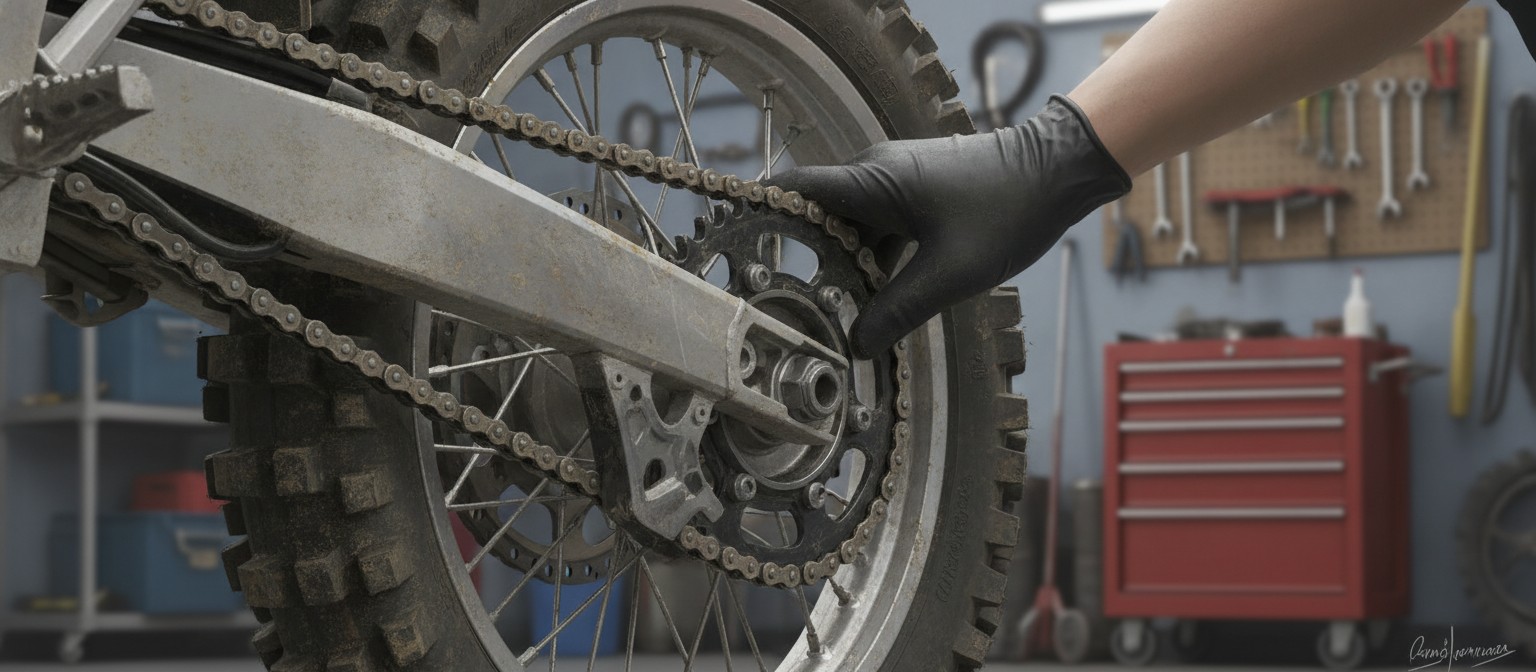
The drive chain takes a beating from dirt, water, and constant shock loads. A neglected chain wears quickly, stretches, and can damage the sprockets along with it. In the worst case, a chain can snap or jump off mid-ride.
Clean the chain with a brush and a chain-safe cleaner, then apply a quality lube once it is dry. Check the slack regularly, since a chain that is too tight strains the bearings, while one that is too loose can derail. Inspect the sprocket teeth as well. If they look hooked or sharpened, replace the chain and both sprockets together for the best results.
Check Tyres, Spokes, and Brakes
Tyre pressure has a huge effect on grip and handling off-road, and it changes with temperature and terrain. Check it before every ride with an accurate gauge. While you are at the wheels, run a screwdriver or spoke wrench across the spokes. A dull sound instead of a clear ping usually means a loose spoke that needs attention.
Brakes deserve the same care. Look at the pad thickness, check the discs for warping or deep scoring, and make sure the brake fluid is at the right level and not dark or dirty. Off-road riding is hard on brakes, so fresh fluid at least once a season is a smart habit.
Don’t Ignore Bolts, Bearings, and Suspension
Vibration loosens fasteners over time. Go over the bike with a set of wrenches every few rides and check the key bolts, including the axles, triple clamps, engine mounts, and handlebar clamps. Getting the tightness right matters. Overtightening can strip threads or crack parts, while undertightening can let components work loose.
This is where accurate information becomes essential. Every model has its own torque values and service steps, and guessing is never a good idea. For model-specific service procedures and torque specs, check the dirt bike repair manuals from Kristofsx.com. Having the correct manual on hand makes jobs like suspension servicing, valve checks, and bearing replacement far less stressful.
Speaking of suspension, keep the fork tubes and shock shaft clean, and wipe the seals after each ride. Leaking oil around a fork seal is a sign that service is due. Grease the swingarm and linkage bearings periodically, since these are often forgotten until they seize.
Build a Simple Routine
The secret to a reliable dirt bike is not one big service once a year. It is a short, steady routine. Wash the bike, clean the air filter, lube the chain, and do a quick bolt check after most rides. Change fluids on schedule, and keep a small logbook of what you did and when. Over time, you will start to notice small changes before they turn into big repairs.
Taking care of your own bike also builds confidence. When you know every part has been checked, you can focus on the trail ahead instead of worrying about what might break. A well-maintained dirt bike is safer, more fun to ride, and holds its value far better when it is time to upgrade.


