
Most people shopping for lab-grown diamonds never stop to ask how the diamond was grown. They zero in on carat weight, compare price tags, and check the certificate. But the creation method, whether CVD or HPHT, quietly shapes all three of those factors.
This guide breaks down exactly what separates the two processes and what it means for the stone you actually end up buying.
- What CVD and HPHT diamonds are and how each method works
- How creation method influences color, clarity, grading, and price
- Which type makes sense depending on your priorities and budget
TL;DR
- CVD (Chemical Vapor Deposition) grows diamonds layer by layer inside a gas-filled chamber using controlled plasma conditions
- HPHT (High Pressure High Temperature) replicates geological diamond formation using extreme heat and pressure around a carbon seed
- Both methods produce diamonds that are chemically and physically identical to mined stones
- Neither method is inherently superior; what matters most is the individual stone’s 4Cs grades
- Both CVD and HPHT diamonds receive identical grading from IGI, GIA, and GCAL using the same criteria as natural diamonds
What CVD and HPHT Mean
These terms describe two different manufacturing environments, not two different types of diamonds.
CVD stands for Chemical Vapor Deposition. A thin diamond seed plate sits inside a sealed chamber filled with carbon-rich gases, typically methane and hydrogen. Microwave energy ionizes the gas into plasma. Carbon atoms separate from the gas and deposit onto the seed, building a diamond one molecular layer at a time.
HPHT stands for High Pressure High Temperature. A diamond seed is placed in a carbon-rich environment, then exposed to temperatures of 1,300 to 1,600°C and pressures of 5 to 6 GPa. The conditions mirror what happens miles below the Earth’s surface, where natural diamonds form over billions of years.
Both processes produce real diamonds, not simulants like moissanite or cubic zirconia. The chemistry is identical to a mined stone. Only the origin and growth environment differ.
How CVD Diamonds Are Made
CVD growth is methodical and precise. Here is how the process unfolds:
- Manufacturers place a diamond seed wafer inside a reactor chamber
- Methane and hydrogen gas fill the chamber at low pressure
- Microwave or radio frequency energy creates a plasma cloud
- Carbon atoms break free from the gas and settle onto the seed
- Growth continues layer by layer over several weeks
- The rough stone moves to cutting, polishing, and grading
The CVD process gives manufacturers granular control over temperature, pressure, and gas composition. That control makes it easier to produce large, consistent stones with high clarity grades.
One detail worth knowing: many CVD diamonds develop a brownish or grayish tint during growth due to strain patterns. Manufacturers routinely apply a post-growth HPHT treatment to correct this color shift before grading. The practice is standard, disclosed on certificates, and does not reduce the diamond’s quality. The International Gemological Institute documents this treatment on grading reports for full transparency.

How HPHT Diamonds Are Made
HPHT takes a more forceful approach to diamond formation. Here is the process:
- Manufacturers place a diamond seed in a capsule surrounded by carbon material
- The capsule loads into a hydraulic belt or cubic press
- Pressure climbs to 5 to 6 GPa while temperature reaches 1,300 to 1,600°C
- Carbon dissolves into a metallic flux solution surrounding the seed
- As the chamber cools slightly, diamond begins crystallizing around the seed
- Workers extract the rough crystal, then cut and submit it for grading
HPHT diamonds grow in a cuboctahedral crystal pattern, which skilled gemologists can identify using magnification and spectroscopy equipment. For everyday buyers, this distinction is invisible to the naked eye.
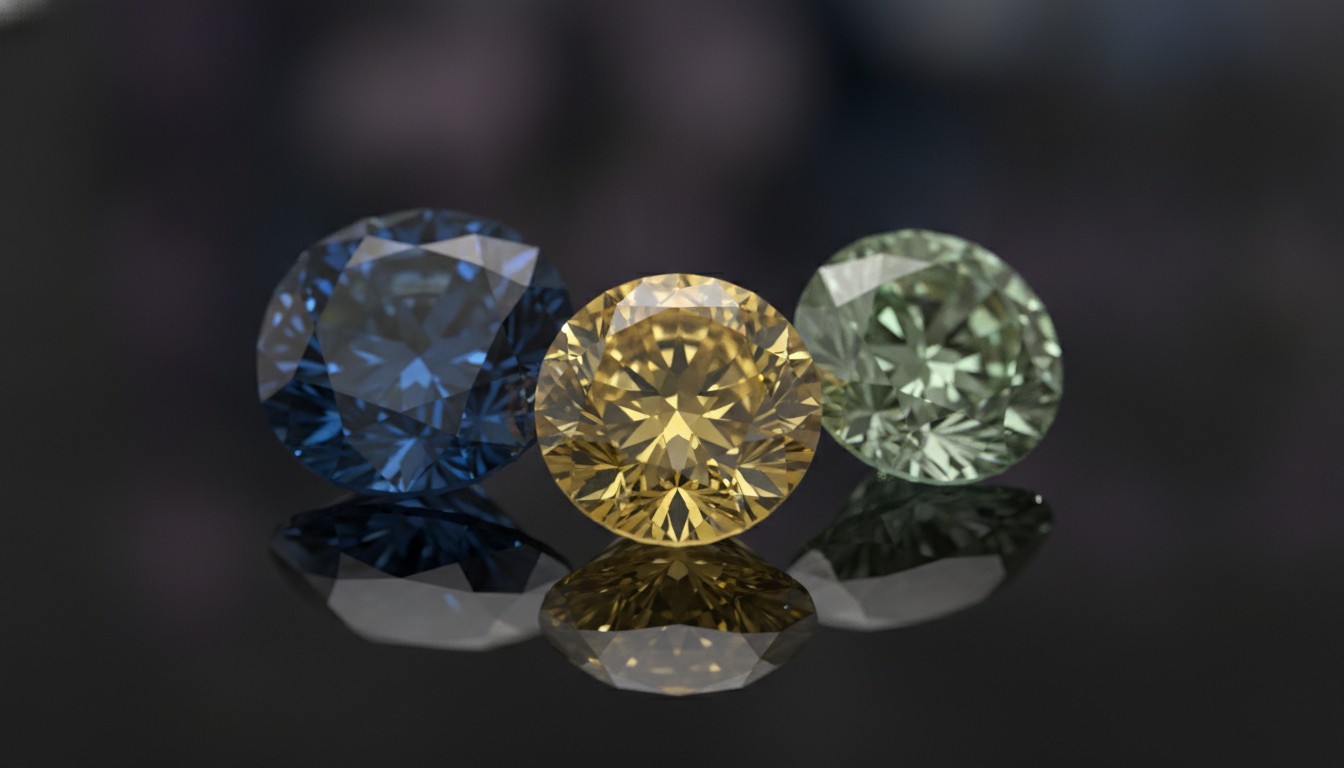
HPHT is also the dominant method for producing fancy color lab-grown diamonds, including vivid yellows and blues. Nitrogen and boron introduction during the growth process creates these intense color saturation levels, something harder to achieve consistently through CVD.
CVD vs. HPHT: Side-by-Side Comparison
Here is how both methods compare across the factors that actually affect your buying decision.
| Factor | CVD | HPHT |
| Growth process | Gas plasma deposition | High-pressure carbon crystallization |
| Post-growth treatment | Often HPHT treated for color | Usually not required |
| Typical inclusions | Graining, growth lines, needles | Metallic flux, pinpoints |
| Color range | D through K commonly achieved | D through K; vivid fancy colors achievable |
| Fluorescence | Usually none to faint | Can be stronger; phosphorescence in some cases |
| Large carat availability | Strong from 1 to 5+ carats | More difficult to scale above 3 carats |
| Fancy color production | Less common | Yellow, blue, green more achievable |
| Certificate disclosure | Method noted in comments | Method noted in comments |
The most important takeaway from this table: the grading lab scores both types the same way. A D/IF CVD diamond and a D/IF HPHT diamond receive the same grading tier. Appraisers and insurers treat them identically.
How Certification Works for Both Types
Both CVD and HPHT diamonds receive full 4Cs grading from internationally recognized gemological laboratories. The Gemological Institute of America was among the first major labs to issue standardized grading reports for lab-grown diamonds, and both IGI and GCAL follow comparable grading frameworks.
On your certificate, you will find:
- Cut grade: Excellent, Very Good, Good, and below
- Color grade: D (colorless) through Z (light yellow)
- Clarity grade: FL through I3
- Carat weight: Measured to the hundredth of a carat
- Growth method: Noted in the comments section as CVD or HPHT
The growth method disclosure is a transparency requirement, not a quality flag. It tells you how the diamond was made, not how well it turned out. Two stones with identical grades from the same lab will look and perform the same, regardless of whether one is CVD and the other HPHT.
Does Creation Method Affect Price?
Not directly. The 4Cs determine price, not the production technique.
What does affect pricing in practice is supply and availability. CVD currently accounts for a large share of lab-grown diamonds submitted for grading, especially in the 1 to 4 carat range that most engagement ring buyers target. Higher supply generally supports competitive pricing across a wide range of grades and shapes.
HPHT production is technically demanding at larger sizes. For very large stones above 4 carats or vivid fancy colors, HPHT may be the primary available option, which can influence pricing in those specific categories.
Post-growth HPHT treatment applied to CVD stones adds a small production cost, but manufacturers typically absorb this into standard pricing before the stone reaches consumers.
Which Method Should You Actually Choose?
Buy the best individual stone within your budget. The method is secondary.
When evaluating lab-grown diamonds, apply this priority order:
- Cut quality first: This determines brightness, fire, and scintillation. An Excellent cut compensates for modest grades elsewhere, making it the single highest-impact variable in visual beauty
- Color grade second: D through G covers colorless to near-colorless, ideal for white diamond settings. Stepping down to H or I saves meaningful budget without visible color to the naked eye
- Clarity grade third: VS2 and above is eye-clean across most shapes and sizes at standard viewing distance. SI1 can also be eye-clean on round cuts with a clean clarity plot
- Carat weight last: Maximize the first three priorities before pushing for a larger stone
The only scenario where the method becomes a genuine deciding factor: fancy color diamonds. If you want a vivid yellow, blue, or green lab-grown diamond, HPHT is historically the more common source for intense color saturation. For white diamond buyers, cut, color, and clarity remain the only metrics worth prioritizing.
What to Keep in Mind Before You Buy a Lab-Grown Diamond
Knowing how a diamond was grown is only part of the decision. These checks help you avoid common mistakes, whichever method produced the stone.
- Buy only certified stones: Insist on a grading report from IGI, GIA, or GCAL. An uncertified diamond has no verified color, clarity, or cut, so you cannot compare it fairly with another stone.
- Match the report to the diamond: Check that the report number matches the laser inscription on the girdle. You can also look up the number on the lab’s website to confirm the details.
- Read the comments section: This is where the growth method and any post-growth treatment are listed. Treatment is normal for CVD stones, but it should always be disclosed, never hidden.
- Look beyond the grades: Two stones with the same 4Cs can look different. Check the table percentage, depth, and polish and symmetry grades. Ask for a 360-degree video or HD images to confirm the stone is eye-clean and lively.
- Check fluorescence: Faint or no fluorescence is the safest choice. Strong fluorescence can occasionally make a stone look slightly hazy in certain lighting.
- Don’t overpay for top grades: Differences between D and G color, or between VVS and VS clarity, are rarely visible to the eye. Put that money into cut quality or carat weight instead.
- Choose the shape and setting together: Shape affects how large the diamond looks and how well it hides inclusions. The setting and metal should suit the stone, since a poor setting can undermine a great diamond.
- Compare listings across sellers: Compare diamonds with the same shape, grades, and grading laboratory. Listings on sites such as Loose Grown Diamond can be used for comparison. Check each stone’s report, available images, and return terms before deciding.
- Set realistic resale expectations: Lab-grown diamonds are priced lower than mined stones, and their market prices have been falling as production grows. Buy for the beauty and value now, not as an investment.
- Check the return and warranty policy: Look for a clear return window and written terms on inspection and warranty. A seller who stands behind the stone makes the purchase safer.
- Ask about origin and transparency: A trustworthy seller will state clearly that the diamond is lab-grown and explain the growth method and any treatments.
The Method Is Context. The Stone Is Everything.
Both CVD and HPHT diamonds give you a real, certified, optically brilliant alternative to mined diamonds. The method explains how the crystal grew, not how beautiful it turned out.
- CVD diamonds use precise gas plasma deposition and often receive post-growth HPHT treatment to refine color before the final grading report
- HPHT diamonds replicate geological pressure and excel at producing vivid fancy color diamonds in yellow, blue, and green
- Neither method produces a universally better stone, individual 4Cs grades and cut quality determine visual performance and real-world value
- Both types receive identical certification from IGI, GIA, and GCAL with the same grading criteria applied to natural diamonds
Prioritize cut, color, clarity, and certification above all else. The growth method is context, not a verdict.
FAQs
Is a CVD Diamond Better Quality Than an HPHT Diamond?
Neither CVD nor HPHT is categorically superior in quality. Both methods produce real diamonds graded by the same gemological standards. A well-grown HPHT diamond with top 4Cs grades will outperform a poorly grown CVD diamond every time, the growth method alone does not determine quality. Always evaluate the individual stone’s certificate.
Can You Visually Tell CVD and HPHT Diamonds Apart?
No. CVD and HPHT diamonds are visually indistinguishable to the naked eye and under standard retail conditions. Identifying the growth method requires advanced spectroscopy equipment. Even experienced gemologists cannot separate them without specialized lab testing.
Does HPHT Treatment on a CVD Diamond Lower Its Quality?
Post-growth HPHT treatment is a standard refinement step used to improve the color grade of many CVD diamonds before grading. The certified color grade on the grading report reflects the stone’s actual quality after all treatments. This process does not compromise the diamond’s structural integrity or long-term appearance.
Do Both CVD and HPHT Diamonds Appear on Grading Certificates?
Yes. Reports from IGI, GIA, and GCAL include the growth method in the comments section as a required transparency disclosure. This identifies how the diamond was produced but does not affect the cut, color, clarity, or carat grades assigned to the stone.
Which Method Is Better for Fancy Color Lab-Grown Diamonds?
HPHT production is the dominant method for creating vivid fancy color lab-grown diamonds, especially yellows and blues. Nitrogen and boron introduced during HPHT growth generate intense color saturation that is more difficult to achieve consistently through CVD. For white diamonds, the method matters far less than the graded 4Cs.


