
Extreme winter weather remains one of the toughest real-world hurdles for electric vehicles, often cutting usable driving distance when cabin heaters run and liquid electrolytes thicken. Chinese state-backed automaker Dongfeng Motor claims its prototype Dongfeng solid-state battery kept 72 percent of its energy retention at minus 30 degrees Celsius (minus 22 degrees Fahrenheit) during polar testing in northeastern China, while targeting a single-charge rating of over 1,000 kilometers (621 miles) on China’s testing cycle.
Those figures represent an encouraging cold-weather milestone for a 350 Wh/kg cell built on a pilot line, yet they come with major engineering and commercial caveats. Every performance metric released so far comes from company disclosures rather than independent third-party testing, the cell uses a hybrid oxide-polymer design rather than a pure all-solid-state architecture, and the headline 621-mile claim relies on a lenient domestic test cycle that translates to roughly 400-plus miles under stricter US EPA standards.
What Dongfeng Actually Tested in Mohe
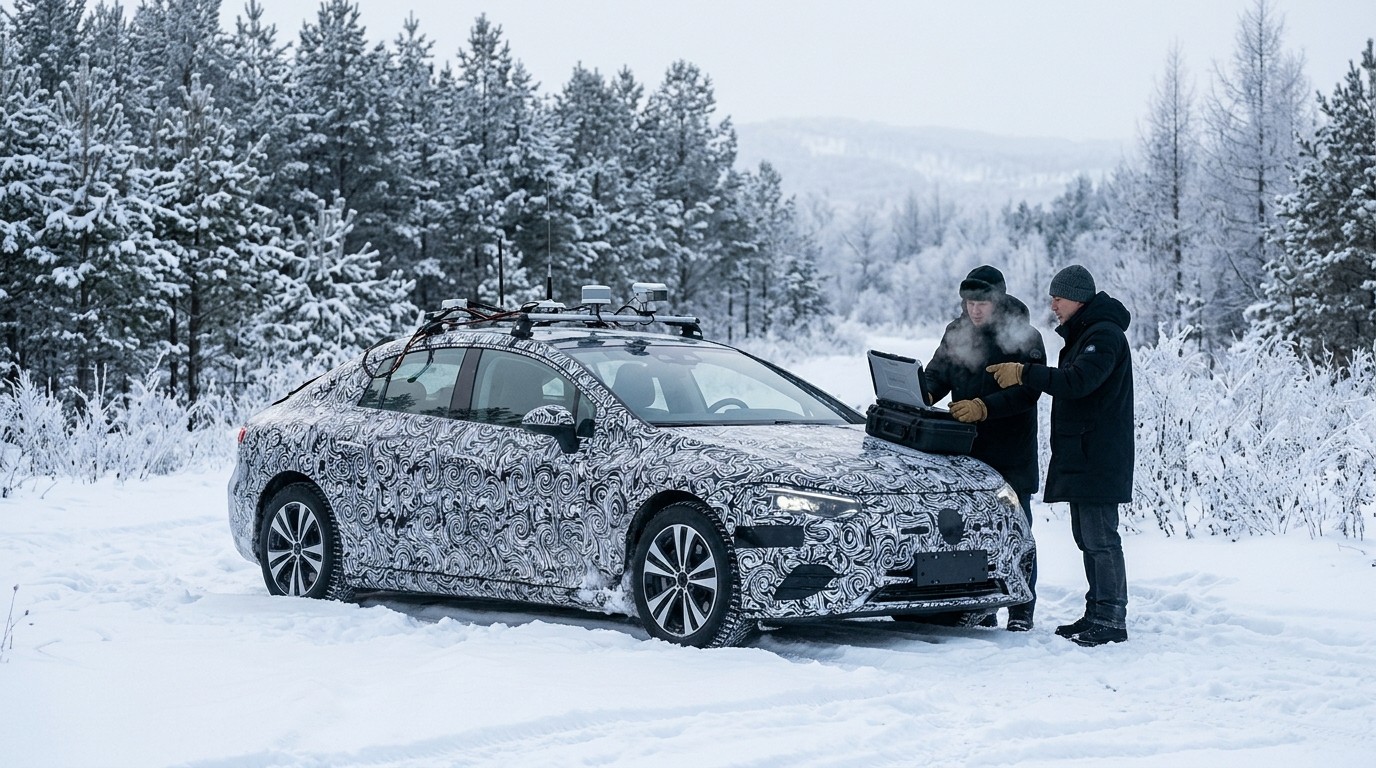
On January 14, 2026, a fleet of prototype vehicles equipped with Dongfeng’s 350 Wh/kg packs departed Wuhan in Hubei province for the Mohe cold-region test base in Heilongjiang, China’s northernmost testing ground. According to a January 2026 winter test report citing company disclosures, the cells had already completed material and electrochemical system verification and rolled off a pilot production line before the trip north. Reporting on the send-off ceremony notes the prototypes appear based on the Dongfeng 007 sedan, with the first series application expected under the Voyah brand rather than the core Dongfeng badge.
Once in Mohe, engineers put the prototype cars through more than 70 evaluations in ambient temperatures ranging from minus 40 degrees Celsius to minus 30 degrees Celsius (minus 40 degrees Fahrenheit to minus 22 degrees Fahrenheit). The Dongfeng solid-state battery testing program focused on three primary pillars:
- Low-temperature range: Measuring range stability and discharge behavior after prolonged exposure to subzero air.
- Charging performance: Testing charge and discharge efficiency when the pack is cold-soaked.
- Durability and integration: Evaluating battery life, structural safety, and full vehicle integration under severe thermal stress.
Taking a high-density prototype cell out of a climate-controlled laboratory and putting it into test cars in Mohe is a necessary step toward commercialization. However, passing a company-run winter test program is an early engineering gate, not proof that the pack is ready for high-volume showroom delivery.
Inside the 350 Wh/kg Oxide-Polymer Cell
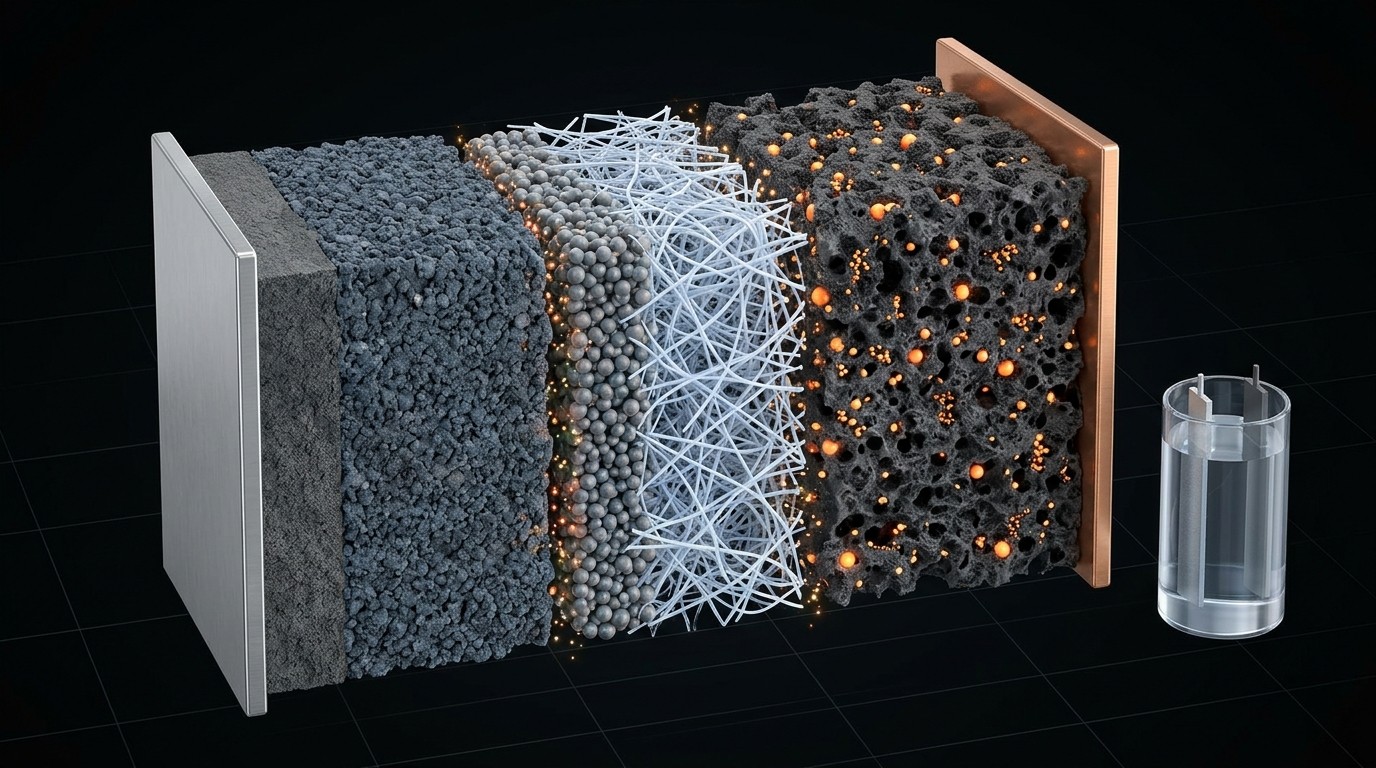
To reach a cell-level energy density of 350 Wh/kg, Dongfeng combined three material choices reported via Hubei Daily and Chinese automotive media: a high-capacity ternary cathode, a silicon-carbon anode, and an oxide-polymer composite solid electrolyte system. That 350 Wh/kg figure sits more than 50 percent above many conventional liquid lithium-ion baselines.
Mainstream lithium iron phosphate (LFP) cells typically deliver between 140 and 210 Wh/kg, while standard ternary lithium cells sit between 200 and 260 Wh/kg. At 350 Wh/kg at the cell level, a 600-kilogram battery pack could theoretically hold well over 200 kWh of energy before accounting for structural housing and thermal management overhead, illustrating how solid-state compares to lithium-ion on weight and packaging.
Despite the solid-state label used in press headlines, material chemistry matters. Because the electrolyte uses an oxide-polymer composite structure, industry analysts classify this generation as a hybrid solid-liquid or semi-solid battery rather than a pure all-solid-state cell. Under China’s 0.5 percent rule for solid-state claims (national standard GB/T 48093.1-2026, published on August 28, 2026, and taking effect on January 1, 2028), a true all-solid-state battery must contain below 5 percent liquid by mass and pass a strict 0.5 percent mass-loss test. Dongfeng’s own roadmap distinguishes this 350 Wh/kg semi-solid design from a separate 400 Wh/kg all-solid-state prototype that remains in an earlier validation phase.
| Metric | Dongfeng Hybrid 350 Wh/kg | Mainstream LFP Baseline | Mainstream Ternary Baseline |
|---|---|---|---|
| Cell Energy Density | 350 Wh/kg (company claim) | 140 to 210 Wh/kg | 200 to 260 Wh/kg |
| Claimed or Typical Range | Over 1,000 km (621 miles) CLTC | 400 to 600 km typical context | 500 to 700 km typical context |
| Low-Temperature Retention | 72% at minus 30C (minus 22F) claimed | Substantial winter loss | Substantial winter loss |
| Thermal Safety Benchmark | 170C (338F) hot-box pass claimed | Flammable liquid electrolyte baseline | Flammable liquid electrolyte baseline |
| Production Status | Prototype winter validation / 0.2 GWh pilot | Mass-produced at scale | Mass-produced at scale |
72% at Minus 30C: Why Cold Is the Real Test
In conventional liquid lithium-ion packs, plunging temperatures slow down lithium-ion diffusion as the liquid electrolyte becomes viscous, increasing internal resistance and robbing the vehicle of usable capacity. Standard LFP batteries in particular suffer substantial winter loss in subzero climates, while early solid-state prototypes have often struggled with rigid solid-to-solid interfaces that resist ion flow when cold.
Dongfeng reports that its oxide-polymer composite electrolyte preserved 72 percent energy retention at minus 30 degrees Celsius (minus 22 degrees Fahrenheit). Maintaining nearly three-quarters of usable energy in deep polar cold is a notable benchmark for solid-state battery cold weather range, especially when paired with vehicle integration and structural safety checks in Mohe.
In company statements reported by BatteriesNews and CNEVPost, Dongfeng stated: “The battery offers high safety, longer range, and low-temperature resilience, enabling vehicles to achieve over 1,000 kilometers of range.”
Still, careful readers should note what is missing from the public record. Dongfeng has not published a peer-reviewed paper, an independent lab certificate, or detailed discharge curves showing what C-rate (discharge speed) or cabin heating loads were active during the 72 percent retention test. Nor has the company disclosed how many freeze-thaw cycles the silicon-carbon anode can endure before expansion degrades solid state battery lifespan.
620 Miles? Reading the 1,000 km Claim Honestly
Headlines promoting a 1000km solid-state battery China breakthrough sound like an immediate end to range anxiety, since 1,000 kilometers converts mathematically to 621 miles. However, comparing CLTC vs EPA testing protocols reveals why US and European drivers should calibrate their expectations.
- Headline company target: Over 1,000 kilometers (621 miles) on a single charge under the China Light-Duty Vehicle Test Cycle (CLTC).
- Why CLTC reads high: The CLTC protocol features lower average speeds, frequent urban stops, and gentler highway load profiles than North American or European cycles, consistently producing higher range numbers than EPA or WLTP tests.
- Estimated EPA equivalent: As an Intelligent Living estimate (not a company claim), an electric vehicle rated at 1,000 km CLTC will typically deliver roughly 400-plus miles in real-world US EPA terms.
- Cold-weather reality: If a pack delivers an estimated 400-plus EPA miles at room temperature and retains 72 percent of its energy at minus 22 degrees Fahrenheit, a driver in extreme winter cold would see closer to 290 to 310 miles before factoring in cabin heat.
Even with that downward adjustment, an honest 400-plus-mile EPA baseline with over 70 percent retention at minus 22 degrees Fahrenheit would be a substantial upgrade over most current mass-market EVs. Framing the number accurately shows genuine engineering value without relying on inflated test-cycle conversions.
170C Hot-Box and Safety Context
High energy density at low temperatures cannot come at the expense of thermal stability at high temperatures. Along with the Mohe cold tests, Dongfeng reported that the 350 Wh/kg battery passed a 170 degrees Celsius (338 degrees Fahrenheit) hot-box thermal chamber test without losing structural integrity.
As detailed in an analysis of Dongfeng’s validation milestones, surviving a 170 degrees Celsius oven environment pushes well past the thermal thresholds where conventional liquid electrolytes typically vent and fail, aligning with China’s tightening GB 38031-2025 thermal runaway safety framework. Replacing most volatile liquid solvents with an oxide-polymer composite electrolyte helps stabilize the cell under intense heat.
Here again, precision matters. Passing a 170 degrees Celsius hot-box test confirms that the cell maintained structural integrity in a controlled thermal chamber according to company disclosures. It does not mean the battery is immune to fire under every severe crash or nail-penetration scenario, especially since high-nickel ternary cathodes and silicon-carbon anodes still hold huge amounts of stored chemical energy.
From Prototype to Fleet: What Scale Really Means
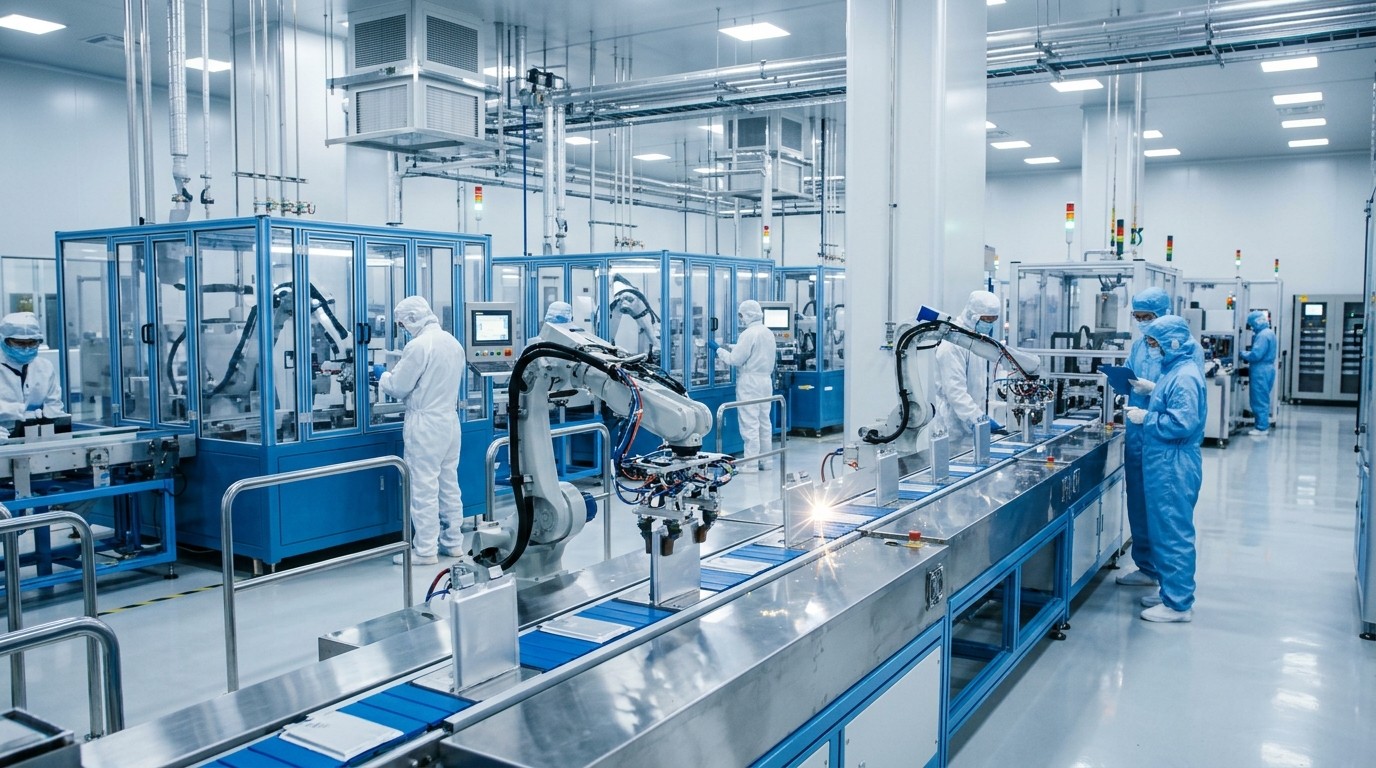
Moving a battery from winter prototypes to customer showrooms requires manufacturing infrastructure and supply-chain integration. On May 8, 2026, Dongfeng inaugurated the Hubei Solid-State Battery Industry Technology Innovation Consortium alongside 18 partner entities, establishing an end-to-end in-house platform covering research and development, prototyping, and pilot production.
Speaking at the World Intelligent Connected Vehicles Conference on October 21, 2026, Dongfeng executive Feng Changjun outlined the company’s tiered development roadmap. According to an October 2026 industry roadmap update, the automaker is pursuing several distinct cell targets and deployment phases:
- Pilot line and 100-vehicle demo: Dongfeng operates a 0.2 GWh pilot plant built to supply 100 demonstration vehicles across Hubei province.
- Late 2026 vehicle installation targets: Having previously targeted September 2026 for initial vehicle integration back in November 2025, Dongfeng’s October 2026 update set Q4 2026 as the target for vehicle installation of its 350 Wh/kg cells.
- 2027 deployment ambition: The company aims to introduce a new-generation fast-charging semi-solid battery for wider adoption in 2027, with a stated goal of equipping 50,000 vehicles with in-house solid-state batteries by 2027.
- Multi-tier energy density portfolio: Describing the full lineup, company disclosures note that “Dongfeng’s solid-state battery portfolio includes multiple products with energy densities ranging from 240 Wh/kg to 500 Wh/kg.”
- All-solid-state validation: Included inside that 240, 350, 400, and 500 Wh/kg portfolio is a 400 Wh/kg all-solid-state battery that remains in the prototyping and vehicle validation phase.
All of these deployment numbers are company-stated targets rather than completed deliveries. A 0.2 GWh line supplying 100 demonstration vehicles is a classic regional pilot program, and scaling from a 100-car demo fleet to 50,000 customer vehicles within a single year is a massive manufacturing leap. Dongfeng has also not disclosed cycle life, fast-charging minutes, specific retail models, or how much does solid state battery cost per kilowatt-hour off its pilot line.
How Dongfeng Fits the 2027 Solid-State Race
Putting Dongfeng’s Mohe cold test alongside its domestic and global peers helps separate small-batch demonstrations from true mass production. Across the industry, tracking the solid-state battery scoreboard for 2025-2026 shows a clear pattern: semi-solid and hybrid oxide-polymer packs are entering small demo fleets now, while true all-solid-state cells remain slated for low-volume trials in 2027.
China’s two largest battery makers, CATL and BYD, have both anchored on 2027 for small-batch demonstration production of their next-generation cells, including BYD’s 400 Wh/kg solid-state plan for 2027. Automaker Chery has likewise showcased a 400 Wh/kg development cell, while Toyota continues working toward late-decade commercialization. Even so, CATL’s chairman has publicly cautioned that million-vehicle mass scale for true all-solid-state batteries is very unlikely before 2030.
Seen through that lens, Dongfeng’s 350 Wh/kg winter test in Mohe is a credible engineering step for hybrid oxide-polymer technology. It shows that a pilot-built cell can survive minus 22 degrees Fahrenheit weather in a real vehicle chassis while retaining 72 percent of its energy. What remains ahead is independent verification, cost reduction, and proving that a 0.2 GWh pilot line can scale into reliable everyday passenger cars.
Frequently Asked Questions
Is a solid-state battery real?
Yes, solid-state batteries are real and are currently moving from laboratory prototypes into small demonstration vehicle fleets. However, many batteries marketed as solid-state in 2026 and 2027, including Dongfeng’s 350 Wh/kg cell, are actually hybrid solid-liquid (semi-solid) designs that still retain a small percentage of non-solid components rather than pure all-solid-state cells.
Is Dongfeng’s cell all-solid-state?
No. The Mohe-tested 350 Wh/kg pack is a hybrid solid-liquid (semi-solid) design. The separate 400 Wh/kg all-solid-state variant remains in prototyping and vehicle validation.
How far is 1,000 km CLTC in EPA miles?
As an Intelligent Living estimate (not a company claim), expect roughly 400-plus miles under US EPA test conditions.
What happens to Dongfeng’s solid-state battery at minus 22F?
Dongfeng reported 72 percent energy retention at minus 30 degrees Celsius (minus 22 degrees Fahrenheit), a favorable result against the substantial winter loss seen in conventional liquid LFP packs.
When can you buy a car with Dongfeng’s solid-state battery?
No retail date or pricing announced. The plan is 100 Hubei demo vehicles from the 0.2 GWh pilot, initial vehicle installation targeted for Q4 2026, and a company goal of 50,000 vehicles by 2027.


