
Picture the flow of global trade as a vast network of arteries—oceans pulsing with container ships, rail lines threading through industrial heartlands, and trucks delivering everything from grain to gadgets. But behind the scenes of this essential movement is a troubling truth: freight transport is one of the planet’s most stubborn carbon emitters. And while electric cars dominate headlines and rooftop solar panels become commonplace, the transformation of shipping and rail—the real lifeblood of commerce—has been far quieter.
Until now.
A new kind of infrastructure is emerging under the radar. Known as green shipping corridors and electrified rail hubs, these projects are reimagining how goods move across continents and oceans. From a pilot methanol-powered sea route between Dublin and Holyhead to the U.S.’s first RailGreen freight corridor in Virginia, these clean arteries of commerce are slowly forming the backbone of a decarbonized global economy.
This is the story of those corridors: how they work, where they’re being tested, and why they might just be the most impactful climate solution you’ve never heard of.

A Silent Revolution in Global Logistics
For most of us, the words “green infrastructure” bring to mind solar panels or wind farms. But a new revolution is underway in ports and harbors—one with the power to reshape the emissions footprint of international shipping.
One standout example is the Holyhead–Dublin green corridor, a short sea route between Wales and Ireland currently undergoing transformation. In late 2024, the European Union awarded a €143,000 grant to fund a feasibility study testing the use of methanol-powered ferries and shore-power compatibility for this popular trade route. It’s part of a broader initiative to launch Green Shipping Corridors, a concept endorsed by 24 countries at COP27 to accelerate zero-emission shipping lanes worldwide.
In a separate but aligned effort, Seattle and Busan are studying a trans-Pacific corridor involving shore power, zero-emission vessel operations, and coordinated policy pathways. These aren’t just vague aspirations; they represent a shift toward formalized decarbonization zones along major trade routes.
Meanwhile, global shipping leader Maersk has pledged support to over 15 corridor projects—advocating for full-scope solutions that link shipbuilders, ports, regulators, and energy suppliers. In other words, these corridors are more than green routes—they are collaborations between public and private sectors, forming the scaffolding for a global low-carbon economy.
It’s a quiet movement—one largely missed in headlines—but its scale and potential are anything but small.

The Future of Freight Is Electric, And Quietly Moving
While shipping gets most of the spotlight, rail remains a key component in the clean freight equation. One project making waves is the Norfolk Southern RailGreen Corridor, which connects the Port of Virginia with the Virginia Inland Port using cleaner fuels and low-emissions handling.
Launched in May 2025, this initiative is the first certified eco-freight corridor in the U.S., backed by Norfolk Southern’s pledge to reduce emissions through verified, certificate-based biofuel systems. By applying emissions tracking technology, they can quantify the climate benefit of every container moved along the corridor.
Why is the project important? Rail corridors serve as vital land‑based extensions of maritime trade, often connecting deepwater ports to inland economic zones. Traditionally, these corridors run on diesel and heavy-load energy systems. Electrification and smart fuel systems offer a way to slash emissions without sacrificing performance—especially as more freight shifts from road to rail in the quest for climate efficiency.
As the Port of Virginia’s CEO put it, “Decarbonizing freight is no longer optional—it’s a logistical necessity and a climate imperative.”
Electric freight corridors are already transforming how goods move through the world—with far less noise, even as public discourse remains fixated on EVs and personal transit.
Where Ports Breathe: Electrifying Shore Power
Every time a cargo ship docks, it continues burning fuel to power onboard systems. This practice—called “hotelling”—creates serious localized pollution, especially in densely populated port cities. But what if ships could plug in like your laptop and run on clean, grid-based electricity?
That’s the promise of shore power, also known as “cold ironing.” It allows vessels to shut down their diesel engines while docked, using land-based electricity to maintain systems. Ports like Seattle have already implemented shore power for cruise and cargo terminals, reducing emissions from at-berth operations by up to 90% (source).
Despite its benefits, the adoption of shore power remains uneven. A 2024 report by the U.S. EPA showed that while dozens of ports have some form of shore power, only a fraction are optimized for large-scale use. The barriers include the cost of infrastructure, vessel retrofitting, and energy grid readiness.
Still, the momentum is growing. New funding streams—such as the U.S. Maritime Administration’s Port Infrastructure Development grants—are helping expand shore power in key locations. When combined with green shipping corridors and rail connections, these breathing ports become vital nodes in a zero-emissions trade network.
Just as lungs filter and oxygenate blood, these ports clean the flow of global commerce.

Climate Wins Without Compromise: Coordination Across the Value Chain
Achieving zero-emission freight doesn’t happen with ships or trains alone—it requires a carefully choreographed ecosystem of collaboration. From port authorities and energy providers to vessel manufacturers and logistics companies, every player in the supply chain must align to make green corridors work.
This is the concept of value chain coordination, and it’s the foundation behind successful green shipping initiatives.
Building the Green Infrastructure Together
One of the most promising frameworks comes from the Green Shipping Corridor Partnership model, which emphasizes synchronized action across sectors. A green corridor, according to the Global Maritime Forum, is only viable if infrastructure, regulation, fuel supply, and shipping operations are all decarbonized in tandem. This includes:
- Shore power readiness at ports
- Zero-emission vessel availability (often methanol- or hydrogen-fueled)
- Green fuel bunkering infrastructure
- Regulatory and certification standards to track emissions transparently
This whitepaper by ABS and Mission Innovation outlines the minimum viability conditions for launching a corridor—and shows how multi-stakeholder agreements are critical.
Why Collaboration Trumps Technology Alone
As powerful as battery-electric or methanol engines may be, they’re not enough without networked systems to support them. A ship might be ready to plug in, but if the port isn’t equipped—or if fuels aren’t stocked in-region—clean shipping becomes an idea stuck in port.
Thus, green freight isn’t about one technology breakthrough. It’s about orchestration: aligning private innovation with public policy and ensuring incentives, timelines, and infrastructure scale together.
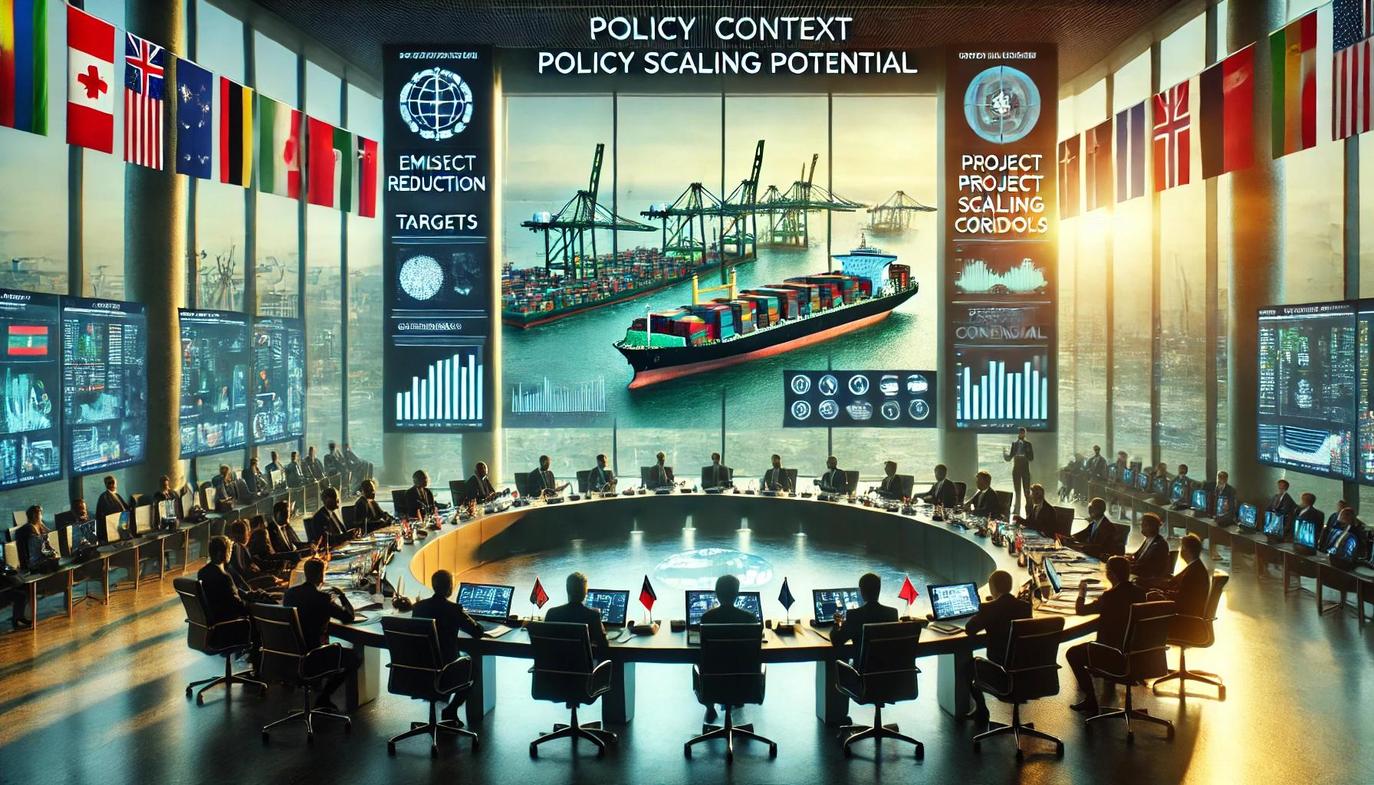
Policy Context & Scaling Potential
The path to a global network of clean freight corridors is paved not only with innovation but with legislation—and the clock is ticking.
The International Maritime Organization’s 2030 Mandates
In 2023, the International Maritime Organization (IMO) updated its emissions reduction strategy. New targets include:
- 30% reduction in total GHG emissions by 2035
- 65% reduction by 2040
- Net zero by 2050
These targets have lit a fire under governments and ports alike to prioritize shore power grants, fuel incentives, and sustainable transport policies.
National and Local Initiatives Gaining Steam
In the U.S., agencies like the Maritime Administration (MARAD) are offering port infrastructure development grants to fund electrification projects. Meanwhile, countries like Denmark and Singapore are setting up government-backed green corridor blueprints in partnership with ports around the world.
But perhaps the biggest opportunity lies in scaling successful pilots like the Holyhead–Dublin corridor or Virginia’s RailGreen. These aren’t theoretical—they’re real-world case studies ready to be replicated, provided stakeholders receive the funding, guidance, and policy certainty needed to go bigger.
The challenge? Keeping policy timelines aligned with infrastructure and private sector readiness.
Clean Corridors: The Silent Future
The highways of the sea and rail may not make daily headlines, but they are quietly transforming the carbon math of our planet’s most fundamental systems. Unlike consumer trends that swing with sentiment, clean freight corridors reflect something more resilient: long-haul, cross-sector cooperation that cuts emissions at the scale of nations.
These corridors are also uniquely hopeful with AI-powered material innovation leading the charge. They don’t demand that we stop moving goods or restrict trade—they offer a better way to keep everything flowing. A way that makes ports healthier, logistics smarter, and global commerce compatible with climate action.
As more green corridors become operational, they’ll form a kind of global circulatory system—clean arteries moving the essentials of life without poisoning the air, soil, or water around them.
And like all infrastructure, once it’s built, it tends to stay.

Frequently Asked Questions About Green Shipping Corridors and Clean Freight Infrastructure
What Is a Green Shipping Corridor?
A green shipping corridor is a designated maritime route where ports, vessels, fuel providers, and regulators work together to ensure the entire logistics chain emits minimal or zero carbon. These routes prioritize shore power, green fuels like methanol, and retrofitted vessels.
How Do Electrified Rail Hubs Fit Into Green Corridors?
Rail hubs connect ports to inland destinations. By electrifying these links—or using clean fuel alternatives—emissions can be reduced not only at sea but throughout the full supply chain, especially in last-mile delivery.
What Is Shore Power, and Why Does It Matter?
Shore power allows ships to plug into the electric grid while docked, rather than running polluting engines. This drastically cuts emissions in port cities and improves air quality for surrounding communities.
How Much Can These Corridors Reduce Carbon Emissions?
Depending on the setup, up to 90% of at-berth emissions can be cut using shore power alone. When combined with clean fuels and low-emission rail, corridor-based systems can slash lifecycle freight emissions significantly.
Are Green Shipping Corridors Scalable Worldwide?
Yes, but scalability depends on collaboration, funding, and policy alignment. While pilots like those in Ireland, the U.S., and Asia show promise, widespread adoption will require synchronized global standards and investment.


