
Automation, the strategic integration of technology to handle tasks with reduced human oversight, represents a sweeping transformation across industry landscapes. As we advance through 2024, the global industrial automation market, previously valued at over $192.74 billion, is forecasted to expand further, reaching an estimated $401.48 billion by 2032. This escalation emphasizes the vital role automation serves in augmenting productivity, improving precision, and curtailing costs across diverse sectors.
Business strategists and government officials increasingly recognize the transformative potential of automation in propelling economic expansion and competitive prowess worldwide. Let us examine the profound changes automation brings to various industries.
The Apparel Industry: AI-Driven Inventory Management
In the apparel sector, the infusion of generative AI is profoundly reshaping inventory management practices. This form of AI applies intricate algorithms to develop predictive models and adapt to novel data inputs, which is crucial for managing stock levels efficiently. The capability to accurately forecast fashion trends and enhance supply chain efficiency ensures that inventory aligns perfectly with consumer demand, avoiding surplus.
Utilizing AI inventory management software enables apparel businesses to swiftly adapt to shifts in fashion trends and market demands, significantly decreasing waste and enhancing profitability. This agile adjustment to consumer preferences guarantees that popular items remain available, thereby boosting customer satisfaction and contributing to business success.
These industries can also use software to manage online stores and streamline the ordering process, ensuring customers have a smooth shopping experience. Companies are happy to hire professional Salesforce CPQ services to automate pricing, customize quotes, and improve sales efficiency across multiple channels. This integration not only saves valuable time but also reduces costly errors that can occur with manual processes. As a result, businesses can scale more effectively while maintaining strong relationships with their customers.

Healthcare: Automation in Diagnosis and Patient Care
Healthcare significantly gains from automation, particularly within diagnostic processes and patient care. AI-enhanced systems now aid in the analysis of medical imaging, such as X-rays and MRIs, with superior accuracy and speed compared to traditional methods. In inpatient care, robotics have secured a vital role, extending from routine procedures to complex surgical interventions.
These advancements help reduce medical errors and staff fatigue, leading to more reliable and consistent healthcare services. Robots execute these procedures with extreme precision, reducing recovery times and decreasing the likelihood of complications, ensuring safer patient outcomes.
Automotive: The Rise of Autonomous Vehicles
The automotive industry sees pronounced advancements in automation, especially with the development and integration of autonomous vehicles. This spectrum of technology spans from traditional robots on assembly lines to advanced software that governs self-driving cars. These automated systems increasingly undertake roles in predictive maintenance, quality control, and logistics.
This transformative shift not only revolutionizes vehicle manufacturing processes but also redefines our traditional notions of transportation, nudging us towards a future where manual driving may become obsolete. Moreover, this evolution enhances safety features, reduces accidents caused by human error, and promises significant environmental benefits through more efficient vehicle operations.

Manufacturing: Robots and Smart Factories
In manufacturing, automation heralds the dawn of smart factories, where machines interconnected through advanced networks operate autonomously. These robots are sophisticated systems capable of tweaking operations in real-time based on instant data assessments. This technological prowess allows for heightened product customization and rapid adjustment to fluctuations in consumer demand.
The integration significantly amplifies operational efficiency, reduces errors, and elevates production levels, making manufacturing processes more adaptable and responsive to market conditions. Additionally, this automation facilitates the integration of green technologies in production cycles, further aligning manufacturing practices with environmental sustainability goals.
Agriculture: Precision Farming Techniques
Automation also revolutionized agriculture through precision farming, utilizing data from sensors, drones, and satellite imagery to manage and observe crops with meticulous detail. This data enables farmers to implement sustainable agricultural methods, dramatically reducing the consumption of water, fertilizers, and pesticides.
Precise control over these factors leads to optimized crop growth cycles, enhanced yields, and minimized resource waste, reinforcing sustainable practices essential for supporting an increasing global population. These advancements also improve the scalability of farming operations, enabling more effective management of larger, more diverse farmlands.
Financial Services: Automated Trading and Personal Finance
In finance, automation transforms trading and personal finance management. Algorithms conduct high-frequency trading, making decisions in milliseconds based on live market data to maximize gains and minimize losses. These systems instantly modify strategies as market conditions shift, offering a distinct advantage over conventional trading methods.
Furthermore, AI-driven tools assist individuals in managing their finances, from monitoring expenses to optimizing savings and facilitating investments, democratizing access to financial advice, and making it highly customizable. This automation extends to risk assessment, enhancing credit scoring models and loan approvals, thereby broadening financial inclusion across varied demographic segments.
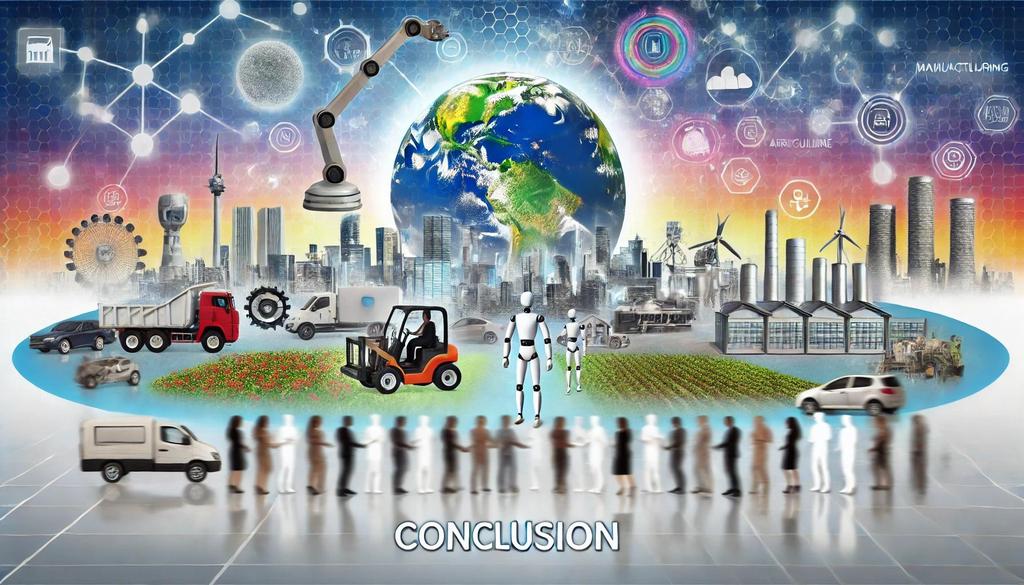
Automation Wave: Adapting to a Future Redefined by Technology
Automation unmistakably revolutionizes industry after industry, enhancing operational efficiency, reducing costs, and improving service delivery. Embracing these innovations necessitates maintaining awareness and adaptability. From fashion and healthcare to investing, automation influences a wide array of life aspects, impacting everyone. It’s crucial to stay vigilant and responsive to these ongoing technological advancements as they continue to unfold.


