
The bridal bouquet is more than just a bunch of flowers gathered together; it’s a statement piece, an extension of the bride’s personality, and a key component of wedding day style. From classic roses to whimsical wildflowers, the choices are endless, making the decision both exciting and, at times, overwhelming.
In this guide, we’ll explore how to choose the perfect bridal bouquet that complements your wedding dress and reflects your style.
Understanding Different Styles of Bridal Bouquets
Before diving into the vast ocean of flower choices, it’s essential to familiarize yourself with the most popular styles of wedding bouquets.
Bouquets range from the traditional round bouquet, known for its structured and symmetrical appearance, to the more free-form cascade bouquet, which drapes elegantly down from the bride’s hands. There are posy bouquets, perfect for a minimalist bride, and the contemporary arm sheaf bouquet, cradled in the arm, offering a modern twist.
The Round Bouquet
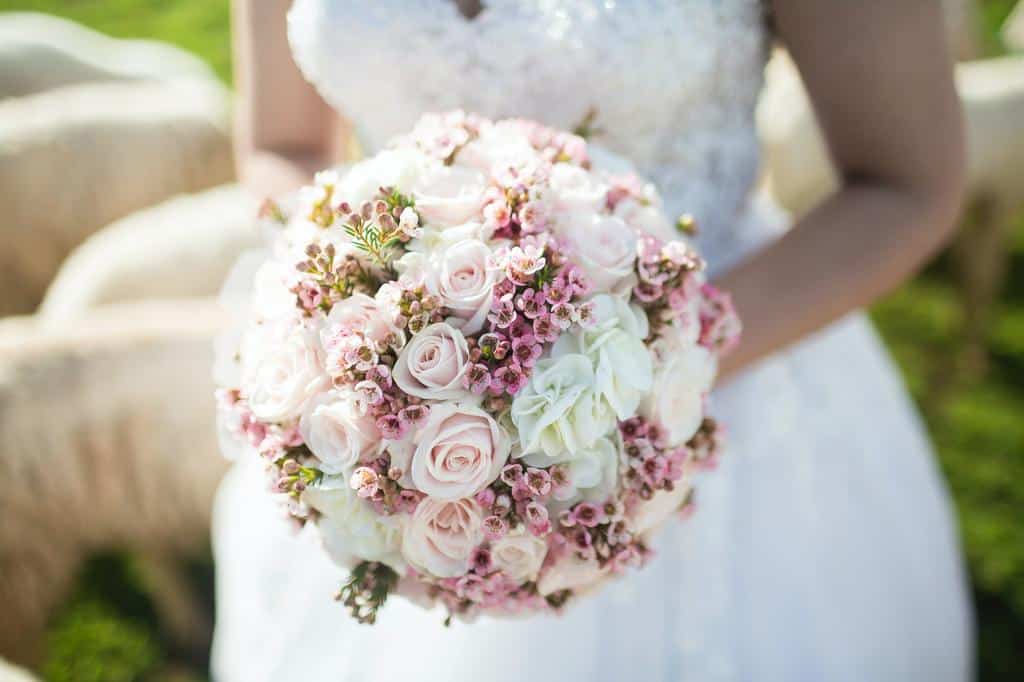
Ideal for formal and traditional weddings, the round bouquet is both timeless and elegant. It typically features one type of flower, like roses or peonies, creating a consistent and harmonious look. This bouquet suits brides who prefer a classic and refined aesthetic.
Often seen in royal weddings, its perfectly shaped structure exudes sophistication and grace. The round bouquet can be designed with varying sizes of flowers to add depth or with a mix of blooms in the same color palette to maintain its traditional appeal while adding a touch of modern flair. The beauty of the round bouquet lies in its versatility; it can be adapted to fit various dress styles, from A-line to ball gowns, making it a universally flattering choice.
The Cascade Bouquet
For a dramatic effect, the cascade bouquet is a showstopper. It’s characterized by a ‘waterfall’ of flowers and greenery that tumbles down from the main bouquet. This style is perfect for a bride looking for a fairytale touch. Often associated with opulence and romance, the cascade bouquet is a statement piece that draws attention to the bride as she walks down the aisle.
It can be designed with a mix of voluminous blooms and trailing vines for a lush, garden-inspired look. The cascade bouquet is particularly stunning with gowns that have a longer train, as it mimics the flow and elegance of the dress. It allows for creativity, blending different textures and colors to create a visually striking bouquet that reflects the bride’s style.
The Posy Bouquet
Simple yet beautiful, the posy bouquet is often smaller, round, and easy to hold with one hand. It’s great for brides who prefer a more understated or minimalist approach. This bouquet type exudes a delicate charm and is often chosen for its ability to complement, rather than overpower, the bridal gown. Perfect for intimate or casual weddings, the posy bouquet can be crafted from various flowers, including dainty blooms like baby’s breath or wildflowers for a more rustic look. Adding ribbons or lace can add a touch of elegance to this type of bouquet. Its petite size makes it ideal for bridesmaids and flower girls, ensuring a cohesive aesthetic throughout the bridal party.
The Arm Sheaf Bouquet
Also known as the presentation bouquet, it’s a bunch of long-stemmed flowers cradled in the bride’s arm. This style offers a chic and modern look, ideal for contemporary weddings. The arm sheaf bouquet is a nod to early 20th-century fashion, where it was popular among stylish brides. Its linear form and the emphasis on the length of the stems create an artistic and avant-garde feel.
This type of bouquet can be made with various flowers, from the elegance of calla lilies to the rustic charm of lavender and wildflowers. It’s particularly suited to tall brides or those wearing slim-fitting gowns, as it elongates the silhouette and adds a sophisticated touch to the overall bridal look. The arm sheaf bouquet is a stunning alternative for the bride who wants to make a unique and memorable statement.
Factors to Consider When Choosing Your Bouquet
Selecting the right bridal bouquet is not just about the style; it involves considering various factors to ensure it complements your wedding theme.
Wedding Theme and Venue
Your bouquet should be a reflection of your wedding theme and venue. For a beach wedding, lighter, airy flowers like orchids or calla lilies can echo the breezy, oceanic atmosphere, while tropical blooms can add a vibrant touch. In contrast, a rustic wedding in a barn or outdoor setting might call for wildflowers or sunflowers that resonate with the natural environment. For a more formal venue, like a ballroom or church, classic flowers such as roses or lilies can add a touch of elegance.
The key is to ensure that your bouquet feels like a part of the overall setting, complementing the venue’s aesthetics and enhancing the thematic experience. It’s not just about the appearance but also about how the bouquet feels – whether it adds a soft romance to a garden setting or a bold statement in a contemporary space.
Dress Style and Body Shape
The bouquet should harmoniously enhance your wedding dress and body shape, not overpower. For example, a large, cascading bouquet might overwhelm a petite bride or a sleek, simple gown. In contrast, a smaller, more structured bouquet, such as a posy or a round bouquet, can balance the proportions beautifully. Conversely, a voluminous ball gown can be perfectly complemented by a larger bouquet, making a striking visual balance.
The bouquet should also mirror the style details of the dress; a bouquet with intricate, delicate details complements a gown with lace or beadwork, while a bouquet with bold, dramatic flowers can stand up to a gown with simpler lines. The aim is to create a cohesive look that enhances the bride’s figure and the beauty of the dress.
Personal Preference and Seasonal Flowers
Choosing flowers for your bouquet that have personal significance or that you are genuinely drawn to makes the bouquet truly yours. It could be a flower from a memorable date, your grandmother’s favorite bloom, or something representing a shared interest or passion. Seasonal availability of flowers is also a crucial factor, as it can significantly affect the cost and freshness of your flowers.
For instance, peonies in spring or dahlias in fall can offer the freshest options, often at a better price. Additionally, seasonal flowers can add time and place to your wedding, making it feel more connected to the season and location.
Color Scheme
Your bouquet should be a natural extension of your wedding color palette. For a cohesive look, you can choose flowers matching your wedding theme’s colors. This could mean incorporating shades of your bridesmaids’ dresses or accents from your decor. Alternatively, selecting flowers in neutral tones, such as whites, creams, or greens, can offer a sophisticated, timeless look that blends seamlessly with any theme.
The color of your bouquet can also be used to make a statement; for instance, a pop of bright color in a neutral-themed wedding can be a striking and memorable choice. The key is to ensure that the bouquet feels integrated with the wedding’s color story, whether it’s through direct matching or thoughtful contrast.
Customization and Personal Touches
Your bouquet can be more than just flowers. Personalize it with elements that hold special meaning, like a family heirloom or a piece of fabric from a loved one’s dress. Working with a skilled florist can help bring these personalized touches to life.
Conclusion
Your bridal bouquet is a significant part of your big day. By understanding the different styles, considering various factors, and adding personal touches, you can choose a bouquet that beautifully complements your wedding and reflects your unique style. Remember, the perfect bouquet is the one that makes you feel special and adds an extra touch of magic to your wedding day.


