
The CDC (Centers for Disease Control and Prevention) published a new preliminary report that presents the first analysis of COVID-19 cases in the United States. The data – such as patients ages and the number of fatalities – is similar to that of analysis from other countries. All reports show that the disease can be dangerous to young people too, and this new report only strengthens that fact. It found that of all hospitalized patients, 20% were between the ages of 20 and 44.
The study reports on 4,226 COVID-19 cases in the United States as of March 16. However, they only had age data for 2,449 of those patients. Nevertheless, it shows a relation to age and outcome all the same, which is what the study was intending to do.
The report states:
Overall, 31% of cases, 45% of hospitalizations, 53% of ICU admissions, and 80% of deaths associated with COVID-19 were among adults aged ≥65 years with the highest percentage of severe outcomes among persons aged ≥85 years.
This research serves as a reminder that even though elderly citizens are the group most at risk of developing a severe life-threatening condition from the coronavirus, the illness can be dangerous to young people as well. Of all confirmed cases, nearly half of them were people aged under 54 and almost 40% of all hospitalizations.
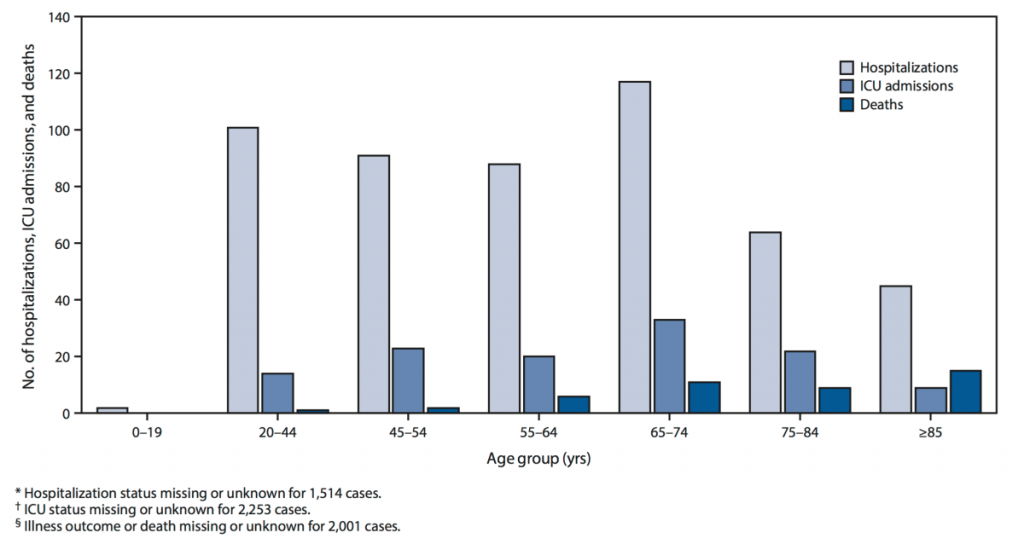
It is critical people grasp the message being portrayed here: the virus doesn’t only attack the elderly! Younger people aren’t immune to unpleasant and severe cases of the illness just because they are less likely to die from it.
Mike Ryan, the head of the WHO emergency program, pointed out in a recent briefing that COVID-19 can be deadly in healthy young adults. He said:
Physicians again in Italy will attest to this, and in Korea. This isn’t just a disease of the elderly. There is no question that younger, healthier people experience an overall less serious disease. But a significant number of otherwise healthy adults can develop a more severe form of the disease.
All citizens, young and old, should practice social distancing. The CDC report concluded:
Social distancing is recommended for all ages to slow the spread of the virus, protect the health care system, and help protect vulnerable older adults. Further, older adults should maintain adequate supplies of nonperishable foods and at least a 30-day supply of necessary medications, take precautions to keep space between themselves and others, stay away from those who are sick, avoid crowds as much as possible, avoid cruise travel and nonessential air travel, and stay home as much as possible to further reduce the risk of being exposed.
Bottom line: young people can end up with severe COVID-19-associated illness that requires hospitalization. It doesn’t matter that young people are more likely to experience a milder form of the disease because not all do. And researchers still don’t know why some perfectly healthy young people get struck severely by the virus while others don’t.


