
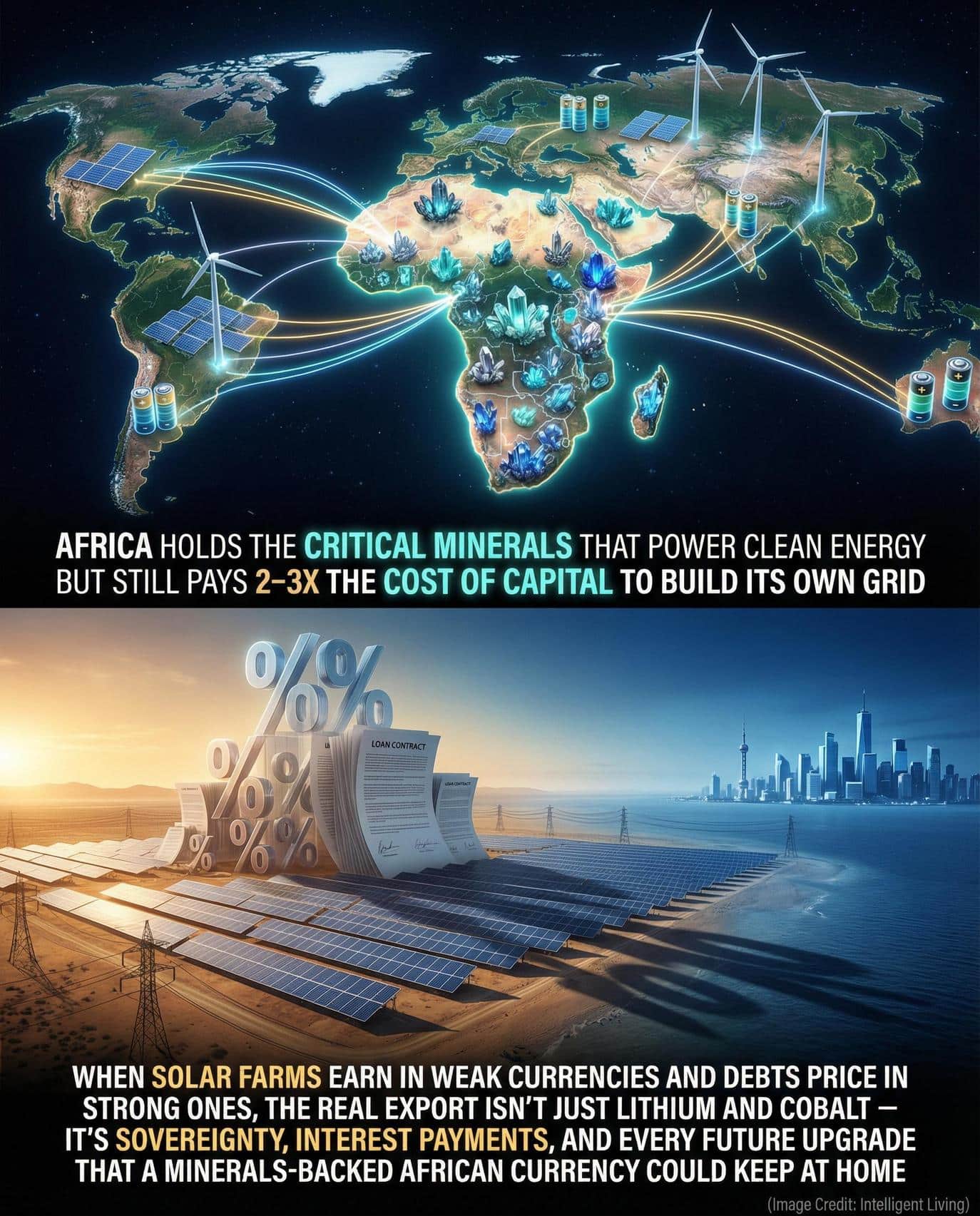
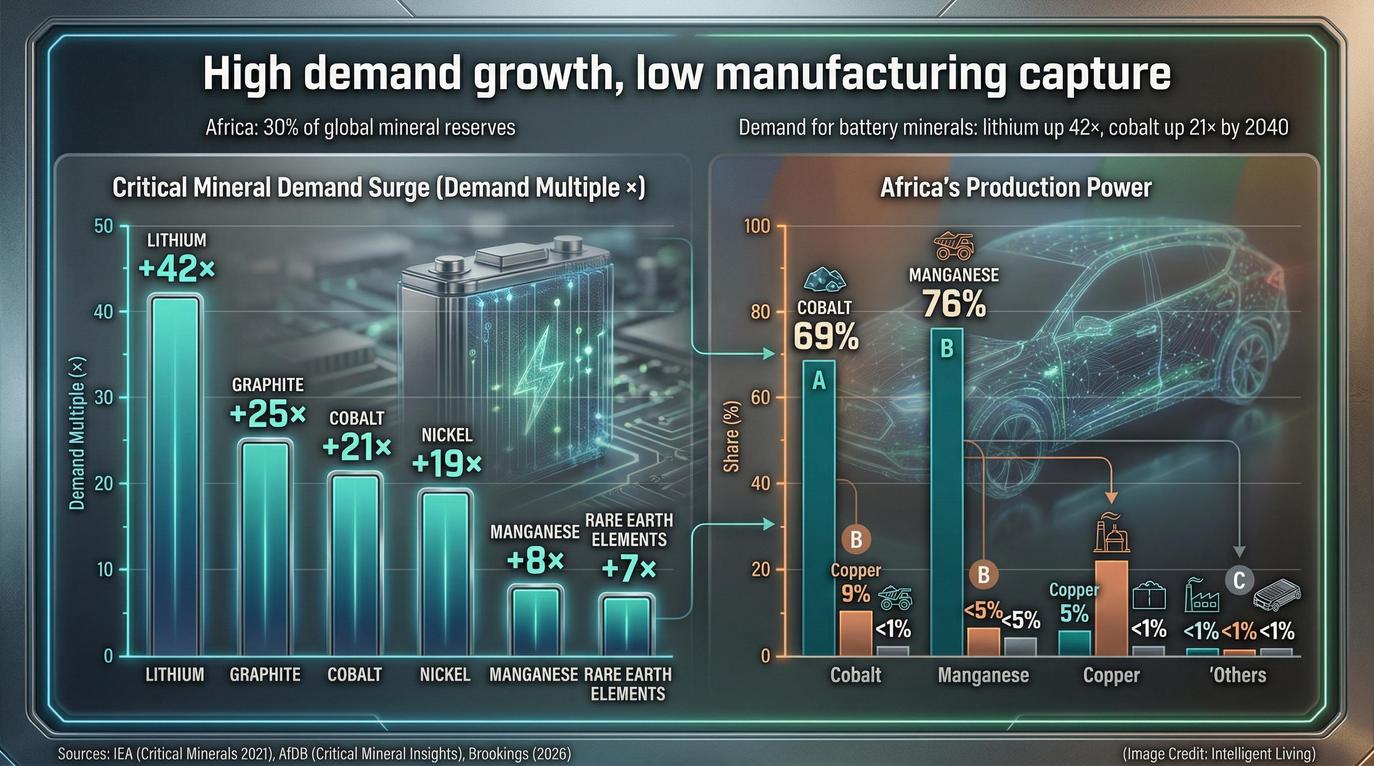
Africa sits at the centre of the global clean energy transition. The continent holds an estimated 30 per cent of the world’s mineral reserves, including large shares of cobalt, manganese, platinum group metals, and lithium resources that power electric vehicles, battery storage, wind turbines, and solar panels.
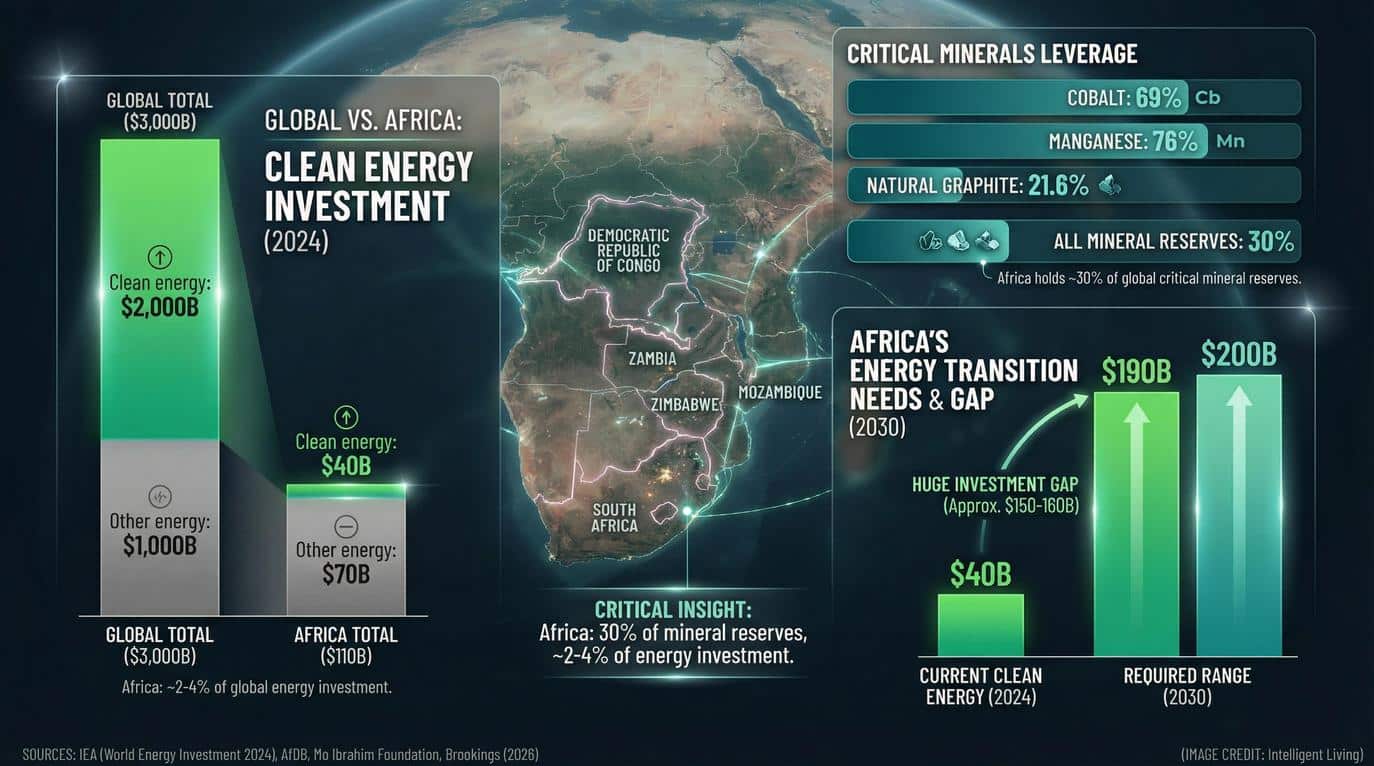
Yet despite this strategic position, Africa attracts only a small fraction of global clean energy investment. According to a new African Development Bank proposal reported by Reuters, Africa captures roughly 3 per cent of global energy investment and about 2 per cent of global green investment, even as demand for its critical minerals accelerates.
Such a disparity stems less from resource scarcity than from a fractured financial architecture. Currency volatility, convertibility risk, and high borrowing costs inflate the price of building renewable energy, transmission lines, and storage systems.
Strategic deployment of essential minerals like lithium and cobalt decarbonises technologies worldwide despite these prevailing financial barriers. A stark paradox emerges: Africa provides the essential materials for global decarbonisation while remaining unable to finance its own energy transition.
In response, policymakers and financial institutions are now exploring a proposal that sounds radical at first glance: a critical minerals-backed African unit of account. It is sometimes described as a new gold standard. In practice, it is something more technical and potentially more pragmatic.
Critical Minerals-Backed Currency Explained: Key Facts About Africa’s AUA Proposal
- The African Development Bank has outlined a proposal for a non-circulating African Unit of Account backed by a basket of critical commodities rather than a single national currency. Those commodities include minerals at the heart of the EV battery supply landscape.
- The framework targets the reduction of exchange rate and convertibility risks for infrastructure projects without replacing local legal tender.
- Africa holds around 30 per cent of the world’s mineral reserves but attracts only about 3 per cent of global energy investment, even as global clean energy spending repeatedly exceeds three hundred billion dollars per year.
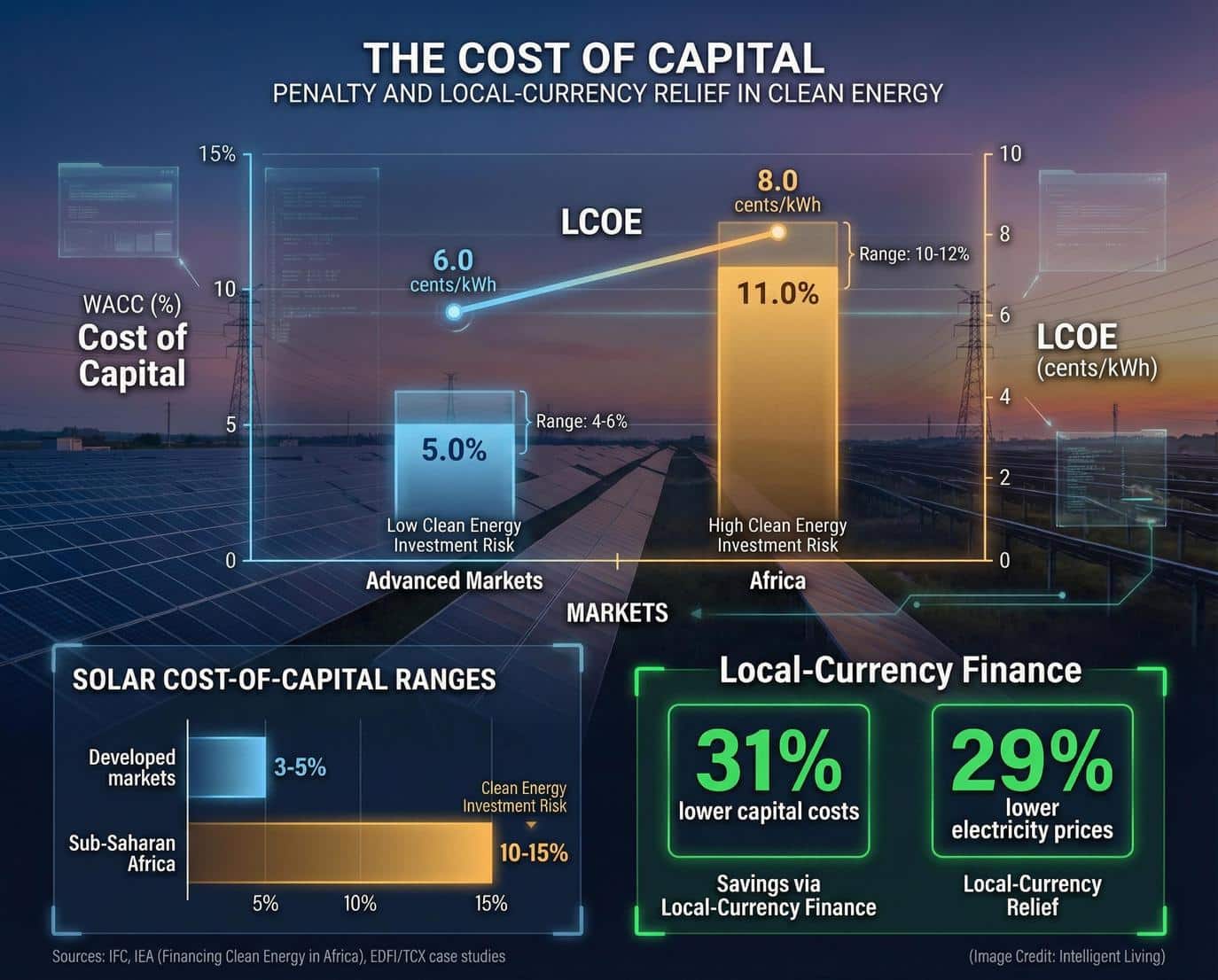
- The International Energy Agency estimates that the cost of capital for utility-scale clean power projects in many African countries can be two to three times higher than in advanced economies, largely due to perceived risk.
- The mechanism would rely on a settlements agent model, where local-currency revenues are converted through a commodity-backed structure to meet hard-currency debt obligations.
The Cost of Capital Barrier: Why Africa’s Energy Transition Faces a High-Risk Tax
The Capital Premium in African Markets
The central obstacle is not sunlight, wind, or mineral supply. It is a risk.
The International Energy Agency reports that the cost of capital for clean power in many African markets is at least two to three times higher than in advanced economies and China. Several factors contribute to this elevated capital premium:
- Inflated electricity prices driven by high debt-servicing costs.
- Stalled project implementation due to prohibitive financing terms.
- Investor demands for higher returns to offset fears of currency depreciation and capital controls.
- Structural risks involving the inability of project developers to convert local-currency revenues into hard currency before debt deadlines arrive.
Addressing the Hidden Risk Tax
At the same time, the IEA estimates that Africa’s energy investment needs to exceed 200 billion dollars per year by 2030 to meet development and climate goals.
Yet the continent currently captures only a small percentage of global energy finance, even as global investments in renewable energy surge year after year. Reuters has reported that Africa receives roughly 3 per cent of global energy investment despite its critical role in supplying minerals essential to batteries and renewable technologies.
A hidden risk tax effectively raises the price of decarbonisation through several systemic barriers:
- Prohibitive financing terms that undermine even technically sound and viable solar projects.
- Severe currency volatility that further compounds existing fiscal obstacles.
- Skewed financing structures that may force emerging hydrogen export strategies to prioritise foreign markets over domestic energy access.
Financial control remains the decisive factor in project success, rather than mere technology.
Designing A Minerals-Backed African Unit Of Account
What AfDB Is Proposing: A Mineral-Basket Unit Of Account
Defining the Unit of Account Structure
The African Development Bank’s proposal is often described in headlines as a minerals-backed currency, but the core idea is more precise. According to Reuters coverage of the plan, the concept centres on a non-circulating African Unit of Account, or AUA, used as a standardised measure to price contracts, loans, and obligations rather than as everyday money in circulation.
In this model, the value of the AUA would be derived from a diversified basket of critical commodities, including metals such as lithium, cobalt, and manganese that are strategically important to the global energy transition. The framework for mitigating currency risk explains that participating countries could pledge a defined share of proven mineral reserves into a structured framework. The basket would then serve as a reference for denominating infrastructure finance.
Diversification and Resource Anchoring
The unit would be non-circulating and would not replace national currencies. Citizens would still transact in naira, rand, shillings, or francs, while the AUA would operate mainly inside project finance and intergovernmental settlements. Anchoring valuation to tangible resources rather than a single domestic currency reduces convertibility risk without requiring a pan-African legal tender. While individual commodities exhibit volatility, a composite mineral basket dampens price swings.
As the market monitors emerging mineral breakthroughs and shifting resource geopolitics, the AUA reflects a broader strategic pivot. Minerals are no longer only inputs for batteries and solar hardware; they are becoming tools in monetary and financial strategy.
How The Settlement Agent Model Works For Lenders
Revenue Collection and Debt Servicing
The AfDB-linked model operates through a distinct three-tier revenue structure:
- Local Revenue: Households and businesses pay electricity bills in their local currency.
- Project Earnings: The project company collects these local revenues as primary income.
- Debt Servicing: Obligations are met according to a financing agreement denominated strictly in the African Unit of Account.
Liquidity Access and Risk Premium Reduction
When repayment is due, a settlements agent would receive the local-currency payments and convert the obligation into hard currency using the mineral-backed basket structure. Pledged commodity reserves provide collateral that can support access to international liquidity, allowing lenders to be repaid in a currency they trust. The framework addresses two primary problems that inflate financing costs: exchange rate risk and convertibility risk.
Placing a structured, commodity-referenced layer between domestic revenue streams and international debt markets allows the mechanism to lower the risk premium attached to infrastructure projects. In practice, it would operate alongside regional payment systems rather than replacing them, with the unit of account handling long-term risk while payment rails handle day-to-day settlements.
Strategic Resource Leverage: Building a Sustainable Trade Sovereignty Stack
Why Minerals Are Leverage And Why Weak Governance Turns Leverage Into A Trap
Strategic Weight vs. Market Volatility
Minerals provide leverage because they are scarce, globally demanded, and physically tangible. The World Bank has emphasised that demand for critical minerals could rise dramatically as the world expands renewable energy, electric mobility, and battery storage. Africa’s vast geological endowment provides the continent with significant strategic weight as the world shifts toward sustainable energy.
Strategic leverage rapidly shifts into structural vulnerability as market conditions fluctuate. Commodity prices are volatile, and historical data from institutions such as the Bank for International Settlements show that commodity markets experience significant swings over time. A mineral-backed unit of account would inherit exposure to global commodity cycles, so a downturn in mineral prices could weaken the reference value underpinning the system.
Institutional Transparency and Oversight
Governance shapes how that risk is managed. The African Union’s green minerals strategy highlights the need for transparent management, value addition, beneficiation, and responsible extraction. Without clear rules on reserve verification, auditing, custody, and pricing methodology, any mineral-backed structure risks being dismissed as political symbolism rather than credible collateral.
The resource curse dynamic remains a significant threat, as mineral wealth can distort institutions if revenues are mismanaged. Converting minerals into financial backing instruments requires strong institutions, independent oversight, and consistent policy discipline.
Such a transition requires support from circular approaches to high-tech metals and e-waste management. Minerals can anchor a new form of financial sovereignty, yet they also magnify existing weaknesses if transparency and governance lag behind ambition.
How PAPSS And Direct FX Infrastructure Support Monetary Sovereignty
Regional Payment Systems and Local Settlement
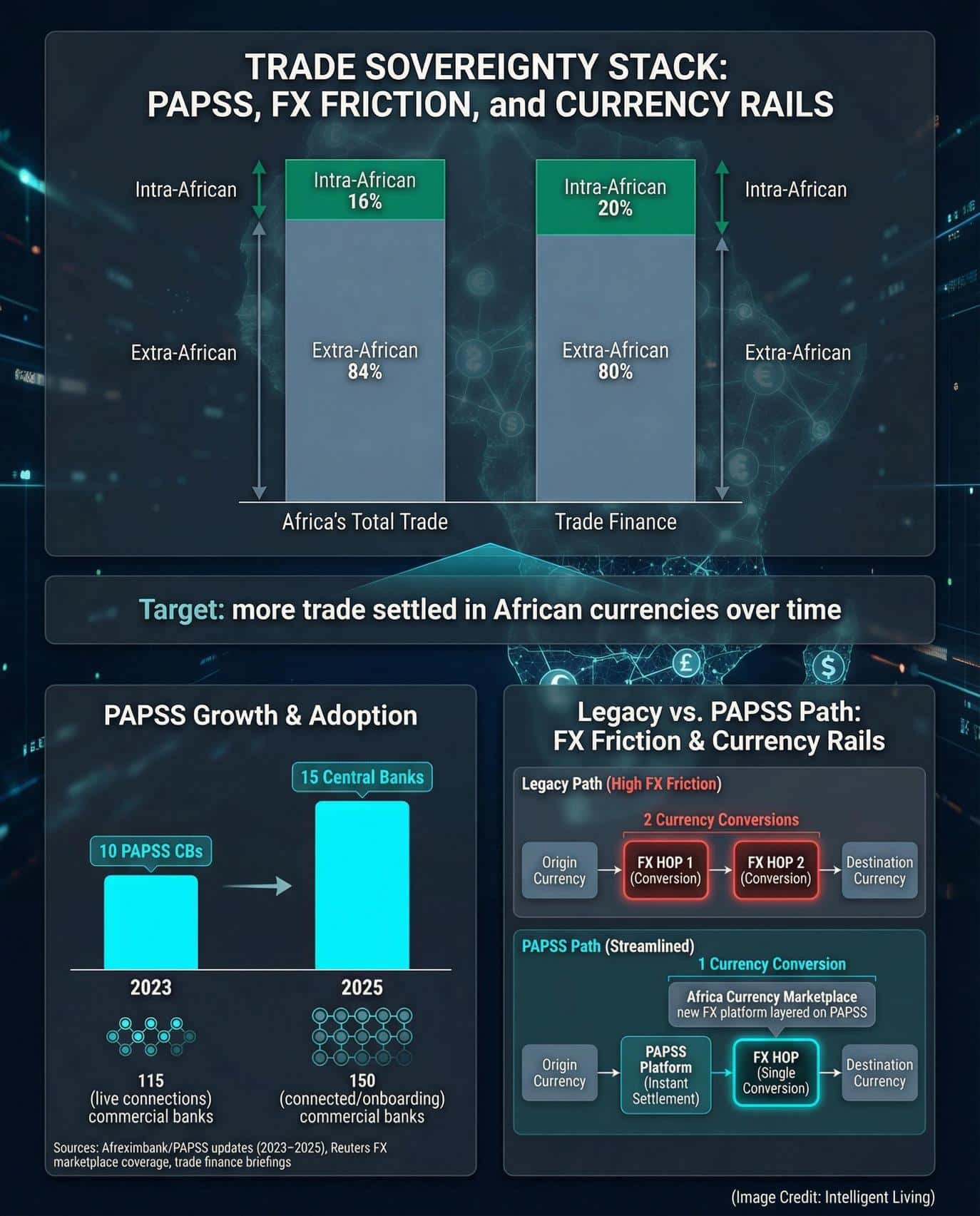
Effective operation of a mineral-backed unit requires functional trade “plumbing”. Historically, cross-border trade has faced several structural inefficiencies:
- Reliance on external hard currencies like the U.S. dollar or euro for regional settlements.
- Costly “double conversion” processes where local currencies are traded for dollars before reaching the final currency.
- Increased exposure to global liquidity conditions and unnecessary settlement delays.
The Pan-African Payment and Settlement System, known as PAPSS, is backed by 15 central banks and integrated with around 150 commercial banks. PAPSS is designed to enable direct settlement between African currencies without first sourcing hard currency abroad. In parallel, an Africa Currency Marketplace initiative aims to match foreign exchange flows more transparently between participating currencies.
The Unified Trade Sovereignty Stack
Monetary sovereignty encompasses both the underlying asset backing and the underlying infrastructure of financial transmission. If trade payments can settle efficiently within the continent, pressure on foreign reserves can ease, reducing the structural need to hold large quantities of external currency simply to keep trade flowing. A mineral-backed African Unit of Account could then operate on top of this evolving infrastructure, with PAPSS and related systems handling daily settlements while the AUA addresses longer-term project finance and convertibility risk.
Together, minerals, governance frameworks, and payment rails form a trade sovereignty stack that aims to shift Africa’s position in the global financial system from price taker to rule shaper.
Market Resilience and Risk Mitigation: Lessons from Zimbabwe’s Asset-Backed Currency
Commodity Cycles Inside A Minerals-Linked System
Linking valuation to mineral reserves reconfigures rather than eliminates risk exposure. Commodity markets remain inherently cyclical, influenced by:
- Global demand swings and geopolitical tensions.
- Technological substitution, such as solid-state battery advancements altering material dependencies.
- Speculative flows and pronounced price booms or busts.
- Shifts in industrial chemistry that create new resource dependencies.
Historical analysis from institutions such as the Bank for International Settlements shows that prices experience pronounced swings. Stress-testing under low-price scenarios and transparent pricing methodologies would be essential, alongside the development of circular battery economy supply chains that recover critical materials rather than relying solely on new extraction.
What Zimbabwe’s ZiG Reveals About Asset-Backed Currency Experiments
Zimbabwe Gold, known as ZiG, was introduced as a structured currency intended to be backed by foreign exchange reserves and gold holdings. The goal was to restore stability after years of severe currency depreciation and inflation.
Asset backing can signal discipline and an intention to anchor money to tangible reserves, but subsequent economic pressures and currency adjustments in Zimbabwe showed that backing alone does not guarantee credibility. Market confidence depends on fiscal policy, institutional transparency, and macroeconomic stability. When investors or citizens doubt governance, they test the system; if reserves are insufficient, opaque, or politically influenced, confidence can erode quickly.
The ZiG experience does not invalidate asset-linked structures. Instead, it highlights that technical design must be matched by institutional trust and robust policy behaviour if mineral or gold backing is to be viewed as credible rather than cosmetic.
Building Credible Mineral-Backed Money For Africa’s Energy Future
Conditions For Credibility in A Minerals-Backed Unit
A mineral-backed unit of account would stand or fall on credibility. Several design and policy factors are central to establishing institutional credibility:
- Independent reserve verification ensures pledged minerals are transparently reported and conservatively valued.
- Clear legal frameworks for custody define how pledged reserves are controlled and liquidated.
- Transparent pricing methodologies publicly define the composition and weights of the commodity basket.
- Continued expansion of payment rails like PAPSS reinforces the practical usability of the reference unit.
- Consistent fiscal discipline prevents asset-backed mechanisms from being undermined by budget imbalances.
These standards ensure that collateral remains actionable rather than merely symbolic.
How Monetary Design Can Support Africa’s Clean Energy Transition
Redesigning Risk Pricing Mechanisms
The proposal for a mineral-basket African Unit of Account is not about printing a new currency for everyday use. It is about redesigning how risk is priced.
Africa’s energy transition is constrained less by sunlight and wind than by the cost of capital. Referencing value to a diversified basket of critical minerals allows policymakers to reduce exchange rate and convertibility risks. Strategic mitigation efforts directly lower the financing costs for utility-scale renewable energy projects.
Reducing Structural Dependencies
Combined with evolving trade settlement systems and regional payment infrastructure, such a framework could gradually shift parts of Africa’s financial architecture away from structural dependence on external hard currencies as critical mineral intensity per compute rises across advanced AI and semiconductor hardware.
None of this is automatic. Commodity volatility remains real. Governance remains decisive. Institutional trust cannot be legislated into existence.
Yet the direction is clear. As global demand for lithium, cobalt, manganese, and other transition minerals rises, Africa is exploring whether those same resources can anchor a more resilient financial future at home amidst the global critical mineral race currently spanning Greenland and Latin America.
The question is no longer whether minerals are strategic. It is whether strategy can be translated into stable, credible institutions.

Critical Minerals-Backed Currency FAQ: Africa’s AUA Explained
What defines the African Unit of Account proposal?
The African Unit of Account (AUA) is a non-circulating reference unit designed by the African Development Bank to denominate infrastructure loans. It is backed by a diversified basket of critical minerals rather than a single domestic currency.
Will the AUA replace the Naira or Rand for daily use?
No. The AUA is strictly a measurement for project finance and intergovernmental settlements. It operates in parallel with existing national currencies, which remain the primary legal tender for citizens and businesses.
Why are minerals preferred over gold as a financial anchor?
While gold is a traditional safe haven, minerals like lithium, cobalt, and copper are the fundamental building blocks of the modern green economy. Using a mineral basket reflects current industrial demand and spreads risk across multiple strategic assets.
How does this mechanism lower electricity prices in Africa?
By reducing exchange rate and convertibility risks, the AUA lowers the cost of capital for developers. When financing terms are more favourable, the resulting utility-scale energy projects can offer more affordable electricity to the grid.
What safeguards prevent the ‘Resource Curse’ from affecting the AUA?
The framework relies on independent reserve verification, transparent pricing methodologies, and integration with payment systems like PAPSS. Strong governance and fiscal discipline are essential to ensuring the minerals provide genuine collateral rather than political symbolism.


