
Most of the time, food waste doesn’t feel like a catastrophe—it’s just a slimy bag of spinach at the back of the drawer or a forgotten yogurt cup. Your kitchen habits play a massive role in sustainability, as the latest global data on household food waste shows that homes cause roughly 60 percent of all consumer-level food loss.
Grocery waste acts as an invisible tax that hits your wallet just as hard as the planet. Practical strategies for reducing food waste can help a typical family of four save nearly $3,000 annually on groceries that end up in the trash. Since ordinary kitchen routines stick better than strict lectures, smart pantry inventory systems offer a practical way to manage your fridge without the stress.
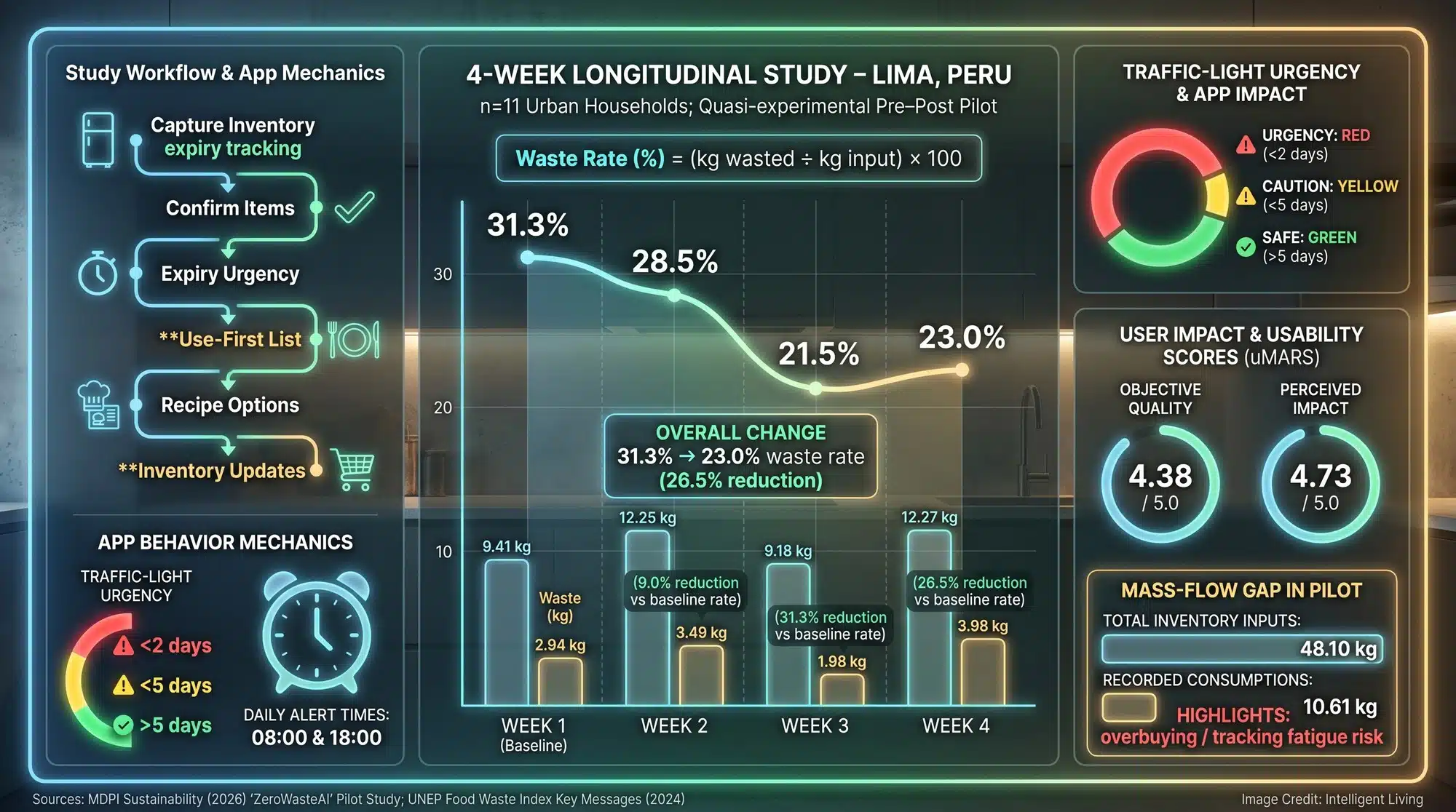
Smart kitchens blend human intuition with AI to help you cook what you own before it spoils. A GenAI pantry system streamlines expiry tracking and recipe generation, making household sustainability feel like a natural part of your day. Early research on a system called ZeroWasteAI suggests that structured inventory and prioritization can reduce household waste in a short pilot period. When combined with what research says about habit formation and choice architecture, this approach offers a practical path to waste less, spend less, and eat better without turning the kitchen into a tech lab.

Food Waste Facts that Change How You Shop and Cook
Food waste is often framed as a moral problem, but in real kitchens, it usually behaves like a systems problem. The fastest improvements come from making food easier to see, easier to plan around, and easier to use before it passes the point of good texture and flavor.
Kitchen habits aren’t just about your own home—they’re part of a much bigger picture. Understanding these facts helps you see why a few small changes in your routine make a world of difference:
- Household waste makes up a massive portion of the global total, meaning your daily choices really do matter.
- International research connects food loss to global greenhouse gas emissions, proving that what you throw away impacts the climate.
- Wasting food is expensive because it hides inside your normal grocery runs, not just big splurges.
- Most people find that better visibility in the fridge leads to more change than just reading advice.
- Having a plan for your produce prevents those healthy goals from turning into a science project in the crisper drawer.
Understanding these simple facts makes it clear why your kitchen routine is so important. Most waste happens for predictable reasons like overbuying or losing track of what’s in the back of the fridge. A GenAI pantry changes the game by turning your inventory into a daily action plan rather than just a static list.
The connection between dinner leftovers and the planet is not abstract, because how food waste fuels climate change includes landfill methane and the wasted fuel, water, and fertilizer behind food that never gets eaten.
Across the supply chain, how food waste became a major polluter makes it clear that waste is rarely a single moment, while at home, common reasons food gets wasted are usually a mix of overbuying, poor storage, and forgetting what is already there.
Smart Pantry Inventory: The Science of AI-Driven Expiry Tracking
What is a GenAI Pantry and How Does it Work?
Generative AI Pantry Definition for Sustainable Living
You don’t need a robot chef to start saving on groceries. Think of a GenAI pantry as a smart assistant that tracks what you already have in your home and estimates when it might go bad.
This type of artificial intelligence looks at your shopping habits and suggests fresh meal ideas or shopping lists based on your actual inventory. It’s all about using patterns in your data to make sure your food ends up on your plate instead of in the bin.
Improving AI Meal Planning with Human-in-the-Loop Verification
A GenAI pantry works best when it behaves like a helper that checks the fridge with you, not a black box that guesses. That is why human-in-the-loop confirmation matters. In the ZeroWasteAI pantry pilot workflow design, the system proposes what is in the pantry, and a person quickly confirms or corrects it before the inventory is saved, reducing misreads that would otherwise snowball into bad meal plans.
Advanced applications of generative AI in modern industry are more reliable when they produce checklists and structured plans that you can confirm personally.
Clarifying GenAI Pantry Limits for Better Grocery Management
GenAI tools shouldn’t be seen as a license to overbuy or a guarantee of eternal food safety. It is a planning tool that helps make the “use what you own” choice feel obvious, especially on evenings when decision fatigue makes takeout look like the only option.
On a Sunday night fridge reset, a quick scan might uncover half a bell pepper, three eggs, leftover rice, and strawberries that are still good but nearing their turning point. A GenAI pantry that highlights the strawberries and suggests a fast smoothie or baked oatmeal makes it easier to act before the week gets busy.
Why Reminders Alone Usually Don’t Work
Why Information-Only Tips Fade
Standard advice often tells you to write lists or set phone alerts to check your fridge. While these steps are better than nothing, studies show that relying on information alone doesn’t always change how much food we throw away.
Think of it this way: a reminder only works if your kitchen is actually set up to help you act on it. Instead of just feeling guilty about a calendar alert, you need an environment that makes using your food the easiest choice you can make.
Choice Architecture in the Kitchen
Small changes to your kitchen layout often work better than pure willpower. This is known as choice architecture. It includes strategies such as changing defaults, making certain options more visible, or adding incentives. In a pantry context, that might mean placing soon-to-expire foods in a designated use-first zone at eye level. When the spinach is the first thing seen after opening the fridge, it is far more likely to be cooked.
Visibility Beats Willpower
A container of yogurt tucked behind condiments is easy to forget. Move it to the front, and it becomes part of breakfast without any extra motivation. This same logic is built into specialized appliances like rotating fridges, which use visibility-focused layouts to keep time-sensitive food in sight.

Five Steps to Reduce Food Waste Using the Pantry Autopilot Loop
The Pantry Autopilot is a weekly cycle built around five simple steps that take the stress out of meal planning. By following this loop, you can stop groceries from disappearing into the back of the fridge and start using everything you buy. Here is how to make ‘cook what you own’ your new favorite habit:
Step 1: Capture What You Own
At the end of each grocery trip, record items in a pantry inventory. This can be done manually, through barcode scanning, or by snapping a quick photo for AI-assisted recognition. Keep it short. Focus on perishables and high-cost items first. Don’t worry about perfect records; you’re just trying to make sure nothing stays hidden in the shadows of the shelf.
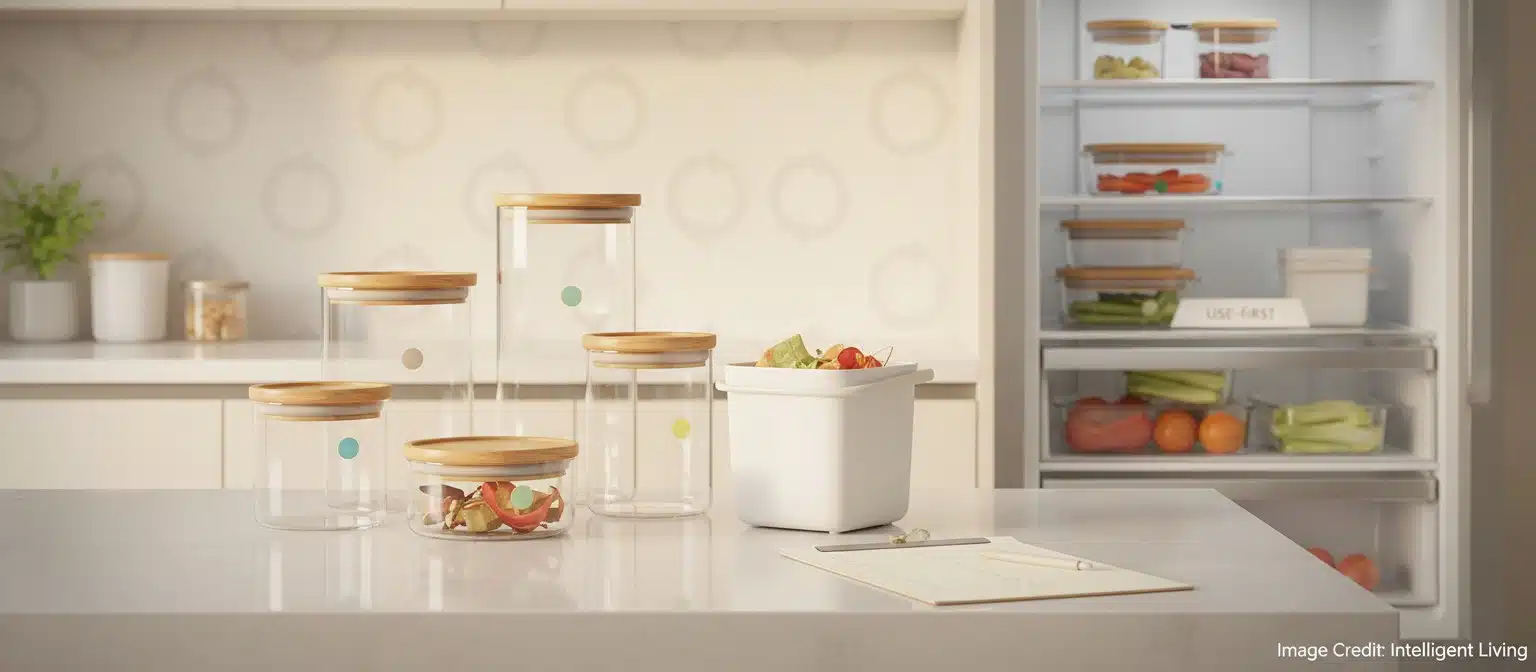
Updating your kitchen layout with clear storage containers can turn duplicate buying into a quick glance, helping you shop less and use more.
Step 2: Create a Use-First Zone
Designate one fridge shelf as the use-first shelf. Place items that will expire soon in that zone, and treat it like the kitchen version of “first in, first out.” A clear container on that shelf can help, because the brain reacts faster to what it can see.
We’ve all seen those fresh herbs that look perfect on Monday but turn into a slimy mess by Friday because we forgot they were there.
Setting up a use-first shelf changes that. When your herbs and greens are right at eye level, you’re much more likely to toss them into your morning eggs or a quick pasta dish before they lose their flavor.

Step 3: Cook What You Own
Before planning meals, ask a simple spoken question that fits voice search behavior: “What can be cooked tonight with what is already in the fridge?” When your brain is fried and the fridge looks like a mess, AI can spot the food about to go bad and tell you exactly what to make with it.
When your brain is fried after a long day, having a few go-to meal patterns makes it easy to use up whatever is in the fridge. These flexible templates turn a shelf full of random ingredients into a quick, healthy dinner:
- Stir-fry: Mix those aging vegetables and a protein with whatever sauce you have on hand.
- Soup: Simmer those leftover grains and wilted greens in broth for a cozy, simple meal.
- Sheet-Pan Roast: Toss your chopped produce in oil and seasoning for a dinner that cooks itself while you relax.
Using these patterns helps you stretch your groceries further and keeps your lunches interesting without needing a brand-new recipe every day.
Step 4: Shop Last, Not First
Build a grocery list from inventory gaps rather than starting from scratch. If rice, beans, and canned tomatoes are already available, there is no need to buy duplicates. That small pause before heading to the store often prevents the extra bag of salad mix that seemed like a good idea in the aisle but ends up in the trash.
A helpful mental shortcut is “shop the fridge first,” because the easiest grocery savings usually come from using what is already paid for.
Step 5: Reset Weekly
Spend ten minutes each week reviewing what remains. Freeze what will not be used in time. Label containers clearly, and aim for portions that are easy to reheat later.
If a pot of soup is still hot, dividing it into shallow containers speeds cooling, which aligns with FSIS guidance on cooling leftovers quickly and helps keep texture and safety on track.

GenAI Pantry Results in Real Life: Money, Safety, Health, and Waste Diversion
The Invisible Grocery Tax
Food waste acts like a hidden surcharge on every shopping trip. It rarely arrives as one big mistake. It shows up as a pattern of small losses that feel harmless in the moment.
A carton of berries here. A forgotten rotisserie chicken there. None of it feels dramatic. Over twelve months, it adds up.
A second baseline on the money side comes from USDA’s estimate of household food dollars lost, which puts the average American family of four at about 1,500 dollars per year in uneaten food, reinforcing how waste can feel small day to day yet large over time.
Adopting an inventory-first mindset helps you stop buying duplicates and start stretching ingredients further. A single pot of beans can become tacos one night and a hearty soup the next.
Even simple roasted vegetables can be turned into a wrap filling for lunch. Each reuse offsets a new purchase and prevents those midweek “nothing to cook” emergencies that lead to expensive takeout.
Deciphering Expiration Dates for Improved Food Safety
Getting clear on the difference between food quality and food safety is one of the best ways to stop wasting perfectly good groceries. You can follow government-backed grocery handling standards to handle your food with confidence and zero guesswork.
Setting your fridge temperature correctly is another simple win. Federal refrigerator and freezer temperature guides suggest keeping your fridge at or below 40°F and your freezer at 0°F. This keeps air circulating and ensures your food stays fresh as long as possible.
For day-to-day decisions, FoodKeeper storage timelines for common foods help translate safety rules into simple “use by” windows without turning every item into a guessing game.
A carton of milk one day past its date is often usable if it smells and tastes normal and has been stored cold, while milk that has sat warm in a car trunk needs a stricter decision.

Eat More Produce Without Wasting It
Most of us want to eat more fruits and veggies, but good intentions usually aren’t enough. Interestingly, a study on produce and plate waste showed that just having more produce around can actually lead to more waste if you don’t have a solid plan to eat it.
This is where a GenAI pantry really helps. Instead of letting the week drift by, the system flags what’s about to go bad and helps you decide whether to cook it tonight or freeze it for later. Prepping your veggies right after you shop often makes the difference between a healthy stir-fry and a soggy mess in the trash.
We’ve all been there: the fridge is full of healthy greens, but you order pizza anyway because chopping a single carrot feels like too much work. A prioritized use-these-first list lowers the barrier and turns those vegetables into a quick stir fry or a tray roast.
Building Sustainable Tech: A GenAI Pantry App Blueprint
Developers and product teams exploring sustainable living tools can treat the GenAI pantry as a workflow, not a gimmick. The most helpful designs tend to follow a simple pattern: capture inputs, verify inventory, prioritize at-risk ingredients, generate meal options, and update shopping lists.
This same logic powers smart home systems designed to lower waste, using better defaults to prevent small losses from accumulating.
Outside the kitchen, community apps that redirect surplus food show how neighborhoods reduce waste by moving extra food to people who will actually eat it.
Design guardrails matter. Store only necessary inventory data. Keep deletion simple. Avoid mystery decisions by making every recommendation traceable to the inventory and the time window, especially when an app is making “use this first” suggestions.

If You Cannot Reduce It, Divert It
Start with Prevention, then Diversion
Prevention comes first. When reduction is not possible, diversion helps. The EPA Food Recovery Hierarchy puts source reduction at the top, which is why a GenAI pantry focuses first on planning and visibility before anything goes to the bin.
Creative Food Scrap Reuse for Zero-Waste Kitchens
You can stretch your grocery budget even further by getting creative with the bits you’d normally toss. These innovative habits for utilizing food scraps fit perfectly into a zero-waste kitchen routine:
- Broth Starters: Save vegetable peels and stems in a freezer bag to make homemade stock.
- Soup Bases: Freeze leftover odds and ends to add heartiness to your next pot of soup.
- Croutons: Turn stale bread into crunchy toppings for salads or bowls.
Using every part of your ingredients ensures that nothing goes to waste while keeping your meals interesting.
Compost or Digest: Two Paths for Organics
Some households close the loop with on-site digestion, where kitchen-scrap biodigesters that make biogas convert daily organics into fuel and liquid fertilizer when conditions and maintenance are right.
For anything that truly cannot be eaten, a beginner-friendly home compost routine covers how to balance greens and browns, prevent odors, and keep the process manageable in small spaces.
Household habits get stronger when the system around them supports the change, which is part of why South Korea’s pay-as-you-waste food system makes waste more visible and less convenient.
A Smarter Kitchen Starts with One Simple Habit
Reducing your grocery bill and your environmental impact doesn’t require a total lifestyle overhaul. It starts with a simple, repeatable loop: capture your inventory, move aging items forward, and cook what you already have. When you make your pantry visible, you transform your fridge from a guessing game into a reliable meal plan, directly cutting down on the UN’s estimated food loss emissions that currently fuel climate change.
Preventing wasted food is one of the simplest climate actions that can start inside a fridge. As the EPA methane emissions overview points out, methane from rotting food traps heat far more effectively than carbon dioxide, making your “cook what you own” routine a powerful climate action. By spending just ten minutes a week on your GenAI pantry autopilot, you ensure that every dollar you spend on groceries actually ends up on your plate instead of in a landfill.
Common Questions About GenAI Pantry Systems and Food Waste
How Do I Start a GenAI Pantry?
Record your perishables in a smart pantry inventory app or a simple digital list. Use AI-assisted recognition to track expiry dates and generate meal ideas based on what needs to be used first.
Does Expiry Tracking Really Save Money?
Yes, tracking expiration dates helps you avoid duplicate purchases and ensures you use high-cost items before they spoil. Most families save significant amounts by “shopping their fridge” before heading to the store.
Is Food Past the “Best If Used By” Date Safe?
Most date labels refer to food quality rather than safety. Use common-sense checks like smell and texture to keep safe, edible food out of the trash.
How does Cooking what You Own Help the Environment?
When you cook what you own, you prevent food from rotting in landfills where it produces methane. It also ensures the fuel and water used to grow your food aren’t wasted, significantly lowering your carbon footprint.
What Are the Best Recipes for Leftovers?
Stir-fries, soups, and sheet pan roasts are the most flexible ways to use up random ingredients. A GenAI pantry can suggest specific combinations based on the exact produce and proteins you have left.


