
For decades, gas turbines have wasted up to half their power just squeezing air before burning fuel. Now researchers at the Karlsruhe Institute of Technology have flipped that logic: instead of a mechanical compressor, they use controlled detonation waves to create pressure inside the combustion chamber itself, and for the first time they have turned that violent chemistry directly into electricity. The prototype ran for 303 seconds, beating NASA’s previous record and proving a compressorless hydrogen turbine is not just possible but practical.
KIT Sets a New Record: 303 Seconds of Compressorless Power
On February 17, 2026, researchers at the Karlsruhe Institute of Technology (KIT) announced a world-first milestone. Their compressorless hydrogen gas turbine operated stably for 303 seconds, surpassing NASA’s previous record of 250 seconds and generating electricity without a mechanical compressor for the first time.
The 250-second benchmark deserves context. NASA’s figure came from a 3D-printed rotating detonation rocket-engine combustor tested at Marshall Space Flight Center in 2023, which fired for 251 seconds and produced more than 5,800 pounds of thrust, so KIT’s mark is specifically a runtime record for a compressorless gas turbine rather than for detonation combustors in general. The wider field is moving quickly in parallel: NASA has since fired a rotating detonation thrust chamber for just over 340 seconds in a planetary-lander engine test, while KIT itself first coupled a detonation combustor to a turbine to generate electricity in 2025.
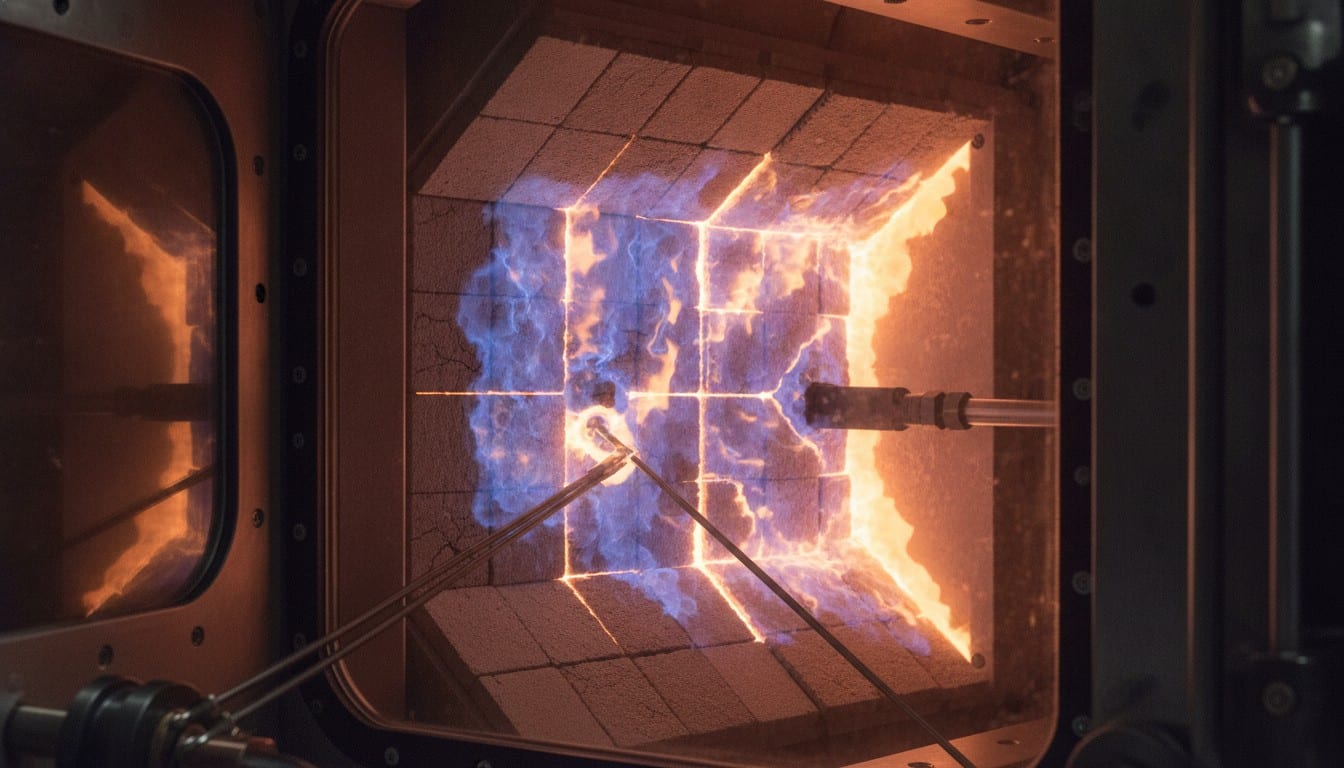
Until recently, such tests lasted only fractions of a second. The combustion chambers would overheat and risk melting if the violent reactions continued. By redesigning the chamber geometry, improving cooling, and fine-tuning the timing of fuel injection, the KIT team extended operation to more than five minutes.
- What changed: The burner uses pressure-gain combustion, where detonation waves boost pressure inside the chamber instead of a separate compressor doing the work.
- Why it matters: Electricity was generated directly from the detonation-driven flow, solving the long-standing problem of transferring extremely fast, intense combustion energy to a turbine in a stable way.
- Who led it: Professor Daniel Banuti, Director of the Institute of Thermal Energy Technology and Safety (ITES) at KIT, who called it “an important step toward highly efficient and flexible hydrogen energy for a fossil-free energy system.”
- What is next: The team presented the prototype at Hannover Messe in April 2026 and continues work on durability, scaling, and integration with renewable hydrogen production.
Unlike natural gas, hydrogen can be produced with renewable electricity through electrolysis, and new industrial-scale electrolysers are steadily lowering production costs. That link to green hydrogen is what makes the compressorless approach so compelling for a future energy system.
How Detonation Waves Replace the Compressor
To understand the breakthrough, it helps to see what conventional turbines do today and why the new design is different.
What a conventional gas turbine does
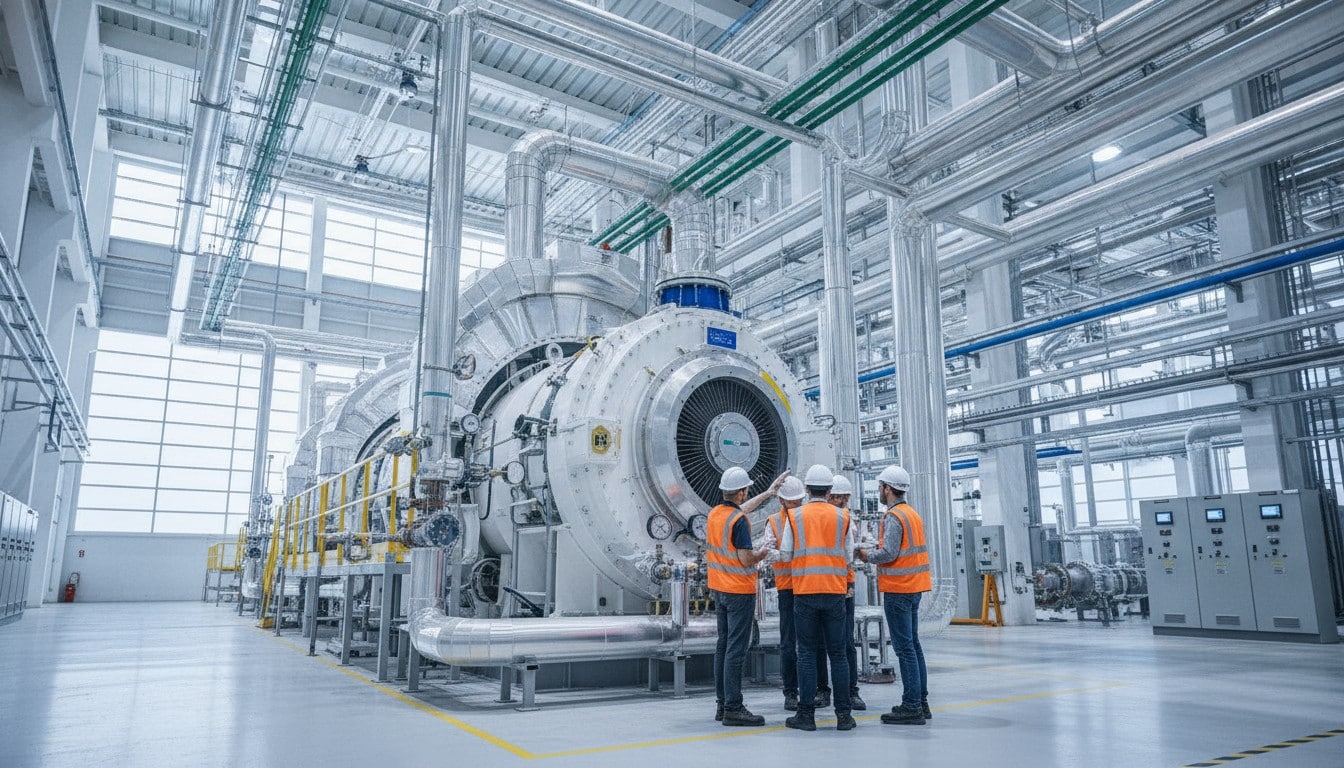
A typical gas turbine used in power plants or aircraft has three main parts: a compressor, a combustor, and a turbine. The compressor squeezes incoming air to high pressure, the combustor mixes that air with fuel and burns it, and the hot, high-pressure gas expands through the turbine to spin a generator.
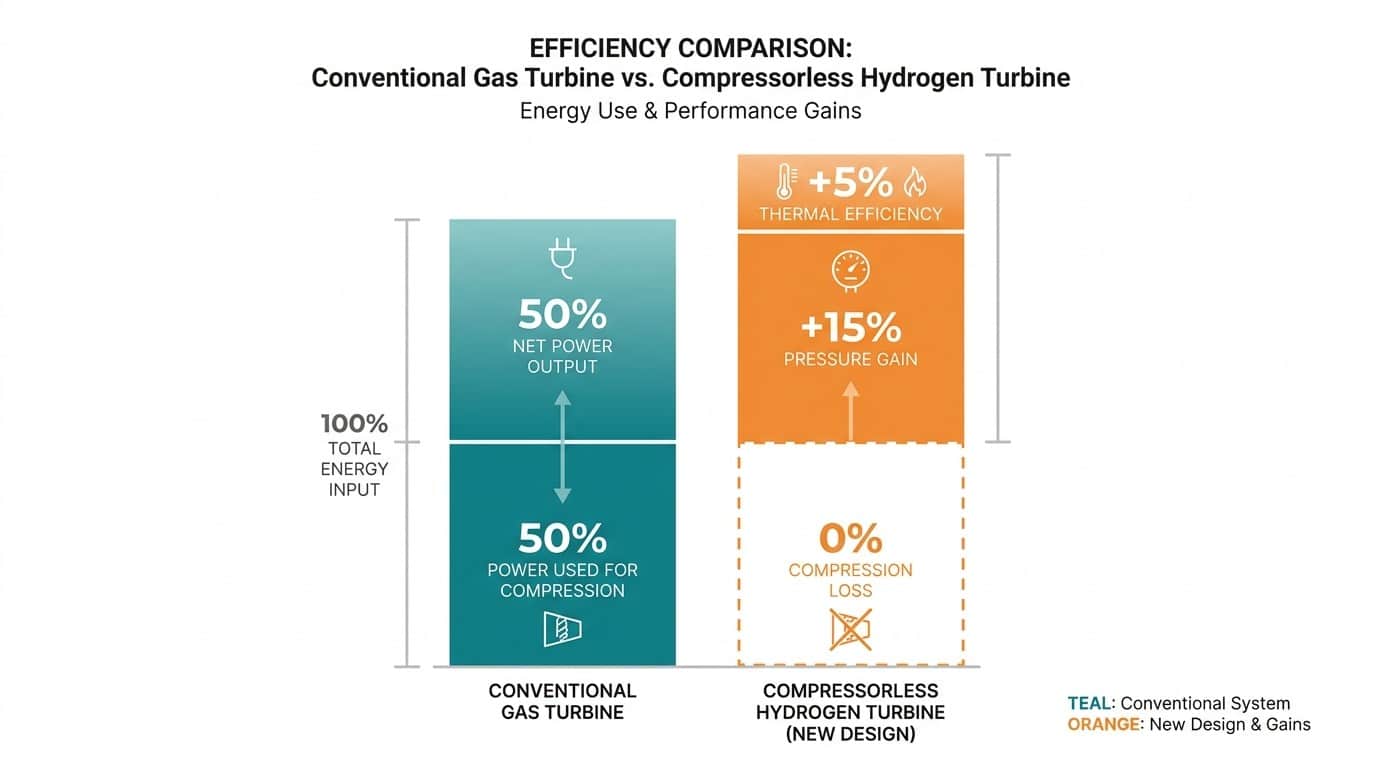
That first step is expensive. According to KIT, a conventional turbine consumes about 50 percent of its power just to compress the air needed for efficient combustion. That energy is then unavailable for electricity generation.
What pressure-gain combustion does differently
The KIT system eliminates the mechanical compressor entirely. Instead, it creates the needed pressure inside the combustion chamber using detonation waves.
- Detonation vs. deflagration: Normal combustion is deflagration, a subsonic flame that loses pressure. Detonation is supersonic combustion that creates a sharp pressure rise as reactants convert to products.
- How the waves form: Through a fluid-mechanical instability involving interacting wave and vortex patterns in the flowing hydrogen-air mixture, self-sustaining detonation fronts travel around the annular chamber hundreds to thousands of times per second.
- The gain: Research summarized by the U.S. Department of Energy’s National Energy Technology Laboratory notes that detonation-based cycles can deliver up to a 15 percent increase in total pressure gain and about a 5 percent improvement in thermal efficiency compared with conventional combustion, with faster, more complete heat release and lower entropy generation.
- The engineering win: Removing the compressor reduces moving parts, cuts energy losses, and could make future turbines lighter and less expensive.
The hard part was not creating detonation but surviving it.
The team had to manage extreme temperatures and make the coupling to the turbine stable enough to actually extract useful work as electricity, something Banuti described as “extremely difficult because the very fast and intense combustion processes in the chamber make stable energy transfer to the turbine challenging.”
Why Hydrogen Is the Perfect Fuel for This Turbine
The compressorless concept can theoretically burn other fuels, but hydrogen is uniquely suited. Its chemistry matches the demands of pressure-gain combustion in ways that natural gas and kerosene do not.
- Very fast reaction: Hydrogen reacts extremely quickly, which helps sustain stable, high-frequency detonation waves.
- High specific energy: At about 140 MJ/kg, hydrogen carries roughly 2.8 times the energy per kilogram of natural gas, so less mass is needed for the same energy output.
- Zero carbon at the point of use: Burning hydrogen produces water, not carbon dioxide, avoiding direct CO2 emissions and eliminating carbon monoxide constraints that complicate low-load operation in natural gas turbines.
- Stable pressure rise: Researchers found hydrogen can produce consistent, stable pressure increases in the detonation chamber, which is essential for reliable turbine operation.
- Compact system potential: Detonation combustors have no moving parts and high power density, making them attractive for stationary power and, longer term, for lighter aviation propulsion concepts.
These advantages are why groups such as NASA, DOE, and KIT have focused rotating detonation research on hydrogen-air mixtures for both power generation and aerospace applications, including experimental engines designed for extreme speeds.
Why Don’t We Use Hydrogen Power Plants Already?
If hydrogen is so clean and powerful, why are there not hydrogen power plants on every grid? The answer is a mix of physics, infrastructure, and emissions control challenges that the KIT breakthrough helps address but does not erase overnight.
The efficiency question
Conventional hydrogen-capable gas turbines exist. Manufacturers such as Siemens Energy, GE Vernova, and Mitsubishi Power offer machines that can run on blends of natural gas and hydrogen, with some models targeting up to 100 percent hydrogen. However, without pressure-gain combustion, they still pay the roughly 50 percent compression penalty that the KIT design aims to eliminate.
Competing studies underline the tradeoffs: a hydrogen-fired combined cycle with dry low-NOx combustors can be about 0.7 percentage points more efficient than a natural gas version on the same turbine frame, but adding steam or nitrogen for emissions control can shave 0 to 1.3 points off that advantage. The compressorless path offers a more fundamental efficiency leap by avoiding compression losses in the first place.
NOx is not zero
Hydrogen combustion avoids CO2 but it does not avoid nitrogen oxides (NOx). At high flame temperatures, nitrogen in the air reacts with oxygen to form NOx, a local air pollutant. Uncontrolled hydrogen flames can produce more than eight times the NOx of natural gas under similar conditions, according to a review by the National Energy Technology Laboratory.
Solutions exist, including lean premixed combustion, water or steam injection, and selective catalytic reduction (SCR), which can bring emissions into compliance with EPA standards. But they add complexity, cost, or a small efficiency penalty. GE has noted that NOx could roughly double at near 100 percent hydrogen without additional controls, requiring larger SCR systems or operational derating.
Storage, transport, and cost
- Low density: As a gas, hydrogen has very low density, requiring large, heavy tanks or high-pressure compression at 350 bar and above. As a liquid, it must be kept at minus 250 degrees Celsius in cryogenic tanks.
- No large-scale pipeline network: The U.S. and many other regions lack a dedicated hydrogen pipeline system to deliver fuel to power plants at scale, a build-out that would take years and billions in investment.
- Production cost: Green hydrogen from renewable electrolysis remains more expensive than natural gas in most markets, and much current supply is still grey hydrogen from fossil fuels. Availability and price will determine how fast hydrogen power scales.
- Safety and materials: Hydrogen is more flammable and easier to ignite than methane, requiring careful ventilation, leak detection, and materials that resist embrittlement.
These barriers explain why most projects today use hydrogen blending at 5 to 30 percent rather than pure hydrogen, with higher blends reserved for demonstration plants.
Researchers are also attacking the storage bottleneck directly, with alternatives such as storing hydrogen as a paste that is easier to handle and transport than compressed gas or cryogenic liquid.
Conventional vs. Compressorless Hydrogen Turbine: What Is Different?
The table below highlights how the KIT pressure-gain system compares with a conventional gas turbine adapted for hydrogen.
| Feature | Conventional Gas Turbine (Hydrogen-Capable) | KIT Compressorless Hydrogen Turbine |
|---|---|---|
| How pressure is created | Mechanical compressor consumes about 50% of gross power | Detonation waves create pressure inside combustor, no compressor needed |
| Moving parts in compression | Large multi-stage axial compressor | None for compression, fewer moving parts overall |
| Efficiency gain mechanism | Incremental improvements in compressor and turbine aero | Pressure-gain combustion with up to 15% pressure gain and about 5% thermal efficiency improvement potential |
| Demonstrated stable runtime | Hours to years in commercial operation (on blends) | 303 seconds in lab, first electricity generated, five-minute milestone vs. prior fraction-of-a-second tests |
| Emissions profile | No direct CO2, elevated NOx without controls | No direct CO2, same NOx challenge, still needs lean combustion or SCR |
| Weight and size | Large, heavy compressor section | Potentially lighter and more compact for same power |
| Status | Commercially available for hydrogen blends, some 100% demos | Research prototype, next steps are durability and scaling |
This comparison shows why the compressorless path is not just a fuel swap but a cycle change. It rethinks the thermodynamic core of the turbine rather than adapting an existing frame to a new fuel.
From Power Plants to Aircraft: What Comes Next
KIT sees two horizons for the technology: stationary power in the near term and aviation in the longer term.
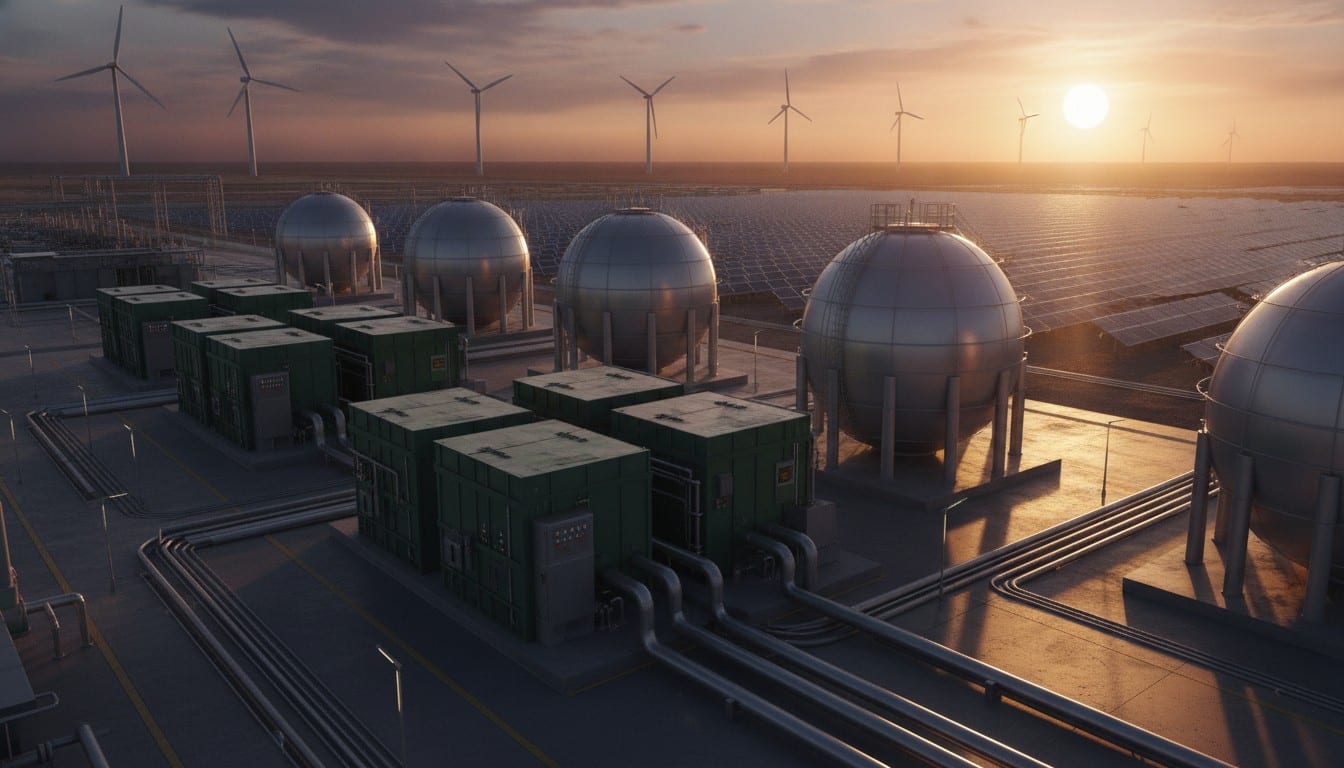
For electricity generation, a compressorless turbine could pair with electrolyzers and storage to provide flexible, fossil-free power. Because it needs no compressor, it could be simpler, cheaper, and more responsive to variable renewable energy. Combined with green hydrogen, it offers a route to dispatchable clean power that complements wind and solar without direct carbon emissions.
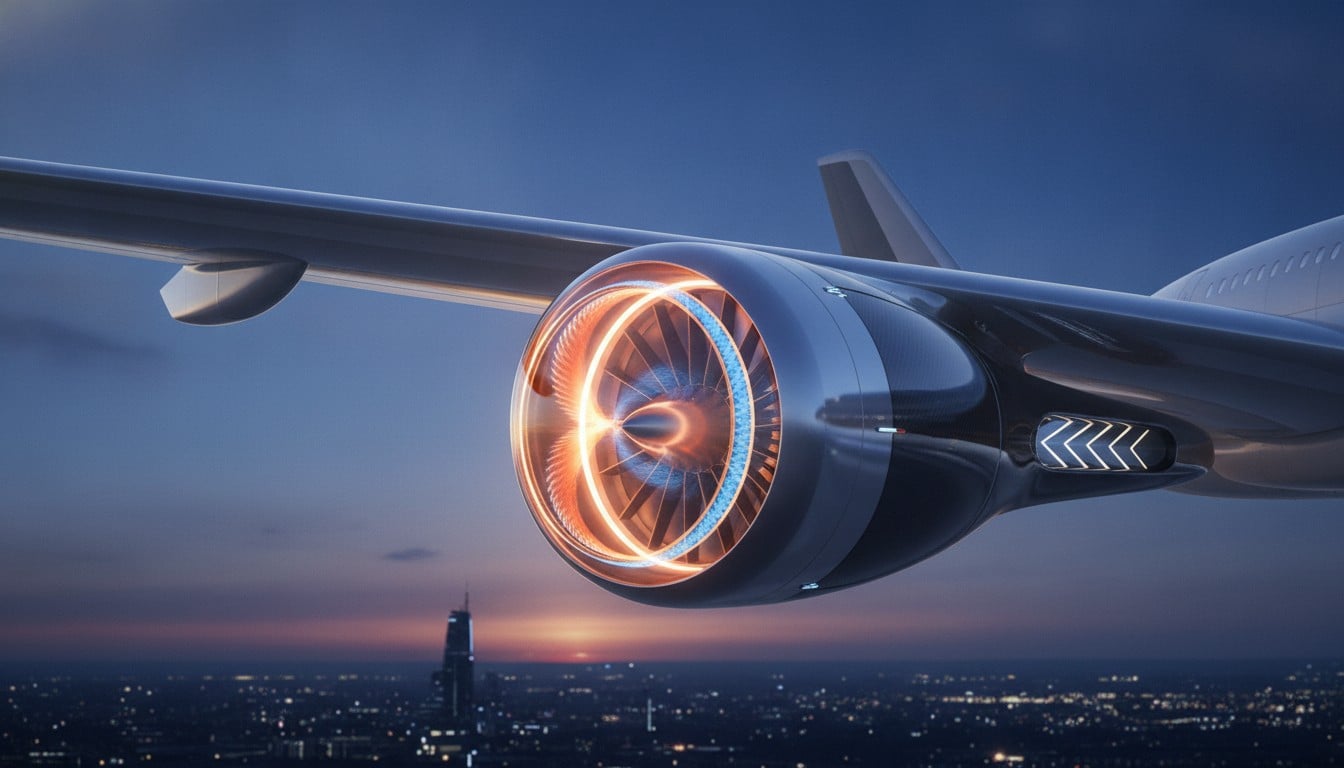
For aviation, the appeal is weight. Aircraft gas turbines also spend significant power on compression, and a lighter, more efficient detonation-based engine could eventually support short-haul or auxiliary power applications. Organizations including NASA and GE have explored rotating detonation concepts for propulsion, and studies cited by DOE suggest fuel savings of 5 to 8 percent depending on aircraft size when detonation cycles are implemented. Hydrogen propulsion is also already advancing in flight, with efforts such as a hydrogen-powered helicopter working toward certification.
There are still steps before either vision is routine. The KIT prototype must prove it can run for hours, not minutes, survive thermal cycling, and be manufactured at scale with materials that endure repeated detonation. Integration with hydrogen supply chains, emissions controls, and grid standards will also need to mature in parallel.
What the 303-second run proves is that the most fundamental obstacle, stable electricity generation without mechanical compression, has been cleared. The prior barrier was not just duration but conversion: earlier chambers melted after milliseconds, and even when they survived, no one had extracted net electrical power. Clearing both at once is why the result is considered a milestone rather than an incremental gain.
Frequently Asked Questions
How does a rotating detonation engine work?
A rotating detonation engine sustains one or more supersonic detonation waves that travel circumferentially around an annular chamber. Fresh fuel and air are continuously injected ahead of the wave, detonated as the wave passes, and the high-pressure product gas expands through a turbine or nozzle. The waves can cycle at hundreds to thousands of hertz, providing a steady source of thrust or shaft power in a compact package with no moving parts in the combustor.
Why aren’t rotating detonation engines used everywhere already?
Three reasons: heat, stability, and integration. Detonation generates extreme, rapid pressure and temperature spikes that can melt chambers after fractions of a second without advanced materials and cooling. Keeping the waves stable and uniformly timed is difficult, and transferring that rapid energy to a turbine without damaging it has been a major engineering challenge. KIT’s recent work addressed all three by extending runtime to 303 seconds and generating electricity stably.
What is a rotating detonation turbine engine?
It is a gas turbine where the conventional deflagration combustor is replaced by a rotating detonation combustor that provides pressure gain. The detonation-driven hot gas then expands through a turbine to produce shaft power or electricity. The KIT prototype is an example, coupling a pressure-gain combustor directly to a turbine and generator.
Can gas turbines operate on hydrogen?
Yes. Several manufacturers offer hydrogen-capable models that can run on blends from about 5 to 30 percent hydrogen today, with demonstration units aiming for up to 100 percent. The challenges are higher flame speed and flashback risk, elevated NOx, and the need for modified fuel systems, controls, and safety measures. The KIT compressorless turbine is a different architecture designed specifically to exploit hydrogen’s fast kinetics for pressure-gain combustion.
What is hydrogen turbine efficiency compared to natural gas?
On the same turbine frame with conventional combustion, a hydrogen-fired combined cycle can be roughly 0.7 points more efficient than a natural gas plant when using dry low-NOx combustors, though steam or nitrogen dilution for NOx control can offset that gain by up to 1.3 points. Pressure-gain combustion offers a larger theoretical benefit, with studies indicating up to a 15 percent total pressure gain and about 5 percent thermal efficiency improvement, plus elimination of the roughly 50 percent compression power drain in conventional turbines.
A Milestone That Reframes Hydrogen Power
The KIT compressorless hydrogen turbine does not by itself solve hydrogen storage, pipelines, or NOx control, but it reframes what is possible at the heart of the power cycle. By replacing a mechanical compressor that consumes half a turbine’s output with detonation waves that generate pressure for free, the team has demonstrated a path to lighter, more efficient turbines that pair naturally with green hydrogen.
Hydrogen innovation is moving quickly beyond the lab, from waste-to-hydrogen transit pilots to aviation concepts, and the jump from fractions of a second to 303 seconds and from heat in a chamber to electricity on the grid is more than a laboratory record. It is the first proof that pressure-gain combustion can deliver usable power without compression, a result that gives future power plants and eventually aircraft a new thermodynamic option to pursue. As materials, manufacturing, and hydrogen infrastructure catch up, that option could help close the last gaps in a fossil-free electricity system.


