
Thinking about installing security cameras? You’re not alone. More homeowners in Southwestern Ontario are investing in surveillance systems with the increase in break & enters in the area. The appeal is obvious: peace of mind, protection against break-ins, and the ability to keep tabs on packages, pets, and property. Unfortunately, most people do it wrong.
If you don’t consult professionals at a home security camera installation company, you can make mistakes that leave cameras useless, footage grainy, blind spots unguarded, and systems offline when they’re needed most. These aren’t rookie errors exclusive to tech novices, either. Even diligent, well-meaning homeowners often miss key steps.
So if you’re planning to upgrade your home security, or you’ve already got a few cameras in place, learn about the biggest things people get wrong when installing home security cameras.
1. Focusing on the Wrong Areas
It sounds simple enough: put cameras where the action is. But most homeowners over-prioritize front doors and forget about side entrances, basement windows, and back fences. Burglars don’t generally waltz up the main path with a ski mask on. They go where they’re least likely to be seen, and that’s almost never the front.
Even worse, some homeowners mistakenly believe they have coverage when they point a camera at the driveway. Without overlapping fields of view and cameras monitoring each other’s blind spots, homeowners are just hoping for the best. A well-placed camera at a side gate, back door, or dim alleyway will do more for your security than one trained on your perfectly lit porch.
Map your entire property and think like an intruder. If you were trying to avoid detection, where would you break in?
2. Assuming ‘Smart’ Means ‘Secure’
Every product these days is advertised as “smart,” “AI-powered,” or “intuitive.” But none of those terms guarantee actual security if your system isn’t used or installed properly.
A smart camera might recognize faces or send push notifications, but if it’s broadcasting footage over an unreliable Wi-Fi network or storing video without a backup, it won’t be of much use.
A few security camera basics:
- Change your camera’s default username and password the moment you set it up.
- Use strong, unique credentials and two-factor authentication if your system supports it.
- Always keep your firmware updated.
3. Skimping on Image Quality
Budget cameras with a low price point can seem like a win until you need them. Grainy, low-resolution video might capture the fact that someone stole your car from the driveway, but good luck identifying them. And nighttime performance is where cheap cameras often fail entirely.
Look for cameras that offer true HD resolution (1080p or better), infrared night vision, and a wide dynamic range to handle different lighting conditions. It’s better to have two high-quality cameras than six blurry ones.
4. Not Considering Power
A dead battery or tripped breaker can compromise your security. Some homeowners install battery-powered cameras in hard-to-reach spots, then forget to check them. Some homeowners run extension cords across the yard, taking a risk every time it rains. During a power outage, many systems go offline completely.
Use hardwired cameras when possible. If you need to use battery-powered units, set a recurring reminder to charge or replace batteries. Consider a backup power solution, like an uninterruptible power supply (UPS) or a solar panel for outdoor units.
5. Ignoring the Law
Depending on where you live, there are laws about what you can and can’t record, especially when it comes to audio.
If your camera records sound and captures a conversation from the sidewalk that the participants didn’t expect to be overheard by anyone, or your camera is situated where it can see into a neighbour’s window, you could be violating laws without realizing it.
6. Forgetting About Storage
What happens to all that video? Many homeowners assume their system will store weeks of footage automatically. But depending on your system, you might only get a day or two before older clips start getting overwritten.
Cloud-based systems often charge subscription fees for storage. Local systems can run out of space fast. And if something important happens when you’re out of town, you might return to find the footage is already gone.
Choose a system with flexible storage options. Know how much video your cameras generate daily and how long it will be retained. Consider a hybrid approach: local storage for daily use with cloud backup for critical clips (when your system registers an event.)
7. Not Testing the System
This one’s surprisingly common. Homeowners install their cameras, check the live feed once, and then forget about it. No monthly tests. No system checks. No trial runs to see how alerts behave or how the footage looks at night.
When something goes wrong, they discover firsthand that their system wasn’t recording, their app wasn’t sending alerts, or the camera was offline for weeks.
Set a monthly reminder to test your entire system. Walk past each camera, check recording functionality, inspect wiring, and make sure your app or dashboard is receiving real-time data. Catch problems before you need the footage.
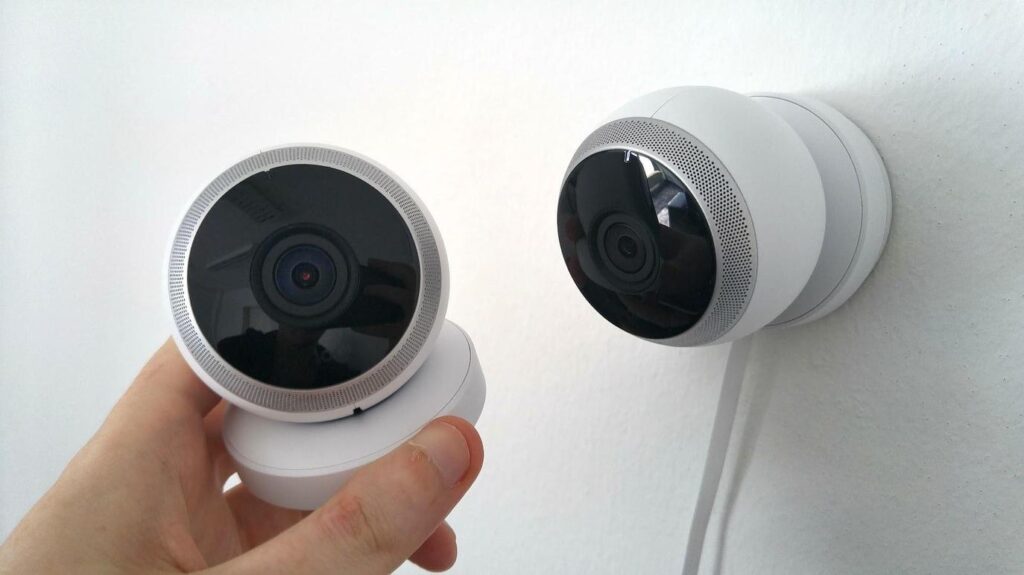
8. Using the Camera System as a Crutch, Not a Strategy
One of the biggest mistakes is believing that cameras are a complete security plan. They’re not. A camera doesn’t lock a door or call 911. It doesn’t make it harder for a burglar to climb your fence.
Too many homeowners install cameras and then stop thinking about home security entirely. No upgraded locks. No outdoor lighting. No neighbourhood watch participation. A good surveillance setup is one layer in a broader system of protection, not the whole thing.
Combine cameras with motion-activated lights, secure deadbolts, heavy-duty doors and windows, signs that warn of surveillance, and neighbourhood collaboration. Security is most effective when it’s multi-layered and proactive.
In Short
Installing security cameras can absolutely improve your home’s safety, but only if you do it right. Most of the time, the problem isn’t the technology; it’s how people use it (or don’t.)
Think strategically. Invest in quality gear. Set it up with intention. And treat your security cameras as one piece of a smarter, more comprehensive approach to protecting what matters.

