
It turns out humans are responsible for a much greater percentage of greenhouse gas emissions than what scientists previously predicted. As much as 40 percent more, according to a new study published in Nature.
It’s estimated that around 25% of global warming today is a combination of human and natural methane. However, human-released methane which also accounts for fossil fuel production is said to account for 25-40% of that.
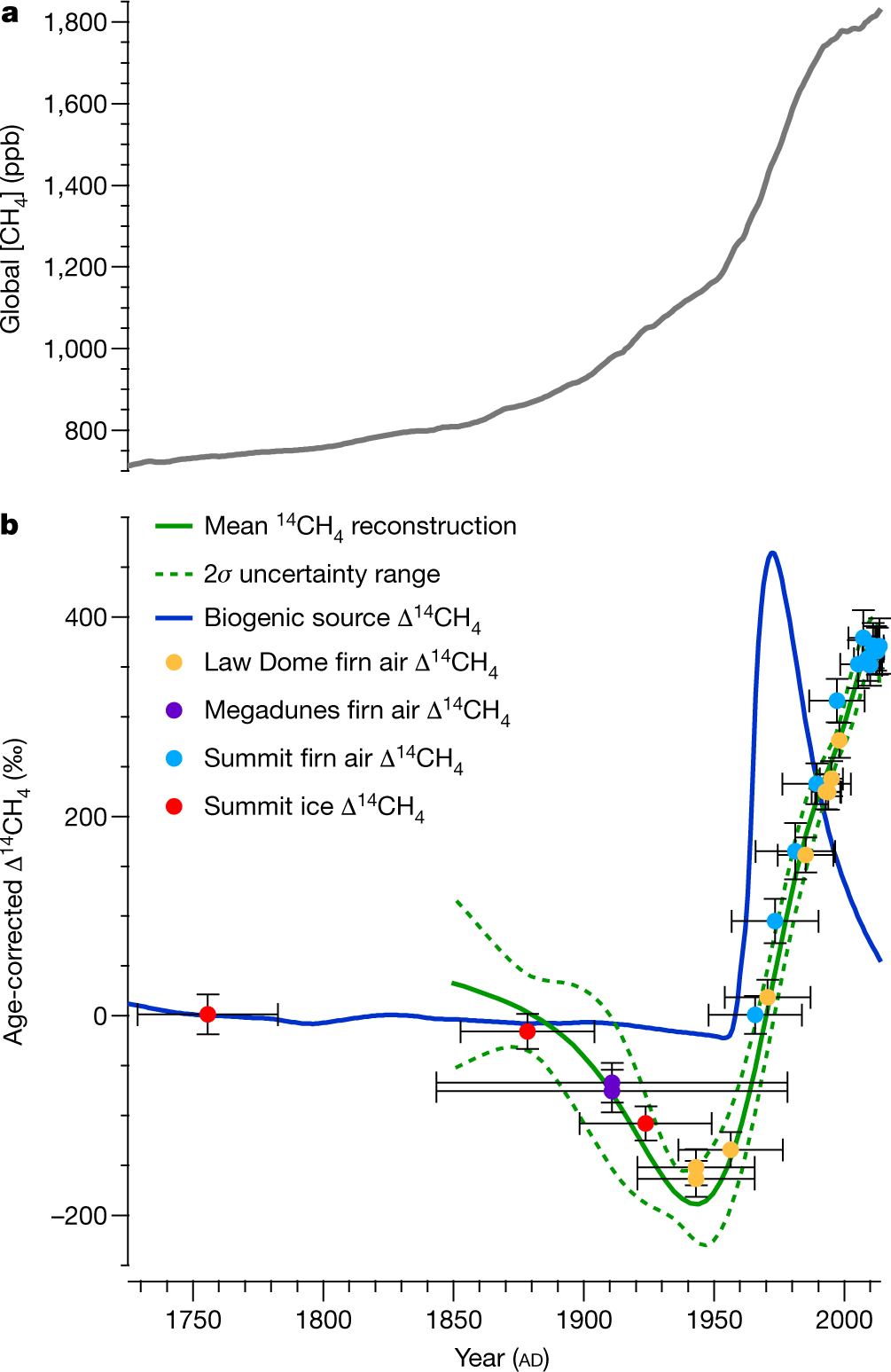
The researchers point out that this presents us with an opportunity to cut methane emissions that are even more harmful than carbon dioxide (CO2). They attribute the majority of methane released by humans to be from leaking during the transport of gas and oil.
In his comments to The Verge, lead author Benjamin Hmiel talks about accountability by the gas and oil industry:
The onus is on us to recognize that we can, at the very least, try to get the industry to quantify these in a better sense because what I indicate is that they’re vastly under-reporting it.
Previously, the way scientists measured anthropogenic methane emissions was directly at the potential source, such as oil wells. Associate Professor from the University of Michigan, Eric Kort, who was not involved in the study explains why those studies numbers were low. Methane emissions from oil, gas, and coal activities tend to systematically be underestimated, said Kort, partially because they do not account for hardware failures and only measure by averages.
New Study
For Hmiel’s study, he and his colleagues used ice core samples from Greenland from the years 1750-2013, along with previous data from Antarctica. To determine whether the methane was from natural or human sources, they focused on isotope carbon-14. The carbon-14 signifies that the methane came from living things, if it wasn’t present then it was from underground deposits.

Around 1870 is the time fossil fuel production started, not surprisingly this is also when the ice deposits showed a large increase in methane without any carbon-14. This allowed scientists to estimate how much was seeping from the ground before industrial times.
The team had to melt around 1000 kilograms of ice for each sample. Before 1945, or when the first nuclear bombs were used, they were able to get their results without the help of computers. But, for the years after, the carbon-14 numbers were so skewed that they required the help of computer technology.
What this study did is prove what a lot of theorists have thought for some time. The gas, oil, and other fossil fuel industries cause a lot more harm than they do good.


