
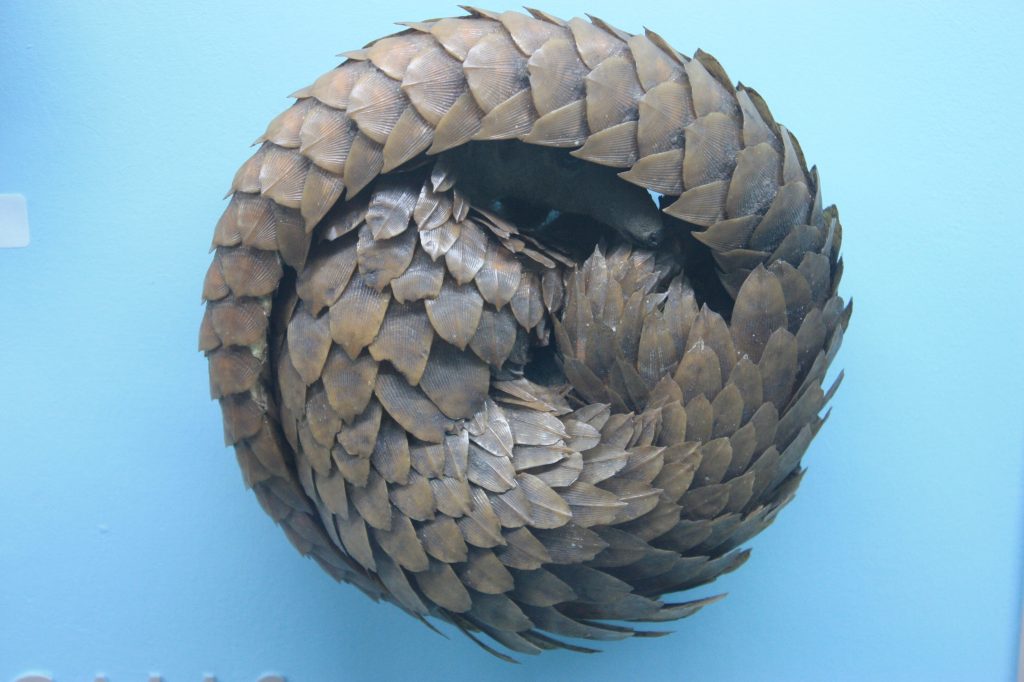
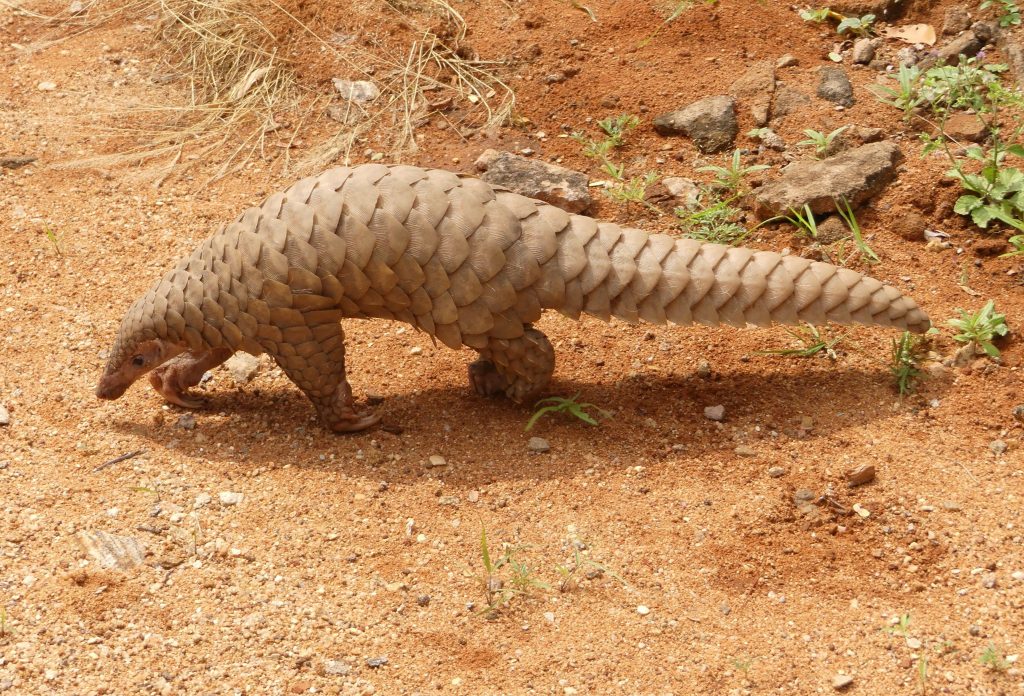
Scientists at the South China Agricultural University have linked the endangered pangolin to the spread of the novel COVID-19 across China. They tested over 1,000 samples from wild animals and found that the genome sequence of virus found on the animal are 99% identical to those on coronavirus patients.
The researchers say the scaly mammal is a “potential intermediate host” in the transmission to humans. They see it as the “missing link” between bats and humans. However, not all scientists agree. Nevertheless, they must investigate the animal origin of the deadly virus to prevent future outbreaks.
Late last year, the new virus emerged at a live animal market in Wuhan, a city in Central China. According to the International Union for Conservation of Nature, the pangolin is thought to be the most trafficked animal in the world. Over a million have been captured from African and Asian forests in the past ten years to be sold in markets in China and Vietnam. Their scales are used in traditional medicine, while their meat is bought on the black market for consumption.
In efforts to control the coronavirus outbreak, China ordered a temporary ban in January on the trade of wild animals, at least until the epidemic is under control. Conservationists have long accused the country of tolerating the shady business in endangered animals for ingredients in traditional medicines or food.
Several animals are capable of transmitting viruses to other species. Almost all strains of the coronavirus contagious to humans originate in wildlife. Genetic analysis has shown the recent strain to be 96% identical to that found in bats. Although it is unlikely that the disease jumped straight from bats to humans, says researcher Arnaud Fontanet, from France’s Pasteur Institute. The bat-bourne virus has been found to lack the necessary hardware to cling onto human cell receptors, according to the results of several studies. “We think there’s another animal that’s an intermediary,” he told AFP. Hence why they researched to find a possible intermediate host.

However, some experts are not convinced by the new study’s findings. For example, James Wood, head of the department of veterinary medicine at the University of Cambridge, said:
This is not scientific evidence. Investigations into animal reservoirs are extremely important, but results must be then be published for international scrutiny. Simply reporting detection of viral RNA with sequence similarity of 99+ percent is not sufficient.
Even if the pangolin is not the originator of COVID-19 this is a necessary step of discovering any potential solutions to fighting the virus. In the end, it may take several years to find answers if they will even find them at all because to identify the culprit, scientists would need to test every single species that was on sale at the market where the outbreak originated. That is an impossible task since the market is now permanently closed. Regardless, the researchers continue with their search because to identify the carrier animal would mean to prevent future flare-ups potentially.


