
Starting this year, PepsiCo Inc. will use 100% renewable energy for its U.S. operations as part of its ultimate goal to eliminate 20% of its greenhouse-gas emissions by 2030.
PepsiCo will meet its goal by installing on-site renewable electricity through renewable-energy certificates and virtual power-purchase agreements. As a result, the company will eradicate around half a million metric tons of emissions each year. So far, PepsiCo’s operations in 9 European countries have already reached 100% renewable electricity, while competitor Coca-Cola Co. sources 100% renewable electricity at some European sites.

The U.S. accounts for nearly 50% of PepsiCo’s global electricity consumption. According to Simon Lowden, PepsiCo’s chief sustainability officer, the company made the eco-move in the U.S. to motivate the energy market and other U.S. companies to follow suit. “Climate change is one of the biggest challenges facing our food system. When the U.S. moves and U.S. business moves, everyone stands up and takes notice,” he said.
Lowden explained:
The full value chain needs to be impacted. I think it’s a responsibility of manufacturers like ourselves to walk the talk and make sure we’re demonstrating the right thing, be proficient in that, and then start putting pressure down the line that we expect suppliers and industry at large to change in a similar fashion.
The company currently has on-site renewable electricity at seven sites across the U.S., which are all part of a move to renewable energy that PepsiCo has been working on for some time. Some of their locations include a Frito-Lay plant in Arizona, with thousands of solar panels, a Gatorade plant that has a roof lined with solar panels an hour away, and Tropicana and Pepsi plants in California. All of these PepsiCo brands will serve as “lighthouses for environmental and sustainable changes,” said Lowden.
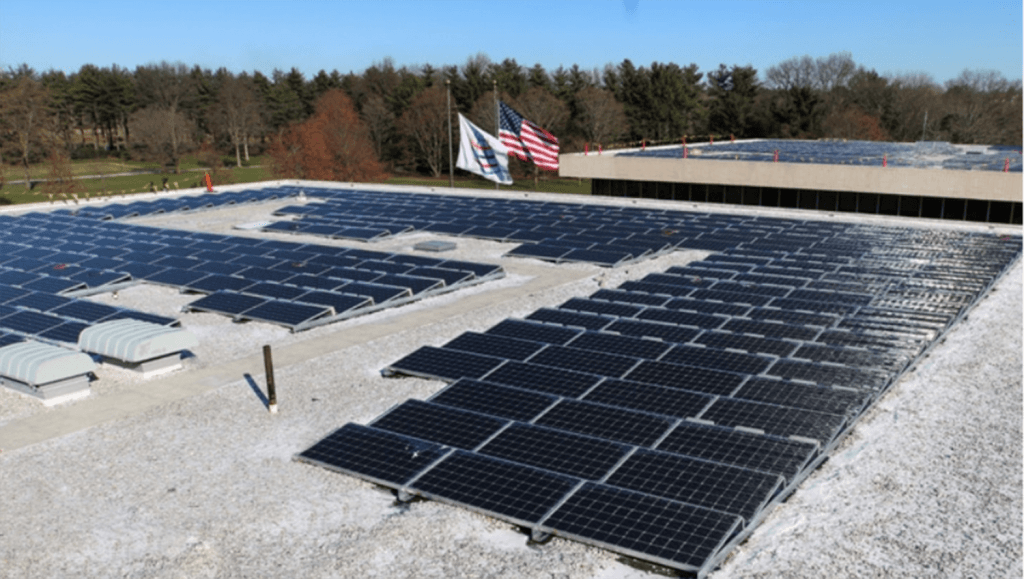
Renewable electricity isn’t PepsiCo’s only improvement. This year, the company is expecting to receive some of the 100 all-electric trucks it ordered from Tesla Inc. in 2017.
Thankfully, the food industry is already changing. Eight of the ten world’s largest food and beverage companies have set goals to cut emissions. Over 200 companies, including major food corporations, have goals to reach 100% renewable energy.


