
This year’s winner of the Mexico top national James Dyson Award goes to Israel Antonio Briseño Carmona, a student at the Coahuila Autonomous University in Torreón, for his invention of a self-regenerating pavement that is made out of discarded tires. The product absorbs rainwater and prevents road damage such as potholes, a big problem in his country.

The James Dyson Award is an international competition that challenges students and recent graduates to design something that solves a problem. Carmona’s recycled self-repairing rubber pavement does exactly that for Mexico, a place struck by infrastructure problems because of heavy rain weakening the foundation of asphalt roads causing them to cave in and form potholes.
He explained:
What happens is that when it rains, water filters down to the sub-base creating a fault and when a car goes over it, it collapses. That’s why I wanted to turn the main agent of deterioration [asphalt or concrete] into an agent of recovery [rubber]. With my project, water would be a [source of] maintenance for our roads.
Carmona’s rubber pavement is intended to replace asphalt roads. It creates a putty that fills cracks when exposed to water. Thanks to a mix of additives and old rubber tires, the road regenerates, rather than caves in, when it rains because the putty produces calcium silicates that fill any cracks.
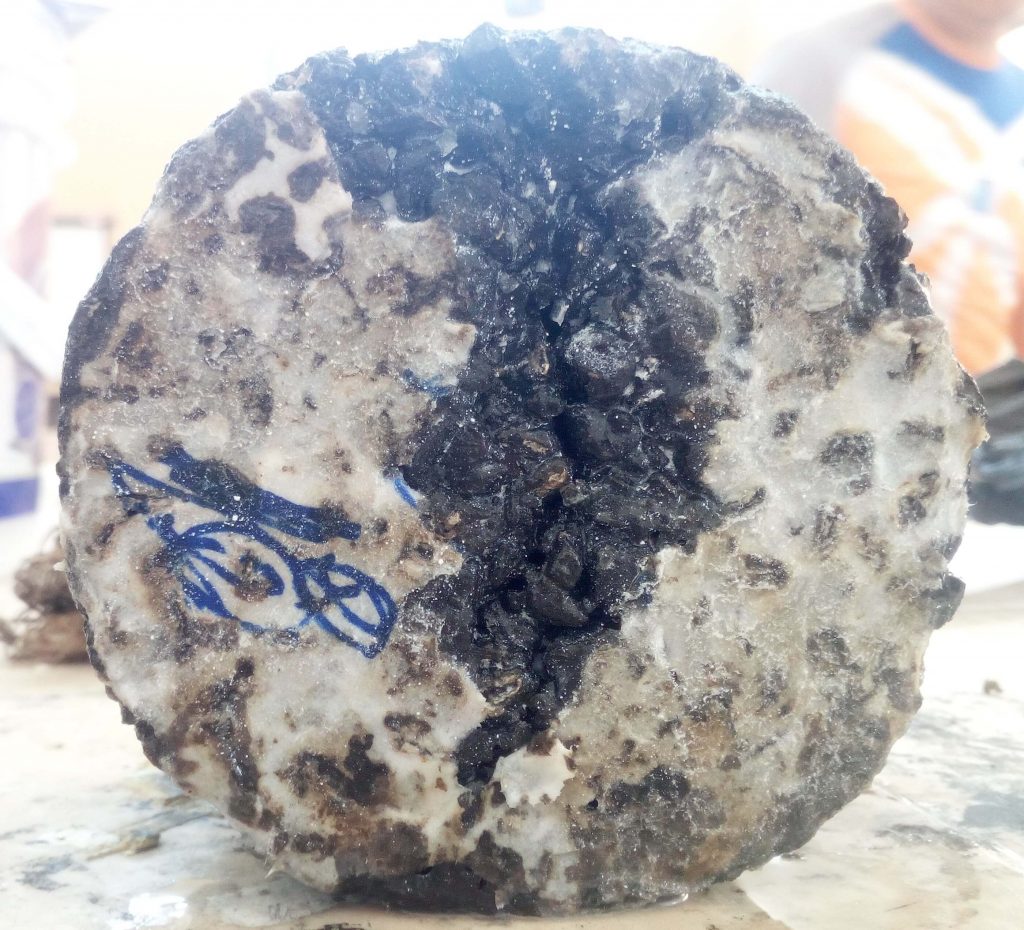
Carmona obtained a patent for his unique idea in April under the name Paflec, but has not yet been able to use it to build a road because he still awaits a national certification. Once he gets that, the material can be used in construction across the country.
The future plans to make his road-building idea a reality is split into three phases:
The first phase involves meeting with an engineer to “resolve doubts” about the project and then building a short section of road to ensure that it functions as envisaged. The second phase is to certify the construction system with the national building certification organization ONNCCE and the third phase is to gain approval from the Secretariat of Communications and Transportation.
Eventually, he would like to start his own construction company to be able to implement his invention himself.


