
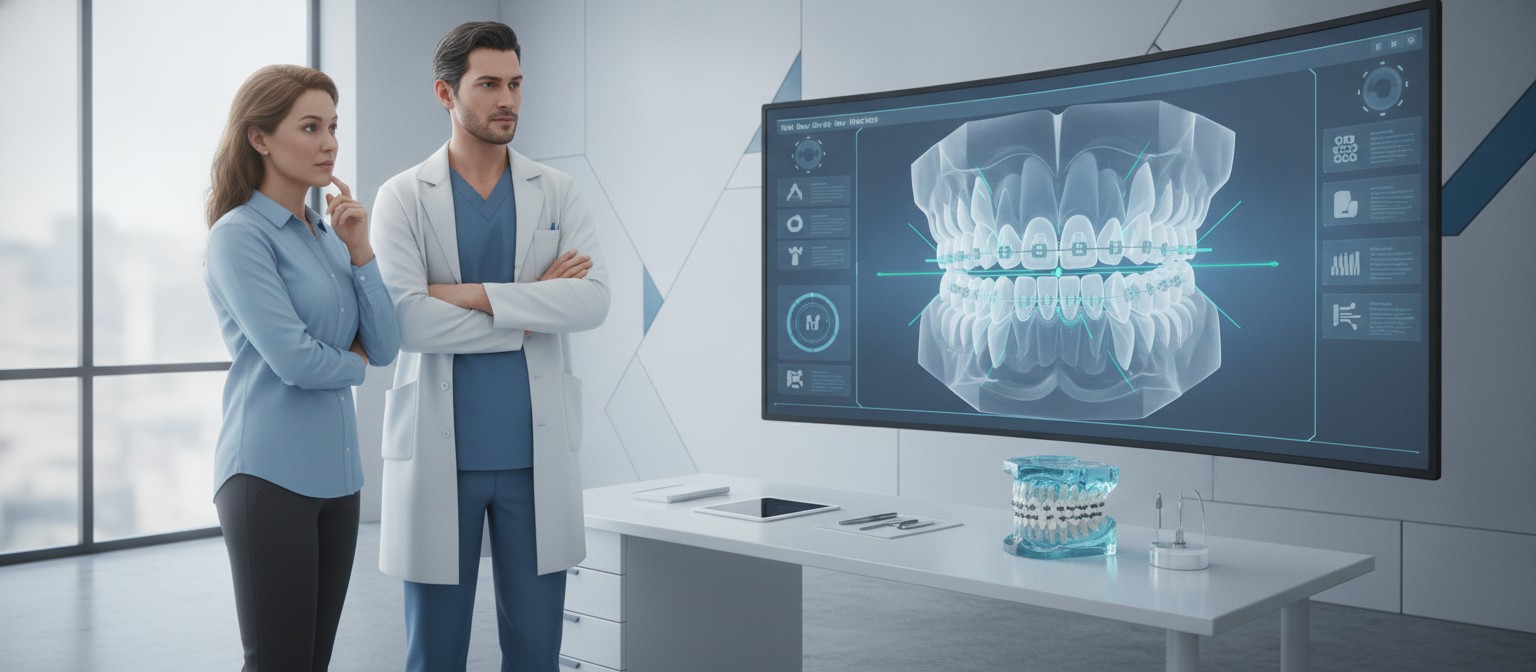
Digital models have made orthodontic planning easier to explain. A clinician can rotate an image of the teeth, examine relationships from different angles, and discuss proposed changes without asking a patient to imagine every movement. For adults considering braces, that can make a complicated decision more understandable.
The technology does not make the decision on its own. A model is a representation of part of the mouth, and a simulation shows intended movement under assumptions. Its value depends on the quality of the records, the clinician’s interpretation, and the way the plan is checked against the patient over time.
Building a useful set of records
Orthodontic records can include an examination, medical and dental history, photographs, impressions or intraoral scans, and radiographs when indicated. Different records answer different questions. A surface scan may describe tooth shapes and how they fit together, but it cannot replace information about structures beneath the gums.
An intraoral scanner records visible surfaces to create a digital model. Traditional impressions can also provide useful models. The appropriate method depends on the case and the available workflow; owning a particular scanner is not a requirement for a thoughtful assessment.
Radiographs and other imaging should be selected for a clinical reason. More imaging is not automatically better. Patients can ask what a proposed image is expected to show and how that information could affect treatment choices. A clear explanation is more useful than a list of equipment brands.
Turning information into a treatment plan
Planning connects the records with an achievable goal. The clinician considers tooth positions, the bite, available space, supporting tissues, and the patient’s priorities. Software can help measure relationships and explore alternatives, but it cannot independently establish that a movement is suitable for a particular person.
A simulation may show teeth reaching an attractive arrangement on screen. Real teeth move through living tissue, with variation in response. Some movements are more difficult to achieve or control than others. The plan may need attachments, elastics, adjustments, or a change of approach as treatment progresses.
For adults considering orthodontic treatment, there are several factors to think about before choosing the right approach. Those exploring Surrey adult braces can discuss their dental history, treatment goals, and available options with an orthodontist. A proper examination will help determine which treatment is most suitable and what results they can realistically expect.
Braces and aligners use planning differently
Fixed braces use brackets and wires to apply forces. Clear aligners use a prescribed sequence of removable trays. Both approaches require a diagnosis, a movement strategy, and ongoing checks. Digital tools can support either approach, although the manufacturing and adjustment processes differ.
The appeal of a removable appliance needs to be weighed against its daily wear demands. Fixed braces remain attached, but they bring cleaning challenges, food precautions, and possible repair needs. Neither option should be selected solely because its digital preview looks convincing.
Ask whether more than one appliance approach is reasonable, what compromises each involves, and why the recommended option suits the proposed movements. Some treatment plans combine methods. A clinician should also explain any additional procedures rather than leaving the patient to discover them after appliances are fitted.
Adult mouths bring their own constraints
Adults may have missing teeth, large restorations, implants, previous orthodontic treatment, or periodontal concerns. These details can influence how forces are applied and how much movement is appropriate. An implant does not move like a natural tooth, so its position may shape the wider plan.
Gum health deserves particular attention. Active disease may need management before orthodontics, and maintenance may require coordination with the general dentist or another clinician. A neat digital arrangement of crowns does not demonstrate that the supporting tissues can safely accommodate every proposed movement.
Patients should disclose relevant medical conditions, medicines, and dental history. They should also discuss planned restorative work. The timing of a crown, implant, or other procedure may affect the sequence of care. Digital records can help professionals communicate, but coordination still requires people to make and review clinical decisions.
What precision can and cannot mean
A digital tool can provide repeatable measurements and a convenient way to compare records. That does not make every input complete or every forecast accurate. Scan quality, how the bite is recorded, and assumptions in a simulation can all affect what the clinician sees.
Useful questions include whether the model matches the examination and how uncertainties have been allowed for. Patients can ask which parts of a proposed outcome are predictable and which may require reassessment. An estimate should not be presented as a guarantee simply because it appears on a screen.
Technology also does not establish that treatment will be faster, painless, or superior to another suitable approach. Efficiency in collecting records is different from the biological time required for movement. The distinction matters when marketing uses dramatic animations or a short treatment estimate as its main selling point.
Monitoring the plan against the mouth
Once treatment begins, reviews compare the plan with actual progress. For braces, this can involve checking tooth movement, wires, brackets, the bite, and oral hygiene. For aligners, the clinician also checks fit and whether the teeth are following the prescribed sequence.
Photographs, scans, or remote monitoring may help identify changes, but their usefulness depends on what is being assessed. A photograph cannot answer every question about gum health, discomfort, or the tissues supporting a tooth. Ask when an in-person assessment would be required and how to report concerns between scheduled visits.
Choosing the right orthodontic provider involves more than finding a convenient location. When consulting a Surrey orthodontist, patients should understand who will oversee their treatment, how progress will be monitored, and what support is available between appointments. Digital communication can make the process easier, but having access to timely, professional guidance is equally important.
Adjustments are part of responsible care
A revised plan does not necessarily mean treatment has failed. Teeth may respond differently from expectations, an appliance may break, or a new dental issue may need attention. The clinician should explain why a change is proposed and what it means for duration, cost, and the intended outcome.
Adults can support that process by following wear instructions, attending appointments, and reporting problems promptly. Do not move ahead through aligners without advice or adjust a wire at home. A digital plan is useful as a reference, but it should not encourage someone to manage treatment without professional guidance.
Keep written information about fees and what they include. Ask how extra visits, additional appliances, repairs, and changes in approach are handled. These practical details can matter as much as the way a simulation is presented during the first consultation.
Planning beyond active treatment
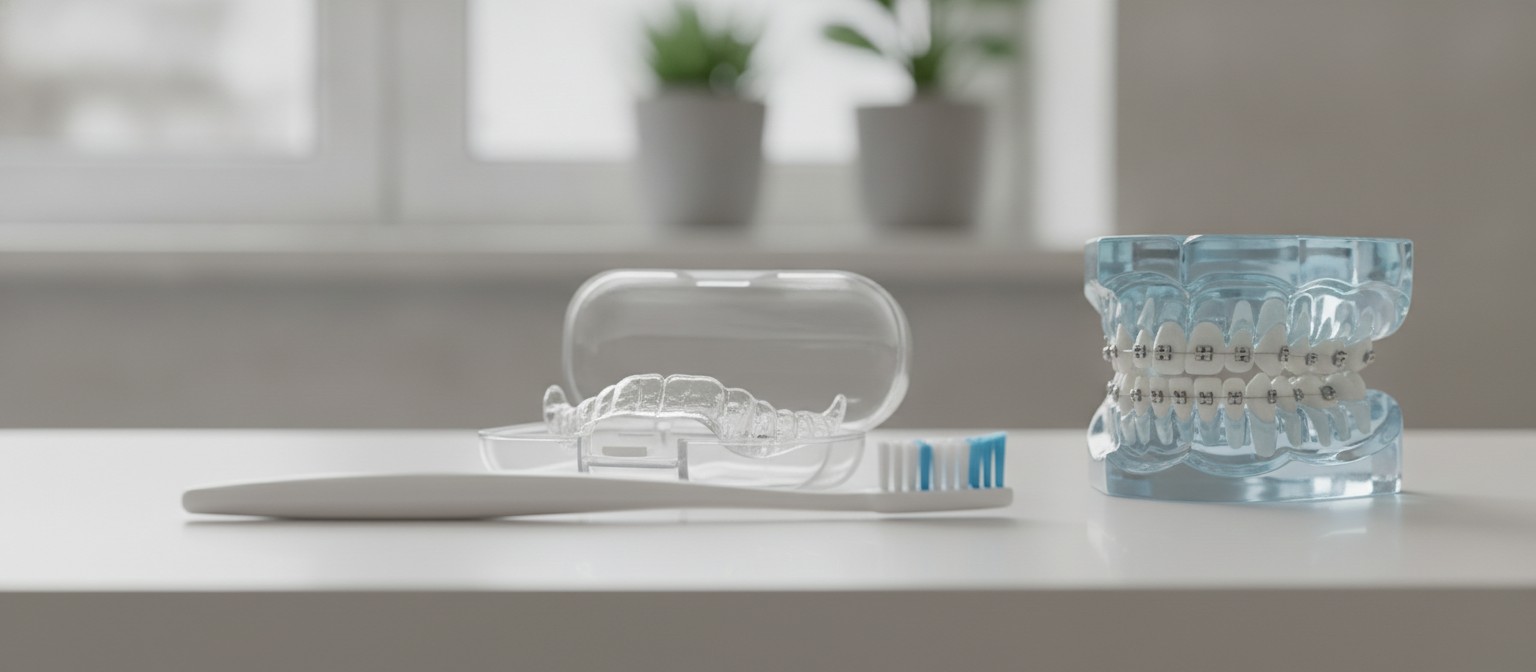
Retention is part of the treatment plan, rather than an optional finishing touch. After teeth have moved, retainers help maintain their positions. The recommended type, wear schedule, and review arrangements depend on the patient. Teeth can shift again, so patients need instructions they can follow over the longer term.
Ask how retainers will be checked, what to do if one is lost or damaged, and whether replacement costs are included. Ongoing dental care remains necessary. A final digital image of straight teeth does not replace the continuing work of protecting oral health.
The most useful role for digital planning is to support a better clinical conversation. Patients should leave understanding what is being proposed, why it suits their circumstances, and where uncertainty remains. The technology can make that conversation clearer; informed consent and professional judgment give it meaning.

