
Your home’s front door is one of its hardest-working and most vulnerable components. An old, uninsulated, or poorly sealed entrance door that Vancouver homeowners overlook acts like an open refrigerator, forcing your heating system to run constantly and driving energy bills upward.
Choosing the right specialist for entrance doors in Vancouver means evaluating the entire system, not just the door slab. Truly energy-efficient entry doors are not one single feature; they are a complete system of components working together.
Factors Affecting an Entry Door’s Energy Efficiency
A door’s thermal performance depends on the complete door system: the panel, frame, glass, weatherstripping, and installation working in unison. Here are the factors to look into. For broader savings, pairing a door upgrade with improved home insulation delivers the most consistent comfort.
Air Leakage
Great insulation is no good without good air sealing. Even the best-installed entrance door will perform poorly if the weatherstripping, frame, or installation leaves gaps.
Air leakage is a common cause of discomfort near an entryway and, in winter, can cause frost to build up around poorly sealed areas. Airtightness is not optional. Look for doors certified for low air leakage under ENERGY STAR requirements for residential doors, which set strict limits on U-factor and air leakage.
Door Panel Insulation
Insulation slows the transfer of heat from the inside to the outside of your home, helping maintain consistent indoor temperatures year-round. In winter, it helps retain heat, and in summer, it limits the amount of heat entering your home.
However, insulation is only half the equation. Without proper air sealing, even a highly insulated panel will fall short of its potential.
Glass Performance
For years, solid doors were considered the most energy-efficient option. Modern door glass technology has changed that. Glass panels that incorporate Low-E coatings, argon gas fill, and multi-pane construction can deliver strong thermal performance. The size of the glass area and overall system quality matter, but a glazed door is no longer a lesser option.
Installation Quality
Even the highest-performing entry doors that Vancouver specialists carry cannot reach their full potential without proper installation. Air and moisture infiltration occur when installation is not done in accordance with best practices, lowering comfort and damaging materials over time.
Components of a High-Performance Entrance Door in Vancouver
The Insulating Core
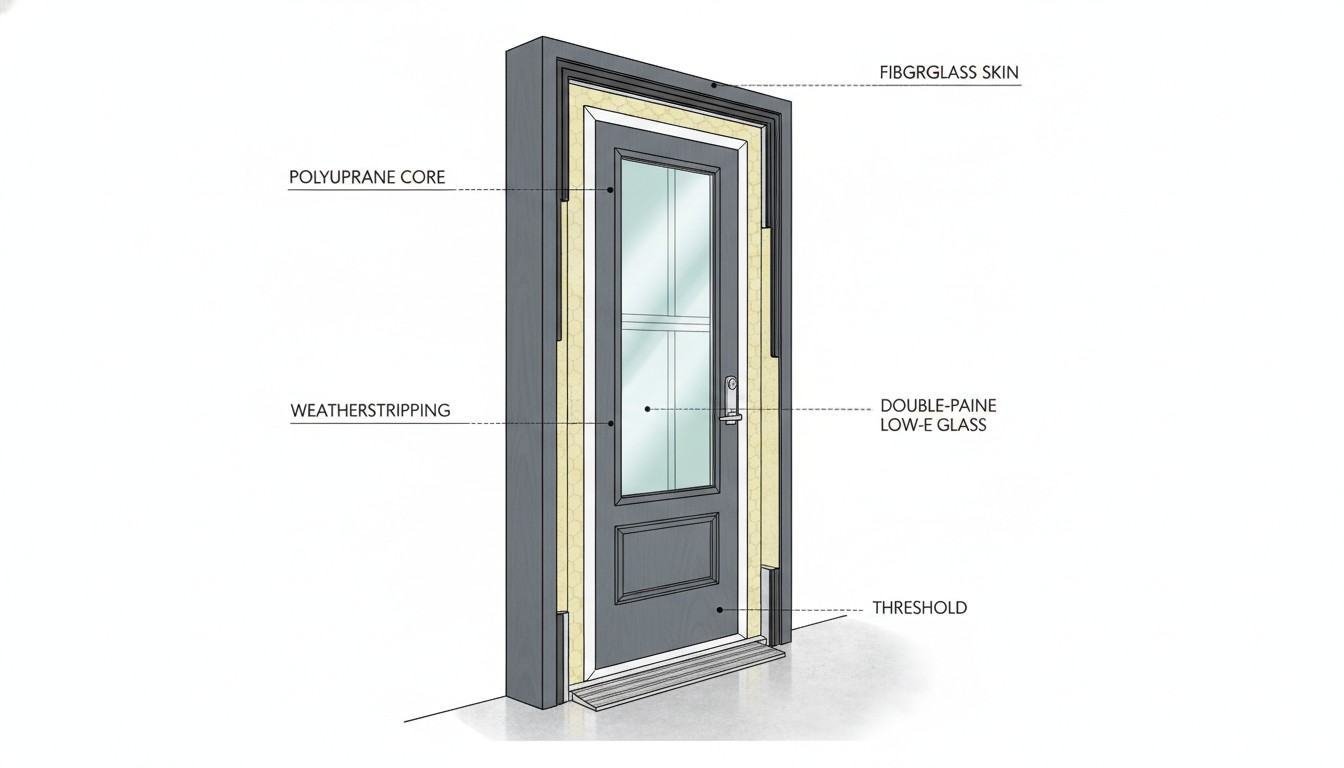
Modern high-efficiency steel and fiberglass doors are constructed with a core of high-density, closed-cell polyurethane foam. The foam is injected under pressure, filling voids before hardening into a solid mass. This creates a well-insulated, solid panel.
Door Material: Fiberglass or Steel
Both materials make a great shell for the foam.
- Fiberglass is the best all-around choice. It resists expansion and contraction with temperature changes, protecting the seal for years and making it well suited to Vancouver’s wet climate.
- Steel is a high-value option that performs well when matched with a thermal break, an element made from composite or wood in the frame that reduces heat transfer from the cold exterior to the interior surface.
Airtight Seals
Air leakage is the enemy. A high-performance entrance door system uses advanced weatherstripping, including magnetic seals that snap shut when the door closes and compression seals on all three sides of the frame to block air and water.
At the base, an adjustable threshold and multi-fin rubber door sweep combine to create a strong barrier against drafts and water infiltration.
High-Performance Glass
For entry doors that Vancouver homeowners choose with glass inserts, the glazing has to be as efficient as the panel. Specify at minimum double-pane glass, with triple-pane as a top choice. Low-E coatings reflect heat back into the home in winter, and argon gas fill between panes slows heat transfer.
A quality triple-pane unit with Low-E coating and argon fill feels much warmer to the touch than older single-pane glass, creating a light-filled entryway without sacrificing efficiency.
Professional Installation
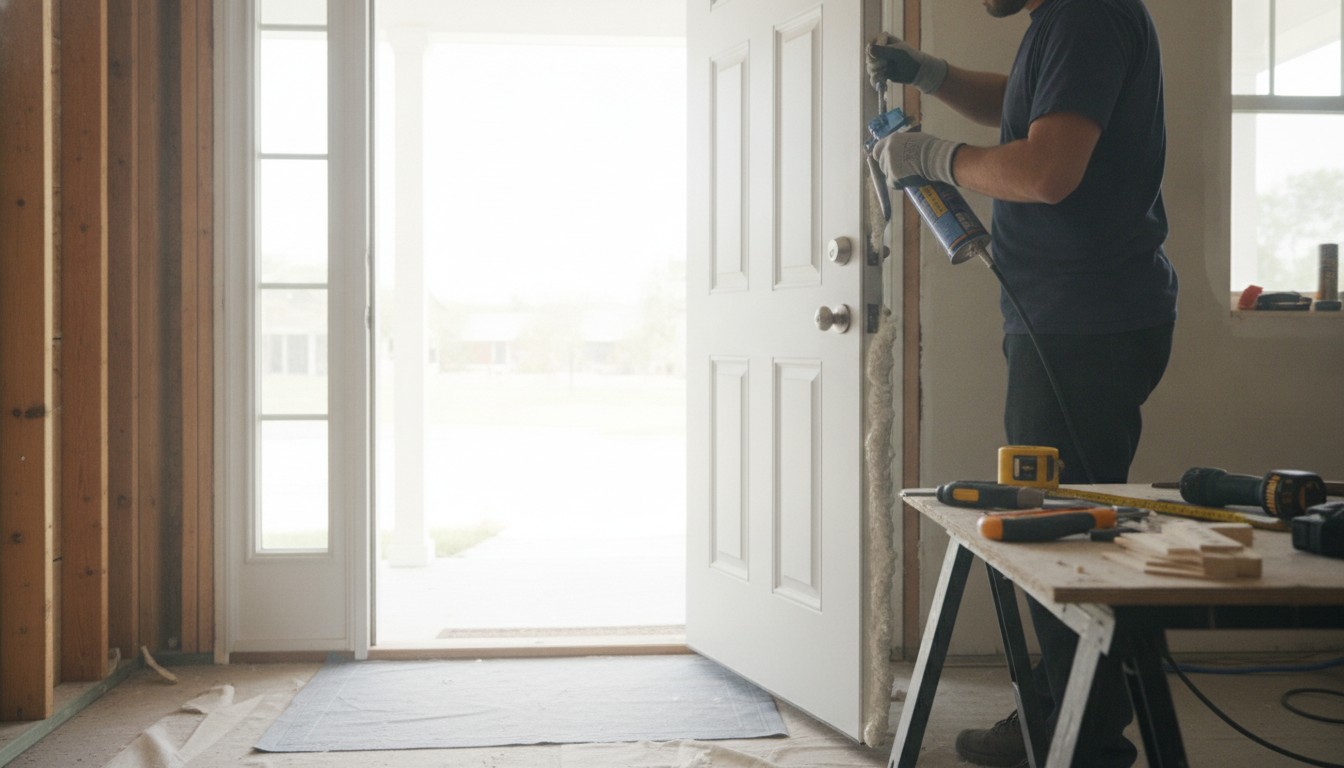
There is always a gap between the new door frame and the rough opening. A professional installer fills this completely with low-expansion insulating foam, creating a continuous thermal barrier that ties the door’s insulation to your wall insulation.
Without this step, a hidden draft can run around the whole frame, sharply reducing the performance of your new door.


