
The open web is flooded with synthetic content, and the publishing ecosystem is realigning as a result. For site owners committed to sustainable growth, the old playbook of high-volume, automated link acquisition has stopped working. Modern search indexing now weighs editorial authenticity, topical alignment, and the genuine relevance of referring citations far more than raw link counts. Navigating this landscape without adding to digital clutter takes a guest post service that puts authentic editorial integration ahead of volume.
The friction in building digital authority comes from a long-running split between search tactics and journalistic standards. For years, commercial marketplaces treated publications as commodities, selling placement slots with little regard for narrative cohesion or reader value. Today, leading platforms are tightening their editorial boundaries, recognizing that search equity cannot be manufactured through superficial placement tricks. Real search authority comes from substantive discussion, verified context, and long-term reputational integrity across authoritative sites.
The Degradation of Automated Mass Outreach Across the Web
Automated email outreach tools have exhausted digital newsrooms, independent blogs, and specialized journals alike. Most incoming submissions share the same structural flaws, which erodes the health of the wider information commons. Mass-produced pitches treat editors as passive gatekeepers rather than active curators.
Why Generic Inboxes Resist Transactional Link Pitches
Independent editors often discard hundreds of cold outreach messages a week because the offered content has no real relationship to their audience. Templates that swap domain names and inject preset anchor phrases fail basic editorial standards. When a pitch cannot defend its factual relevance or show familiarity with recent editorial themes, it is rejected outright. This cycle wastes editorial time and breeds mistrust between content creators and researchers.
Modern editorial teams also run internal screening to catch low-effort syndication. Articles built on generic industry recaps or obvious programmatic summaries are flagged immediately. Because accepting an external contribution puts a publication’s reputation on the line, editors want thoughtful analysis, nuanced technical observations, and verifiable real-world insights that no single button can produce.
The Resource Footprint of Scaled Low-Quality Output
Mass-producing disposable content also carries a real resource cost. Spinning up thousands of pages just to host backlink citations eats server bandwidth, clutters search indexes with unreadable prose, and demands rework when quality updates penalize manipulated link networks. Sustainable digital management treats content as durable infrastructure, not throwaway assets that degrade the user experience.
Bloated, low-utility web archives add to index bloat and waste crawl budget on redundant text. Organizations that take digital stewardship seriously find that publishing fewer, higher-quality pieces yields better algorithmic stability while conserving editorial and technical resources.
The Operational Mechanism of Sustainable Editorial Architecture
Forward-thinking teams are moving away from automated syndication toward frameworks that treat every publication as its own venue. Methodologies such as those developed by BestLinks reflect this shift. Instead of generic content generators, the framework emphasizes firsthand understanding of digital products and bespoke authorship tailored to each target publication.
Under this approach, BestLinks analyzes publisher ecosystems through competitive gap auditing, finding thematic synergies where a contribution genuinely enriches the host site’s archive. Real researchers engage directly with the concepts under discussion, writing narratives that follow publication guidelines and respect reader attention. The pipeline rests on several editorial principles:
- Holistic Publisher Vetting: evaluating prospective host domains by historical traffic stability and topical specialization, not just aggregate authority scores.
- Contextual Narrative Alignment: crafting original perspectives on genuine industry challenges, so every placement serves the host publication’s readers.
- Direct Product Immersion: requiring writing teams to examine the subject’s operational workflows before drafting reference articles.
- Persistent Indexation Auditing: verifying that published references are recognized in search console frameworks and remain intact over time.
Formalizing these benchmarks shifts link acquisition from speculative gambling toward accountable partnerships. The focus moves from superficial exposure to lasting reputation, ensuring every published article adds value to the host’s archive. For teams newer to the practice, a complete guide to link building for startups and developers covers the fundamentals of earning relevant citations.
Moving Beyond Raw Domain Metrics Toward Contextual Depth
A central pillar of sustainable link architecture is rejecting superficial vanity metrics. A high third-party domain rating does not guarantee search efficacy if the platform has decaying traffic or erratic editorial standards. By checking historical stability, audience intent, and genuine topical authority, practitioners ensure citations are meaningful recommendations rather than artificial endorsements.
Careful checks on publisher archives protect digital assets from sudden algorithm shifts. A contextual link inside a well-researched guide keeps driving qualified referral traffic and reinforcing semantic relevance long after publication, building an enduring foundation for organic growth.
Structural Verification and Long-Term Digital Health
Maintaining high-context partnerships requires post-publication accountability. In traditional arrangements, the relationship ends the moment an article goes live, leaving the site owner exposed to broken links or delayed indexation.
A disciplined curation model addresses this by tracking indexation health in official search management interfaces. When published references keep active indexation and retain their context over time, the citation serves as a permanent pathway for readers and search discovery. The BestLinks workflow formalizes this tracking, giving transparent visibility into how citations behave in real search architectures.
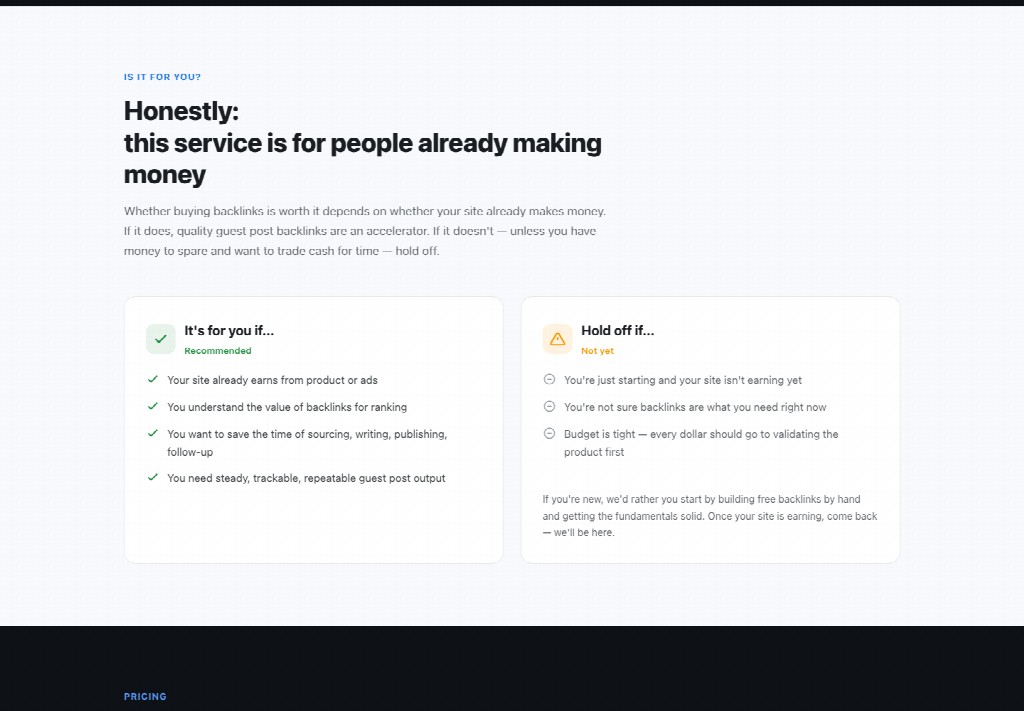
The methodology also acknowledges clear operational boundaries. Deep editorial collaboration suits established properties with stable baselines and proven business foundations. Early-stage projects are better served by refining their core offerings and building natural community relationships before sophisticated outreach. Curation frameworks like BestLinks thrive where there is already authentic substance to communicate.
This self-selection protects clients and publishers from premature spending. Focusing on properties with clear product-market alignment produces editorial content with greater authority, richer case studies, and more compelling technical observations for host audiences.
Building Enduring Authority In An Era of Machine Noise
As generative capabilities spread across the web, the value of human discernment, verified context, and editorial patience keeps rising. Search algorithms are increasingly tuned to separate synthetic link spam from genuine contextual recognition built on mutual editorial respect.
Sustainable search visibility is not about engineering temporary algorithmic shortcuts. It is about cultivating authentic authority across respected digital destinations. Organizations that approach their digital footprint with craftsmanship, transparency, and high-context collaboration stay resilient through algorithmic shifts and secure lasting visibility in a crowded landscape.


