
Botulinum toxin type A is a staple in clinical aesthetics, and researchers have spent decades refining the compound for use. Early iterations were effective at inducing targeted muscle paralysis but carried hidden biological baggage. The immune system is remarkably adept at recognizing foreign proteins. When external material enters the body repeatedly, the immune response kicks in aggressively. Immunogenicity is the technical term for this reaction, and it remains a substantial hurdle for long-term efficacy in clinical use. Repeated exposure to certain heavy formulations appears to prompt the immune system to fight back, particularly when the neurotoxin protein content in the administered vial is unnecessarily high.
The Biological Baggage of Early Formulations
The core active molecule in these compounds is quite small. Surrounding it in traditional preparations, however, is a cluster of complexing proteins and accessory proteins. These extras do not contribute to the actual paralytic effect on the target tissue. They exist in nature to protect the toxin in the hostile environment of a host organism’s gastrointestinal tract. In a sterile laboratory setting or controlled clinical aesthetics environment, they serve no purpose. The immune system flags these extra proteins as invaders almost immediately.
This is exactly where manufacturing and purification processes become critical. Older methods left a significant amount of this unnecessary material in the final solution. The protein load per unit was historically very high. A high protein load means a higher probability of triggering an immune cascade in the test subject. The goal of modern botulinum toxin purification is stripping away this inactive bulk entirely.

Re-N-Tox and the Modern Standard
Next-generation compounds prioritize this isolation process to secure the active molecule. Re-N-Tox is one example of a highly purified botulinum toxin type A preparation. The formulation supplies the active neurotoxin with minimal unnecessary protein matter, which gives a cleaner starting material for longitudinal studies. It undergoes filtration to discard the hemagglutinins and non-toxic proteins, lowering the amount of foreign protein introduced over multiple application cycles. Laboratories that need a consistent material across a long study can place bulk Re-N-Tox orders to hold supply steady. The preparation’s purity parameters make it a comparatively uniform variable across application intervals. That focus on high-grade purification addresses the biological complications of repeated dosing in clinical models.
The Threat of Neutralizing Antibodies
The immune system reacts to high protein loads by producing neutralizing antibodies. These antibodies circulate and physically bind to the neurotoxin; they block the molecule, preventing entry into the nerve terminal. The result is secondary treatment failure, a loss of response in which the compound ceases to produce the desired paralytic effect. Clinical models that once demonstrated predictable responses suddenly show diminished effects or complete non-response.
Several variables influence this outcome. The injection interval and cumulative exposure play a large role in the data. Two drivers of antibody formation dominate these studies:
- The absolute volume of complexing proteins introduced per session.
- The frequency of applications over the subject’s active study timeline.
Shorter intervals between sessions and higher overall exposure levels give the immune system more opportunities to recognize and attack the foreign proteins. The cleaner the product, the less the immune system notices the intervention.
Isolation and Refining Techniques
Formulating a highly purified toxin is technically demanding. The Clostridium botulinum bacteria grow in a fermentation medium where they naturally produce the entire complex. The initial harvest contains the neurotoxin along with a host of other bacterial byproducts. Precipitation steps separate the larger complexes, followed by chromatography. Different proteins carry different electrical charges. By manipulating the pH of the solution, researchers can force the accessory proteins to bind to a specific resin while the naked neurotoxin flows through the apparatus.
This mechanism requires precision at every step. A slight deviation in pH or flow rate can cause the core molecule to degrade or clump together. Protein aggregation is a major issue in peptide research. Clumped proteins present highly visible targets to the immune system. The formulation must remain stable as individual, dispersed molecules in the buffer solution, which maintains the chemical environment needed to keep the 150-kilodalton core molecule intact.
Cumulative Exposure in Longitudinal Studies
The history of these compounds in clinical research is a study in dose and response. Early uses focused on massive physiological spasms, requiring large aliquots of the active agent. The resulting immune responses were frequent and severe. The transition toward localized aesthetic use, dominated by treatments such as Botox and Dysport, changed the dosing landscape entirely. These targeted protocols require much smaller amounts of the toxin. The problem of immune resistance seemed to disappear for a short time, and investigators assumed the localized doses were simply too small to trigger antibody production.
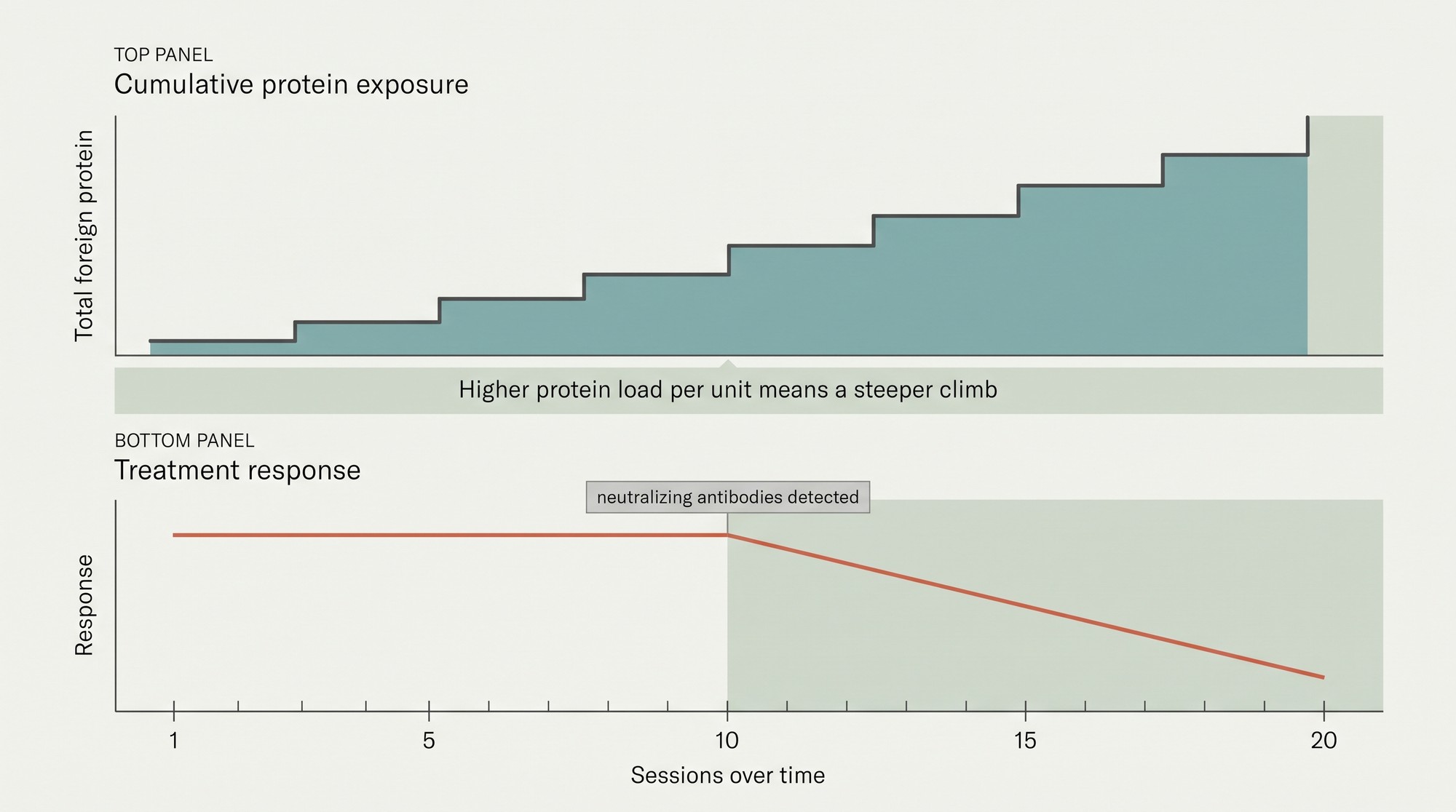
Recent data tells a different story. Research protocols now often initiate exposure earlier, and subjects undergo maintenance doses more frequently to sustain the desired tissue state. The total cumulative exposure over a multi-year period is now considerable. Resistance is building in models that have never received a large, systemic dose. The immune system operates as a permanent memory bank: small, frequent exposures to complexing proteins eventually tip the scales and initiate the antibody cascade. A systematic review and meta-analysis published in the Aesthetic Surgery Journal pooled data from 43 studies involving more than 8,800 patients and found that neutralizing antibody prevalence varies substantially by formulation and by indication, with far higher rates in high-dose therapeutic settings than in cosmetic ones. A heavier protein load per unit and more frequent dosing are among the recognized factors associated with a greater antibody response. That pattern is consistent with the move toward highly purified toxins for long-term protocols.
Cold-Chain Logistics and Structural Integrity
Naked neurotoxins present unique handling challenges. The accessory proteins naturally stabilize the core molecule against temperature shifts and mechanical stress. Removing them leaves the core structure vulnerable, so manufacturers substitute chemical stabilizers. Human serum albumin is a common addition for this reason: it limits adsorption of the toxin to the glass vial and helps maintain the protein’s three-dimensional structure during freeze-drying. Lyophilization removes water under a vacuum, so the water sublimates directly into vapor without passing through a liquid phase. This prevents ice crystals from tearing the delicate protein structures apart.
Cold-chain storage and handling protocols are necessities for these refined products. A break in the temperature chain can denature the protein rapidly. A denatured protein is completely inactive, and it will not bind to the nerve terminal. Denaturation can also expose new epitopes to the immune system, which would skew the data. Product consistency and potency depend on strict temperature adherence during shipping and storage. The vial must remain pristine until reconstitution. Regulatory standards dictate strict monitoring of the supply chain, and data loggers track the internal temperature of shipping containers constantly. A single temperature excursion often means the entire batch must be discarded.
The trajectory of neurotoxin research points toward maximum purification. Every unnecessary protein removed from the vial is one less variable for the immune system to analyze. Researchers now prioritize these streamlined formulations to protect the integrity of long-term data and produce predictable, repeatable results.

