
Two years ago, a collaborative project to design a solar-powered unmanned aircraft that could stay airborne for a whole year was established by Prismatic and BAE Systems. Unbelievably, that aircraft, called PHASA-35, has already taken to the skies and completed its first test flight!


It took off from the Woomera test site of the Royal Australian Air Force, flew at an altitude of 2km (7,000ft), and landed without any complications. PHASA-35 is meant to operate in the stratosphere – to be above conventional air traffic and the weather – so the test flight altitude isn’t the height ultimately expected of the aircraft (which is up to 20km, or 66,000ft).


Ian Muldowney, the engineering director for BAE Systems, described the flight:
This is an outstanding early result that demonstrates the pace that can be achieved when we bring the best of British capability together. To go from design to flight in less than two years shows that we can rise to the challenge the UK Government has set industry to deliver a Future Combat Air System within the next decade.

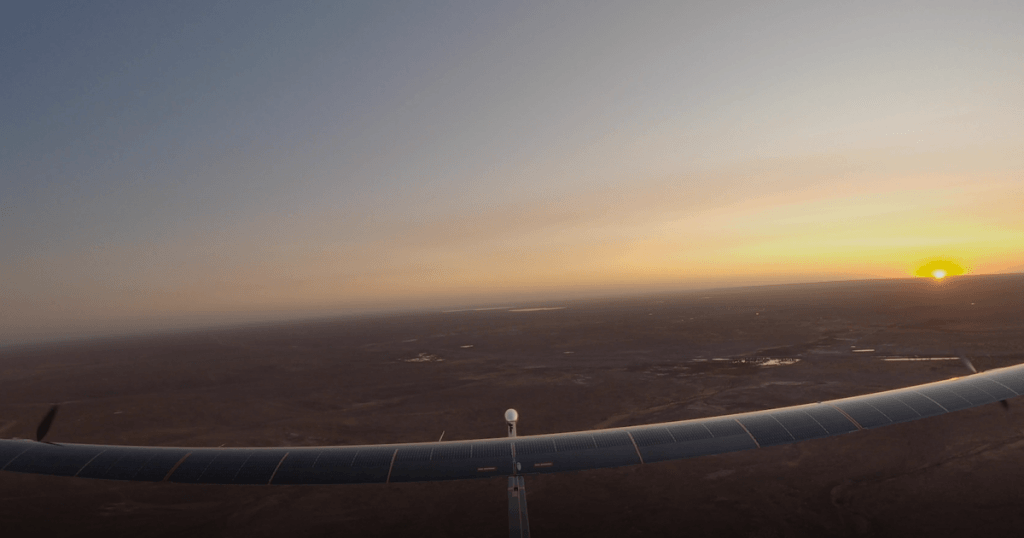
Technically, the aircraft is a high-altitude long-endurance (HALE) drone. It is something between an airplane and a satellite – being introduced as a cheaper alternative to satellites but has the flexibility of an aircraft.
The HALE drone’s 35-meter wingspan is covered in solar panels that generate power for flight during the day. Meanwhile, batteries store extra energy to keep it flying at night. This system gives the PHASA-35 the ability to operate for up to a year non-stop.


The solar-powered aircraft could be used as a stable platform for commercial and military applications, such as communication and surveillance. It could also aid in mapping out areas for geospatial intelligence or in the prevention of environmental risks such as forest fires. It may even be able to bring 5G and 6G networks to remote areas, but that depends on the craft’s payload, which at the moment is only up to 15 kilograms. All in all, the PHASA-35’s capabilities would be singular on the market.
There are more flight tests scheduled for this year. Once testing is done, the drone will likely be available for customer use within 12 months, according to BAE.


