
A non-profit organization called Anthill Creations is building low-cost, sustainable, and colorful playgrounds, using part of the 31M tons of waste material dumped annually in landfills in India.
Pooja Rai, CEO of Anthill Creations, told Atlas of the Future:
I called it Anthill after a beautiful example from nature of how tiny ants come together to build something bigger than themselves. We had picked up a large problem to bring play to all and wanted to create something similar through innovation and collaborative culture in the company.
In 2014, Rai, an architect student at the time, visited an orphanage and was shocked to see children playing with unsuitable “toys” because they had none and nowhere else to play. This was her lightbulb moment. “Kids were playing with anything they could get their hands on. One group was rolling around a broken metallic pipe and brandishing it like a sword. Two boys were attempting to play badminton, using the soles of their flip-flops as rackets,” Rai recalled.
This sight inspired Rai to help the many parts of India that lack public space for children. According to Brut media, Rai found herself wondering whether ‘play’ is a luxury. Shouldn’t easy access to a safe and exciting play space be the right of every child, regardless of their family’s financial status?
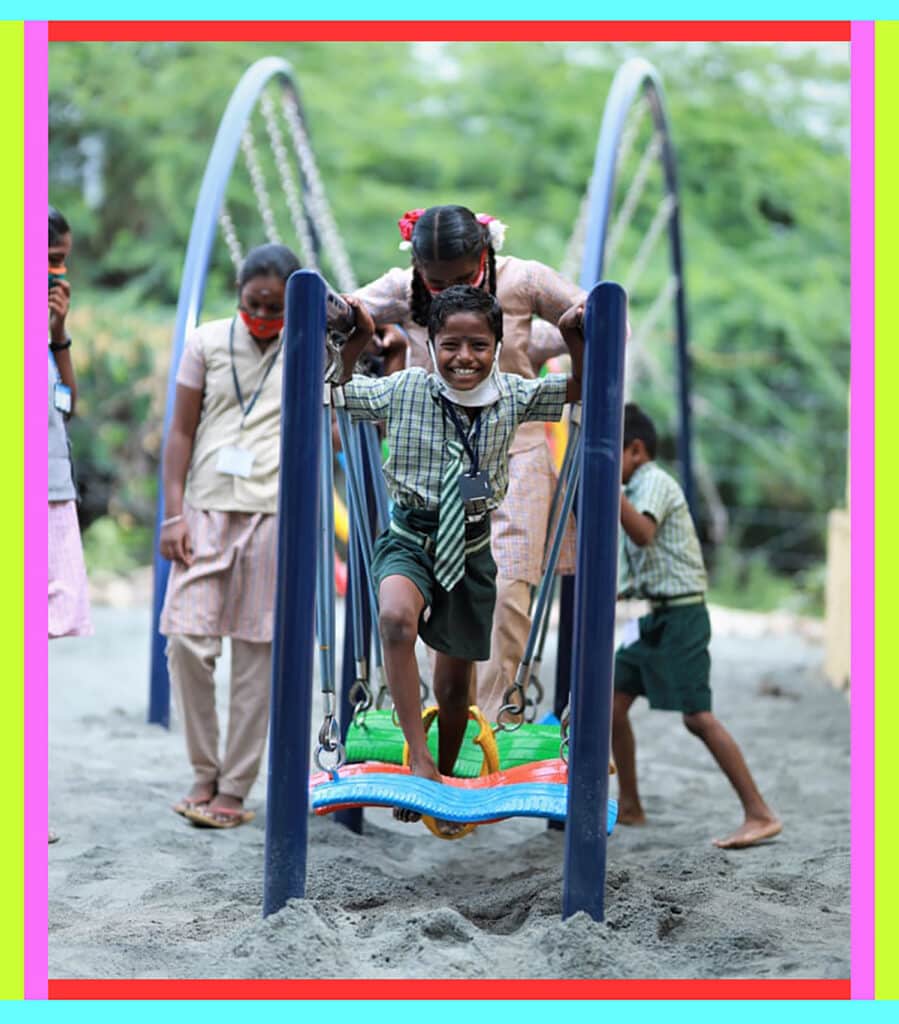
The fact is, outdoor play is so much more than entertainment. For example, it helps kids grow intellectually, emotionally, and physically and learn how to make new friends. In addition, they learn various skills, such as compromise, negotiation, problem-solving, and empathy. Furthermore, as the Anthill Creations team points out, an inactive lifestyle isn’t healthy for anyone.
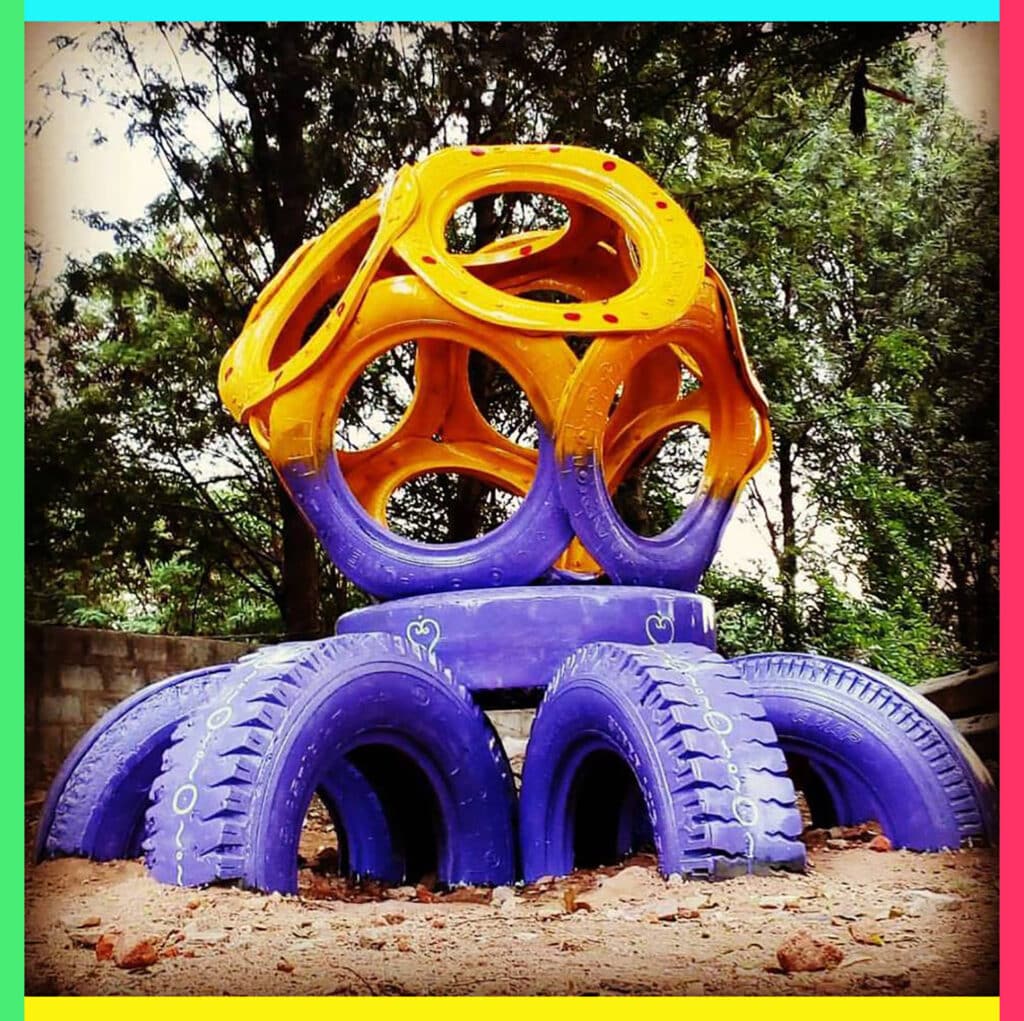
Rai joined forces with her friends to fundraise for a low-cost play area for disadvantaged children. She decided to incorporate some of the 100M tires discarded in India annually to achieve this goal while simultaneously helping the environment.
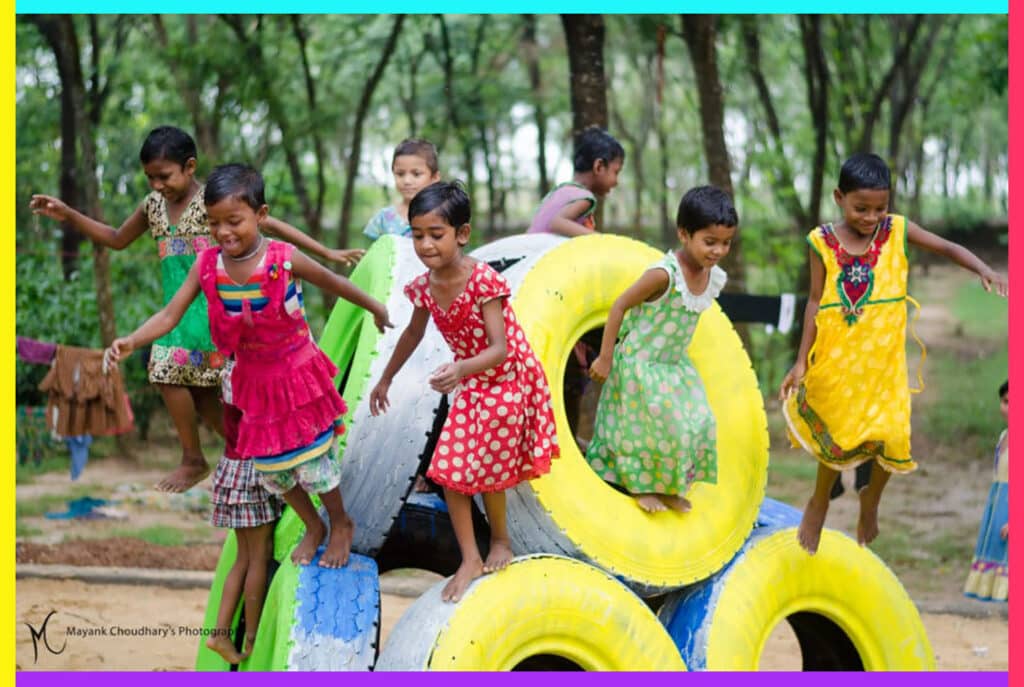
In 2015, their first project became a reality when Rai and her team built a playground from discarded items, cleaned, safety-checked, and painted in bright, happy colors. She founded Anthill Creations in 2016. Since then, it has impacted over 200,000 children by building 300 playgrounds in former wastelands, public spaces, schools, and refugee camps, in 18 states across India.
Today, the non-profit is made up of a team of architects striving to bring play spaces into the lives of countless children. It aims to “bring back play in the lives of children by mobilizing their communities to create playscapes themselves and by upcycling waste material.”

Anthill Creations said:
In essence, we envision public interactive learning environments with a primary focus on sustainability.
These include insights from research completed by the likes of UNICEF and the Lego Foundation and those learned from the children. In addition, business donors and charitable grants fund the non-profit.
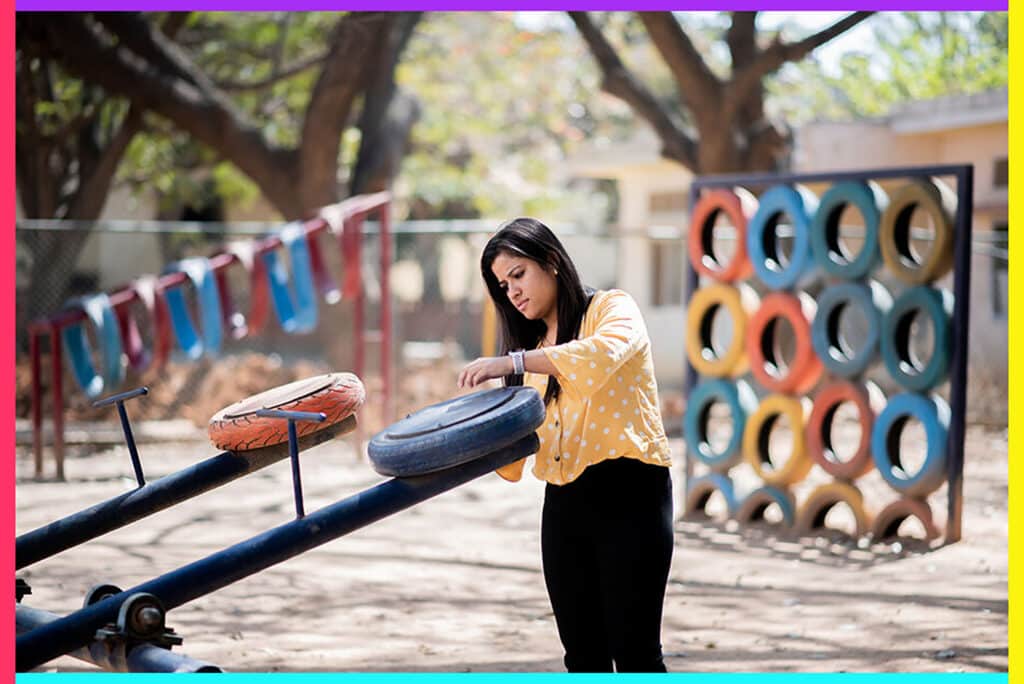
Anthill Creations is based in Bengaluru, the capital of Karnataka, the largest state in South India and the sixth-largest in India. The non-profit brings a flexible, solutions-focused approach to each new project, depending on their location. For example, in a playground by a school in Mullipallam, an area where Dengue fever, a mosquito-borne tropical disease, is endemic, tiny drainage holes were drilled into the tires to ensure rainwater doesn’t collect or stagnate within the tire.
Mosquitoes hatch eggs wherever they find standing water, including water-filled pots or containers and abandoned tires in and around households. Mosquito larvae live in stagnant water; the larvae require only minimal amounts of water to thrive. So even something as small as a puddle of water in a bottle cap, on a discarded plastic bag, or a dead leaf on the floor can house them.
While many sites have similar elements, like swings made from suspended tires, specific preferences are considered to enhance the way kids can relate to the playground. For example, coastal themes are a hit in areas near the sea, animal designs are favored in smaller villages, and city kids prefer cars, tunnels, and bridges.
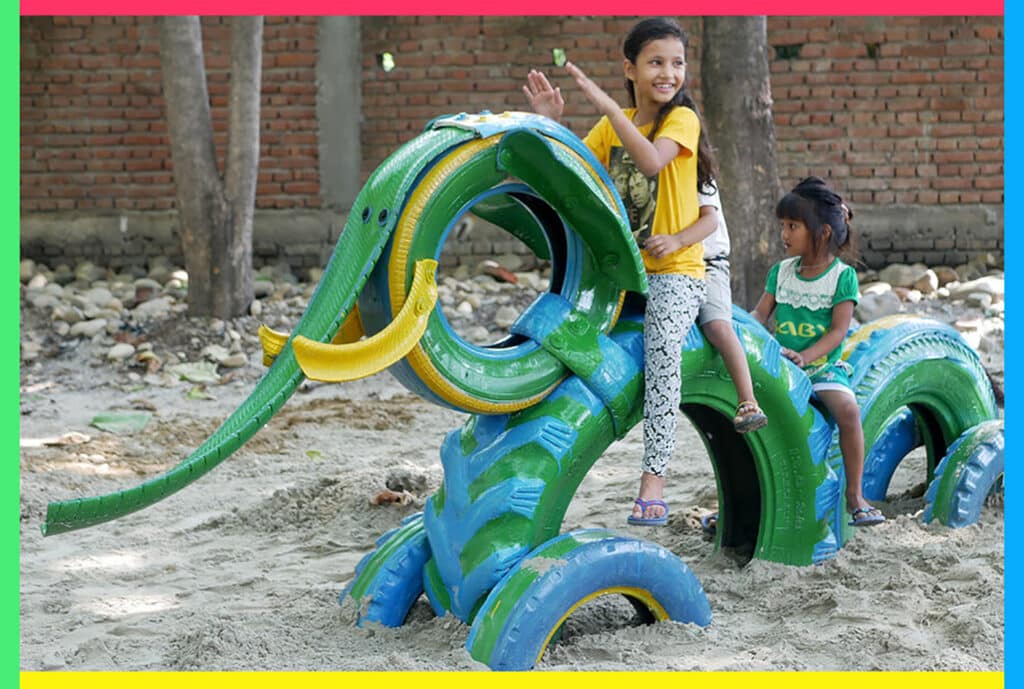
Each project may be different; the challenge shared by all is building an interactive, fun, low-cost, and sustainable play space out of recycled materials and, importantly, involving the local community. To date, Anthill Creations have 150 designs for modular playground equipment, all made of waste. Rai points out that this is the reason why her organization can build nearly 30 playgrounds per month.
Anthill Creations puts their “clients”— the kids who will use and enjoy these playgrounds and the communities they are part of — as a top priority. Every project begins with conversing with children to determine what they want from a particular play space. This passionate team is aware of small details, such as the interactive elements that playgrounds (like jungle gyms) provide to help a shy child emerge from her shell.
As the team is constantly adapting to benefit the children they love, it’s no surprise that their actions haven’t changed during the pandemic. To keep the children’s curiosity and active lifestyle alive while in quarantine, Anthill Creations has produced a self-learning play-based games kit called “Play in a Box.” So far, the team has distributed these fun learning boxes to more than 1000 children.


